Sakura Seas: Japan & South Korea - Westbound

Itinerary: Osaka, Sakaiminato, Busan, Nagasaki, Kagoshima, Uwajima, Hiroshima, Tamano See full itinerary

5 Apr 27
8 nights

Voyage Details

Duration:
8 nights
Departure:
5 Apr 2027
Embarkation:
Osaka, Japan
Cruise code:
XJW2027

Your Itinerary, Day-By-Day

Special Chapters of Your Journey

Day 1 - Osaka

Tour begins: 5:30 PM, Mandarin Oriental, Tokyo, the Shangri-La Hotel, Tokyo or the Palace Hotel, Tokyo. A transfer is included upon arrival from Narita International Airport or Haneda Airport to the Mandarin Oriental, Tokyo, the Shangri-La Hotel, Tokyo or the Palace Hotel, Tokyo, premier hotels ideally located in the heart of the city. Join us this evening for a welcome reception and dinner at your hotel.

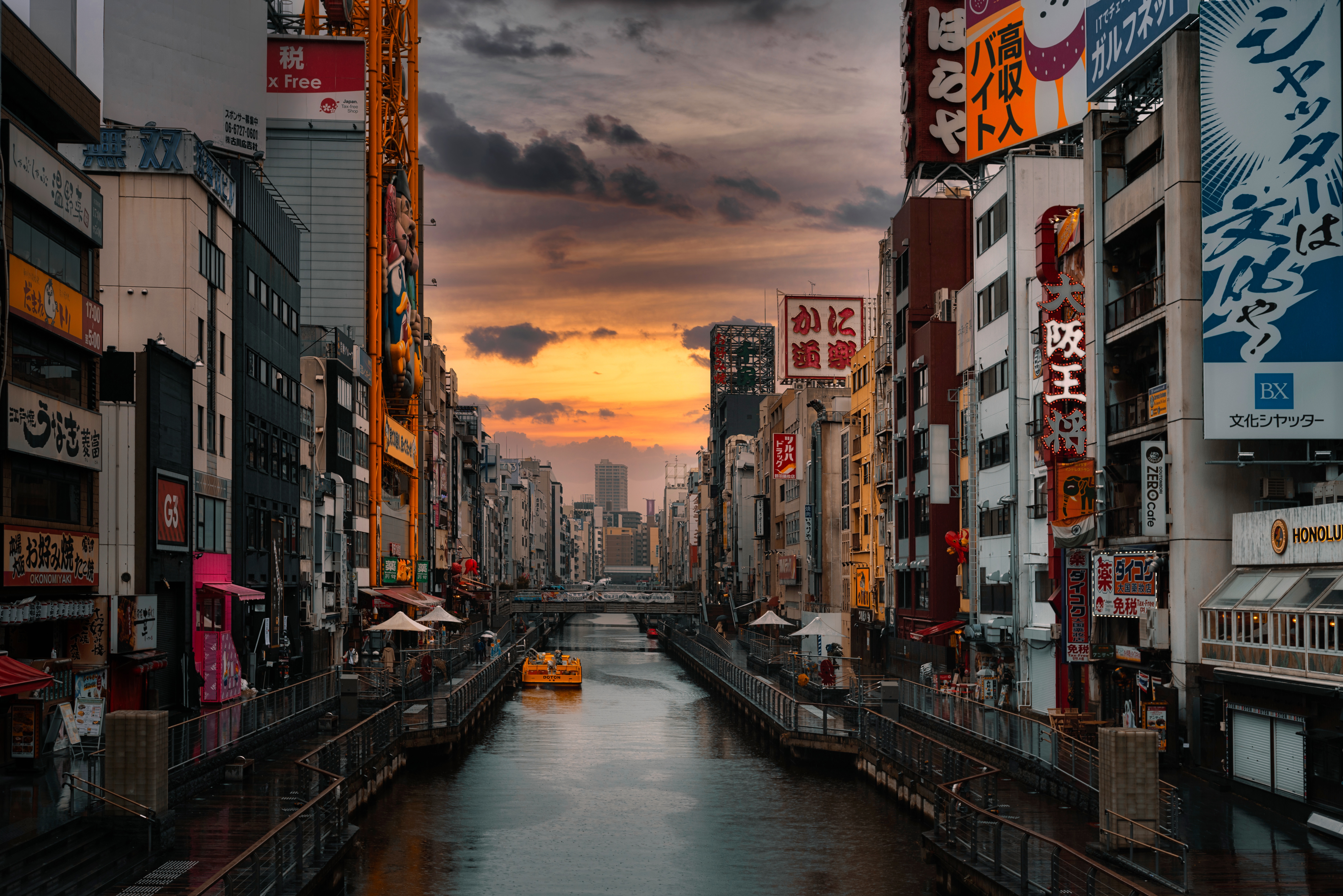
From Minami's neon-lighted Dotombori and historic Tenno-ji to the high-rise class and underground shopping labyrinths of Kita, Osaka is a city that pulses with its own unique rhythm. Though Osaka has no shortage of tourist sites, it is the city itself that is the greatest attraction. Home to some of Japan's best food, most unique fashions, and warmest locals, Osaka does not beg to be explored—it demands it. More than anywhere else in Japan, it rewards the impulsive turn down an interesting side street or the chat with a random stranger. People do not come here to see the city, they come to experience it.Excluded from the formal circles of power and aristocratic culture in 16th-century Edo (Tokyo), Osaka took advantage of its position as Japan's trading center, developing its own art forms such as Bunraku puppet theater and Rakugo comic storytelling. It was in Osaka that feudal Japan's famed Floating World—the dining, theater, and pleasure district—was at its strongest and most inventive. Wealthy merchants and common laborers alike squandered fortunes on culinary delights, turning Osaka into "Japan's Kitchen," a moniker the city still has today. Though the city suffered a blow when the Meiji government canceled all of the samurai class's outstanding debts to the merchants, it was quick to recover. At the turn of the 20th century, it had become Japan's largest and most prosperous city, a center of commerce and manufacturing.Today Osaka remains Japan's iconoclastic metropolis, refusing to fit Tokyo's norms and expectations. Unlike the hordes of Tokyo, Osakans are fiercely independent. As a contrast to the neon and concrete surroundings, the people of Osaka are known as Japan's friendliest and most outgoing. Ask someone on the street for directions in Tokyo and you are lucky to get so much as a glance. Ask someone in Osaka and you get a conversation.The main areas of the city, Kita (north) and Minami (south), are divided by two rivers: the Dojima-gawa and the Tosabori-gawa. Between Kita and Minami is Naka-no-shima, an island and the municipal center of Osaka. Kita (north of Chuo Dori) is Osaka's economic hub and contains Osaka's largest stations: JR Osaka and Hankyu Umeda. The area is crammed with shops, department stores, and restaurants. Nearby are a nightlife district, Kita-shinchi; Naka-no-shima and the Museum of Oriental Ceramics; Osaka-jo (Osaka Castle); and Osaka Koen (Osaka Park). Restaurants, bars, department stores, and boutiques attract Osaka's youth to Minami (south Chuo Dori); theatergoers head to the National Bunraku Theatre and electronics-lovers to Den Den Town. For a glimpse of old Osaka, visit Tenno-ji Temple and Shin Sekai. The main stations are Namba, Shin-sai-bashi, Namba Nankai, and Tenno-ji. There's easy access to the Municipal Museum of Fine Art and Sumiyoshi Taisha (Sumiyoshi Grand Shrine).The bay area, to the west of the city center, is home to the Osaka Aquarium and Universal Studios Japan. The Shinkansen stops at Shin-Osaka, three stops (about five minutes) north of Osaka Station on the Mido-suji subway line. To the north of Shin-Osaka is Senri Expo Park.
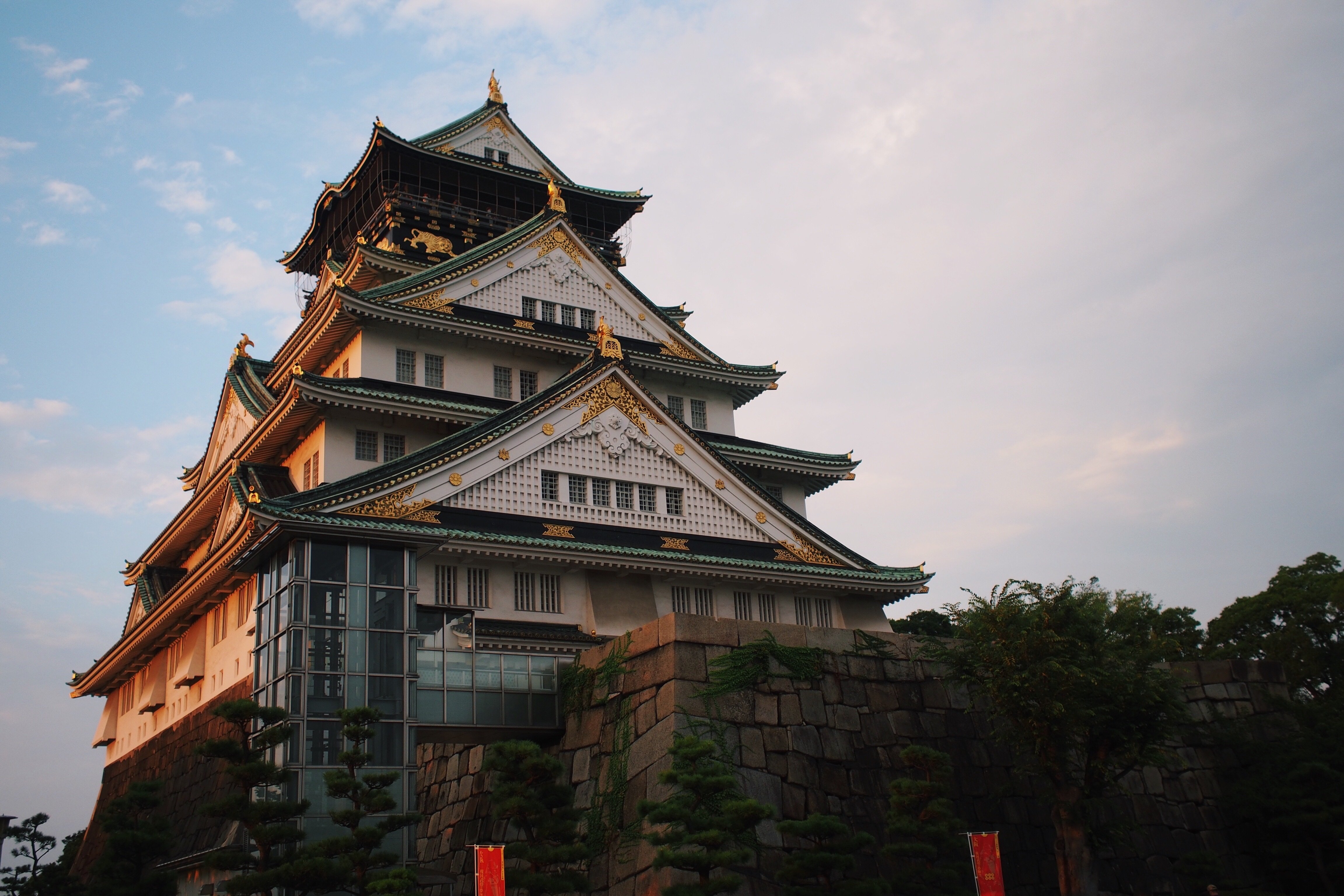
Castle, Osaka, Japan
Castle, Osaka, JapanImage by leo leung from Pixabay
River, Osaka, Japan
River, Osaka, JapanImage by djedj from Pixabay

Day 2 - Osaka

Begin your exploration of Japan's dynamic capital with a locally guided visit to serene Meiji Shrine, set amid a forested oasis in the heart of the city. Continue with an insightful guided visit to the Edo Museum or the Japan National Museum. Enjoy time at leisure for lunch and independent exploration, then dine at your hotel this evening at your leisure.

�   �


From Minami's neon-lighted Dotombori and historic Tenno-ji to the high-rise class and underground shopping labyrinths of Kita, Osaka is a city that pulses with its own unique rhythm. Though Osaka has no shortage of tourist sites, it is the city itself that is the greatest attraction. Home to some of Japan's best food, most unique fashions, and warmest locals, Osaka does not beg to be explored—it demands it. More than anywhere else in Japan, it rewards the impulsive turn down an interesting side street or the chat with a random stranger. People do not come here to see the city, they come to experience it.Excluded from the formal circles of power and aristocratic culture in 16th-century Edo (Tokyo), Osaka took advantage of its position as Japan's trading center, developing its own art forms such as Bunraku puppet theater and Rakugo comic storytelling. It was in Osaka that feudal Japan's famed Floating World—the dining, theater, and pleasure district—was at its strongest and most inventive. Wealthy merchants and common laborers alike squandered fortunes on culinary delights, turning Osaka into "Japan's Kitchen," a moniker the city still has today. Though the city suffered a blow when the Meiji government canceled all of the samurai class's outstanding debts to the merchants, it was quick to recover. At the turn of the 20th century, it had become Japan's largest and most prosperous city, a center of commerce and manufacturing.Today Osaka remains Japan's iconoclastic metropolis, refusing to fit Tokyo's norms and expectations. Unlike the hordes of Tokyo, Osakans are fiercely independent. As a contrast to the neon and concrete surroundings, the people of Osaka are known as Japan's friendliest and most outgoing. Ask someone on the street for directions in Tokyo and you are lucky to get so much as a glance. Ask someone in Osaka and you get a conversation.The main areas of the city, Kita (north) and Minami (south), are divided by two rivers: the Dojima-gawa and the Tosabori-gawa. Between Kita and Minami is Naka-no-shima, an island and the municipal center of Osaka. Kita (north of Chuo Dori) is Osaka's economic hub and contains Osaka's largest stations: JR Osaka and Hankyu Umeda. The area is crammed with shops, department stores, and restaurants. Nearby are a nightlife district, Kita-shinchi; Naka-no-shima and the Museum of Oriental Ceramics; Osaka-jo (Osaka Castle); and Osaka Koen (Osaka Park). Restaurants, bars, department stores, and boutiques attract Osaka's youth to Minami (south Chuo Dori); theatergoers head to the National Bunraku Theatre and electronics-lovers to Den Den Town. For a glimpse of old Osaka, visit Tenno-ji Temple and Shin Sekai. The main stations are Namba, Shin-sai-bashi, Namba Nankai, and Tenno-ji. There's easy access to the Municipal Museum of Fine Art and Sumiyoshi Taisha (Sumiyoshi Grand Shrine).The bay area, to the west of the city center, is home to the Osaka Aquarium and Universal Studios Japan. The Shinkansen stops at Shin-Osaka, three stops (about five minutes) north of Osaka Station on the Mido-suji subway line. To the north of Shin-Osaka is Senri Expo Park.
Castle, Osaka, Japan
Castle, Osaka, JapanImage by leo leung from Pixabay
River, Osaka, Japan
River, Osaka, JapanImage by djedj from Pixabay

Day 3 - Osaka

Board the Shinkansen bullet train bound for Osaka today, enjoying a traditional bento box lunch aboard as you travel. Upon arrival, take a short panoramic drive en route to the pier and embark your small ship to begin your cruise.

From Minami's neon-lighted Dotombori and historic Tenno-ji to the high-rise class and underground shopping labyrinths of Kita, Osaka is a city that pulses with its own unique rhythm. Though Osaka has no shortage of tourist sites, it is the city itself that is the greatest attraction. Home to some of Japan's best food, most unique fashions, and warmest locals, Osaka does not beg to be explored—it demands it. More than anywhere else in Japan, it rewards the impulsive turn down an interesting side street or the chat with a random stranger. People do not come here to see the city, they come to experience it.Excluded from the formal circles of power and aristocratic culture in 16th-century Edo (Tokyo), Osaka took advantage of its position as Japan's trading center, developing its own art forms such as Bunraku puppet theater and Rakugo comic storytelling. It was in Osaka that feudal Japan's famed Floating World—the dining, theater, and pleasure district—was at its strongest and most inventive. Wealthy merchants and common laborers alike squandered fortunes on culinary delights, turning Osaka into "Japan's Kitchen," a moniker the city still has today. Though the city suffered a blow when the Meiji government canceled all of the samurai class's outstanding debts to the merchants, it was quick to recover. At the turn of the 20th century, it had become Japan's largest and most prosperous city, a center of commerce and manufacturing.Today Osaka remains Japan's iconoclastic metropolis, refusing to fit Tokyo's norms and expectations. Unlike the hordes of Tokyo, Osakans are fiercely independent. As a contrast to the neon and concrete surroundings, the people of Osaka are known as Japan's friendliest and most outgoing. Ask someone on the street for directions in Tokyo and you are lucky to get so much as a glance. Ask someone in Osaka and you get a conversation.The main areas of the city, Kita (north) and Minami (south), are divided by two rivers: the Dojima-gawa and the Tosabori-gawa. Between Kita and Minami is Naka-no-shima, an island and the municipal center of Osaka. Kita (north of Chuo Dori) is Osaka's economic hub and contains Osaka's largest stations: JR Osaka and Hankyu Umeda. The area is crammed with shops, department stores, and restaurants. Nearby are a nightlife district, Kita-shinchi; Naka-no-shima and the Museum of Oriental Ceramics; Osaka-jo (Osaka Castle); and Osaka Koen (Osaka Park). Restaurants, bars, department stores, and boutiques attract Osaka's youth to Minami (south Chuo Dori); theatergoers head to the National Bunraku Theatre and electronics-lovers to Den Den Town. For a glimpse of old Osaka, visit Tenno-ji Temple and Shin Sekai. The main stations are Namba, Shin-sai-bashi, Namba Nankai, and Tenno-ji. There's easy access to the Municipal Museum of Fine Art and Sumiyoshi Taisha (Sumiyoshi Grand Shrine).The bay area, to the west of the city center, is home to the Osaka Aquarium and Universal Studios Japan. The Shinkansen stops at Shin-Osaka, three stops (about five minutes) north of Osaka Station on the Mido-suji subway line. To the north of Shin-Osaka is Senri Expo Park.
Castle, Osaka, Japan
Castle, Osaka, JapanImage by leo leung from Pixabay
River, Osaka, Japan
River, Osaka, JapanImage by djedj from Pixabay

Day 4 - Osaka

Journey to Kyoto to visit the Golden Pavilion and Sanjusangendo, or travel to the ancient capital of Nara for a visit to Todaiji Temple. A third option offers a locally guided visit in Kobe featuring the Carpentry Tools Museum and gondola ride to the Nunobiki Herb Garden. Each excursion includes a hands-on lesson in taiko drumming. Return to the ship and gather for the Captain's welcome dinner this evening.

From Minami's neon-lighted Dotombori and historic Tenno-ji to the high-rise class and underground shopping labyrinths of Kita, Osaka is a city that pulses with its own unique rhythm. Though Osaka has no shortage of tourist sites, it is the city itself that is the greatest attraction. Home to some of Japan's best food, most unique fashions, and warmest locals, Osaka does not beg to be explored—it demands it. More than anywhere else in Japan, it rewards the impulsive turn down an interesting side street or the chat with a random stranger. People do not come here to see the city, they come to experience it.Excluded from the formal circles of power and aristocratic culture in 16th-century Edo (Tokyo), Osaka took advantage of its position as Japan's trading center, developing its own art forms such as Bunraku puppet theater and Rakugo comic storytelling. It was in Osaka that feudal Japan's famed Floating World—the dining, theater, and pleasure district—was at its strongest and most inventive. Wealthy merchants and common laborers alike squandered fortunes on culinary delights, turning Osaka into "Japan's Kitchen," a moniker the city still has today. Though the city suffered a blow when the Meiji government canceled all of the samurai class's outstanding debts to the merchants, it was quick to recover. At the turn of the 20th century, it had become Japan's largest and most prosperous city, a center of commerce and manufacturing.Today Osaka remains Japan's iconoclastic metropolis, refusing to fit Tokyo's norms and expectations. Unlike the hordes of Tokyo, Osakans are fiercely independent. As a contrast to the neon and concrete surroundings, the people of Osaka are known as Japan's friendliest and most outgoing. Ask someone on the street for directions in Tokyo and you are lucky to get so much as a glance. Ask someone in Osaka and you get a conversation.The main areas of the city, Kita (north) and Minami (south), are divided by two rivers: the Dojima-gawa and the Tosabori-gawa. Between Kita and Minami is Naka-no-shima, an island and the municipal center of Osaka. Kita (north of Chuo Dori) is Osaka's economic hub and contains Osaka's largest stations: JR Osaka and Hankyu Umeda. The area is crammed with shops, department stores, and restaurants. Nearby are a nightlife district, Kita-shinchi; Naka-no-shima and the Museum of Oriental Ceramics; Osaka-jo (Osaka Castle); and Osaka Koen (Osaka Park). Restaurants, bars, department stores, and boutiques attract Osaka's youth to Minami (south Chuo Dori); theatergoers head to the National Bunraku Theatre and electronics-lovers to Den Den Town. For a glimpse of old Osaka, visit Tenno-ji Temple and Shin Sekai. The main stations are Namba, Shin-sai-bashi, Namba Nankai, and Tenno-ji. There's easy access to the Municipal Museum of Fine Art and Sumiyoshi Taisha (Sumiyoshi Grand Shrine).The bay area, to the west of the city center, is home to the Osaka Aquarium and Universal Studios Japan. The Shinkansen stops at Shin-Osaka, three stops (about five minutes) north of Osaka Station on the Mido-suji subway line. To the north of Shin-Osaka is Senri Expo Park.

Castle, Osaka, Japan
Castle, Osaka, JapanImage by leo leung from Pixabay
River, Osaka, Japan
River, Osaka, JapanImage by djedj from Pixabay

Day 5 - Sakaiminato

Dock in Tamano for a choice of excursions. Travel to Kurashiki for a walking tour and time to visit the Ohara Museum, or ferry to the art island of Naoshima for a visit to the Benesse House Museum and River Gallery with a local guide. Alternatively, sample local beer during a visit to a nearby brewery, or explore the sights of Tamano on a guided bicycle excursion.

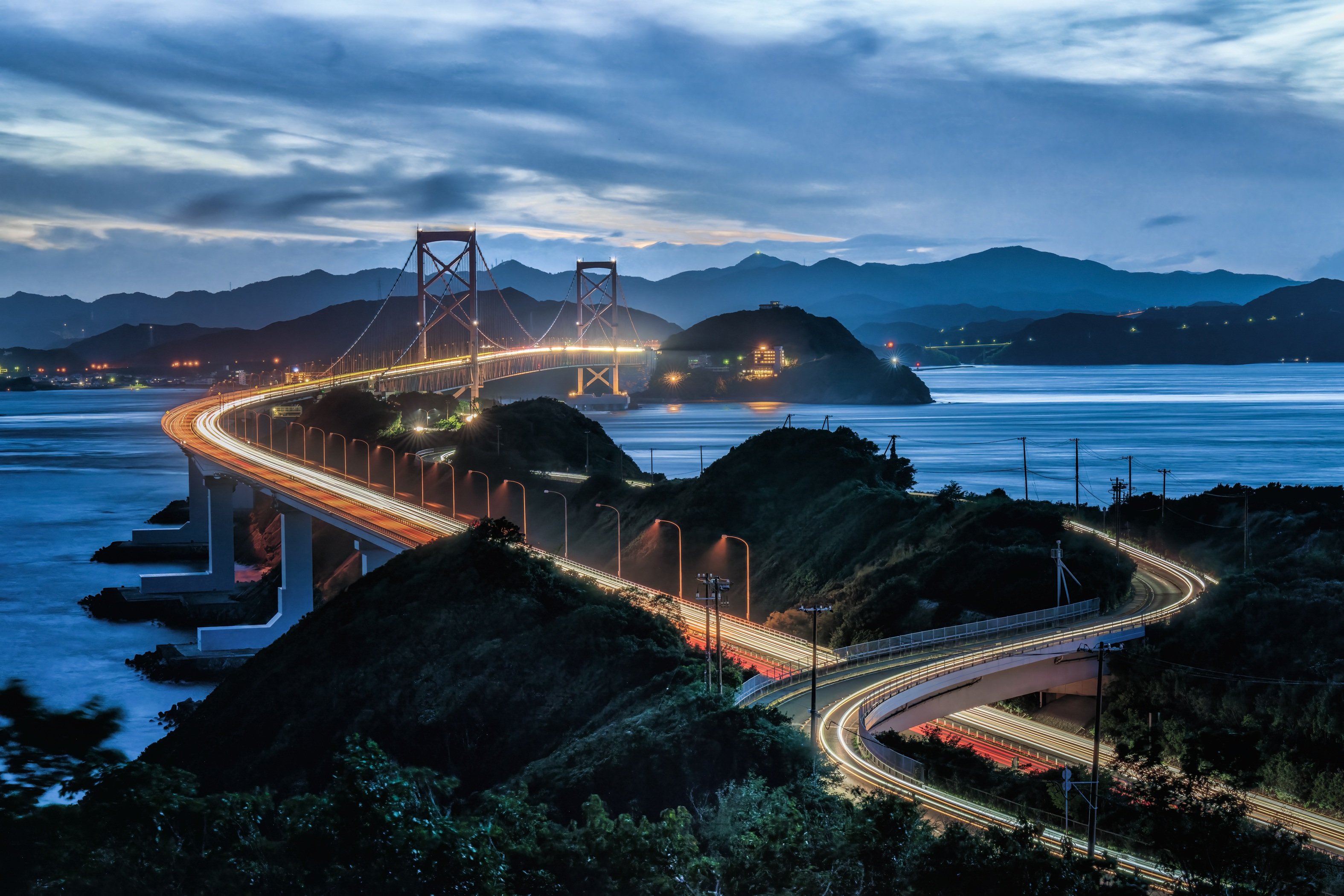
Sakaiminato is a small city almost totally surrounded by water: the Sea of Japan to the east, the Sakai Channel to the north and Lake Nakaumi to the west. Across the lake the towns of Matsue and Yasugi offer interesting experiences. Matsue is known as the “Town of Water” next to scenic Lake Shinji and Lake Nakaumi. It has one of the very few wooden castles that still remain in Japan. Touring the castle and boat rides on the Horikawa River and the castle’s moat are popular. Yasugi has the Adachi Museum of Art, a private museum that houses one of the finest collections of contemporary Japanese paintings, but also has a 165,000 square metres garden –with plants and rocks collected by the museum’s founder. Six different gardens show different scenarios depending on the season. These gardens have been selected as “Japan’s best garden” for several years.

Bridges In Japan
Bridges In JapanImage by Kanenori from Pixabay

Day 6 - Busan

Disembark in Miyajima for a locally guided visit to Itsukushima Shrine, then board a ferry to the mainland and drive to Hiroshima. After a traditional okonomiyaki lunch, choose a visit to the Atomic Bomb Museum and the Peace Memorial, embark on a panoramic tour of the city with a photo stop at the A-Bomb Dome, or tour the Museum of Fude Art for an informative brush making experience. Return to the ship for dinner onboard this evening.

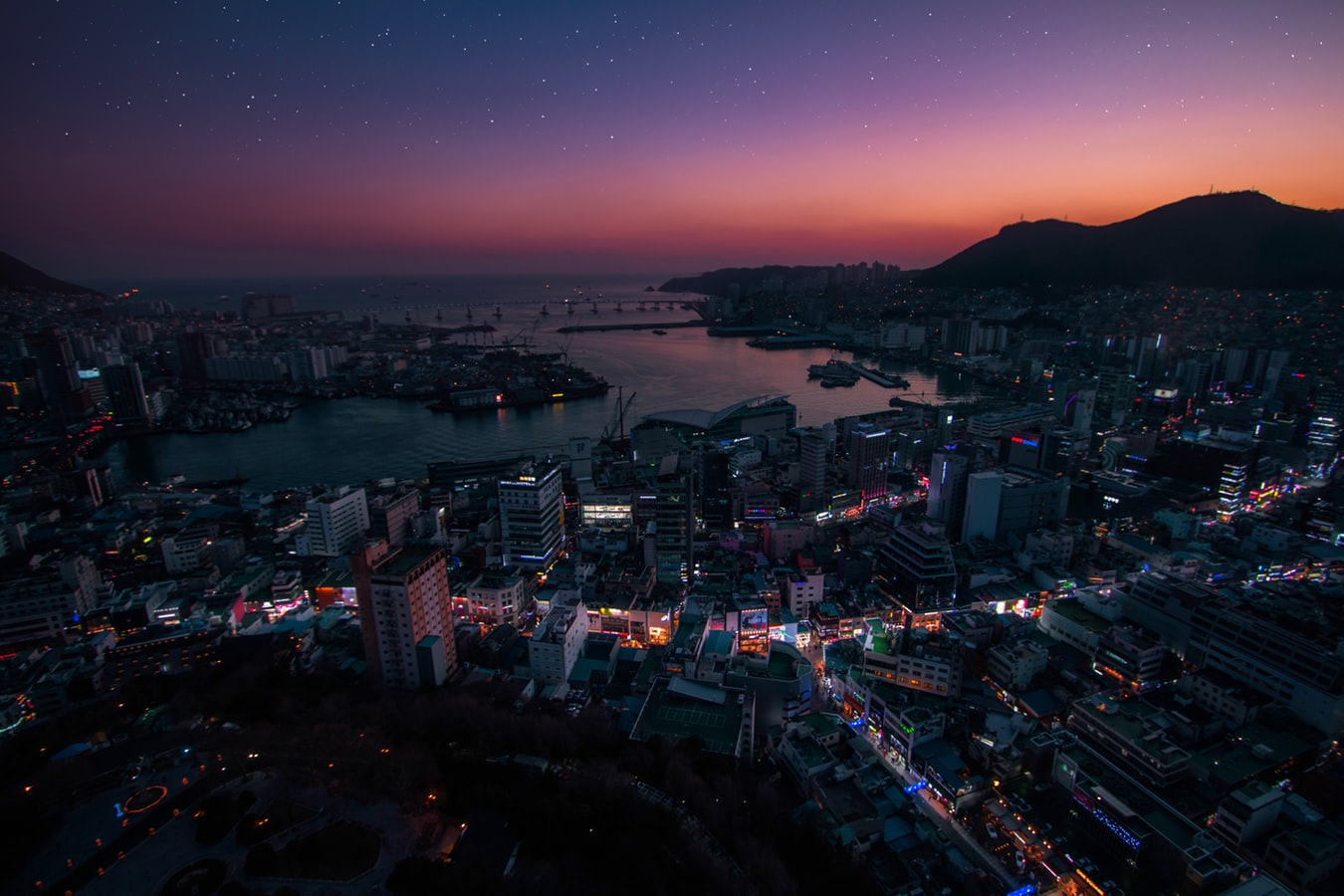
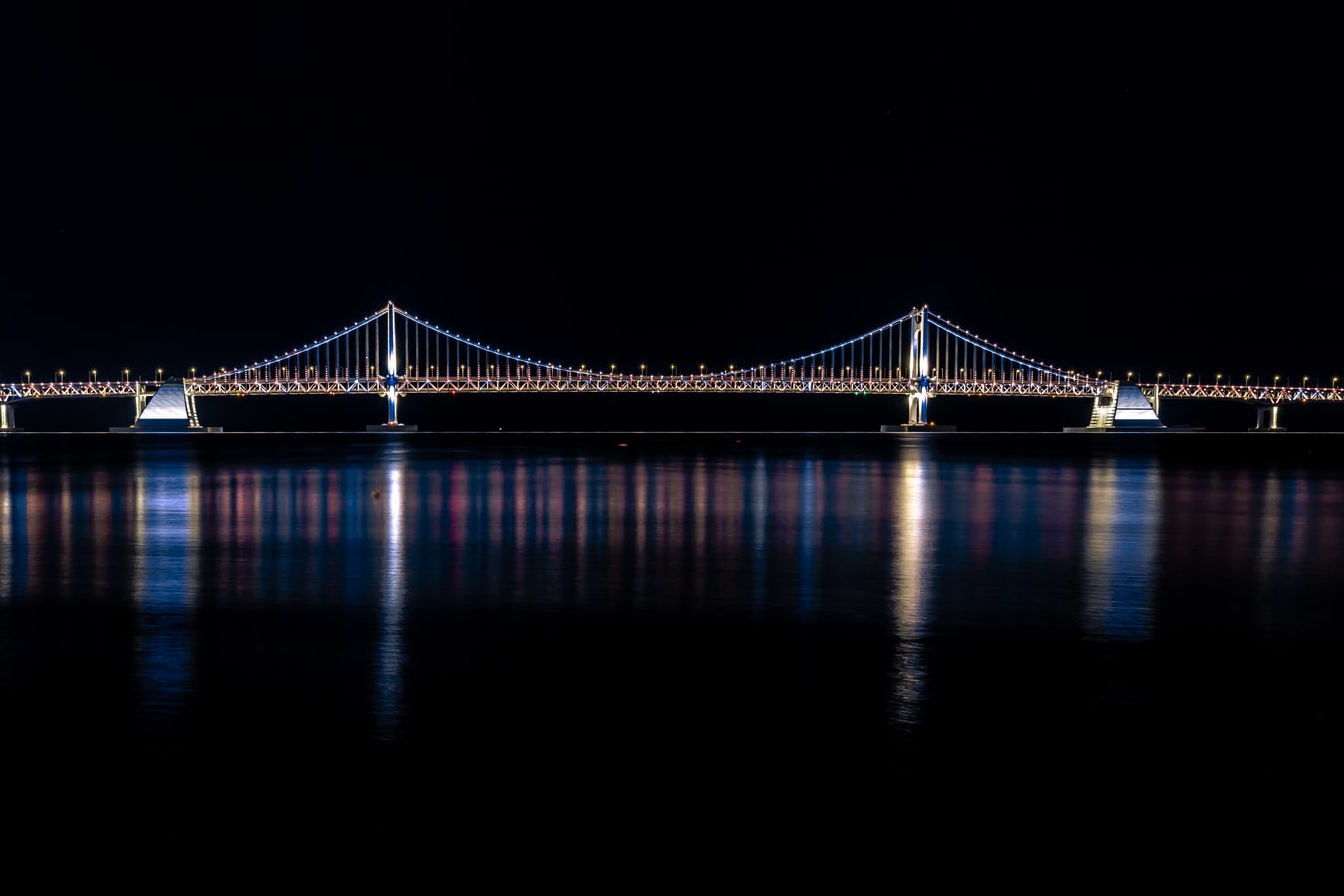
White-sand city beaches and hot-spring resorts may not be everyone's first image of Korea, but these are what Koreans flock to Busan for all year. And there are plenty of opportunities for rest, relaxation, retail therapy, and even a touch of glamour every October with the Busan International Film Festival. Busan's beaches are the big summertime draw but there is plenty to be seen year round. Quintessential experiences include taking some rest and relaxation at a local spa and exploring the Beomeosa temple complex.

Krpus   Busan, South Korea   Photo Cred By Pang Yuhao
Krpus Busan, South Korea Photo Cred By Pang Yuhao
Krpus   Busan, South Korea   Photo Credit Christopher Lee
Krpus Busan, South Korea Photo Credit Christopher Lee
Krpus   Busan, South Korea   Photo Credit Daniel Lee 1
Krpus Busan, South Korea Photo Credit Daniel Lee 1
Krpus   Busan, South Korea   Photo Credit Daniel Lee
Krpus Busan, South Korea Photo Credit Daniel Lee

Day 7 - Nagasaki

Dock in the famous spa resort city of Beppu this morning. Located on Kyushu Island between Beppu Bay and volcanic mountains, it's home to more than 2,000 onsen (hot springs) that together produce more hot spring water than any other onsen resort in the country. In addition to conventional hot water baths, visitors can enjoy sand baths where bathers are buried in naturally heated sand, steam baths that are heated by the steam of a hot spring, and mud baths. Enjoy an opportunity to experience them your way today on a guided visit that lets you see the "Hells of Beppu," nationally designated a "place of scenic beauty," or an opportunity to experience the healing waters of the hot springs like the locals do, clothes off. A third choice drives you to Usuki Castletown to view the ruins of its historic castle and its well-preserved Samurai district. Visit the impressive Inaba Family Villa and former Samurai residence, designated a National Tangible Cultural property. Continue on the Usuki Stone Buddhas, created between 794 and 1185 and the only stone Buddhas to be designated as a national treasure. Return to the ship for lunch and time at leisure and set sail for Uwajima tonight.

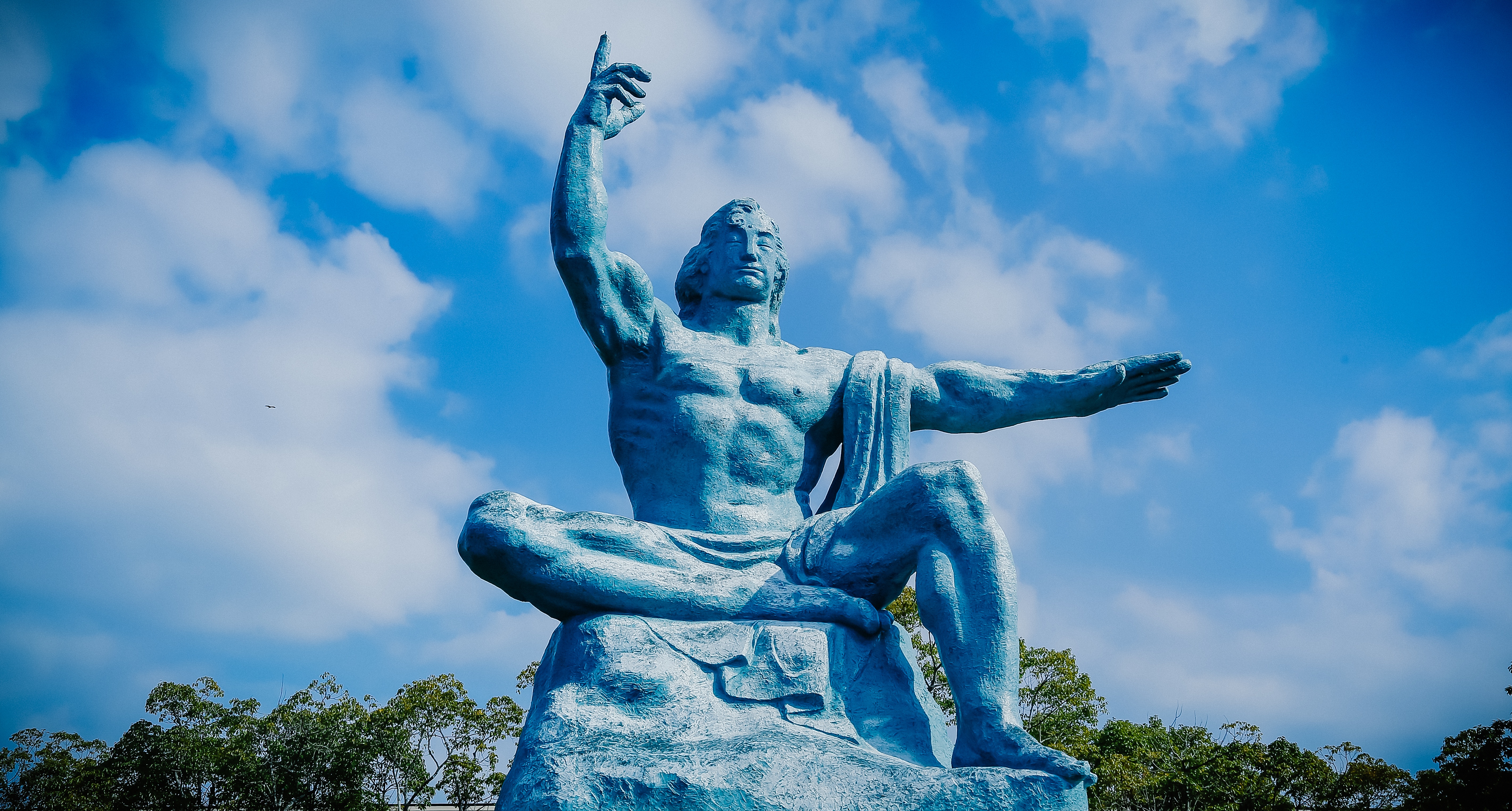
Nagasaki city has developed into one of the most important port cities in Japan. During Japan’s period of isolation in the 17th century, Nagasaki played a prominent role in foreign trade relation and only a very few ports were open to restricted numbers of foreign traders. Even though Holland was a major country who conducted trading during this period, Dutch people were only allowed to stay in Dejima Island and were not allowed to have contact with the Japanese people. Today, you will still find the strong influence of Dutch and Chinese culture in the city which is very different from all other cities in Japan. In the more recent history, Nagasaki became the second city after Hiroshima to be destroyed by an atomic bomb towards the end of World War II. From the visit to Atomic bomb museum and peace memorial park, people could understand how chaotic the situation was and the agony that the people in the days have experienced from the damage inflicted by the atomic bomb. It continues to appeal to the world with their wish for world peace.

Jpngs   Nagasaki   Atomic Bomb Sculpture
Jpngs Nagasaki Atomic Bomb Sculpture
Jpngs   Nagasaki   Battleship Island
Jpngs Nagasaki Battleship Island
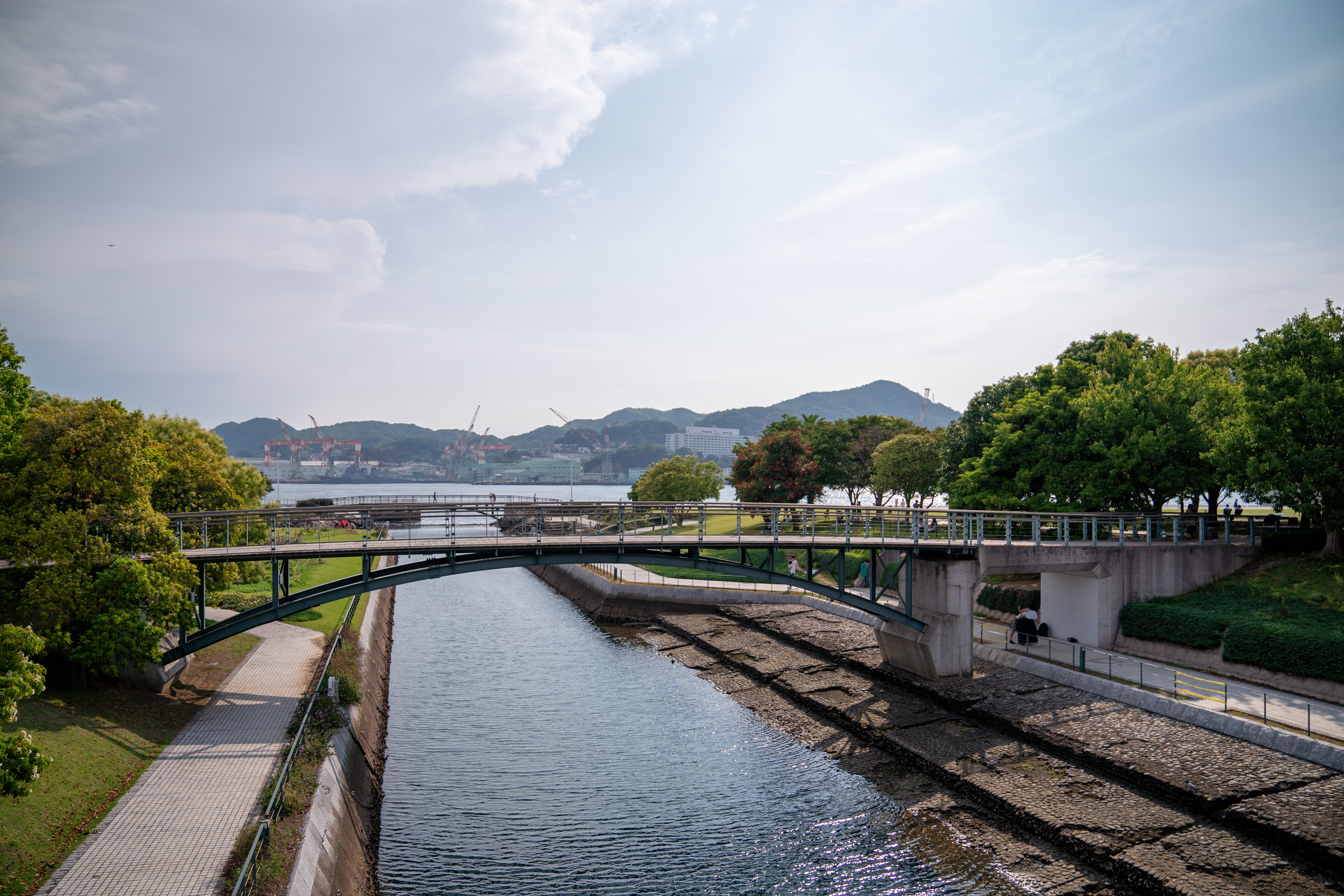
Jpngs   Nagasaki   Bridge Over A Canal   Credit Jason Rost
Jpngs Nagasaki Bridge Over A Canal Credit Jason RostJason Rost
Jpngs   Nagasaki   Night View
Jpngs Nagasaki Night View
Jpngs   Nagasaki   Sea Port
Jpngs Nagasaki Sea Port
Jpngs   Nagasaki   Warship Island
Jpngs Nagasaki Warship Island

Day 8 - Kagoshima

Enjoy a choice of excursions in Uwajima, Japan's main center for cultured pearls. Visit a family-owned pearl farm in the countryside to learn about skill and precision it takes to produce the oyster-grown pearls and tour a local open-air museum. Or, visit Nanrakuen Garden on a guided walk, followed by a calligraphy demonstration and a traditional tea experience. Chart a course for Hagi late afternoon.

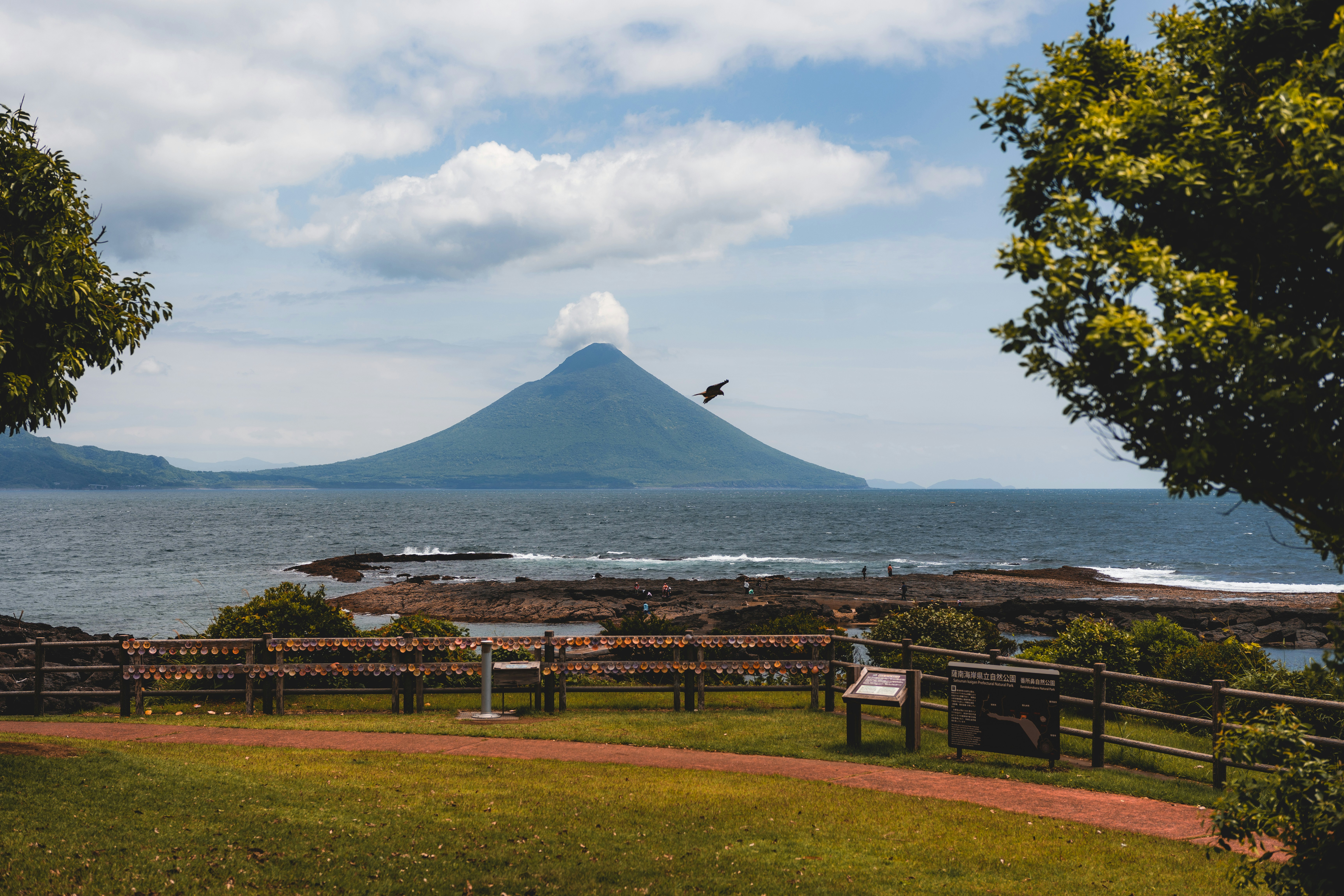
Kagoshima city is the capital of Kagoshima prefecture and also Kyushu’s southernmost major city. This city is often compared to its Italian sister city Naples, due to its’s similarities such as mild climate and active volcano, Sakurajima. Sakurajima is one of the most renowned active volcanos not only in Japan but also in the whole entire world. This smoking Sakurajima is centred in Kinko Bay and is one of the main symbols of this prefecture. We cannot talk about Sakurajima without the history of continuous eruption. Sakurajima used to be an isolated island; however, the land has banded together with Osumi peninsula from the eruption in 1914. You may have a chance to see the smoke coming from the top of Sakurajima depending on the weather condition. Not only does the scenery of Sakurajima represent the beauty of Kagoshima City but Senganen garden is also symbolic to elegance in the Kagoshima region. This Japanese garden was constructed by a feudal lord, Mitsuhisa Shimazu, as a guest house of the Kagoshima castle which attracts many visitors for its splendid view.

Minamikyūshū, Kagoshima, Japan
Minamikyūshū, Kagoshima, JapanPhoto by Iori Ikeda on Unsplash
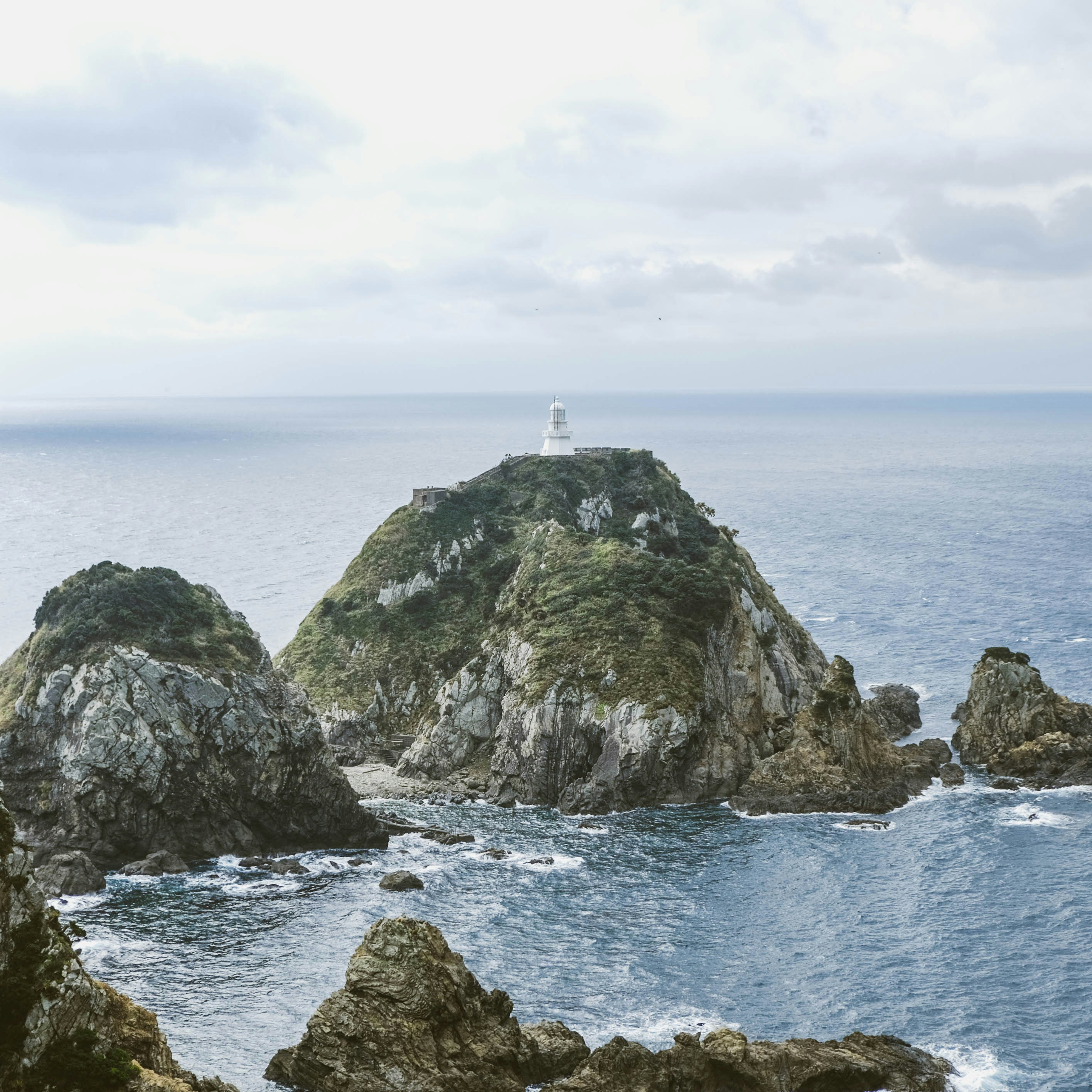
Japan, Kagoshima, Minamiosumi, Satamagome
Japan, Kagoshima, Minamiosumi, SatamagomePhoto by Yuya Murakami on Unsplash

Day 9 - Uwajima

On a choice of excursions today, experience the charms of coastal Hagi, a gem of a castle town lined with traditional well-preserved samurai-era residences and merchants' homes. The seaside town grew up around Hagi Castle, built in 1604; today the castle ruins are set Shizuki Park, known for its spring cherry blossoms and forested mountain slopes. The town is also known for its stoneware pottery, an art form dating back to the early 1600s; Hagi ware is one of the most famous pottery types in Japan and is characterized by its earthy texture. Join our local guide for a walking tour of the town; visit the 400-year-old Kikuya Residence and the Yoshika Taibi Memorial Museum, renowned for its Hagi pottery, still made by hand; or explore one of the largest limestone caves in the world at Akiyoshidai Plateau, learning about the geologic attributes of the area with a geoguide. Another option visits Shoin-Jinja Shinto Shrine, followed by a former schoolhouse for a hands-on calligraphy lesson and a tasting of fugu (puffer fish), a regional delicacy. Set sail for Sakaiminato this evening.

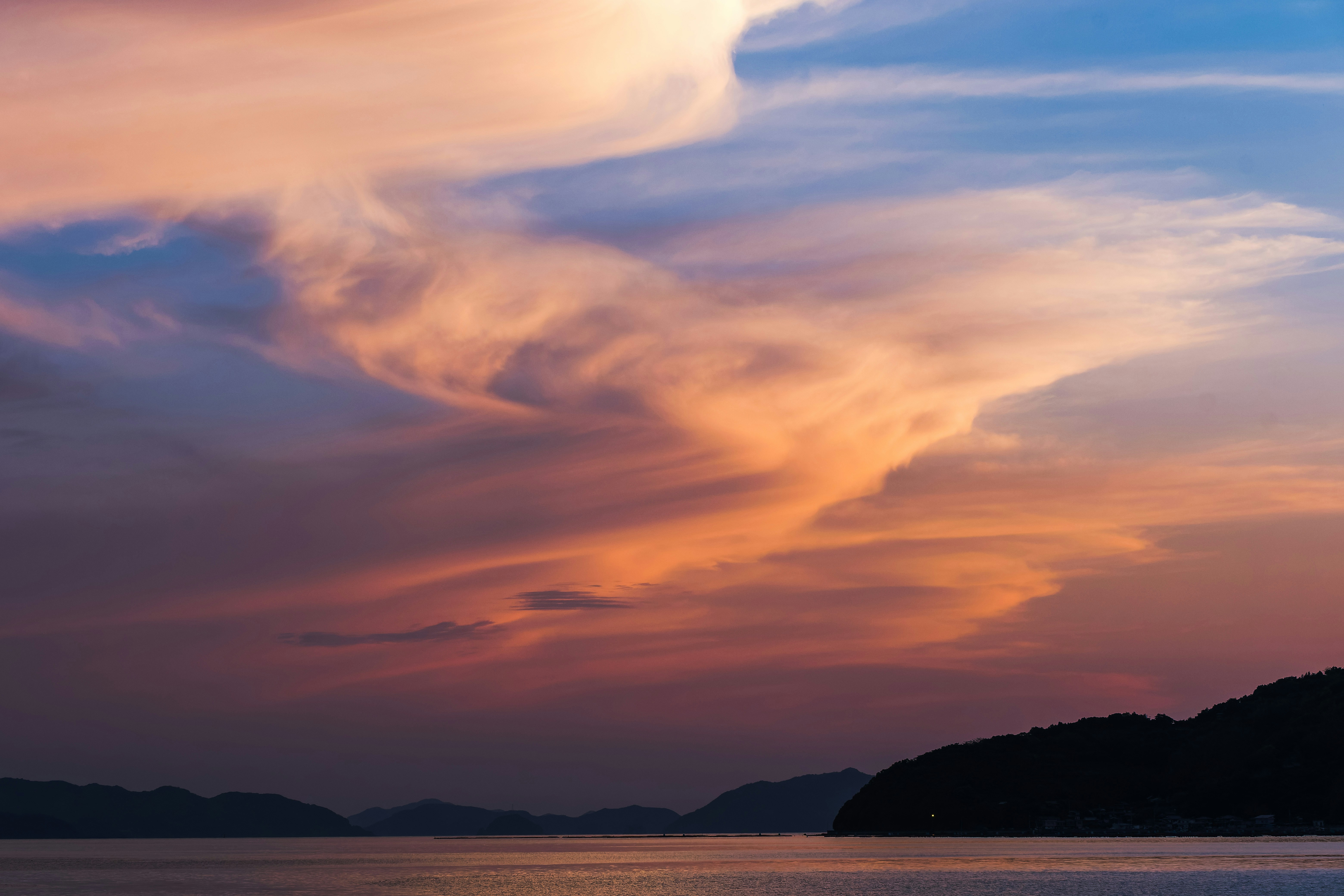
Uwajima, Ehime, Japan
Uwajima, Ehime, JapanTerumi Tokino

Day 10 - Hiroshima

Disembark for a day of sightseeing in Sakaiminato. Located in western Japan, Sakaiminato has been known an important fishing port since the Middle Ages, serving as trading hub between Continental Asia and the archipelago for centuries. A choice of activities today includes a visit to Matsue's Black Castle or the Adachi Museum, renowned for its modern art and stunning gardens. Your ship sets sail for Busan, South Korea, early this afternoon.

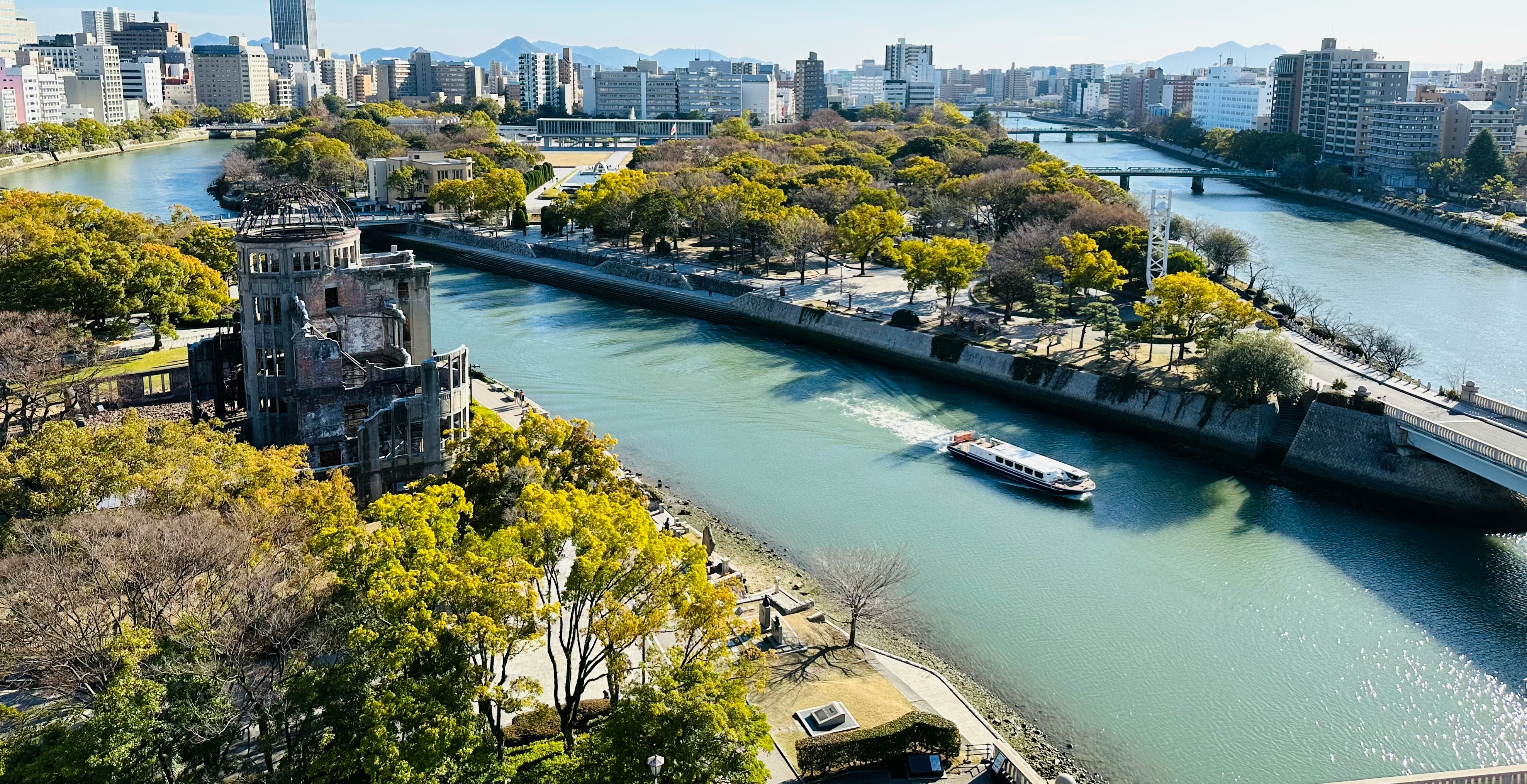
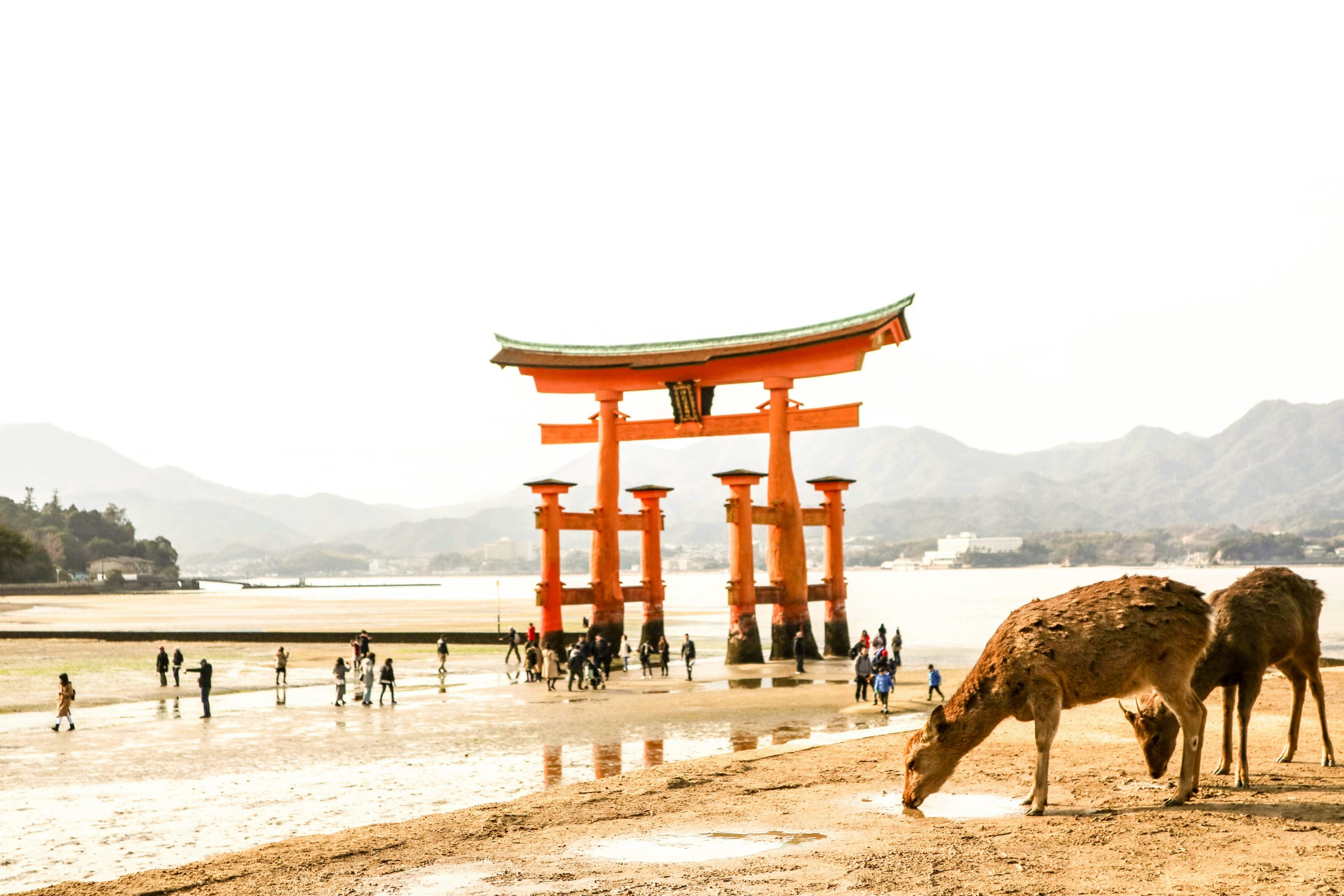
History buffs will want to write home Hiroshima. Despite being devastated in 1945, this Japanese city is known to all for its commitment peace – its ruin on the 6th August 1945 led to the end of the war and today, the Peace Memorial (a UNESCO World Heritage Site) , is a constant reminder of the destruction that war brings. A walk in the leafy boulevards of Peace Memorial Park brings quiet contemplation. The Flames of Peace – set in the park’s central feature pond – burn brightly and will continue to do so until all the nuclear bombs I the world have been destroyed. There are many other inspiring messages of hope around the city too; the Children’s’ Peace Monument just north of the park is a homage to little Sadako Sasaki, who was just two in 1945. When she developed leukemia in 1956, she believed that if she folded 1,000 paper cranes – a symbol of longevity and happiness in Japan – she would recover. Sadly she died before she finished her task but her classmates finished the rest. It is impossible to ignore the events of 1945 in Hiroshima, but this is far from a depressing place. The great efforts that have been made in rebuilding of the city over the years have given Hiroshima a vibrant, eclectic edge, with the downtown shopping area and street food stalls being well worth a visit. The proximity to Miyajima and its iconic, impressive, Torii gate should not be overlooked either. If you are lucky enough to visit during the unpredictable and short-lived Sakura (cherry blossom) season, then the extraordinary sight of the delicate pink blossom floating across the water to the red gate, means you can consider yourself one of the luckiest people on the planet.

The Atomic Bomb Dome, Hiroshima
The Atomic Bomb Dome, HiroshimaPhoto by Desmond Tawiah
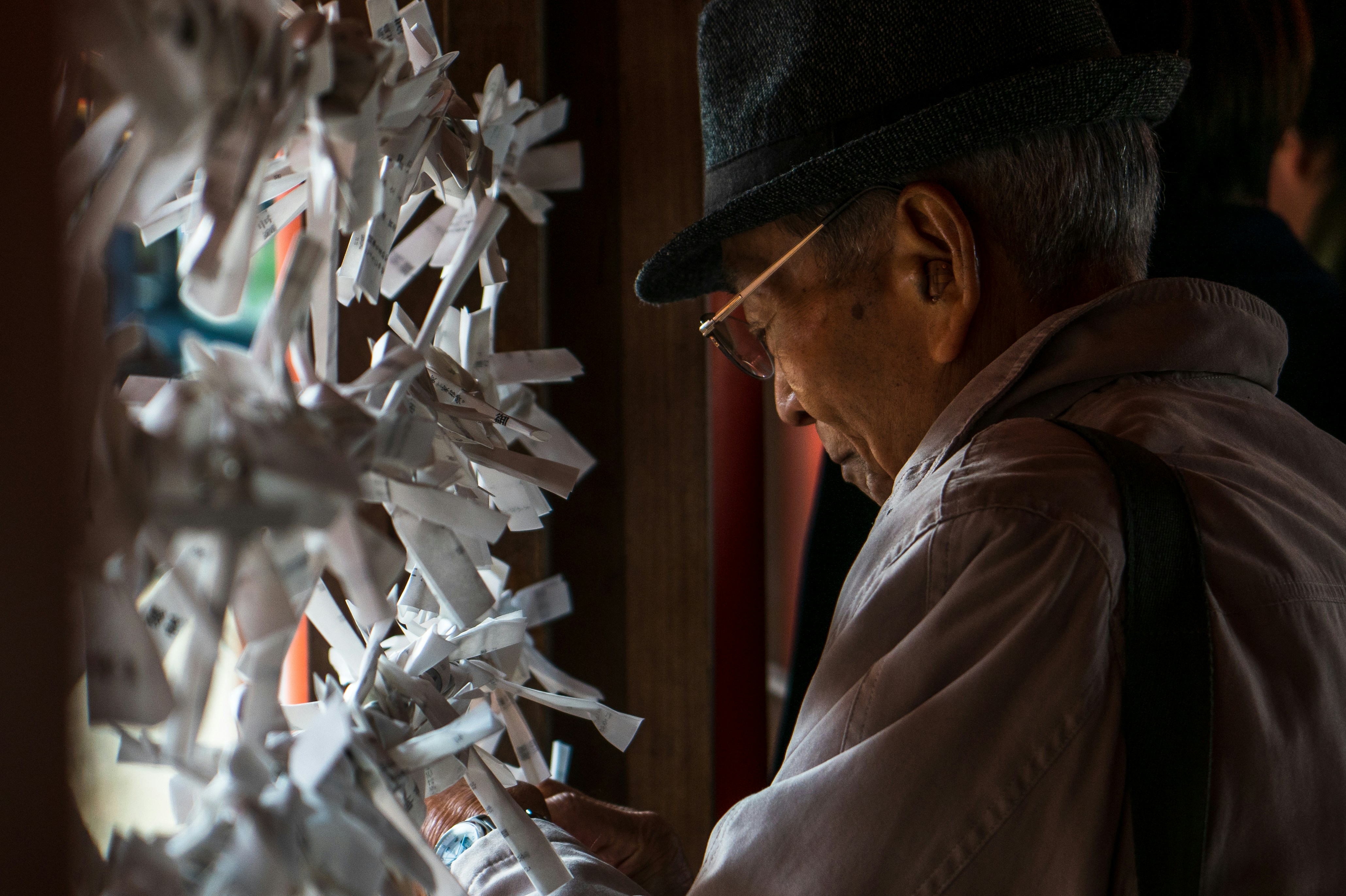
Paper Cranes  New Years Wishes
Paper Cranes New Years Wishes Photo by Daniel Gregoire
Itsukushima Shrine, Miyajima
Itsukushima Shrine, MiyajimaPhoto by Joan Tran

Day 11 - Tamano

Nestled amidst mountains, pristine beaches, and steaming hot springs, Busan captivates with its cultural treasures, diverse landscapes and ocean-fresh seafood, displayed in markets teeming with every species of fish imaginable. Enjoy a tour of the town, including the Jalgachi Fish Market and the UN Memorial Cemetery and UN Peace Memorial Hall, before boarding a bullet train bound for Seoul.

Uno, Tamano, Okayama, Japan
Uno, Tamano, Okayama, JapanAlan Jiang
Uno, Tamano, Okayama, Japan
Uno, Tamano, Okayama, JapanAlan Jiang

Day 12 - Osaka

Seoul is a dynamic capital where centuries of Korean history unfold against a thoroughly modern skyline. Capital of the Joseon Dynasty from the late 14th century, the city remains deeply connected to its past, with grand palaces, historic neighborhoods and enduring cultural traditions woven into the fabric of contemporary life. Today, explore this fascinating heritage on a guided visit to Gyeongbokgung Palace, the principal royal palace of the Joseon Dynasty, first built in 1395. Stroll through its stately courtyards and grounds for a glimpse into Korea's royal past, then visit the National Folk Museum of Korea, where exhibits illuminate the customs and everyday lives of the Korean people through the centuries. Continue to Insadong Culture Street, a lively neighborhood known for its galleries, teahouses, traditional crafts and shops, before enjoying lunch at a local restaurant. Return to your hotel late this afternoon; the evening is yours to spend as you please. Please note: Sightseeing activities may alternate on days 12 and 13.

From Minami's neon-lighted Dotombori and historic Tenno-ji to the high-rise class and underground shopping labyrinths of Kita, Osaka is a city that pulses with its own unique rhythm. Though Osaka has no shortage of tourist sites, it is the city itself that is the greatest attraction. Home to some of Japan's best food, most unique fashions, and warmest locals, Osaka does not beg to be explored—it demands it. More than anywhere else in Japan, it rewards the impulsive turn down an interesting side street or the chat with a random stranger. People do not come here to see the city, they come to experience it.Excluded from the formal circles of power and aristocratic culture in 16th-century Edo (Tokyo), Osaka took advantage of its position as Japan's trading center, developing its own art forms such as Bunraku puppet theater and Rakugo comic storytelling. It was in Osaka that feudal Japan's famed Floating World—the dining, theater, and pleasure district—was at its strongest and most inventive. Wealthy merchants and common laborers alike squandered fortunes on culinary delights, turning Osaka into "Japan's Kitchen," a moniker the city still has today. Though the city suffered a blow when the Meiji government canceled all of the samurai class's outstanding debts to the merchants, it was quick to recover. At the turn of the 20th century, it had become Japan's largest and most prosperous city, a center of commerce and manufacturing.Today Osaka remains Japan's iconoclastic metropolis, refusing to fit Tokyo's norms and expectations. Unlike the hordes of Tokyo, Osakans are fiercely independent. As a contrast to the neon and concrete surroundings, the people of Osaka are known as Japan's friendliest and most outgoing. Ask someone on the street for directions in Tokyo and you are lucky to get so much as a glance. Ask someone in Osaka and you get a conversation.The main areas of the city, Kita (north) and Minami (south), are divided by two rivers: the Dojima-gawa and the Tosabori-gawa. Between Kita and Minami is Naka-no-shima, an island and the municipal center of Osaka. Kita (north of Chuo Dori) is Osaka's economic hub and contains Osaka's largest stations: JR Osaka and Hankyu Umeda. The area is crammed with shops, department stores, and restaurants. Nearby are a nightlife district, Kita-shinchi; Naka-no-shima and the Museum of Oriental Ceramics; Osaka-jo (Osaka Castle); and Osaka Koen (Osaka Park). Restaurants, bars, department stores, and boutiques attract Osaka's youth to Minami (south Chuo Dori); theatergoers head to the National Bunraku Theatre and electronics-lovers to Den Den Town. For a glimpse of old Osaka, visit Tenno-ji Temple and Shin Sekai. The main stations are Namba, Shin-sai-bashi, Namba Nankai, and Tenno-ji. There's easy access to the Municipal Museum of Fine Art and Sumiyoshi Taisha (Sumiyoshi Grand Shrine).The bay area, to the west of the city center, is home to the Osaka Aquarium and Universal Studios Japan. The Shinkansen stops at Shin-Osaka, three stops (about five minutes) north of Osaka Station on the Mido-suji subway line. To the north of Shin-Osaka is Senri Expo Park.

Castle, Osaka, Japan
Castle, Osaka, JapanImage by leo leung from Pixabay
River, Osaka, Japan
River, Osaka, JapanImage by djedj from Pixabay

Day 13 - Osaka

Sightseeing continues today with a visit to the War Memorial of Korea, where exhibits, monuments, military artifacts and memorials offer a poignant perspective on the conflicts that have shaped the Korean Peninsula, including the Korean War. Continue to Namsangol Hanok Village, an open-air museum where restored traditional hanok homes offer a window into everyday life in Korea's past; step inside these historic residences and discover the architectural traditions of an earlier Seoul. After lunch at a local restaurant, the remainder of the afternoon is yours to explore Seoul as you wish. Tonight, gather with your fellow travelers for a farewell reception and dinner at the Fairmont Seoul, accompanied by Korean entertainment – a memorable finale to your journey through Japan and South Korea.

From Minami's neon-lighted Dotombori and historic Tenno-ji to the high-rise class and underground shopping labyrinths of Kita, Osaka is a city that pulses with its own unique rhythm. Though Osaka has no shortage of tourist sites, it is the city itself that is the greatest attraction. Home to some of Japan's best food, most unique fashions, and warmest locals, Osaka does not beg to be explored—it demands it. More than anywhere else in Japan, it rewards the impulsive turn down an interesting side street or the chat with a random stranger. People do not come here to see the city, they come to experience it.Excluded from the formal circles of power and aristocratic culture in 16th-century Edo (Tokyo), Osaka took advantage of its position as Japan's trading center, developing its own art forms such as Bunraku puppet theater and Rakugo comic storytelling. It was in Osaka that feudal Japan's famed Floating World—the dining, theater, and pleasure district—was at its strongest and most inventive. Wealthy merchants and common laborers alike squandered fortunes on culinary delights, turning Osaka into "Japan's Kitchen," a moniker the city still has today. Though the city suffered a blow when the Meiji government canceled all of the samurai class's outstanding debts to the merchants, it was quick to recover. At the turn of the 20th century, it had become Japan's largest and most prosperous city, a center of commerce and manufacturing.Today Osaka remains Japan's iconoclastic metropolis, refusing to fit Tokyo's norms and expectations. Unlike the hordes of Tokyo, Osakans are fiercely independent. As a contrast to the neon and concrete surroundings, the people of Osaka are known as Japan's friendliest and most outgoing. Ask someone on the street for directions in Tokyo and you are lucky to get so much as a glance. Ask someone in Osaka and you get a conversation.The main areas of the city, Kita (north) and Minami (south), are divided by two rivers: the Dojima-gawa and the Tosabori-gawa. Between Kita and Minami is Naka-no-shima, an island and the municipal center of Osaka. Kita (north of Chuo Dori) is Osaka's economic hub and contains Osaka's largest stations: JR Osaka and Hankyu Umeda. The area is crammed with shops, department stores, and restaurants. Nearby are a nightlife district, Kita-shinchi; Naka-no-shima and the Museum of Oriental Ceramics; Osaka-jo (Osaka Castle); and Osaka Koen (Osaka Park). Restaurants, bars, department stores, and boutiques attract Osaka's youth to Minami (south Chuo Dori); theatergoers head to the National Bunraku Theatre and electronics-lovers to Den Den Town. For a glimpse of old Osaka, visit Tenno-ji Temple and Shin Sekai. The main stations are Namba, Shin-sai-bashi, Namba Nankai, and Tenno-ji. There's easy access to the Municipal Museum of Fine Art and Sumiyoshi Taisha (Sumiyoshi Grand Shrine).The bay area, to the west of the city center, is home to the Osaka Aquarium and Universal Studios Japan. The Shinkansen stops at Shin-Osaka, three stops (about five minutes) north of Osaka Station on the Mido-suji subway line. To the north of Shin-Osaka is Senri Expo Park.
Castle, Osaka, Japan
Castle, Osaka, JapanImage by leo leung from Pixabay
River, Osaka, Japan
River, Osaka, JapanImage by djedj from Pixabay

Day 14 - Osaka

Tour ends: Seoul. Fly home anytime. A transfer is included from the Fairmont Ambassador Seoul, Conrad Seoul or Four Seasons Seoul to ICN Incheon International Airport or GMP Gimpo International Airport. Allow a minimum of three hours for flight check-in at the airport.

From Minami's neon-lighted Dotombori and historic Tenno-ji to the high-rise class and underground shopping labyrinths of Kita, Osaka is a city that pulses with its own unique rhythm. Though Osaka has no shortage of tourist sites, it is the city itself that is the greatest attraction. Home to some of Japan's best food, most unique fashions, and warmest locals, Osaka does not beg to be explored—it demands it. More than anywhere else in Japan, it rewards the impulsive turn down an interesting side street or the chat with a random stranger. People do not come here to see the city, they come to experience it.Excluded from the formal circles of power and aristocratic culture in 16th-century Edo (Tokyo), Osaka took advantage of its position as Japan's trading center, developing its own art forms such as Bunraku puppet theater and Rakugo comic storytelling. It was in Osaka that feudal Japan's famed Floating World—the dining, theater, and pleasure district—was at its strongest and most inventive. Wealthy merchants and common laborers alike squandered fortunes on culinary delights, turning Osaka into "Japan's Kitchen," a moniker the city still has today. Though the city suffered a blow when the Meiji government canceled all of the samurai class's outstanding debts to the merchants, it was quick to recover. At the turn of the 20th century, it had become Japan's largest and most prosperous city, a center of commerce and manufacturing.Today Osaka remains Japan's iconoclastic metropolis, refusing to fit Tokyo's norms and expectations. Unlike the hordes of Tokyo, Osakans are fiercely independent. As a contrast to the neon and concrete surroundings, the people of Osaka are known as Japan's friendliest and most outgoing. Ask someone on the street for directions in Tokyo and you are lucky to get so much as a glance. Ask someone in Osaka and you get a conversation.The main areas of the city, Kita (north) and Minami (south), are divided by two rivers: the Dojima-gawa and the Tosabori-gawa. Between Kita and Minami is Naka-no-shima, an island and the municipal center of Osaka. Kita (north of Chuo Dori) is Osaka's economic hub and contains Osaka's largest stations: JR Osaka and Hankyu Umeda. The area is crammed with shops, department stores, and restaurants. Nearby are a nightlife district, Kita-shinchi; Naka-no-shima and the Museum of Oriental Ceramics; Osaka-jo (Osaka Castle); and Osaka Koen (Osaka Park). Restaurants, bars, department stores, and boutiques attract Osaka's youth to Minami (south Chuo Dori); theatergoers head to the National Bunraku Theatre and electronics-lovers to Den Den Town. For a glimpse of old Osaka, visit Tenno-ji Temple and Shin Sekai. The main stations are Namba, Shin-sai-bashi, Namba Nankai, and Tenno-ji. There's easy access to the Municipal Museum of Fine Art and Sumiyoshi Taisha (Sumiyoshi Grand Shrine).The bay area, to the west of the city center, is home to the Osaka Aquarium and Universal Studios Japan. The Shinkansen stops at Shin-Osaka, three stops (about five minutes) north of Osaka Station on the Mido-suji subway line. To the north of Shin-Osaka is Senri Expo Park.
Castle, Osaka, Japan
Castle, Osaka, JapanImage by leo leung from Pixabay
River, Osaka, Japan
River, Osaka, JapanImage by djedj from Pixabay

Suites & Deck Plans

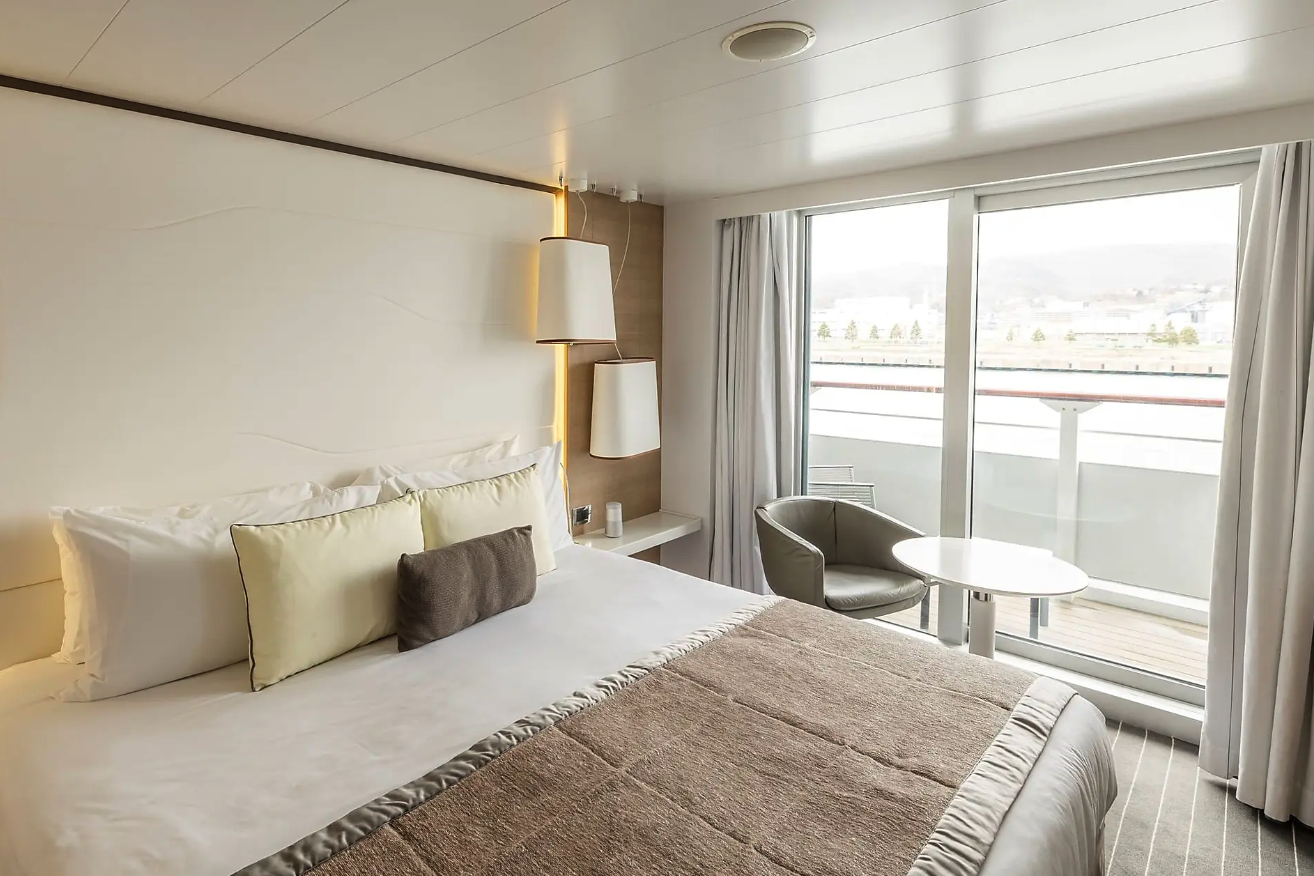
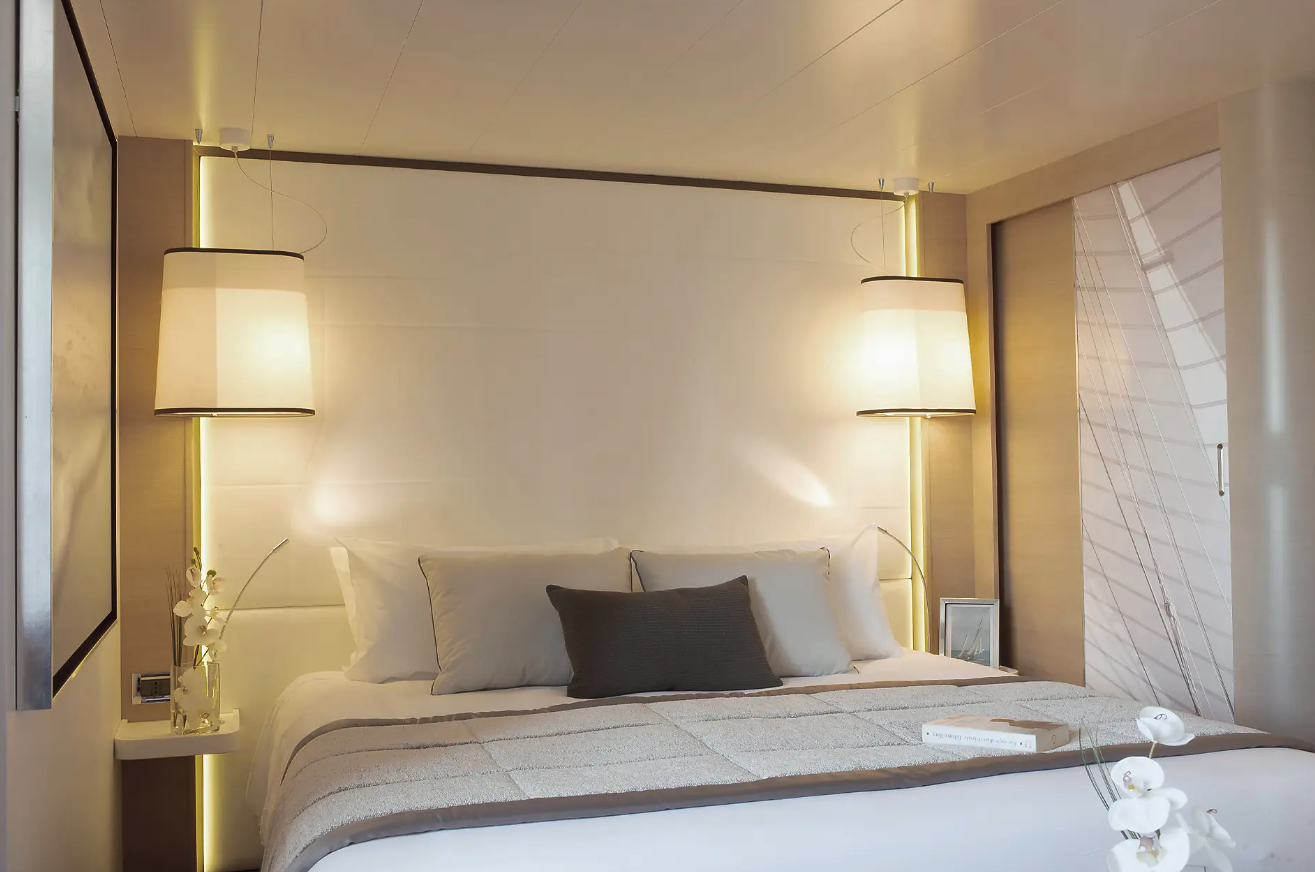
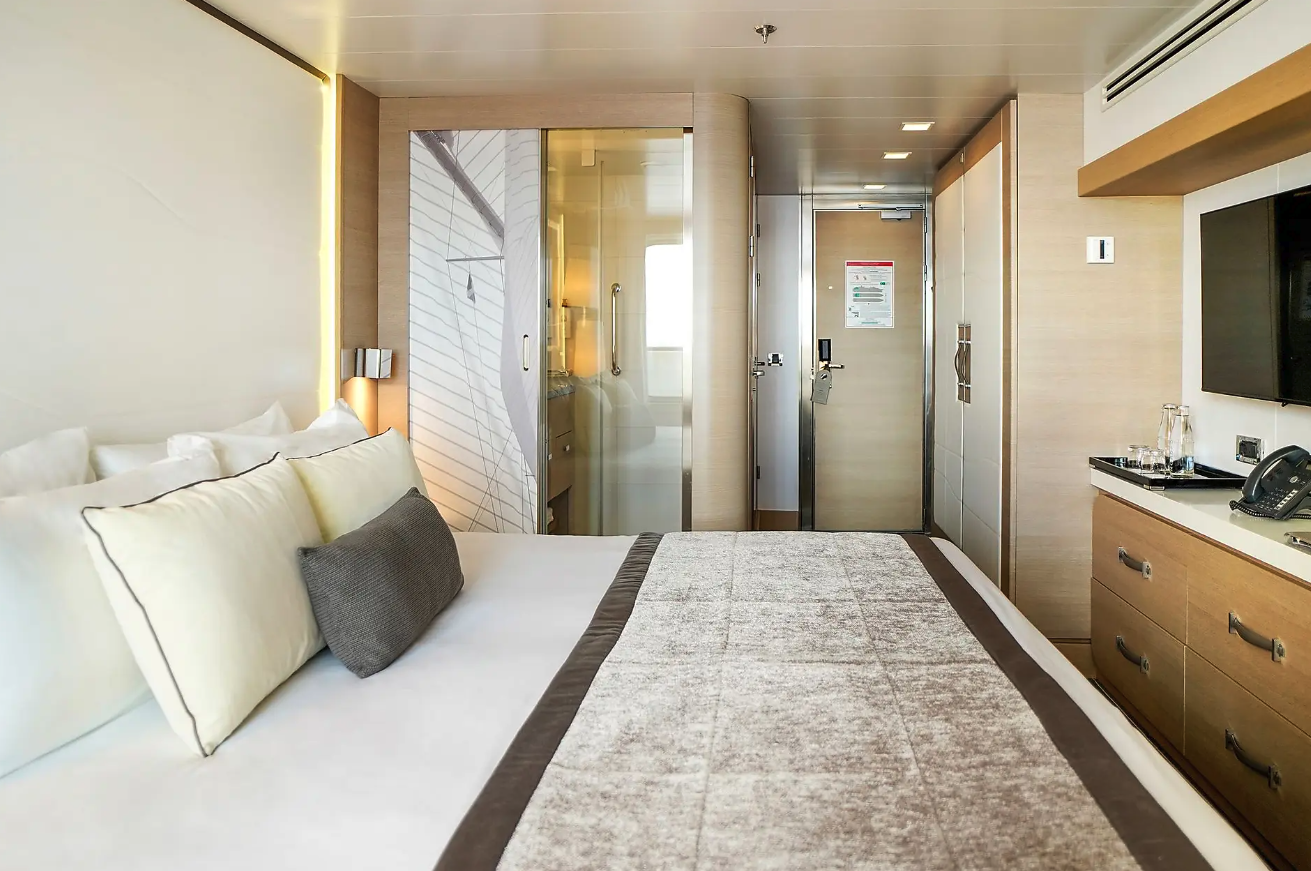
Suite

In addition to the common services provided to all our suites and staterooms:

  • A private 96 ft² balcony
  • Two sliding panoramic windows
  • A bathroom with shower and spa bath
  • Butler service
  • A one-hour treatment per person (for 2 people) in the wellness area, including body and facial treatments
  • Private return transfer
  • Priority boarding (depending on port of embarkation)
  • Champagne and fruit on arrival
  • A fruit basket every day
  • One bedroom with king-size bed (180 x 190 cm) or two single beds (90 x 190 cm)
  • A living-dining room with a sofa, armchair, TV, a table for four, and a courtesy sliding door

Included in all staterooms

  • Minibar
  • Diptyque Paris top-of-the-line bath products
  • Bose Bluetooth speaker
  • Individually-controlled air conditioning
  • Nespresso coffee maker and boiler
  • Dressing room with shelves and closet
  • Dressing table and hairdryer
  • Direct line telephone
  • Three ADA staterooms
  • 24-hour room service
  • Electronic safe
  • Flat screen TV, international channels and videos on demand
  • Inclusive Wifi internet

484 sq ft
Accommodates 2 guests
Owner's Suite

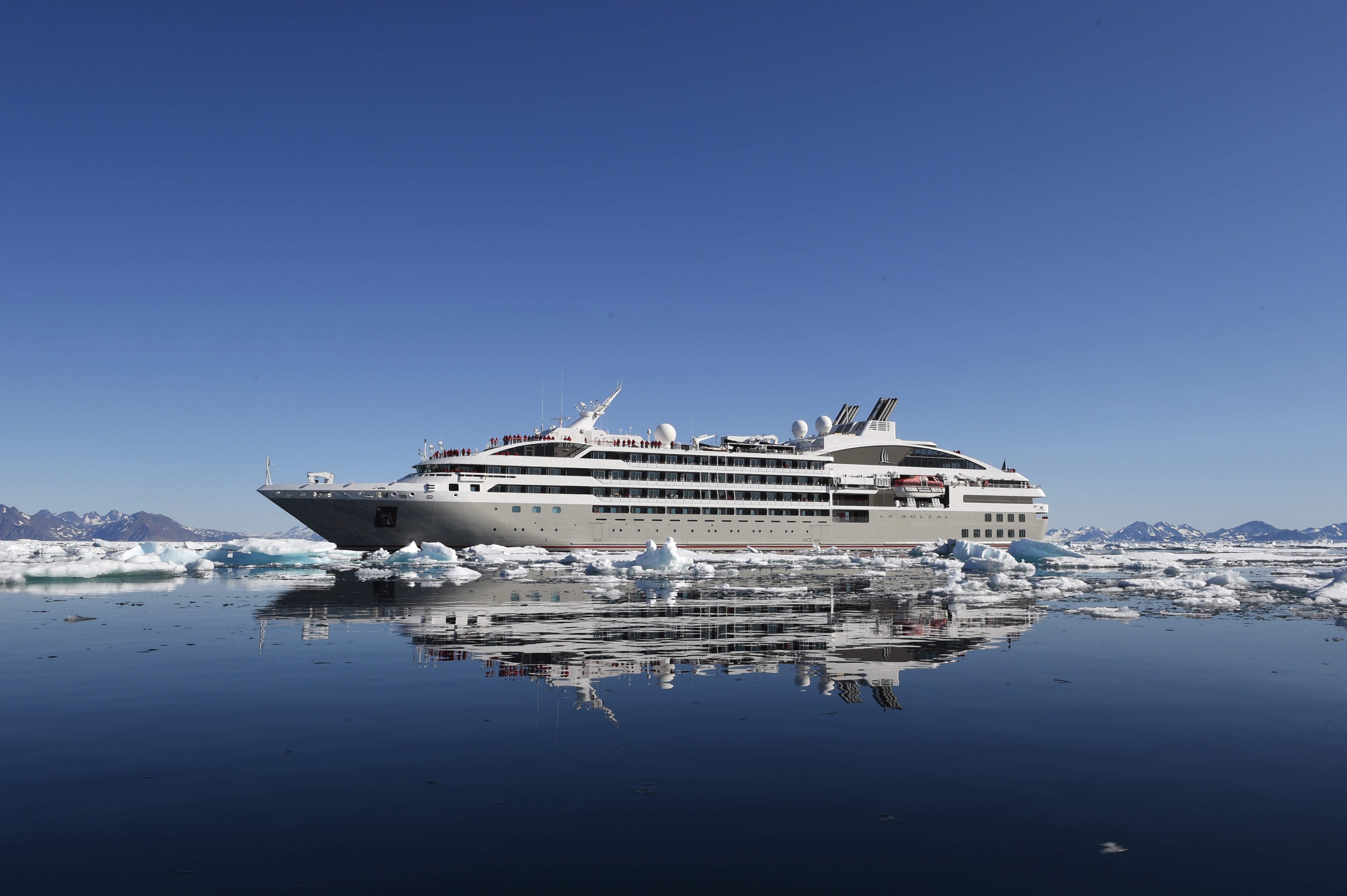
Le Soléal

Le Soléal

Life on board

The Onboard Experience

Client testimonials

I have worked with Lore Doick for more than 20 years, and she has booked over 30 cruises for me. Her expertise, care, and attention to every travel detail have made her an invaluable advisor and friend over the years.”

Tina B.

We are now in our second generation working with Cheri Ozimac at Tully Luxury Travel. From Antarctica to Greece, she has handled every detail with expertise, responsiveness, and care…

Earl M.

My wife and I have worked with Tully since 2007, and Kit Neil and her team went far beyond expectations while helping us navigate multiple cruise and flight cancellations. Their advocacy, care, and support during a difficult time were extraordinary.

Carri F.

Cheri Ozimac organized our Seabourn cruise flawlessly, from the hotel recommendation to every travel arrangement. She was responsive, attentive, and an excellent advocate throughout the process…

Cyn S.

We discovered Tully Luxury Travel after years of booking cruises through US agents and were impressed by their competitive pricing, exceptional service, and Canadian based support. Their team is always available, offers excellent value, and makes booking the right cruise seamless.

Peter C.

GoogleAverage Customer Rating:

The Tully Difference

Why travel with us


Tully Luxury Travel was built on access, discretion, and trust. For our clients, that means ease at every step, with distinctions that turn exceptional voyages into defining moments.

Recognized expertise

A renowned agency worldwide in luxury land and small-ship cruising, consistently trusted by the industry’s most prestigious brands.