Silversea logo

Civitavecchia to Fusina

Itinerary: Civitavecchia, Naples, Palermo, Taormina, At Sea, Otranto, Dubrovnik, Split, Zadar, Fusina See full itinerary

30 Mar 28
12 nights

Voyage Details

Duration:
12 nights
Departure:
30 Mar 2028
Embarkation:
Civitavecchia, Italy
Voyage code:
SS280330012

Your Itinerary, Day-By-Day

Special Chapters of Your Journey

Day 1 - Civitavecchia

Italy's vibrant capital lives in the present, but no other city on earth evokes its past so powerfully. For over 2,500 years, emperors, popes, artists, and common citizens have left their mark here. Archaeological remains from ancient Rome, art-stuffed churches, and the treasures of Vatican City vie for your attention, but Rome is also a wonderful place to practice the Italian-perfected il dolce far niente, the sweet art of idleness. Your most memorable experiences may include sitting at a caffè in the Campo de' Fiori or strolling in a beguiling piazza.

Itrom   Rome   Colosseum   Mathew Schwartz
Itrom Rome Colosseum Mathew SchwartzPhotograph by Matthew Schwartz
Itrom   Rome   Navona Square   Fototeca Enit
Itrom Rome Navona Square Fototeca EnitFototeca ENIT
Itrom   Rome   S.Pietro & S.Angelo Bridge   Fototeca Enit
Itrom Rome S.Pietro & S.Angelo Bridge Fototeca Enit Fototeca ENIT
Itrom   Rome   Sant'angelo Bridge   Fototeca Enit
Itrom Rome Sant'angelo Bridge Fototeca EnitFototeca ENIT
Itrom   Rome   Tempio Del Divo Claudio   Nicole Reyes
Itrom Rome Tempio Del Divo Claudio Nicole ReyesPhotograph by Nicole Reyes
Itrom   Rome   Trevi Fountain   Christopher Czermak
Itrom Rome Trevi Fountain Christopher CzermakPhotograph by Christopher Czermak
Itrom   Rome   Vatican City   Caleb Miller
Itrom Rome Vatican City Caleb MillerPhotograph by Caleb Miller
Itrom   Rome   Vatican City   Christopher Czermak
Itrom Rome Vatican City Christopher CzermakPhotograph by Christopher Czermak

Day 2 - Naples

Naples, in the Campania region, is Italy's third largest city. Its claim to fame is the spectacular location along one of the world's most splendid bays, backed by the perfect cone of Mount Vesuvius. In addition to its beautiful setting, Naples' surprises with other outstanding attractions such as the Royal Palace, San Carlos Opera House, the impressive National Archaeological Museum and the Castel Nuovo, dating from the 13th-century. The city's central area is best explored on foot. Chaotic traffic conditions make driving around the city a very frustrating experience. Naples provides a convenient starting point for trips to such favored destinations as Pompeii, Herculaneum and Mount Vesuvius. The Isle of Capri can be reached via a 45-minute hydrofoil service. The region of Campania was home to Greeks settlers some 300 years before Rome was founded. Pompeii, too, was a Greek town before being conquered by the Romans during the 5th century BC. It was under the Romans that Pompeii flourished and grew prosperous. When Mount Vesuvius erupted in 79 AD, the population of 20,000 was wiped out, but dozens of buildings were preserved under layers of cinder more than 20 feet deep. The most important finds from Pompeii are displayed in Naples' National Archaeological Museum. A visit here will no doubt enhance a visit to ancient Pompeii.

Itnap   Naples   Castello Aragonese Ischia   Fototeca Enit
Itnap Naples Castello Aragonese Ischia Fototeca Enit©FOTOTECA ENIT
Itnap   Naples   Colourful Aerial Of Naples
Itnap Naples Colourful Aerial Of Naples
Itnap   Naples   Pompeii
Itnap Naples Pompeii
Itnap   Naples   Stacks In Capri   Fototeca Enit
Itnap Naples Stacks In Capri Fototeca Enit©FOTOTECA ENIT

Day 3 - Palermo

Once the intellectual capital of southern Europe, Palermo has always been at the crossroads of civilization. Favorably situated on a crescent-shaped bay at the foot of Monte Pellegrino, it has attracted almost every culture touching the Mediterranean world. To Palermo's credit, it has absorbed these diverse cultures into a unique personality that is at once Arab and Christian, Byzantine and Roman, Norman and Italian. The city's heritage encompasses all of Sicily's varied ages, but its distinctive aspect is its Arab-Norman identity, an improbable marriage that, mixed in with Byzantine and Jewish elements, created some resplendent works of art. No less noteworthy than the architecture is Palermo's chaotic vitality, on display at some of Italy's most vibrant outdoor markets, public squares, street bazaars, and food vendors, and above all in its grand climax of Italy's most spectacular passeggiata (the leisurely social stroll along the principal thoroughfare).

Itpmo   Palermo, Italy   Photo Credit Belongs To Carlo Columba
Itpmo Palermo, Italy Photo Credit Belongs To Carlo ColumbaCarlo Columba
Itpmo   Palermo, Italy   Photo Credit Belongs To Denilo Vieira
Itpmo Palermo, Italy Photo Credit Belongs To Denilo VieiraDenilo Vieira
Itpmo   Palermo, Italy   Photo Credit Belongs To Rado Slav
Itpmo Palermo, Italy Photo Credit Belongs To Rado Slav Rado Slav
Itpmo   Palermo, Italy   Photo Credit Belongs To Tomas Anton Escobar
Itpmo Palermo, Italy Photo Credit Belongs To Tomas Anton EscobarTomas Anton Escobar
Itpmo   Palermo, Italy   Photo Credit Belongs To Vasily Kotlyarov
Itpmo Palermo, Italy Photo Credit Belongs To Vasily KotlyarovVasily Kotlyarov
Itpmo   Palermo, Italy   Photo Credit Belongs To Yuliya Kosolapova
Itpmo Palermo, Italy Photo Credit Belongs To Yuliya Kosolapova Yuliya Kosolapova

Day 4 - Taormina

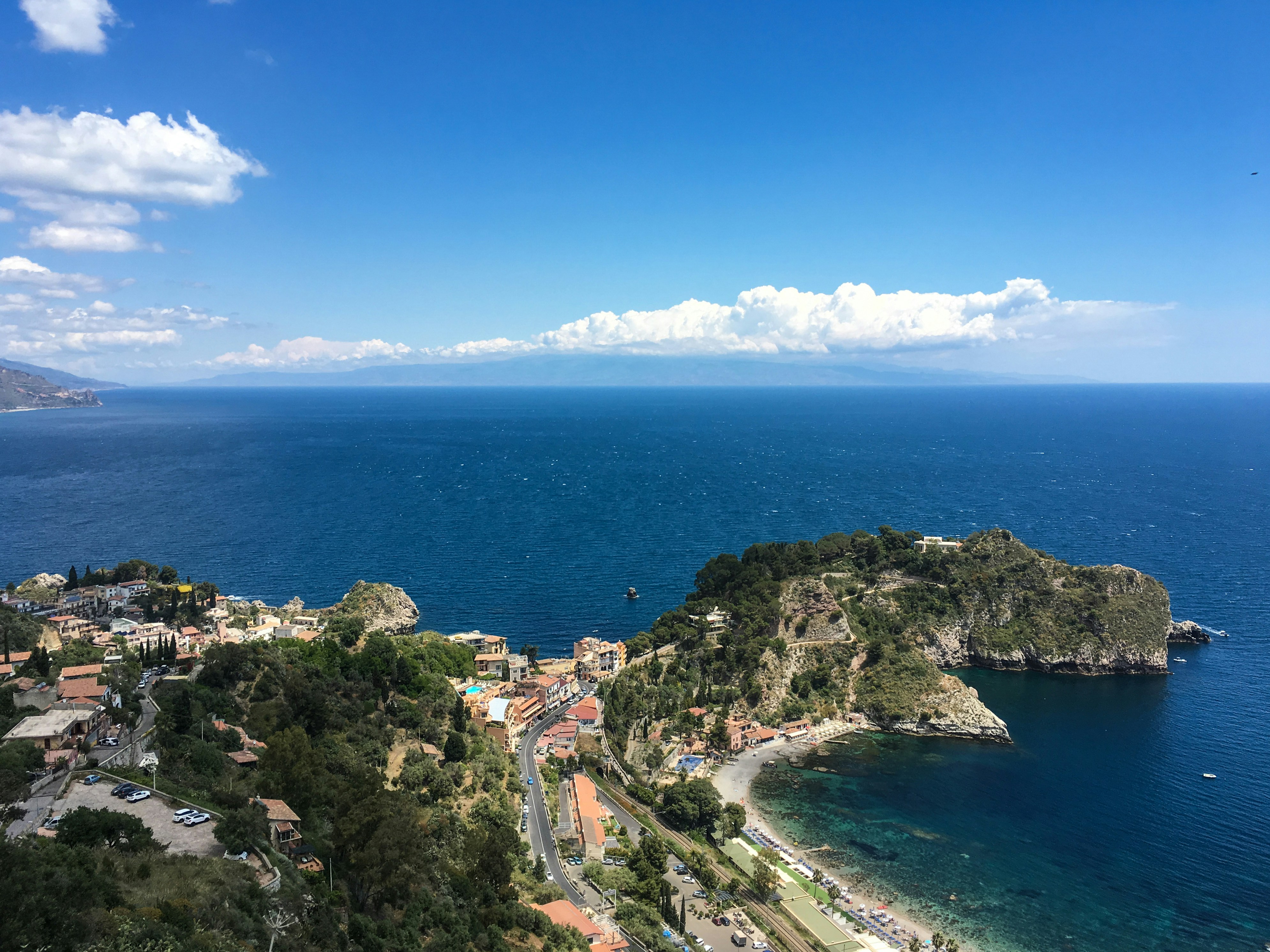
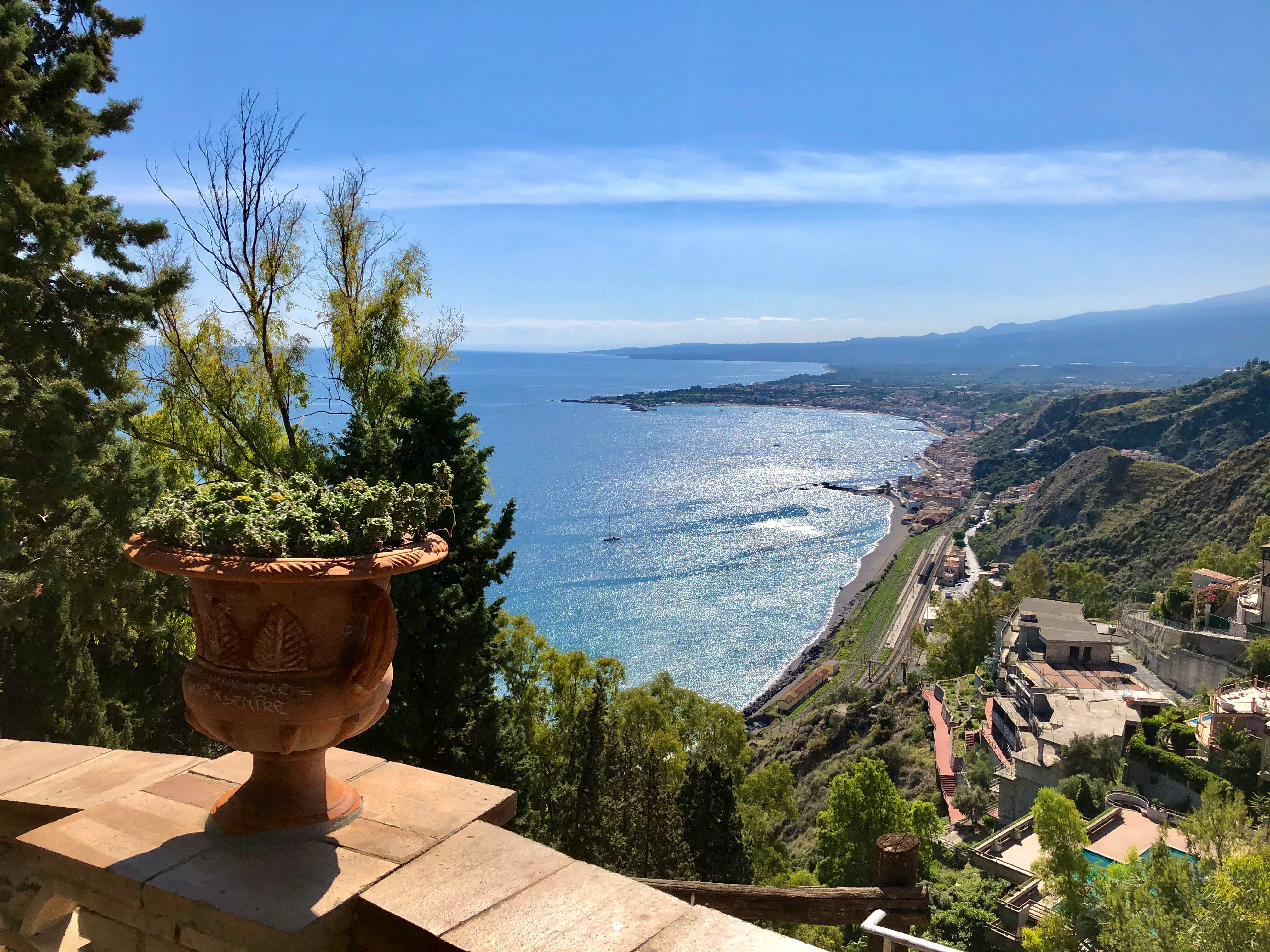
The medieval cliff-hanging town of Taormina is overrun with tourists, yet its natural beauty is still hard to dispute. The view of the sea and Mt. Etna from its jagged cactus-covered cliffs is as close to perfection as a panorama can get—especially on clear days, when the snowcapped volcano's white puffs of smoke rise against the blue sky. Writers have extolled Taormina's beauty almost since it was founded in the 6th century BC by Greeks from nearby Naxos; Goethe and D. H. Lawrence were among its well-known enthusiasts. The town's boutique-lined main streets get old pretty quickly, but the many hiking paths that wind through the beautiful hills surrounding Taormina promise a timeless alternative. A trip up to stunning Castelmola (whether on foot or by car) should also be on your itinerary.

Taormina, Italy
Taormina, ItalyPhoto by Maria Bobrova on Unsplash
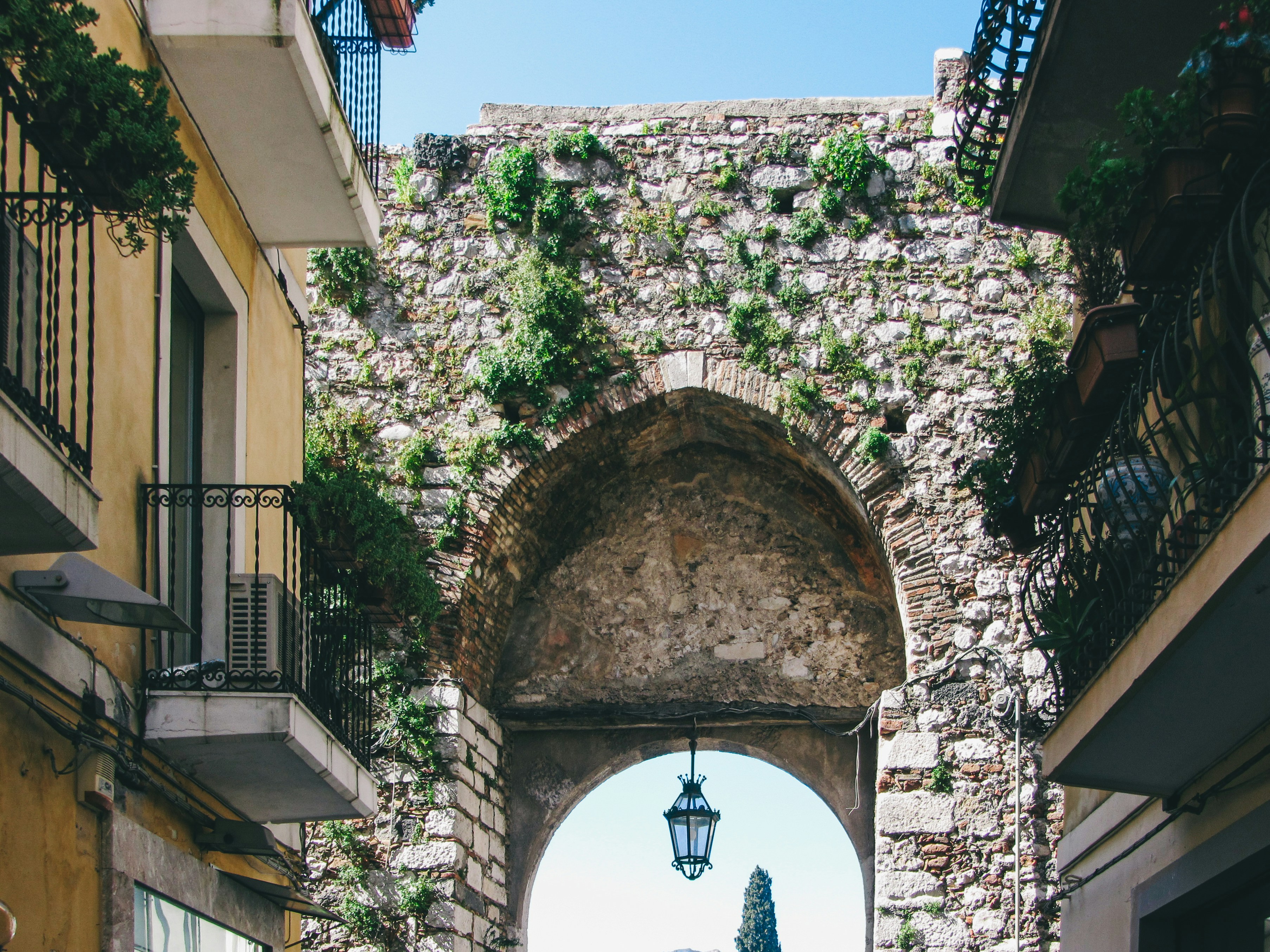
Street Archway In Taormina, Taormina, Metropolitan City Of Messina, Italy
Street Archway In Taormina, Taormina, Metropolitan City Of Messina, ItalyPhoto by Casey Lovegrove on Unsplash
Taormina, Italia
Taormina, ItaliaPhoto by Marco Faccini on Unsplash
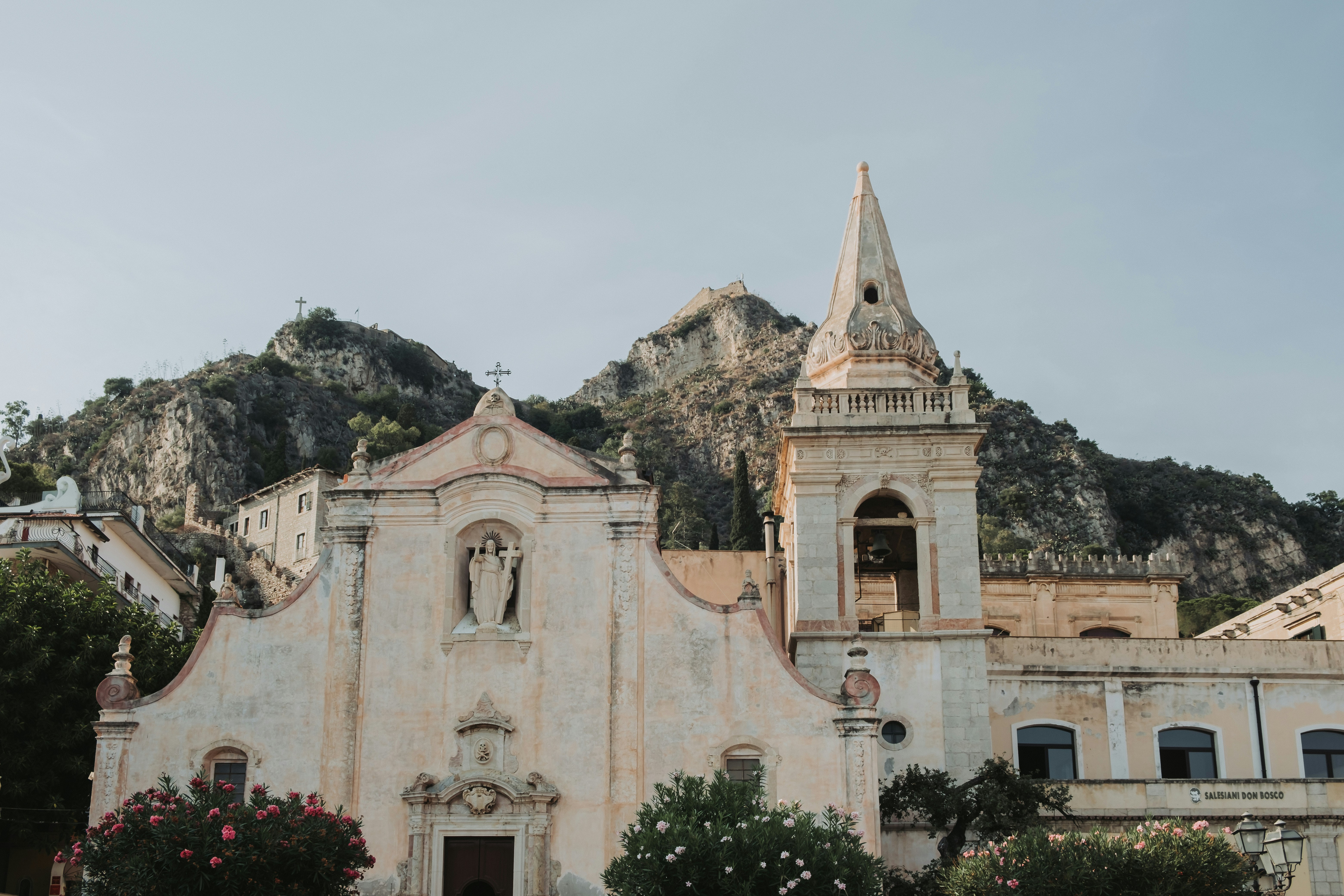
Taormina, Metropolitan City Of Messina, Italy
Taormina, Metropolitan City Of Messina, ItalyPhoto by Dagnija Berzina on Unsplash

Day 5 - At Sea

Further details for this day are not available.

Day 6 - Otranto

Located right in the heel of the Italian boot, Otranto’s scenic landscape often plays the protagonist in displaying the beauty of Puglia, Italy’s easternmost region. Facing the Adriatic sea, the seducing weather and pristine waters have made it a popular destination where on a clear day, wanderers can see the coast of Albania. Like much of Italy, the city boasts a rich and mixed history. Once a Greek and Roman port, it was later occupied by the Byzantines, the Normans and the Spanish before the Ottoman invaded in during their Jihad to conquer Europe. Remains of forts are still visible and are a living testimonial of the town’s rich history along with Otranto’s cathedral, which still encloses today the relics of martyrs who refused to convert to Islam.

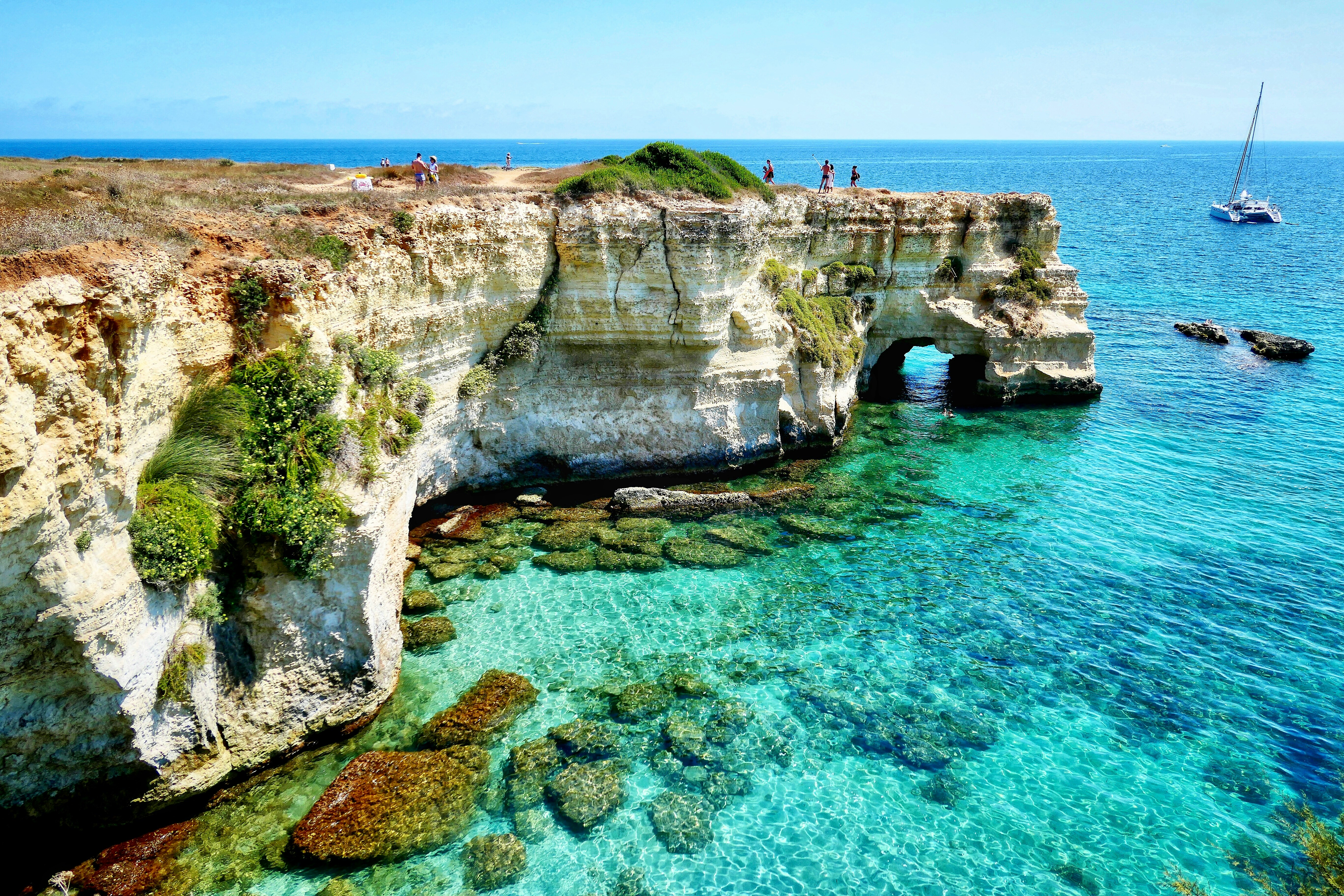
Faraglioni Di Torre Sant'andrea, Melendugno, Otranto, Puglia, Italy
Faraglioni Di Torre Sant'andrea, Melendugno, Otranto, Puglia, ItalyPhoto by Massimo Virgilio on Unsplash
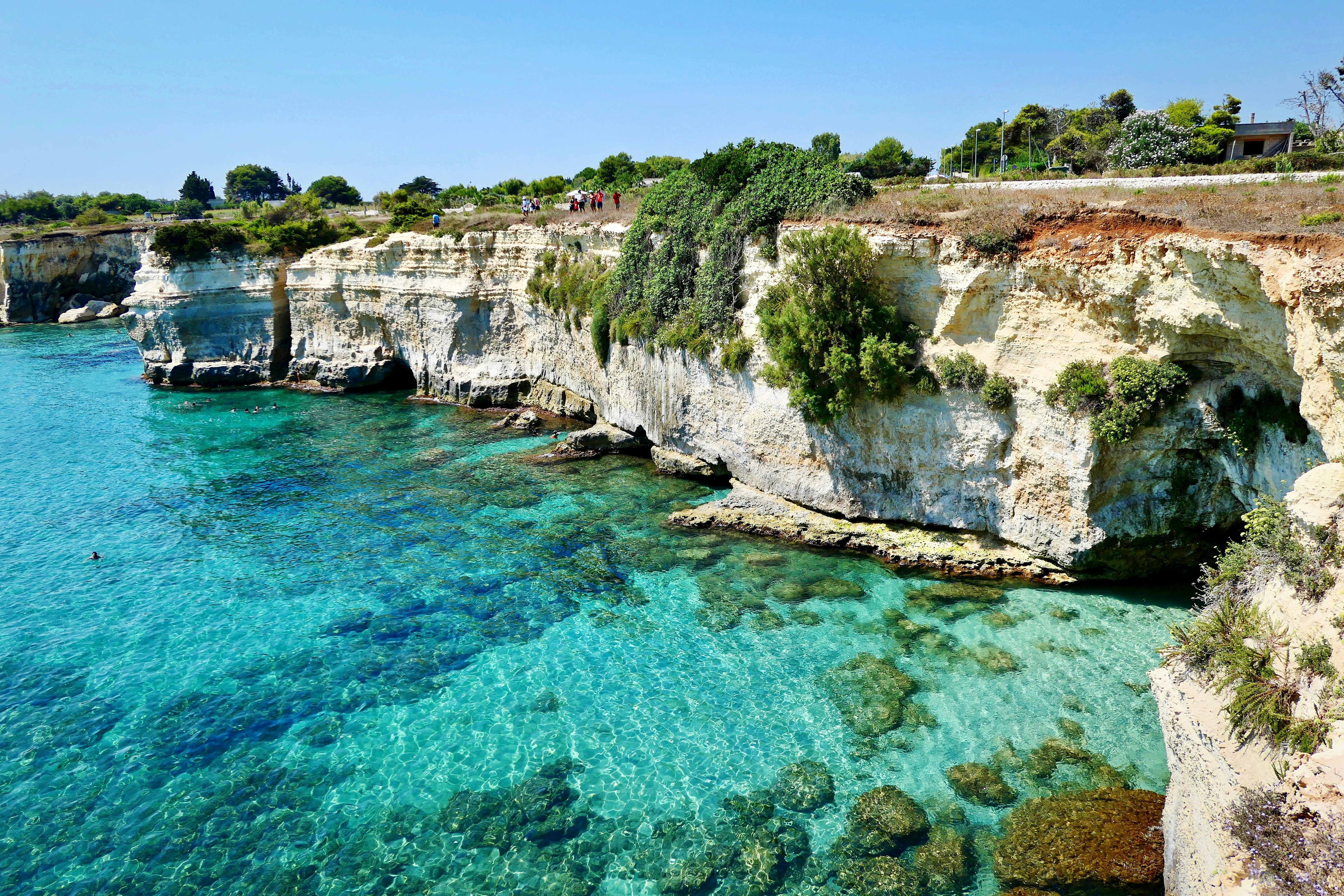
Torre Sant'andrea, Melendugno, Otranto, Le, Italia
Torre Sant'andrea, Melendugno, Otranto, Le, ItaliaPhoto by Massimo Virgilio on Unsplash
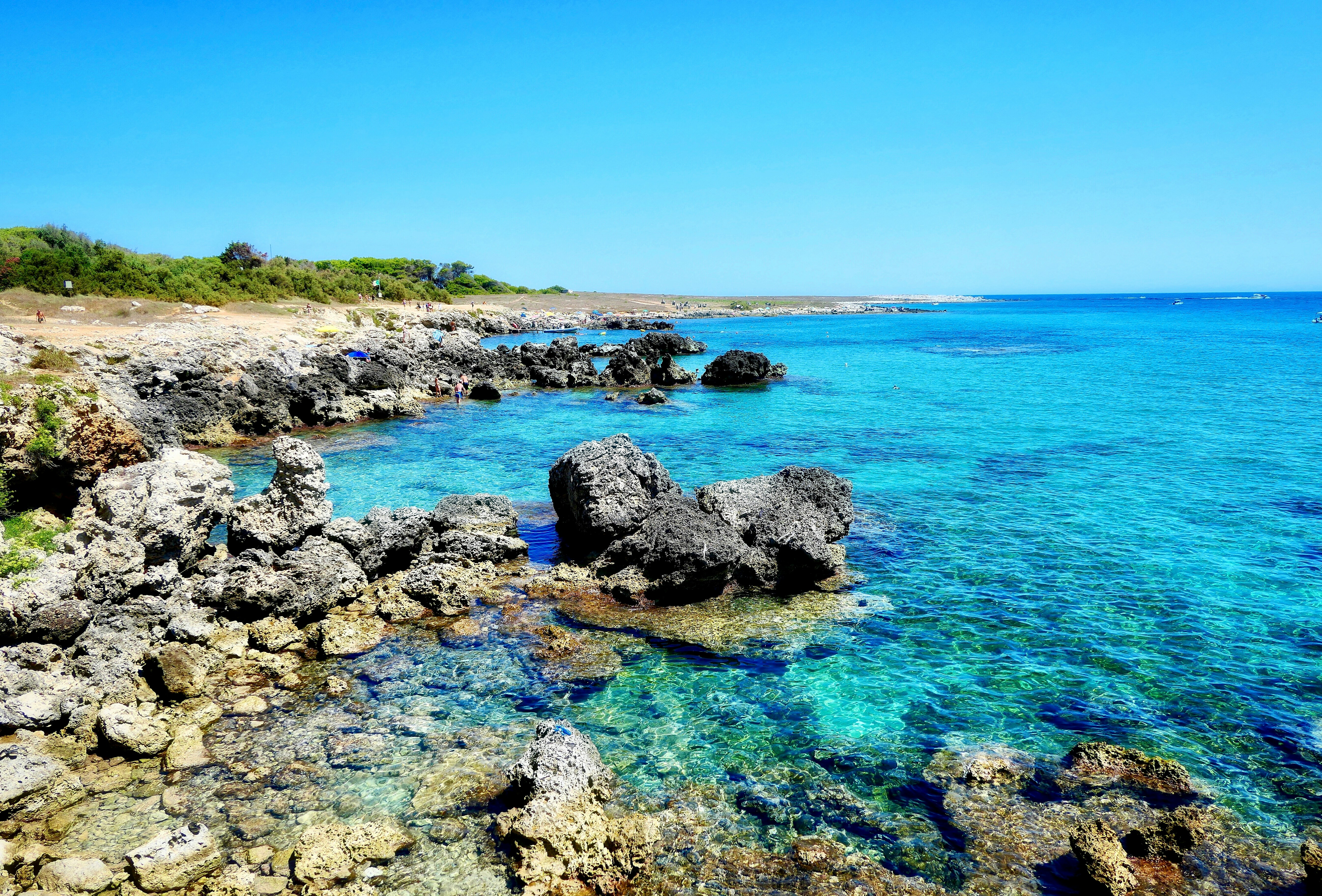
Spiaggia Di Baia Dell'orte, Strada Porto   Torre Del Serpe   Orte, Otranto, Le, Italy
Spiaggia Di Baia Dell'orte, Strada Porto Torre Del Serpe Orte, Otranto, Le, ItalyPhoto by Massimo Virgilio on Unsplash

Day 7 - Dubrovnik

Nothing can prepare you for your first sight of Dubrovnik. Lying 216 km (135 miles) southeast of Split and commanding a jaw-dropping coastal location, it is one of the world's most beautiful fortified cities. Its massive stone ramparts and fortress towers curve around a tiny harbor, enclosing graduated ridges of sun-bleached orange-tiled roofs, copper domes, and elegant bell towers. Your imagination will run wild picturing what it looked like seven centuries ago when the walls were built, without any suburbs or highways around it, just this magnificent stone city rising out of the sea.In the 7th century AD, residents of the Roman city Epidaurum (now Cavtat) fled the Avars and Slavs of the north and founded a new settlement on a small rocky island, which they named Laus, and later Ragusa. On the mainland hillside opposite the island, the Slav settlement called Dubrovnik grew up. In the 12th century the narrow channel separating the two settlements was filled in (now the main street through the Old Town, called Stradun), and Ragusa and Dubrovnik became one. The city was surrounded by defensive walls during the 13th century, and these were reinforced with towers and bastions in the late 15th century.From 1358 to 1808 the city thrived as a powerful and remarkably sophisticated independent republic, reaching its golden age during the 16th century. In 1667 many of its splendid Gothic and Renaissance buildings were destroyed by an earthquake. The defensive walls survived the disaster, and the city was rebuilt in baroque style.Dubrovnik lost its independence to Napoléon in 1808, and in 1815 passed to Austria-Hungary. During the 20th century, as part of Yugoslavia, the city became a popular tourist destination, and in 1979 it was listed as a UNESCO World Heritage Site. During the war for independence, it came under heavy siege. Thanks to careful restoration, few traces of damage remain; however, there are maps inside the Pile and Ploče Gates illustrating the points around the city where damage was done. It’s only when you experience Dubrovnik yourself that you can understand what a treasure the world nearly lost

Hrdbv   Dubrovnik   Cathedral
Hrdbv Dubrovnik Cathedral
Hrdbv   Dubrovnik   Citadel
Hrdbv Dubrovnik Citadel
Hrdbv   Dubrovnik   Cliff
Hrdbv Dubrovnik Cliff
Hrdbv   Dubrovnik   Nightlife
Hrdbv Dubrovnik Nightlife
Hrdbv   Dubrovnik   Old Town Bells
Hrdbv Dubrovnik Old Town Bells
Hrdbv   Dubrovnik   Street
Hrdbv Dubrovnik Street

Day 8 - Dubrovnik

Nothing can prepare you for your first sight of Dubrovnik. Lying 216 km (135 miles) southeast of Split and commanding a jaw-dropping coastal location, it is one of the world's most beautiful fortified cities. Its massive stone ramparts and fortress towers curve around a tiny harbor, enclosing graduated ridges of sun-bleached orange-tiled roofs, copper domes, and elegant bell towers. Your imagination will run wild picturing what it looked like seven centuries ago when the walls were built, without any suburbs or highways around it, just this magnificent stone city rising out of the sea.In the 7th century AD, residents of the Roman city Epidaurum (now Cavtat) fled the Avars and Slavs of the north and founded a new settlement on a small rocky island, which they named Laus, and later Ragusa. On the mainland hillside opposite the island, the Slav settlement called Dubrovnik grew up. In the 12th century the narrow channel separating the two settlements was filled in (now the main street through the Old Town, called Stradun), and Ragusa and Dubrovnik became one. The city was surrounded by defensive walls during the 13th century, and these were reinforced with towers and bastions in the late 15th century.From 1358 to 1808 the city thrived as a powerful and remarkably sophisticated independent republic, reaching its golden age during the 16th century. In 1667 many of its splendid Gothic and Renaissance buildings were destroyed by an earthquake. The defensive walls survived the disaster, and the city was rebuilt in baroque style.Dubrovnik lost its independence to Napoléon in 1808, and in 1815 passed to Austria-Hungary. During the 20th century, as part of Yugoslavia, the city became a popular tourist destination, and in 1979 it was listed as a UNESCO World Heritage Site. During the war for independence, it came under heavy siege. Thanks to careful restoration, few traces of damage remain; however, there are maps inside the Pile and Ploče Gates illustrating the points around the city where damage was done. It’s only when you experience Dubrovnik yourself that you can understand what a treasure the world nearly lost

Hrdbv   Dubrovnik   Cathedral
Hrdbv Dubrovnik Cathedral
Hrdbv   Dubrovnik   Citadel
Hrdbv Dubrovnik Citadel
Hrdbv   Dubrovnik   Cliff
Hrdbv Dubrovnik Cliff
Hrdbv   Dubrovnik   Nightlife
Hrdbv Dubrovnik Nightlife
Hrdbv   Dubrovnik   Old Town Bells
Hrdbv Dubrovnik Old Town Bells
Hrdbv   Dubrovnik   Street
Hrdbv Dubrovnik Street

Day 9 - Split

Split's ancient core is so spectacular and unusual that a visit is more than worth your time. The heart of the city lies within the walls of Roman emperor Diocletian's retirement palace, which was built in the 3rd century AD. Diocletian, born in the nearby Roman settlement of Salona in AD 245, achieved a brilliant career as a soldier and became emperor at the age of 40. In 295 he ordered this vast palace to be built in his native Dalmatia, and when it was completed he stepped down from the throne and retired to his beloved homeland. Upon his death, he was laid to rest in an octagonal mausoleum, around which Split's magnificent cathedral was built.In 615, when Salona was sacked by barbarian tribes, those fortunate enough to escape found refuge within the stout palace walls and divided up the vast imperial apartments into more modest living quarters. Thus, the palace developed into an urban center, and by the 11th century the settlement had expanded beyond the ancient walls.Under the rule of Venice (1420–1797), Split—as a gateway to the Balkan interior—became one of the Adriatic's main trading ports, and the city's splendid Renaissance palaces bear witness to the affluence of those times. When the Habsburgs took control during the 19th century, an overland connection to Central Europe was established by the construction of the Split–Zagreb–Vienna railway line.After World War II, the Tito years saw a period of rapid urban expansion: industrialization accelerated and the suburbs extended to accommodate high-rise apartment blocks. Today the historic center of Split is included on UNESCO's list of World Heritage Sites.

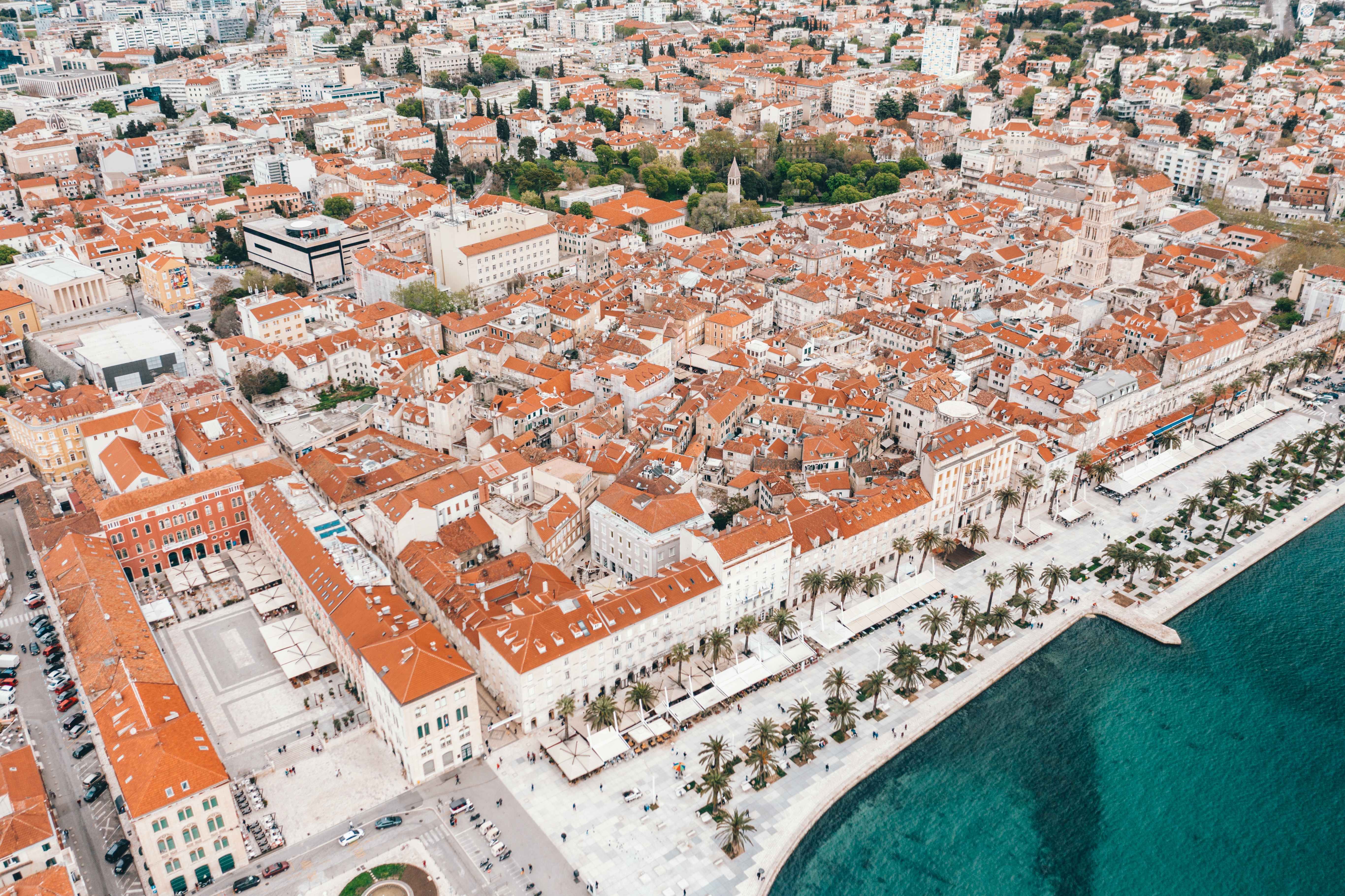
Hrspu Split Aerial Photography Of Concrete Buildings Spencer Davis
Hrspu Split Aerial Photography Of Concrete Buildings Spencer DavisSpencer Davis
Hrspu Split Aerial Photography Of Buildings Under Gray Sky Jonny Mckenna
Hrspu Split Aerial Photography Of Buildings Under Gray Sky Jonny MckennaJonny Mckenna
Hrspu Split People Walking On Alley Drazen Biljak
Hrspu Split People Walking On Alley Drazen BiljakDrazen Biljak

Day 10 - Zadar

Dalmatia's capital for more than 1,000 years, Zadar is all too often passed over by travelers on their way to Split or Dubrovnik. What they miss out on is a city of more than 73,000 that is remarkably lovely and lively despite—and, in some measure, because of—its tumultuous history. The Old Town, separated from the rest of the city on a peninsula some 4 km (2½ miles) long and just 1,640 feet wide, is bustling and beautiful: the marble pedestrian streets are replete with Roman ruins, medieval churches, palaces, museums, archives, and libraries. Parts of the new town are comparatively dreary, a testament to what a world war followed by decades of communism, not to mention a civil war, can do to the architecture of a city that is 3,000 years old. A settlement had already existed on the site of the present-day city for some 2,000 years when Rome finally conquered Zadar in the 1st century BC; the foundations of the forum can be seen today. Before the Romans came the Liburnians had made it a key center for trade with the Greeks and Romans for 800 years. In the 3rd century BC the Romans began to seriously pester the Liburnians, but required two centuries to bring the area under their control. During the Byzantine era, Zadar became the capital of Dalmatia, and this period saw the construction of its most famous church, the 9th-century St. Donat's Basilica. It remained the region's foremost city through the ensuing centuries. The city then experienced successive onslaughts and occupations—both long and short—by the Osogoths, the Croatian-Hungarian kings, the Venetians, the Turks, the Habsburgs, the French, the Habsburgs again, and finally the Italians before becoming part of Yugoslavia and, in 1991, the independent republic of Croatia. Zadar was for centuries an Italian-speaking city, and Italian is still spoken widely, especially by older people. Indeed, it was ceded to Italy in 1921 under the Treaty of Rapallo (and reverted to its Italian name of Zara). Its occupation by the Germans from 1943 led to intense bombing by the Allies during World War II, which left most of the city in ruins. Zadar became part of Tito's Yugoslavia in 1947, prompting many Italian residents to leave. Zadar's most recent ravages occurred during a three-month siege by Serb forces and months more of bombardment during the Croatian-Serbian war between 1991 and 1995. But you'd be hard-pressed to find outward signs of this today in what is a city to behold. There are helpful interpretive signs in English all around the Old Town, so you certainly won't feel lost when trying to make sense of the wide variety of architectural sites you might otherwise pass by with only a cursory look.
Hrzad Zadar Sea
Hrzad Zadar Sea
Hrzad Zadar Church
Hrzad Zadar Church

Day 11 - At Sea

Further details for this day are not available.
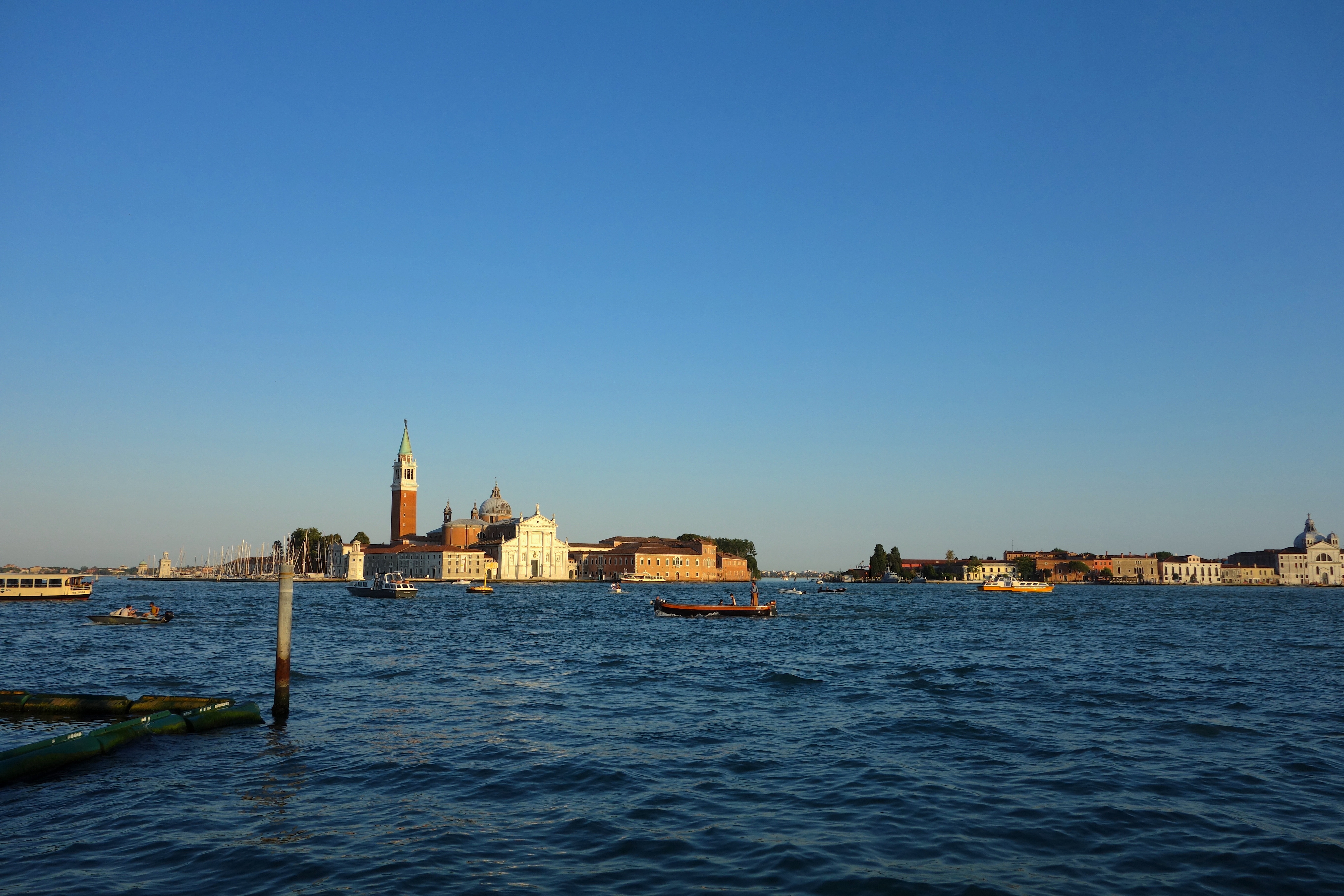
Day 12 - Fusina

Further details for this day are not available.

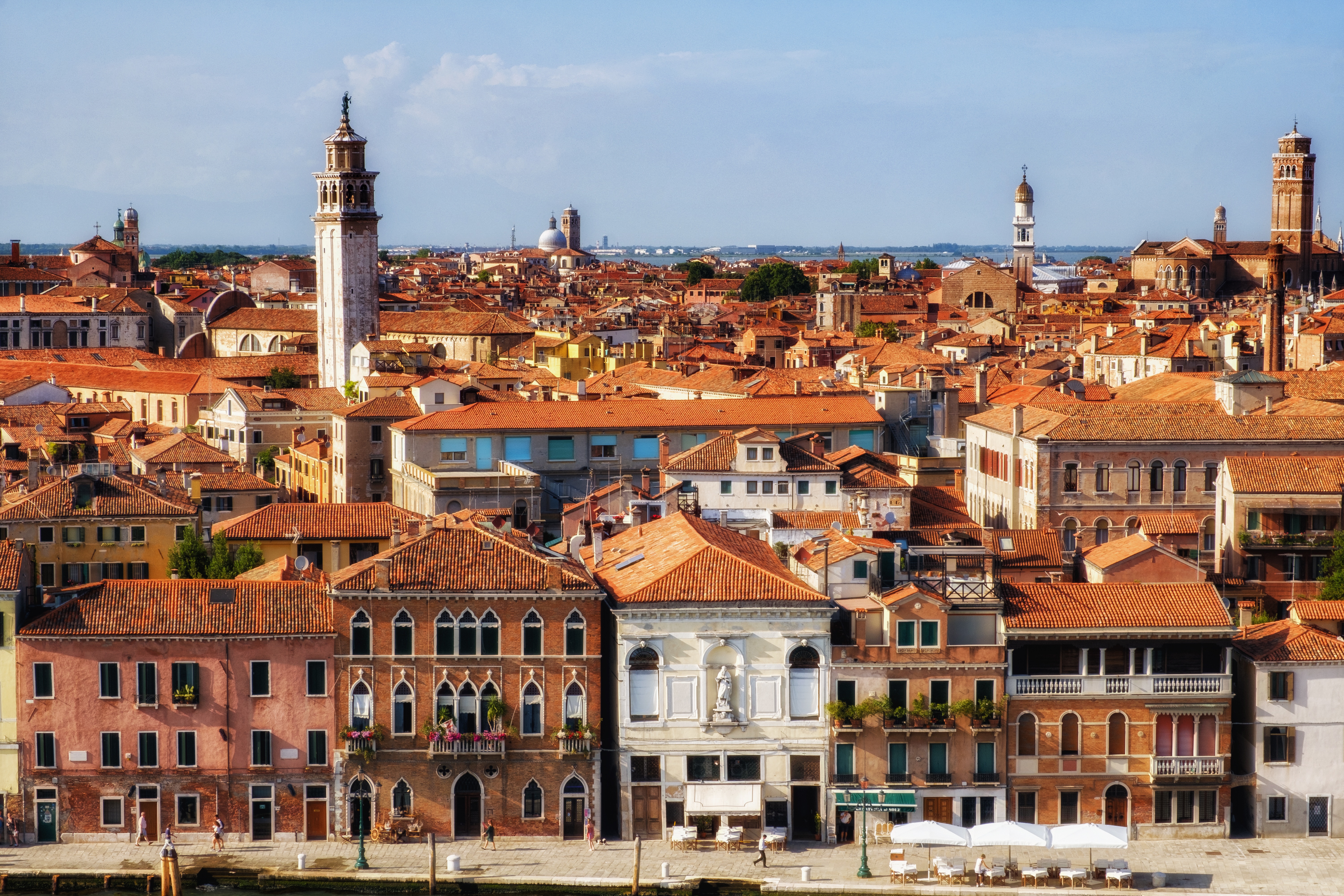
Fusina, Port For Venice
Fusina, Port For VeniceImage by wild0wild from Pixabay
Fusina  Venice , Italy
Fusina Venice , ItalyImage by Bruno from Pixabay

Day 13 - Fusina

Further details for this day are not available.

Fusina, Port For Venice
Fusina, Port For VeniceImage by wild0wild from Pixabay
Fusina  Venice , Italy
Fusina Venice , ItalyImage by Bruno from Pixabay

Suites & Deck Plans

Suite

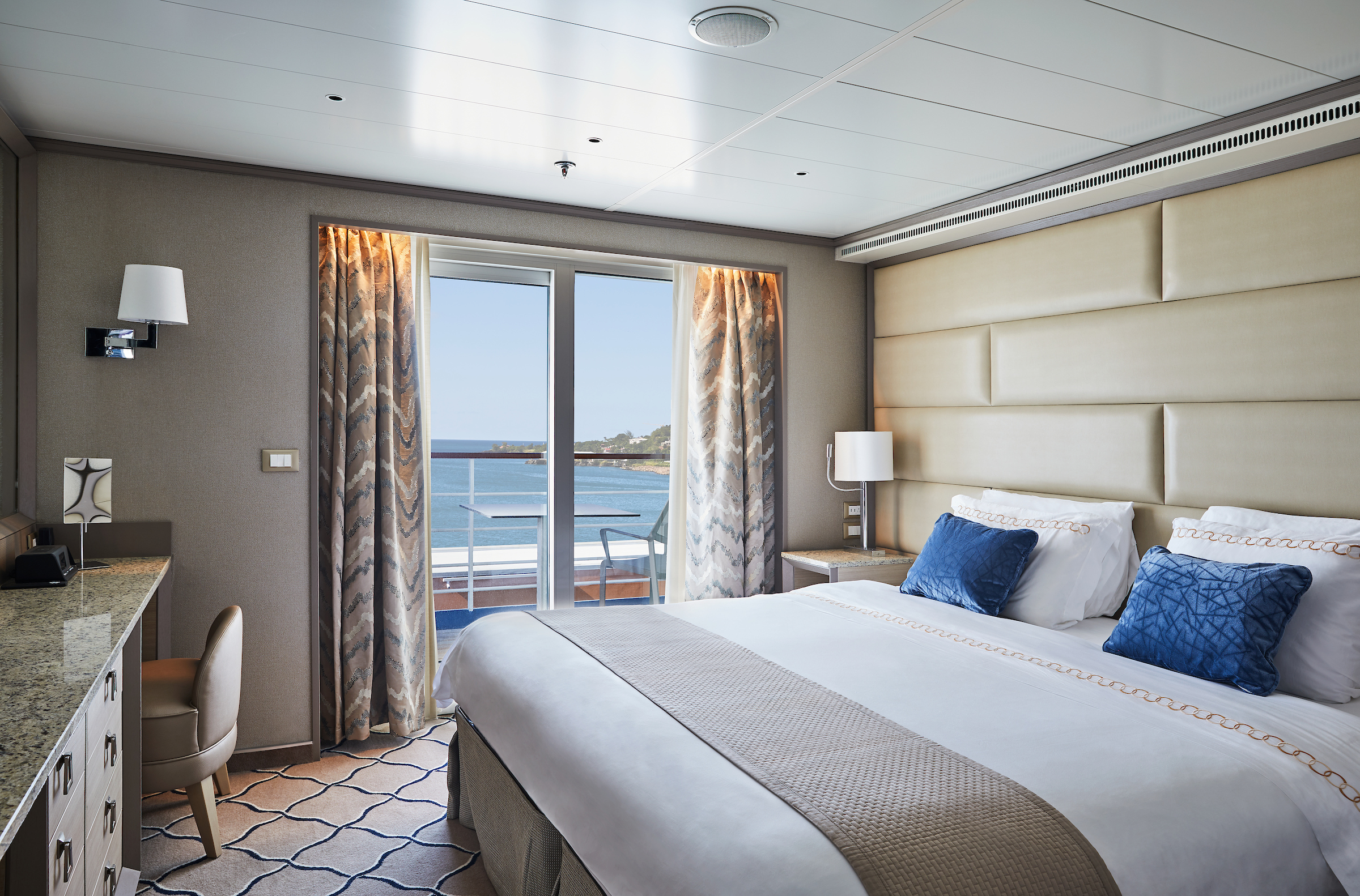
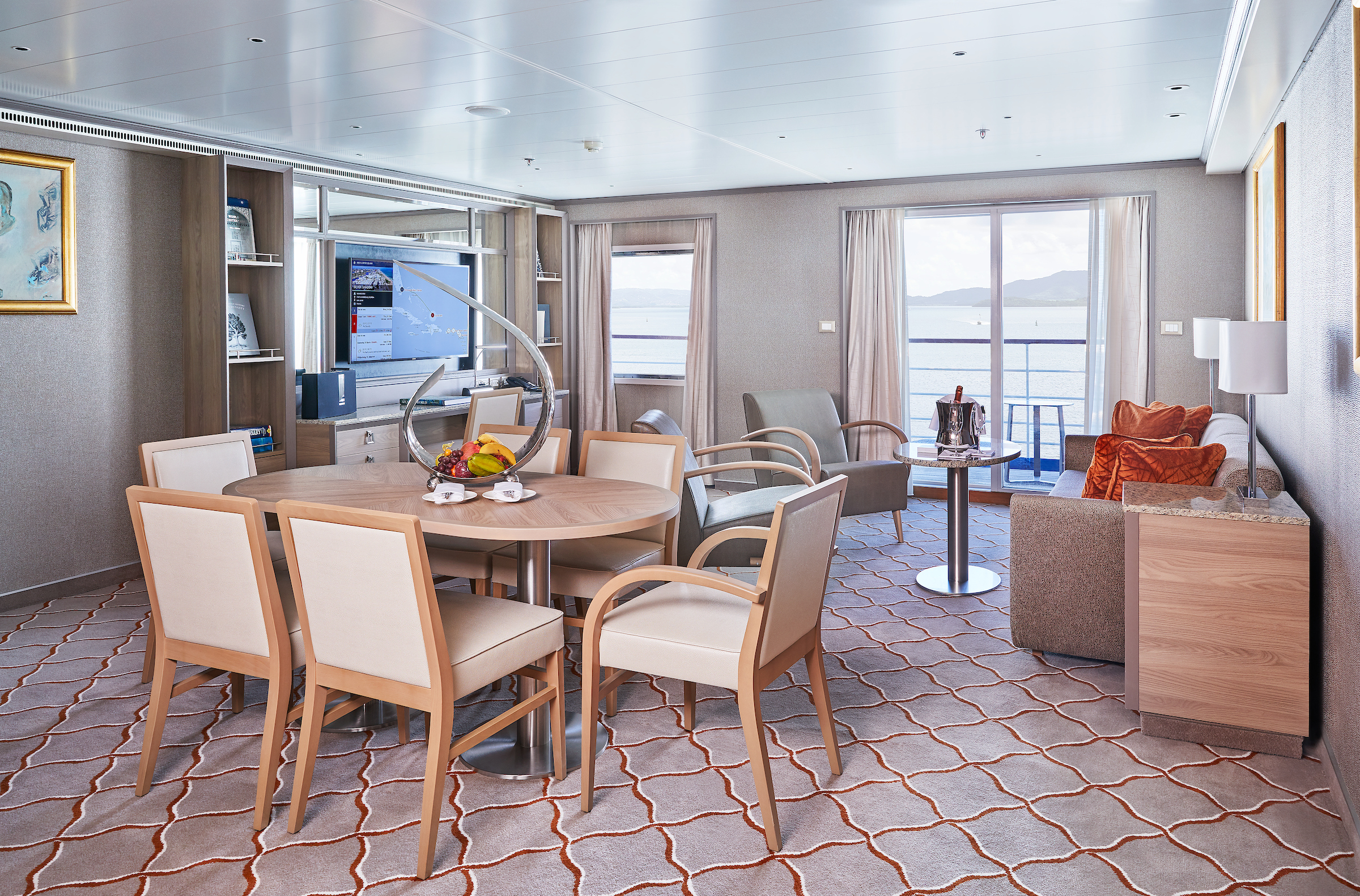
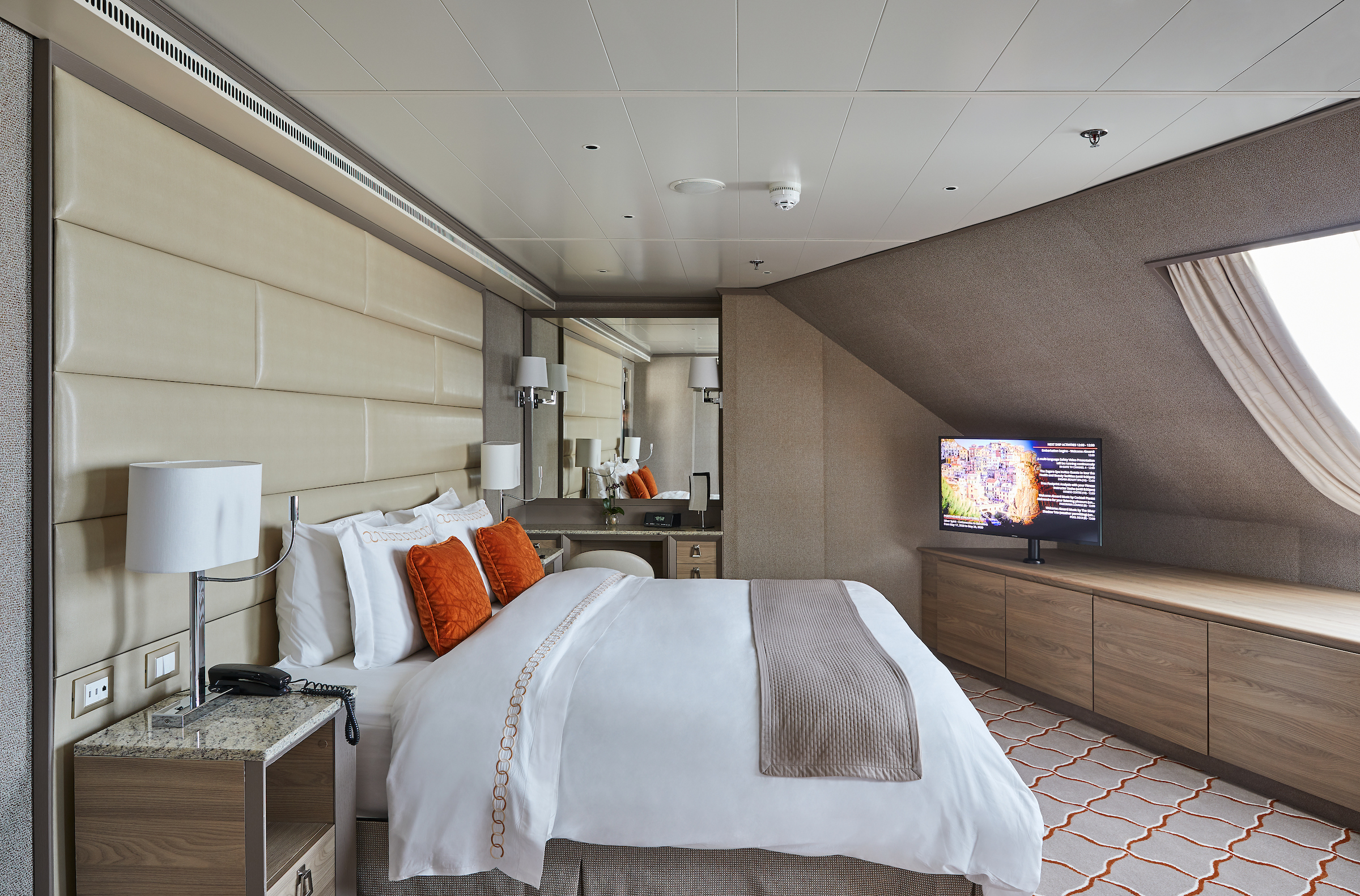
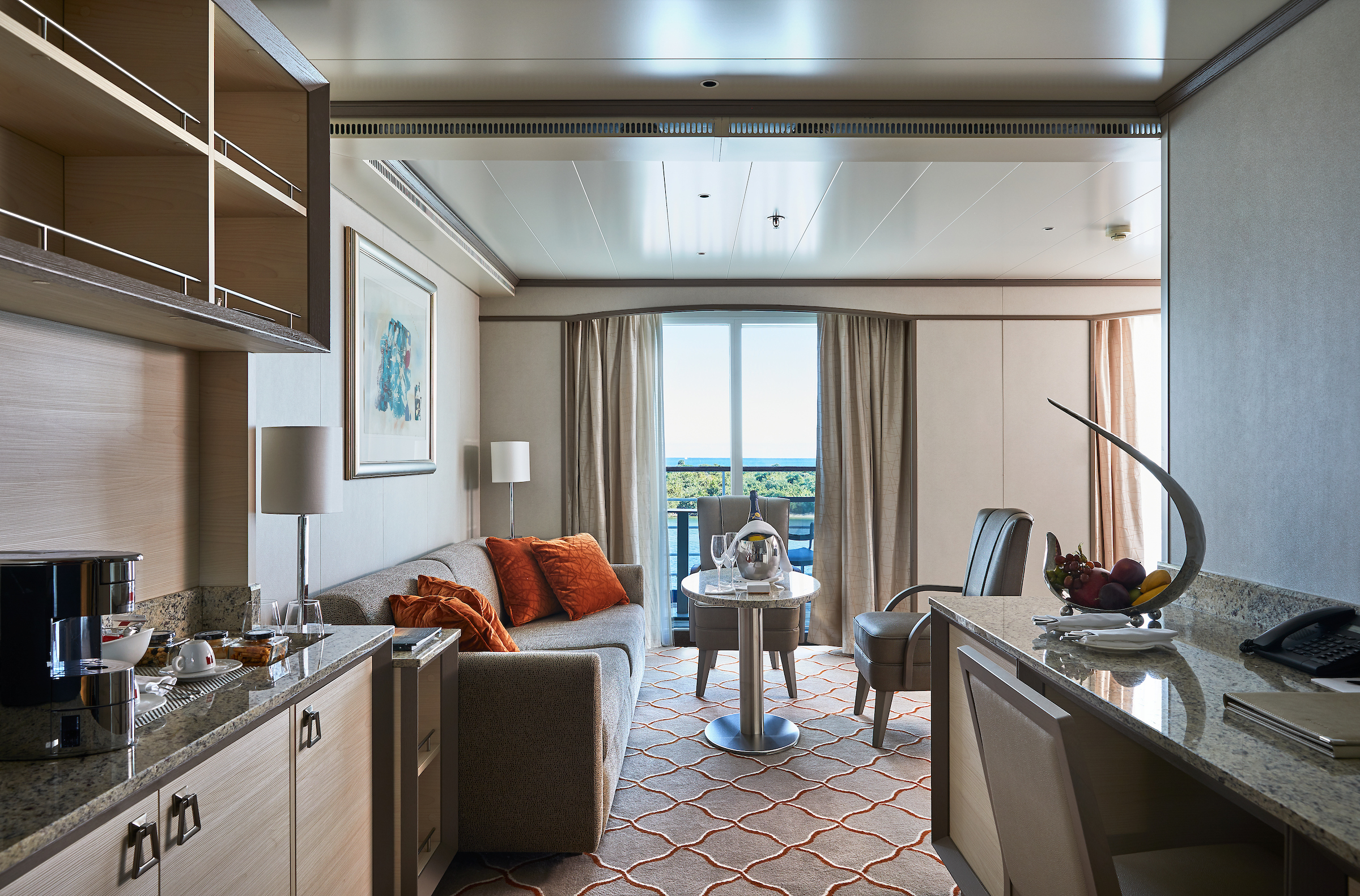
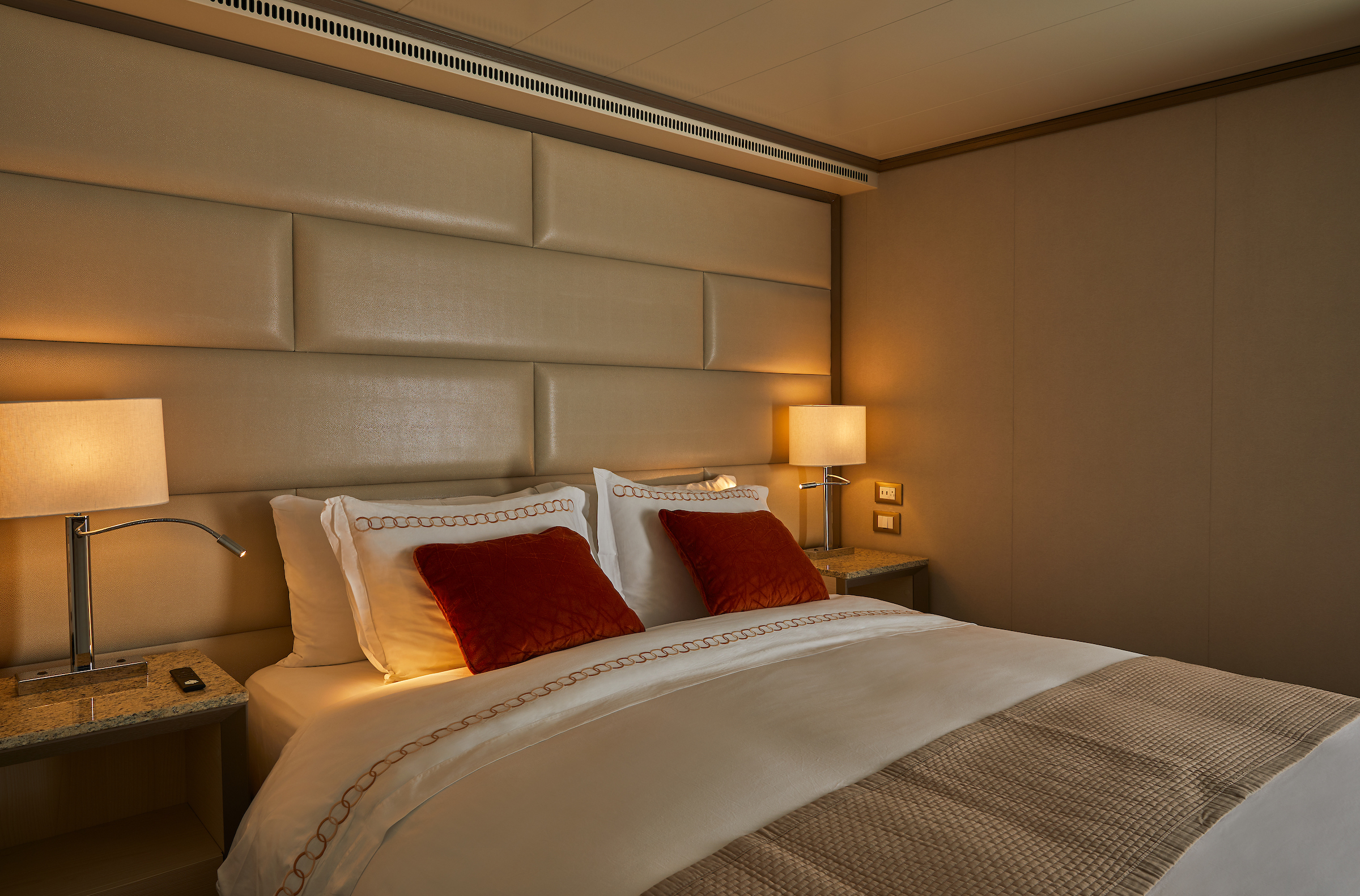
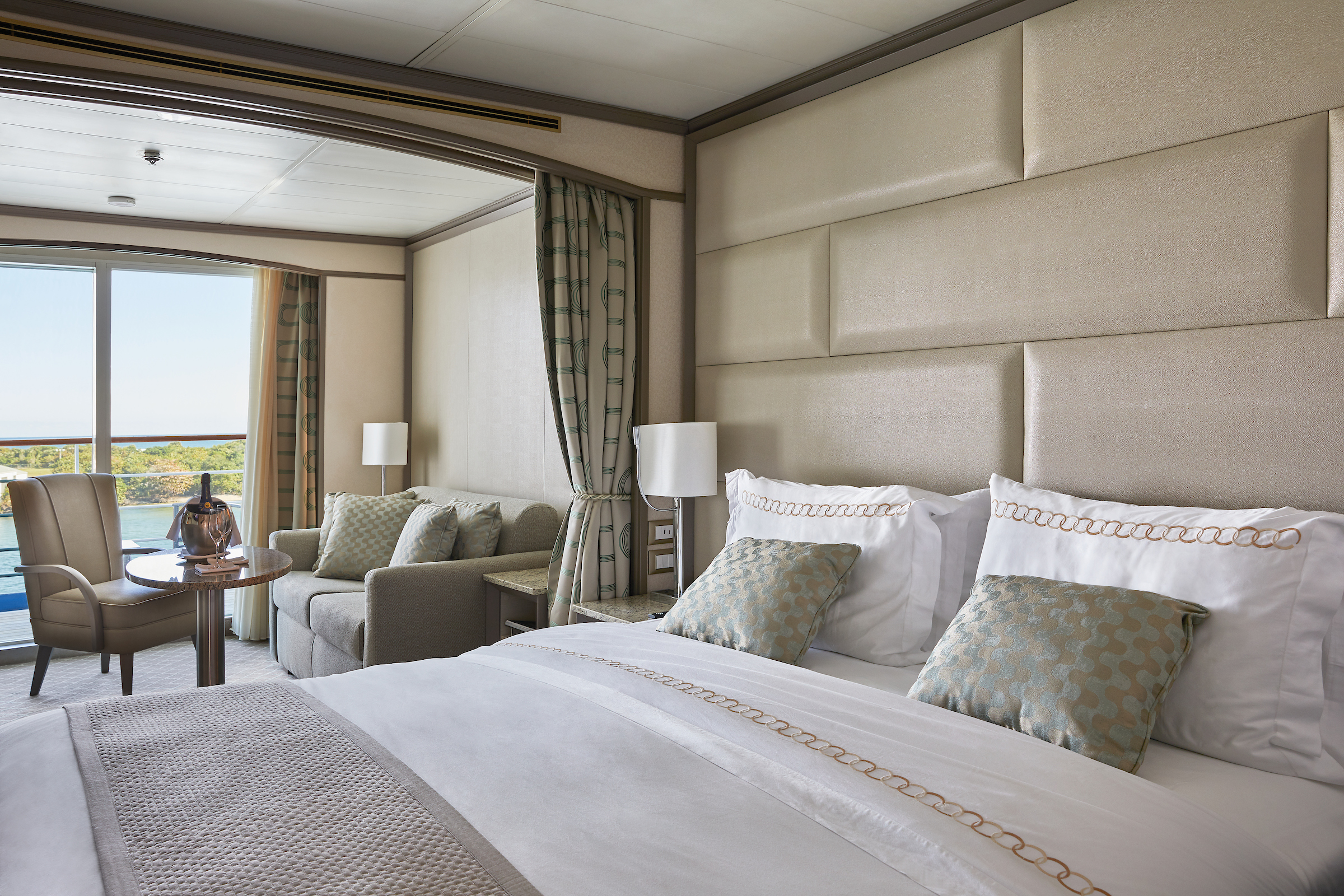
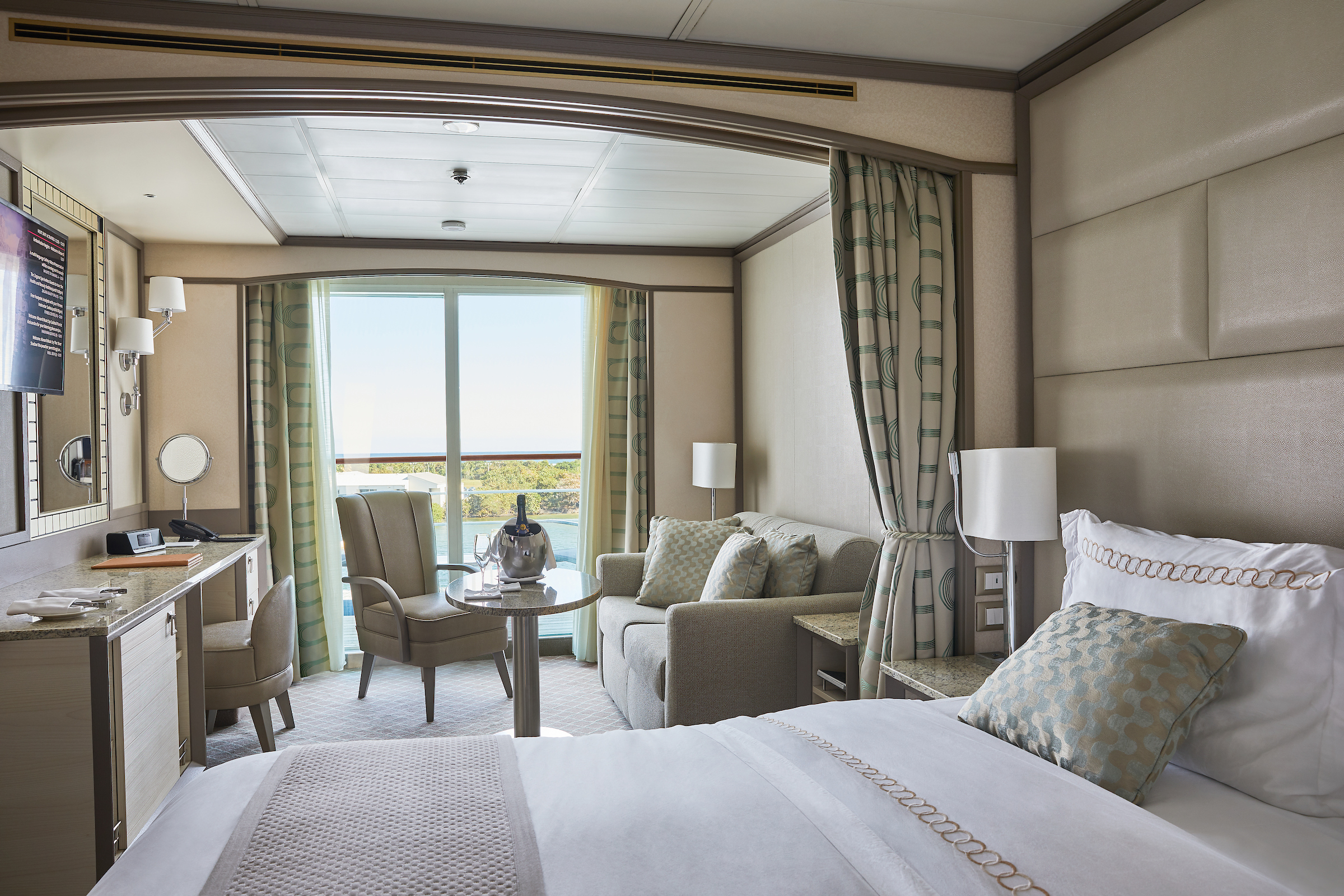
The name Owner’s Suite says it all. A stylish apartment. Prestigious and classic. For those who seek the superlative level of space, comfort, and service on board. Available in a one- or two-bedroom configuration (as illustrated) by adjoining with a Vista Suite.

One bedroom: 85 sq m including veranda (20 sq m)

Two bedrooms: 117 sq m including veranda (20 sq m)

Please note that the 3rd guest will sleep on a comfortable sofa bed in the reception area of the suite.

Essentials

  • Deck(s): 7
  • Section: Mid-Ship

Characteristics

  • Veranda
  • Separate dining area
  • Living room with sitting area
  • Double vanity
  • Separate shower
  • Full-size bath
  • Walk-in wardrobe with personal safe

Furniture

  • King size bed
  • Writing desk
  • Vanity table
  • Luxury bed mattresses

Media & Communication

  • Unlimited Premium Wi-Fi
  • 2 large flat screen TVs with Interactive Media Library
  • Sound system with bluetooth connectivity
  • Direct dial telephone
  • Wall mounted USB-C mobile device chargers
  • Dual voltage 110/220 outlets

Onboard Services

  • Butler service
  • Complimentary laundry, pressing & wet cleaning
  • Dinner for two in La Dame, one evening per voyage,
  • Two hours of worldwide phone use, per voyage segment
  • Champagne on arrival

Amenities

  • Espresso machine
  • Tea kettle
  • Pillow menu
  • Refrigerator and bar setup stocked with your preferences
  • Plush bathrobe
  • Luxury bath amenities
  • Umbrella
  • Hair Dryer
  • Slippers

1130-1475 sq ft
Accommodates 5 guests
Owner's Suite

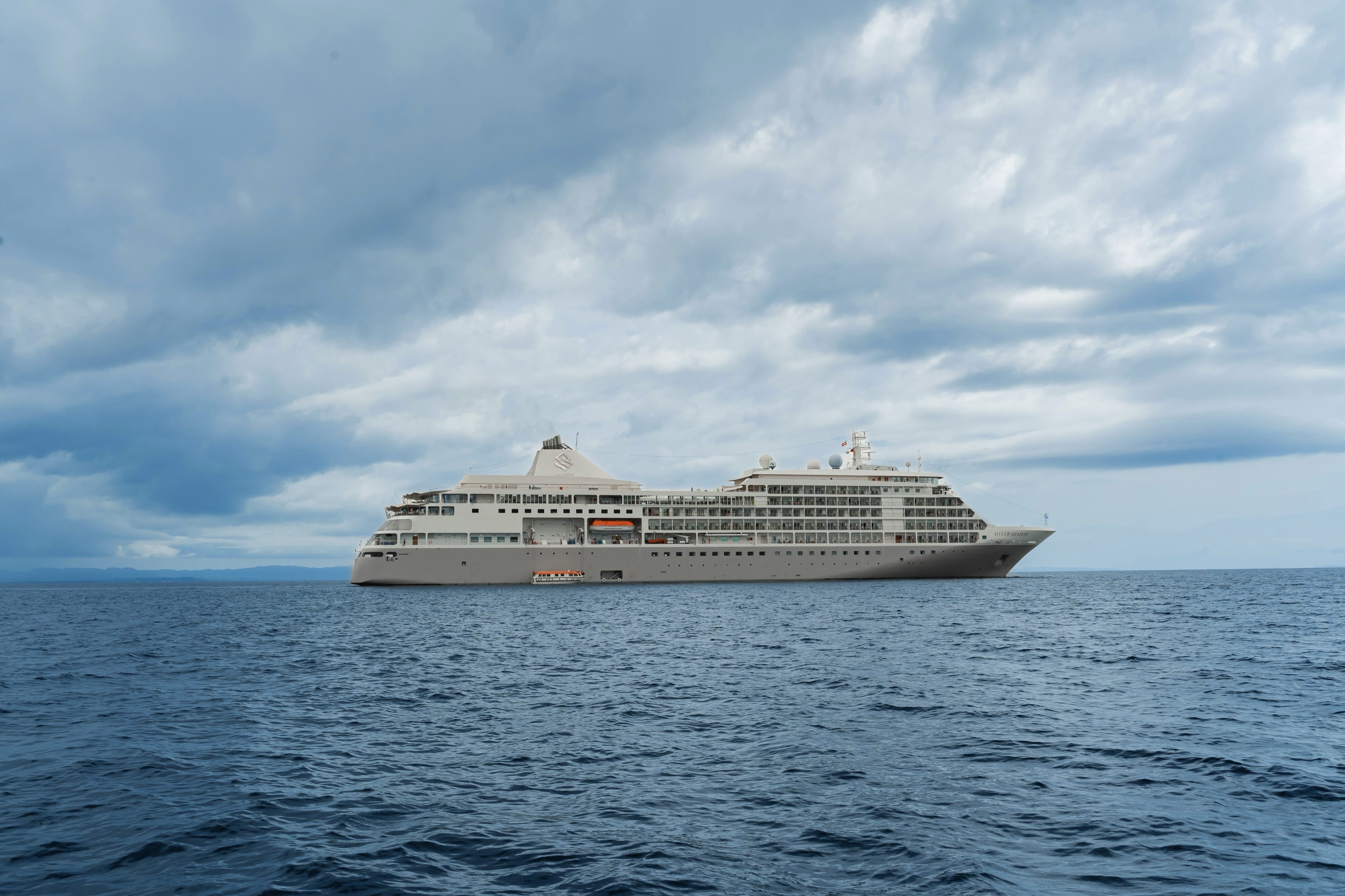
Silver Shadow

Silver Shadow

Life on board

The Onboard Experience

Client testimonials

I have worked with Lore Doick for more than 20 years, and she has booked over 30 cruises for me. Her expertise, care, and attention to every travel detail have made her an invaluable advisor and friend over the years.”

Tina B.

We are now in our second generation working with Cheri Ozimac at Tully Luxury Travel. From Antarctica to Greece, she has handled every detail with expertise, responsiveness, and care…

Earl M.

My wife and I have worked with Tully since 2007, and Kit Neil and her team went far beyond expectations while helping us navigate multiple cruise and flight cancellations. Their advocacy, care, and support during a difficult time were extraordinary.

Carri F.

Cheri Ozimac organized our Seabourn cruise flawlessly, from the hotel recommendation to every travel arrangement. She was responsive, attentive, and an excellent advocate throughout the process…

Cyn S.

We discovered Tully Luxury Travel after years of booking cruises through US agents and were impressed by their competitive pricing, exceptional service, and Canadian based support. Their team is always available, offers excellent value, and makes booking the right cruise seamless.

Peter C.

GoogleAverage Customer Rating:

The Tully Difference

Why travel with us


Tully Luxury Travel was built on access, discretion, and trust. For our clients, that means ease at every step, with distinctions that turn exceptional voyages into defining moments.

Recognized expertise

A renowned agency worldwide in luxury land and small-ship cruising, consistently trusted by the industry’s most prestigious brands.