Scenic Ocean Cruises logo

Catalonia, Italy & the French Riviera - Cruise & Land Journey

Itinerary: Barcelona, Cadaqués, Girona, L'Escala, Collioure, Cassis, Sanary-sur-Mer, Saint-Tropez, Nice, Monte-Carlo, Portovenere, Livorno, Civitavecchia See full itinerary

20 Sep 28
10 nights

Voyage Details

Duration:
10 nights
Departure:
20 Sept 2028
Embarkation:
Barcelona, Spain
Cruise code:
OMB7
Voyage code:
OMB7200928.1

Your Itinerary, Day-By-Day

Special Chapters of Your Journey

Day 1 - Barcelona

Welcome to Barcelona, one of Europe’s most culturally rich and visually extraordinary cities. As the capital of the autonomous region of Catalonia, Barcelona occupies a singular position in the European imagination – a place where Roman foundations, medieval grandeur, and the audacious vision of modernist architecture exist side by side. The city was founded as the Roman settlement of Barcino around 133 BC, and its layered history – shaped by Romans, Visigoths, Moors, and the Crown of Aragon – is legible at almost every turn.

This evening, meet your  Tour Director for a welcome dinner at a Scenic-selected restaurant, the first taste of Catalan hospitality that will define the days ahead.

The infinite variety of street life, the nooks and crannies of the medieval Barri Gòtic, the ceramic tile and stained glass of Art Nouveau facades, the art and music, the throb of street life, the food (ah, the food!)—one way or another, Barcelona will find a way to get your full attention. The capital of Catalonia is a banquet for the senses, with its beguiling mix of ancient and modern architecture, tempting cafés and markets, and sun-drenched Mediterranean beaches. A stroll along La Rambla and through waterfront Barceloneta, as well as a tour of Gaudí's majestic Sagrada Famíliaand his other unique creations, are part of a visit to Spain's second-largest city. Modern art museums and chic shops call for attention, too. Barcelona's vibe stays lively well into the night, when you can linger over regional wine and cuisine at buzzing tapas bars.

Barcelona Beach
Barcelona BeachEnes F, Unsplash
Barcelona Beach
Barcelona BeachLucrezia Carnelos, Unsplash
Barcelona Aerial Logan Armstrong
Barcelona Skyline Apasaric

Day 2 - Barcelona

Barcelona rewards those who explore it on foot, and today you do exactly that. Your Tour Director leads you through the Gothic Quarter (Barri Gòtic), the city’s oldest neighbourhood, where the streets preserve the footprint of Roman Barcino – including sections of the original 4th-century defensive wall and the 2nd-century Temple of Augustus, still standing within a medieval courtyard. Though the quarter was extensively restored in the late 19th and early 20th centuries in preparation for the 1929 International Exhibition, its winding laneways and medieval palaces retain a tangible connection to the city’s deep past.

From the Gothic Quarter, you stroll the famous La Rambla, Barcelona’s great tree-lined promenade that stretches from Plaça de Catalunya to the waterfront. A visit to the La Boqueria Market – officially the Mercat de Sant Josep de la Boqueria, which has occupied this site since 1217 – immerses you in the extraordinary abundance of Catalan food culture: vivid seasonal produce, charcuterie, seafood, and local cheeses that speak to the region’s proud culinary identity.

The infinite variety of street life, the nooks and crannies of the medieval Barri Gòtic, the ceramic tile and stained glass of Art Nouveau facades, the art and music, the throb of street life, the food (ah, the food!)—one way or another, Barcelona will find a way to get your full attention. The capital of Catalonia is a banquet for the senses, with its beguiling mix of ancient and modern architecture, tempting cafés and markets, and sun-drenched Mediterranean beaches. A stroll along La Rambla and through waterfront Barceloneta, as well as a tour of Gaudí's majestic Sagrada Famíliaand his other unique creations, are part of a visit to Spain's second-largest city. Modern art museums and chic shops call for attention, too. Barcelona's vibe stays lively well into the night, when you can linger over regional wine and cuisine at buzzing tapas bars.

Barcelona Beach
Barcelona BeachEnes F, Unsplash
Barcelona Beach
Barcelona BeachLucrezia Carnelos, Unsplash
Barcelona Aerial Logan Armstrong
Barcelona Skyline Apasaric

Day 3 - Cadaqués

Today you travel north to the Costa Brava, one of the most dramatically beautiful stretches of Mediterranean coastline in Europe. The rugged headlands, hidden coves, and crystalline waters of this Catalan shore have long drawn artists and writers seeking light and solitude. None more famously than Salvador Dalí, who was first brought to Cadaqués as a child and remained entranced by it for the rest of his life. As early as 1916, the stark landscape of the town had begun to appear in his paintings, and from the 1930s onwards he transformed a fisherman’s hut in the nearby cove of Portlligat into a labyrinthine house and studio that became the epicentre of his creative world. The whitewashed village of Cadaqués itself – with its narrow lanes climbing from a curved bay, its church silhouetted against the hills – remains one of the most photographed places in Spain, beloved by Picasso, Magritte, and Max Ernst, all of whom visited during the years Dalí held court here. 

Scenic Enrich
Your Scenic Enrich experience today at Mas Llunes Cellar is as rich in history as it is in flavour. The Mas Llunes estate in Garriguella sits within the Empordà wine region, and one of its vineyards occupies the site of a Republican airfield used during the Spanish Civil War – the scene of the last aerial battle fought in Catalonia. Shelters and bunkers survive among the vines, offering a deeply moving encounter with 20th-century history before you settle in for a guided tasting of five regional wines and three estate olive oils. 

Tonight, your Scenic Special Stay is the Hotel Peralada Wine and Golf Spa, a property that combines the elegance of a historic estate with the distinctive character of the Empordà. 

Day 4 - Girona

The medieval city of Girona is one of Catalonia’s finest discoveries. Your walking tour centres on the Call, one of the best-preserved Jewish quarters in Europe, home to a thriving Sephardic community of scholars and philosophers from the 10th century until the expulsion of Spain’s Jews in 1492. The Bonastruc ça Porta Centre – named for the great Catalan rabbi Nahmanides, born in Girona in 1194 – houses the Museum of Jewish History on the site of the community’s last medieval synagogue, alongside a 13th-century mikveh and a remarkable collection of Hebrew inscriptions. The medieval walls and remains of the Gironella Tower complete a richly layered morning, before lunch immerses you in the depth and originality of Catalan cuisine.

This afternoon, the jagged peaks of Montserrat rise dramatically from the Catalan plains, home to the Benedictine monastery of Santa Maria founded in 1025 and the beloved La Moreneta – the 12th-century Black Madonna, patron of Catalonia.

Scenic Enrich
This evening you dine in the Saló de Pedra, a historic stone hall within the monastery that has welcomed pilgrims since the 16th century – a setting that transforms the act of sharing a meal into something quietly ceremonial.

Day 5 - Barcelona

Your final morning in Barcelona invites a deeper look at the city’s extraordinary architectural legacy. Visit Casa Vicens, where Antoni Gaudí first revealed his distinctive vision through bold forms, intricate ceramics and Moorish influences, an early masterpiece that set the tone for his later work. Continue to the Barcelona Cathedral, whose Gothic façade, soaring interiors and peaceful cloister offer a striking contrast in style and atmosphere.

Enjoy lunch at Port Olímpic, the revitalized waterfront created for the 1992 Olympic Games, where the city opens to the Mediterranean.

This afternoon, transfer to your Scenic Discovery Yacht, where the Captain and crew welcome you on board. Settle into your suite, raise a glass of Champagne, and ease into the next chapter of your journey as you prepare to set sail.

The infinite variety of street life, the nooks and crannies of the medieval Barri Gòtic, the ceramic tile and stained glass of Art Nouveau facades, the art and music, the throb of street life, the food (ah, the food!)—one way or another, Barcelona will find a way to get your full attention. The capital of Catalonia is a banquet for the senses, with its beguiling mix of ancient and modern architecture, tempting cafés and markets, and sun-drenched Mediterranean beaches. A stroll along La Rambla and through waterfront Barceloneta, as well as a tour of Gaudí's majestic Sagrada Famíliaand his other unique creations, are part of a visit to Spain's second-largest city. Modern art museums and chic shops call for attention, too. Barcelona's vibe stays lively well into the night, when you can linger over regional wine and cuisine at buzzing tapas bars.

Barcelona Beach
Barcelona BeachEnes F, Unsplash
Barcelona Beach
Barcelona BeachLucrezia Carnelos, Unsplash
Barcelona Aerial Logan Armstrong
Barcelona Skyline Apasaric

Day 6 - L'Escala

Discover L’Escala, a charming coastal town on Spain’s Costa Brava known for its beaches and rich history. Famous for its connection to the ancient Greek settlement of Empúries, this town offers a unique blend of shimmering shores and fascinating archaeological sites. Stroll along the waterfront, savour fresh seafood and enjoy the relaxed Mediterranean vibe that makes L’Escala a hidden gem. 

Day 7 - Collioure

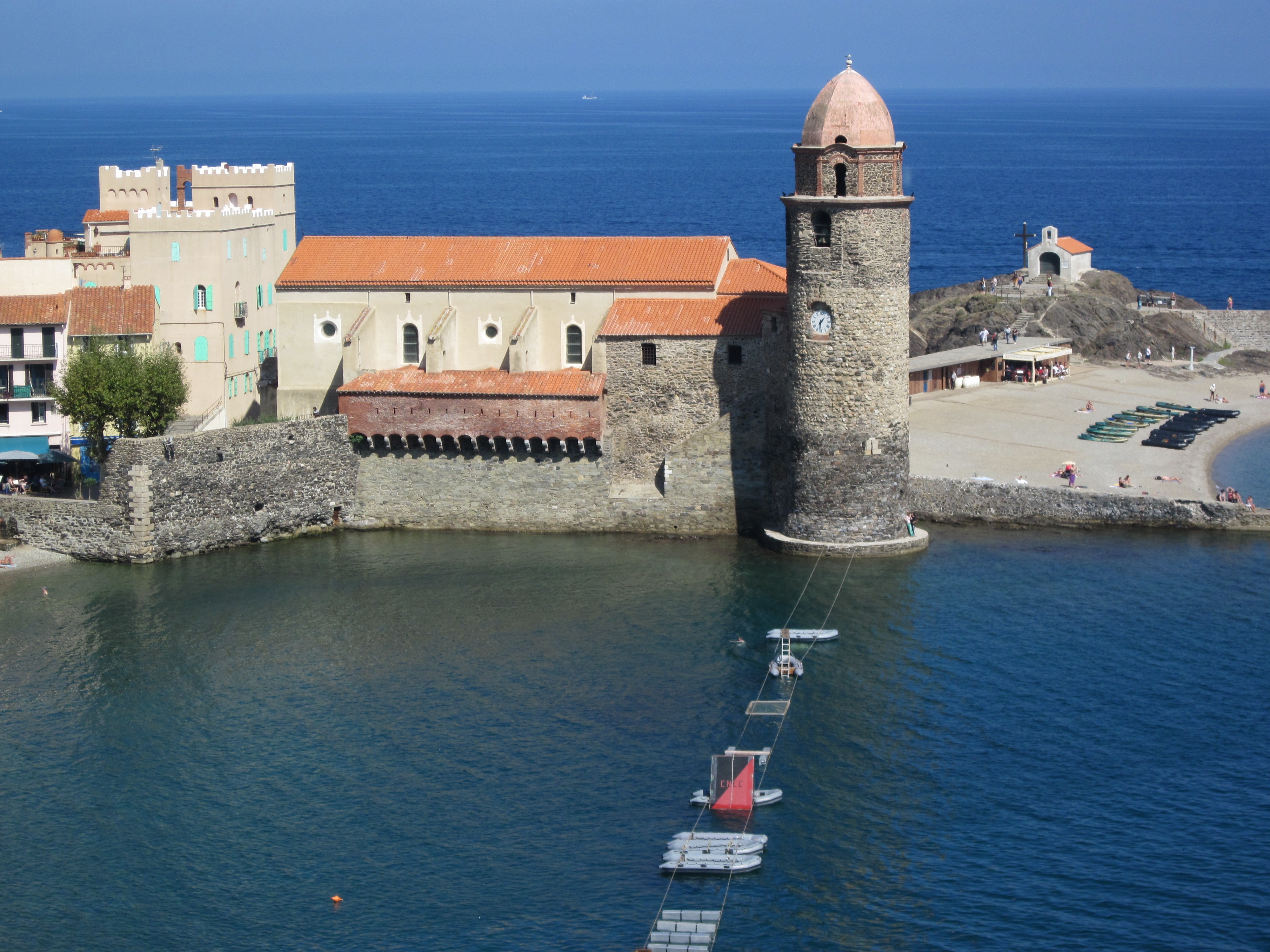
This morning, glide into another of the Mediterranean’s stunning deep-water harbours. Collioure is adorned with small beaches, castles by the sea, and pink-domed bell towers. Known as the ‘Pearl of the Vermillion Coast’, Collioure has azure waters lapping pebbled beaches and pastel houses surrounding sun dappled squares. Walk through the town and lose yourself on the streets lined with cafes and gelato shops. With a mix of French and Spanish influences, Collioure is famed for its wine and salted anchovies, both of which are exported all over France.    

Collioure, France
Collioure, FranceImage by Guy Dugas from Pixaba

Day 8 - Cassis

The picturesque fishing village of Cassis, nestled along the stunning French Riviera, is famous for its colourful harbour, charming streets and the dramatic cliffs of Calanques National Park. Enjoy local wines, stroll along the waterfront and take in the unforgettable coastal views that define this captivating destination. Later this evening, set sail for Sanary-sur-Mer, where you’ll enjoy an overnight stay. 

Cassis, France
Cassis, FrancePauline Bernard
Cassis, France
Cassis, FranceChloé Mormin
Cassis, France
Cassis, FranceCatalina Fedorova
Cassis, France
Cassis, FranceAnastasia Quince
Cassis, France
Cassis, FranceLien Van Win
Cassis, France
Cassis, FranceSimon PALLARD
Cassis, France
Cassis, FranceAlexandra Smielova
Cassis, France
Cassis, FranceAmandine Manteau
A View From Above Onto The Beach Of Cassis In Provence, France
A View From Above Onto The Beach Of Cassis In Provence, FranceArno Senoner
Vacationers On A Cassis Beach
Vacationers On A Cassis Beachfreddie marriage

Day 8 - Sanary-sur-Mer

The picturesque fishing village of Cassis, nestled along the stunning French Riviera, is famous for its colourful harbour, charming streets and the dramatic cliffs of Calanques National Park. Enjoy local wines, stroll along the waterfront and take in the unforgettable coastal views that define this captivating destination. Later this evening, set sail for Sanary-sur-Mer, where you’ll enjoy an overnight stay. 

Sanary Sur Mer
Sanary Sur MerImage by Guy Dugas from Pixabay

Day 9 - Sanary-sur-Mer

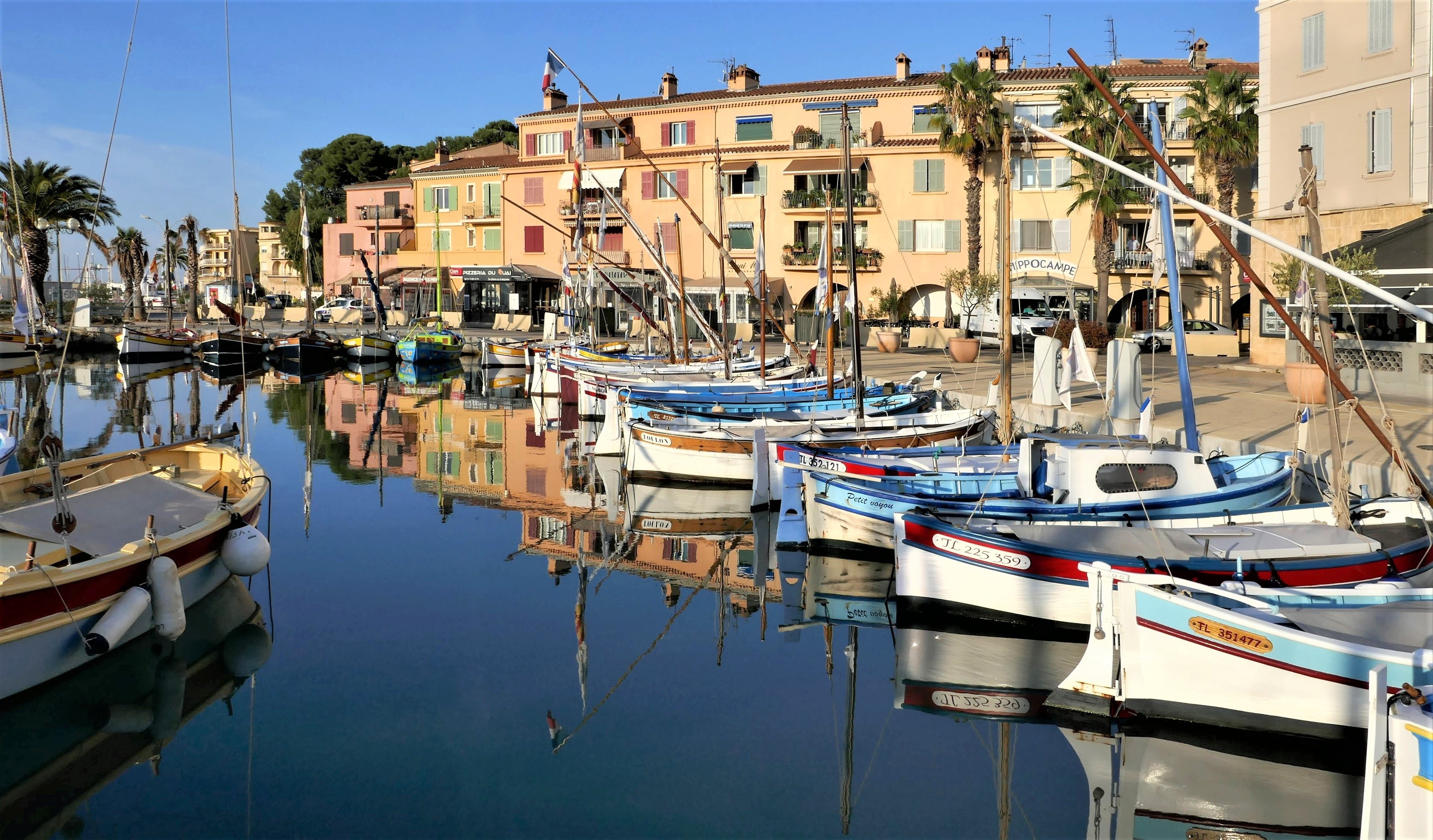
The small town of Sanary-sur-Mer on the French Riviera began life as a fishing village and the marina is still filled with hundreds of brightly coloured wooden boats. You’ll quickly be charmed by this picturesque Provençal village, with its pretty palm-lined harbour, quiet pedestrian streets and pastel-hued buildings. They are all clustered around a 13th century watchtower, which you can climb for sweeping views of the town. Along the harbour, you’ll see fishermen pulling in the day’s catch which is then served up at the open-air restaurants looking out over the bobbing boats.   

Sanary Sur Mer
Sanary Sur MerImage by Guy Dugas from Pixabay

Day 10 - Saint-Tropez

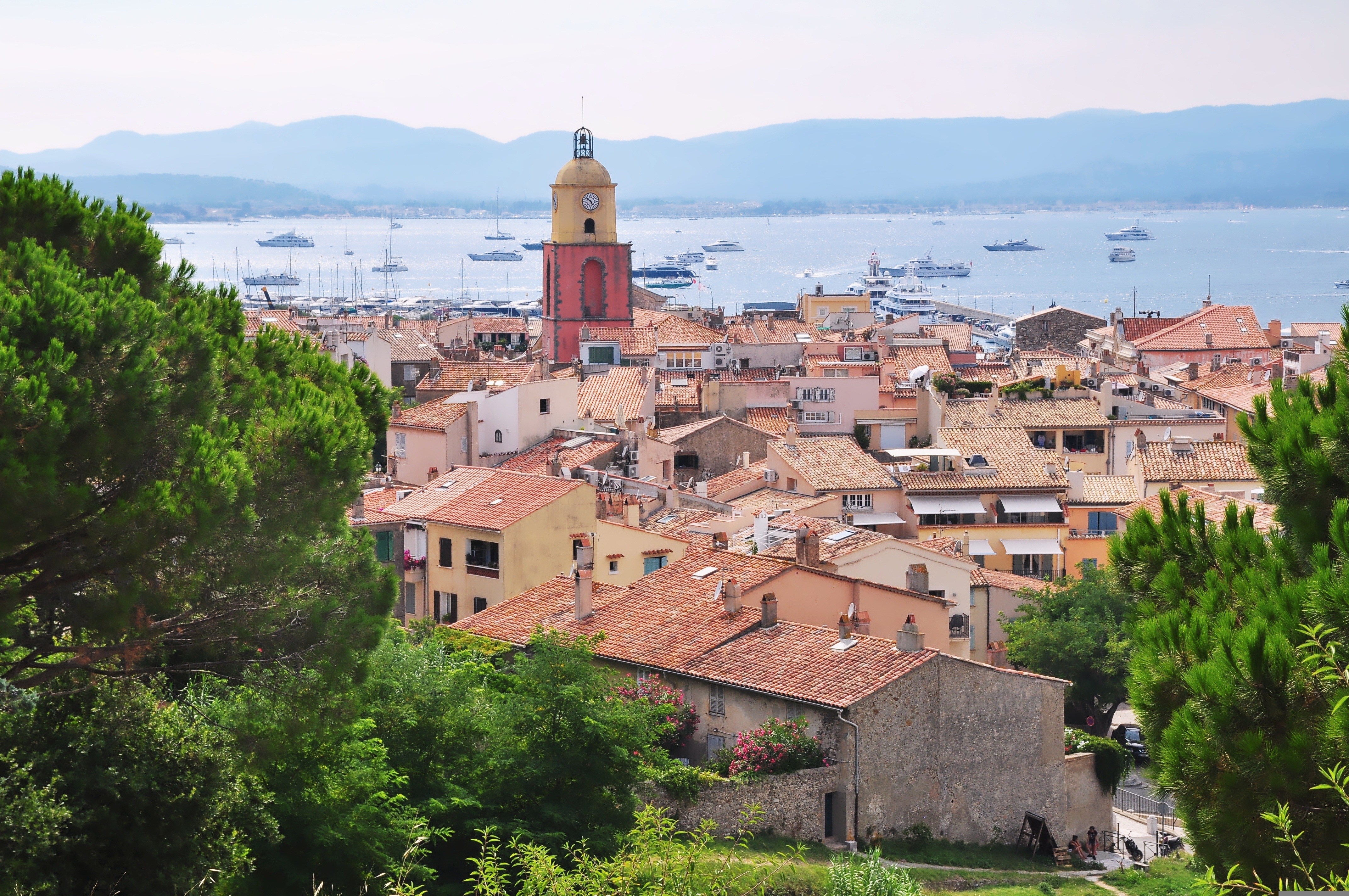
Saint-Tropez, once a quiet fishing village, became a chic travel destination in the 1950s, thanks to Brigitte Bardot and the film ‘And God Created Woman’. Today, it still retains all the glitz and glamour, alongside glittering blue seas, stunning beaches and a Bohemian art scene. Stroll along the cobblestone streets of the old fishing quarter of La Ponche, and revel in the abstract architecture and sunlit landscapes that inspired great artists and filmmakers. With a late departure, see Saint-Tropez come alive in the evening. 

At first glance, it really doesn't look all that impressive. There's a pretty port with cafés charging €5 for a coffee and a picturesque old town in sugared-almond hues, but there are many prettier in the hills nearby. There are sandy beaches, rare enough on the Riviera, and old-fashioned squares with plane trees and pétanque players, but these are a dime a dozen throughout Provence. So what made St-Tropez an internationally known locale? Two words: Brigitte Bardot. When this pulpeuse (voluptuous) teenager showed up in St-Tropez on the arm of Roger Vadim in 1956 to film And God Created Woman, the heads of the world snapped around. Neither the gentle descriptions of writer Guy de Maupassant (1850–93), nor the watercolor tones of Impressionist Paul Signac (1863–1935), nor the stream of painters who followed (including Matisse and Bonnard) could focus the world's attention on this seaside hamlet as did this one sensual woman in a scarf, Ray-Bans, and capris. Vanity Fair ran a big article, "Saint Tropez Babylon," detailing the over-the-top petrodollar parties, megayachts, and Beyoncé–d paparazzi. But don't be turned off: the next year, Stewart, Tabori & Chang released an elegant coffee-table book, Houses of St-Tropez, packed with photos of supremely tasteful and pretty residences, many occupied by fashion designers, artists, and writers. Once a hangout for Colette, Anaïs Nin, and Françoise Sagan, the town still earns its old moniker, the "Montparnasse of the Mediterranean." Yet you might be surprised to find that this byword for billionaires is so small and insulated. The lack of train service, casinos, and chain hotels keeps it that way. Yet fame, in a sense, came too fast for St-Trop. Unlike the chic resorts farther east, it didn't have the decades-old reputation of the sort that would attract visitors all year around. For a good reason: its location on the south side of the gulf puts it at the mercy of the terrible mistral winter winds. So, in summer the crowds descend and the prices rise into the stratosphere. In July and August, you must be carefree about the sordid matter of cash. After all, at the most Dionysian nightclub in town, a glass of tap water goes for $37 and when the mojo really gets going, billionaires think nothing of "champagne-spraying" the partying crowds—think World Series celebrations but with $1,000 bottles of Roederer Cristal instead of Gatorade. Complaining about summer crowds, overpricing, and lack of customer service has become a tourist sport and yet this is what makes St-Tropez—described by the French daily newspaper Le Figaro as the place you can see "the greatest number of faces per square meter"—as intriguing as it is seductive.

St Tropez, France
St Tropez, FranceImage by Karl Egger from Pixabay

Day 11 - Nice

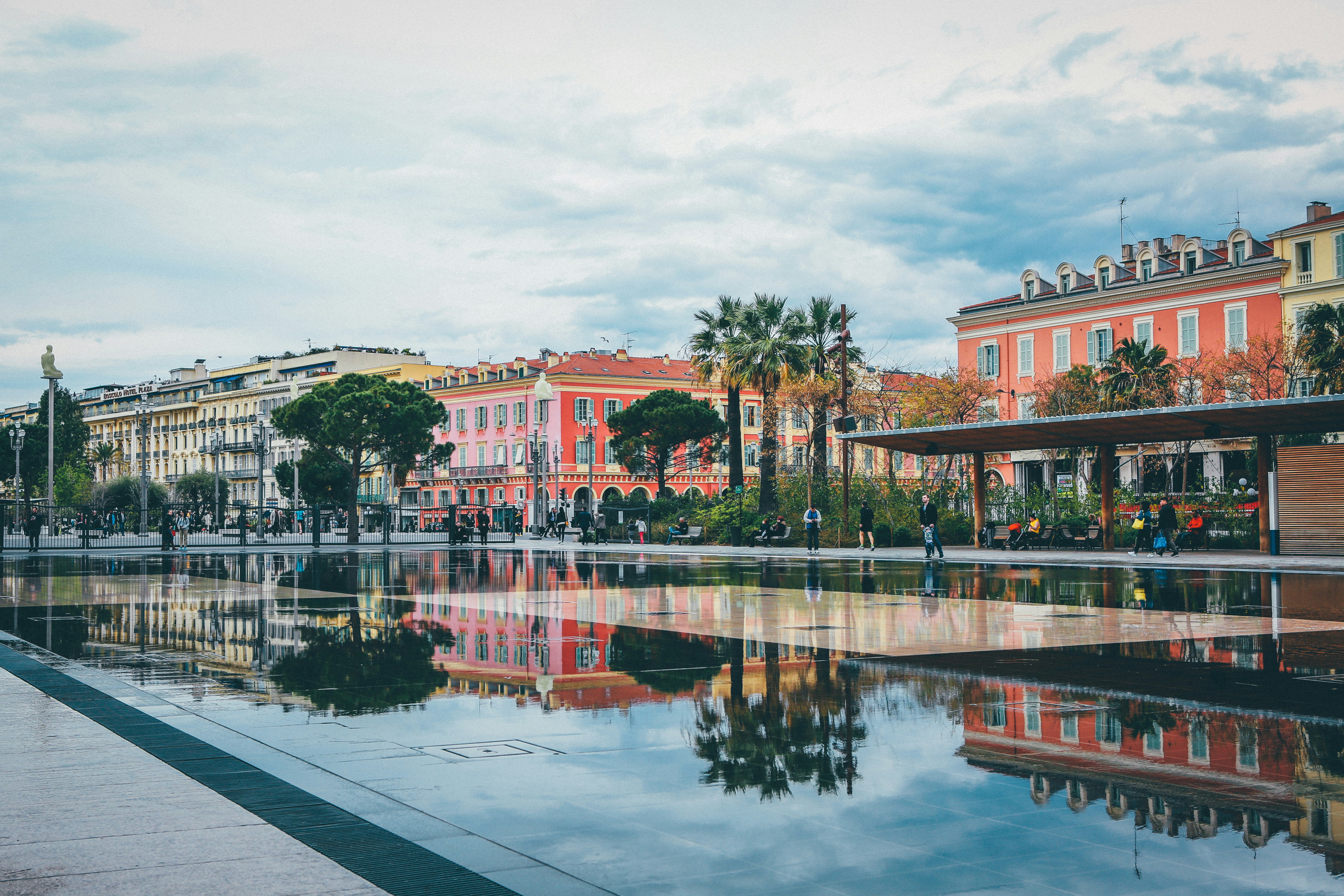
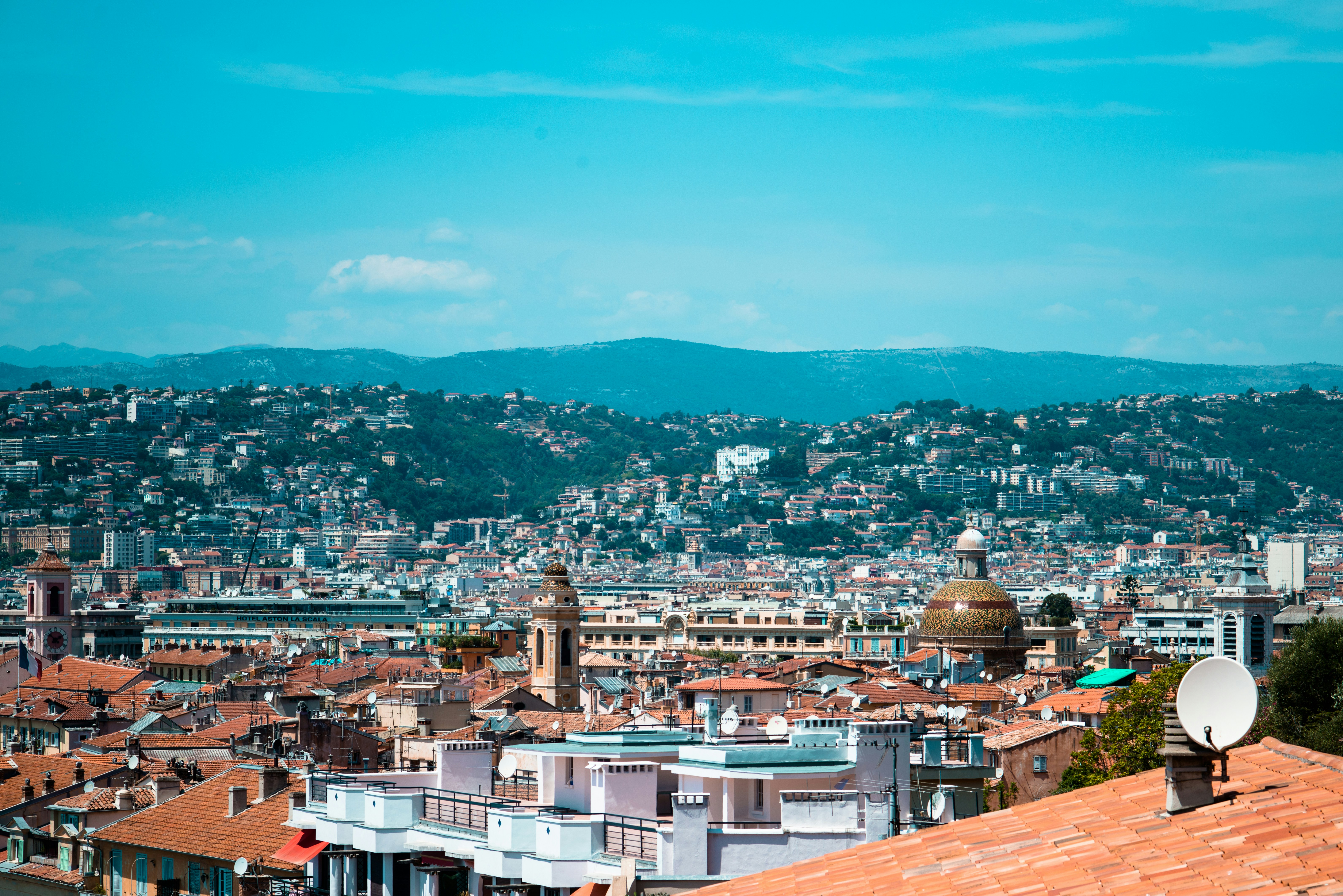
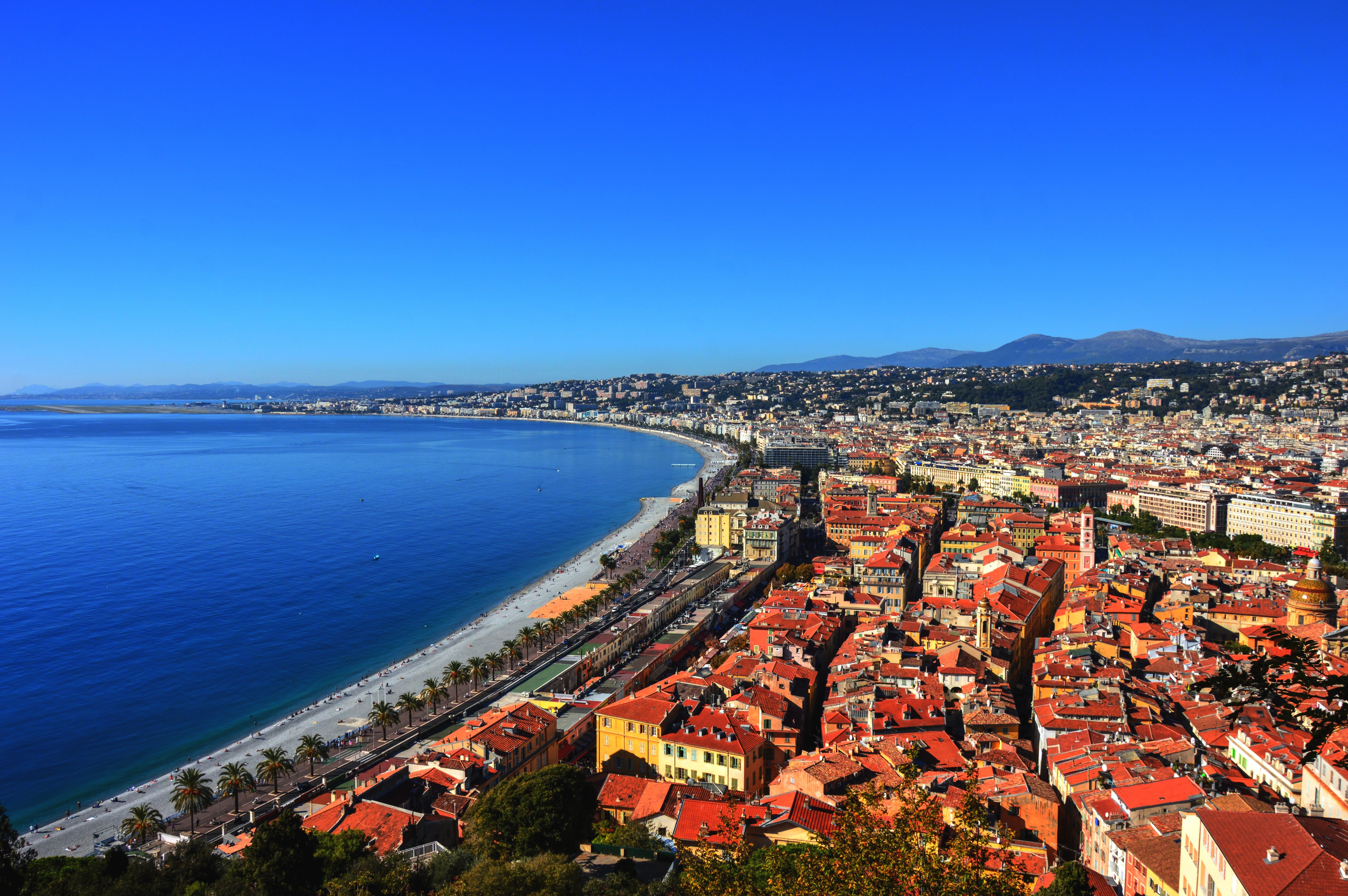
Welcome to Nice, the sparkling jewel of the French Riviera. With its elegant seaside promenade, Belle Époque architecture and vibrant markets, this coastal city blends Mediterranean charm with timeless sophistication. Stroll along the famous Promenade des Anglais, explore the narrow streets of the Old Town (Vieux Nice), or relax at a café with a view of the turquoise sea. Later this evening, sail for Monte Carlo, where you’ll enjoy an overnight stay. 

United with France only since 1860, Nice has its own history and atmosphere, which dates back 230,000 years. It was on Colline du Château (now château-less) and at the Plage des Ponchettes, in front of the Old Town, that the Greeks established a market-port in 350 BC and named it Nikaia, which would become Marseilles' chief coastal rival. The Romans established themselves a little later on the hills of Cimiez (Cemenelum), already previously occupied by Ligurians and Celts, and quickly overshadowed the waterfront port. After falling to the Saracen invasions, Nice regained power as an independent state, becoming an important port in the early Middle Ages.So cocksure did it become that in 1388, Nice, along with the hill towns behind, effectively seceded from the county of Provence, under Louis d'Anjou, and allied itself with Savoie. Thus began its liaison with the House of Savoy, and through it with Piedmont and Sardinia, it was the Comté de Nice (Nice County). This relationship lasted some 500 years, tinting the culture, architecture, and dialect in rich Italian hues.By the 19th century Nice was flourishing commercially, locked in rivalry with the neighboring shipping port of Genoa. Another source of income: the dawning of tourism, as first the English, then the Russian nobility, discovered its extraordinary climate and superb waterfront position. A parade of fine stone mansions and hotels closed into a nearly solid wall of masonry, separated from the smooth-round rocks of the beach by what was originally named Camin deis Anglés (the English Way), which of course is now the famous Promenade des Anglais. This magnificent crescent, which is seeking UNESCO recognition, is one of the noblest in France. Many of Nice's most delightful attractions—the Cours Saleya market, the Old Town streets, the Hotel Negresco, and the Palais Masséna—are on or close to this 10-km (6-mile) waterfront, making it the first stop for most visitors, while the redevelopment of Nice's port, around the other side of the Colline du Château, makes it easier for amblers who want to take in the Genoese architecture or peruse the antiques at the Puces de Nice, now part of the Promenade des 100 Antiquaires, along Quai Papacino. Nice also has the distinction of the "Family Plus" label, with free strollers, play areas, and restaurants with child-friendly activities.

Town Centre, Nice, France
Town Centre, Nice, FrancePhoto by Nick Karvounis on Unsplash
Skyline Of Nice, France
Skyline Of Nice, FrancePhoto by Jonas Smith on Unsplash
Nice, France
Nice, FranceImage by Fabien from Pixabay

Day 11 - Monte-Carlo

Welcome to Nice, the sparkling jewel of the French Riviera. With its elegant seaside promenade, Belle Époque architecture and vibrant markets, this coastal city blends Mediterranean charm with timeless sophistication. Stroll along the famous Promenade des Anglais, explore the narrow streets of the Old Town (Vieux Nice), or relax at a café with a view of the turquoise sea. Later this evening, sail for Monte Carlo, where you’ll enjoy an overnight stay. 

On one of the best stretches of the Mediterranean, this classic luxury destination is one of the most sought-after addresses in the world. With all the high-rise towers you have to look hard to find the Belle Époque grace of yesteryear. But if you head to the town's great 1864 landmark Hôtel de Paris—still a veritable crossroads of the buffed and befurred Euro-gentry—or enjoy a grand bouffe at its famous Louis XV restaurant, or attend the opera, or visit the ballrooms of the casino, you may still be able to conjure up Monaco's elegant past. Prince Albert II, a political science graduate from Amherst College, traces his ancestry to Otto Canella, who was born in 1070. The Grimaldi dynasty began with Otto's great-great-great-grandson, Francesco Grimaldi, also known as Frank the Rogue. Expelled from Genoa, Frank and his cronies disguised themselves as monks and in 1297 seized the fortified medieval town known today as Le Rocher (the Rock). Except for a short break under Napoléon, the Grimaldis have been here ever since, which makes them the oldest reigning family in Europe. In the 1850s a Grimaldi named Charles III made a decision that turned the Rock into a giant blue chip. Needing revenue but not wanting to impose additional taxes on his subjects, he contracted with a company to open a gambling facility. The first spin of the roulette wheel was on December 14, 1856. There was no easy way to reach Monaco then—no carriage roads or railroads—so no one came. Between March 15 and March 20, 1857, one person entered the casino—and won two francs. In 1868, however, the railroad reached Monaco, and it was filled with Englishmen who came to escape the London fog. The effects were immediate. Profits were so great that Charles eventually abolished all direct taxes. Almost overnight, a threadbare principality became an elegant watering hole for European society. Dukes (and their mistresses) and duchesses (and their gigolos) danced and dined their way through a world of spinning roulette wheels and bubbling champagne—preening themselves for nights at the opera, where such artists as Vaslav Nijinsky, Sarah Bernhardt, and Enrico Caruso came to perform. Along with the tax system, its sensational position on a broad, steep peninsula that bulges into the Mediterranean—its harbor sparkling with luxury cruisers, its posh mansions angling awnings toward the nearly perpetual sun—continues to draw the rich and famous. One of the latest French celebrities to declare himself "Monégasque," thus giving up his French passport, is superchef Alain Ducasse, who said that he made the choice out of affection for Monaco rather than tax reasons. Pleasure boats vie with luxury cruisers in their brash beauty and Titanic scale, and teams of handsome young men—themselves dyed blond and tanned to match—scour and polish every gleaming surface. As you might expect, all this glitz doesn't come cheap. Eating is expensive, and even the most modest hotels cost more here than in nearby Nice or Menton. As for taxis, they don't even have meters so you are completely at the driver's mercy (with prices skyrocketing during events such as the Grand Prix). For the frugal, Monaco is the ultimate day-trip, although parking is as coveted as a room with a view. At the very least you can afford a coffee at Starbucks. The harbor district, known as La Condamine, connects the new quarter, officially known as Monte Carlo with Monaco-Ville (or Le Rocher), a medieval town on the Rock, topped by the palace, the cathedral, and the Oceanography Museum. Have no fear that you'll need to climb countless steps to get to Monaco-Ville, as there are plenty of elevators and escalators climbing the steep cliffs. But shuttling between the lovely casino grounds of Monte Carlo and Old Monaco, separated by a vast port, is a daunting proposition for ordinary mortals without wings, so hop on the No. 1 bus from Saint Roman, or No. 2 from the Jardin Exotique - Both stop at Place du Casino and come up to Monaco Ville.

Mcmcm Monte Carlo Aerial Photography Of Cityscape During Daytime Julien Lanoy
Mcmcm Monte Carlo Aerial Photography Of Cityscape During Daytime Julien LanoyJulien Lanoy
Mcmcm Monte Carlo City At Night Pasquale Iovino
Mcmcm Monte Carlo City At Night Pasquale IovinoPasquale Iovino
Mcmcm Monte Carlo Red Coupe On Road Jannis Lucas
Mcmcm Monte Carlo Red Coupe On Road Jannis LucasJannis Lucas

Day 12 - Monte-Carlo

Monte Carlo is the epitome of style and elegance, nestled within the principality of Monaco. Explore the opulent streets lined with famous designer boutiques and savour the warmth of the Mediterranean sun along the picturesque coastline. With its world-class entertainment, exclusive clubs and prestigious events, Monte Carlo captivates visitors with glamour and sophistication. Whether you're seeking excitement at the famous Casino de Monte-Carlo or prefer a quiet moonlit dinner, an unforgettable overnight stay awaits.  

On one of the best stretches of the Mediterranean, this classic luxury destination is one of the most sought-after addresses in the world. With all the high-rise towers you have to look hard to find the Belle Époque grace of yesteryear. But if you head to the town's great 1864 landmark Hôtel de Paris—still a veritable crossroads of the buffed and befurred Euro-gentry—or enjoy a grand bouffe at its famous Louis XV restaurant, or attend the opera, or visit the ballrooms of the casino, you may still be able to conjure up Monaco's elegant past. Prince Albert II, a political science graduate from Amherst College, traces his ancestry to Otto Canella, who was born in 1070. The Grimaldi dynasty began with Otto's great-great-great-grandson, Francesco Grimaldi, also known as Frank the Rogue. Expelled from Genoa, Frank and his cronies disguised themselves as monks and in 1297 seized the fortified medieval town known today as Le Rocher (the Rock). Except for a short break under Napoléon, the Grimaldis have been here ever since, which makes them the oldest reigning family in Europe. In the 1850s a Grimaldi named Charles III made a decision that turned the Rock into a giant blue chip. Needing revenue but not wanting to impose additional taxes on his subjects, he contracted with a company to open a gambling facility. The first spin of the roulette wheel was on December 14, 1856. There was no easy way to reach Monaco then—no carriage roads or railroads—so no one came. Between March 15 and March 20, 1857, one person entered the casino—and won two francs. In 1868, however, the railroad reached Monaco, and it was filled with Englishmen who came to escape the London fog. The effects were immediate. Profits were so great that Charles eventually abolished all direct taxes. Almost overnight, a threadbare principality became an elegant watering hole for European society. Dukes (and their mistresses) and duchesses (and their gigolos) danced and dined their way through a world of spinning roulette wheels and bubbling champagne—preening themselves for nights at the opera, where such artists as Vaslav Nijinsky, Sarah Bernhardt, and Enrico Caruso came to perform. Along with the tax system, its sensational position on a broad, steep peninsula that bulges into the Mediterranean—its harbor sparkling with luxury cruisers, its posh mansions angling awnings toward the nearly perpetual sun—continues to draw the rich and famous. One of the latest French celebrities to declare himself "Monégasque," thus giving up his French passport, is superchef Alain Ducasse, who said that he made the choice out of affection for Monaco rather than tax reasons. Pleasure boats vie with luxury cruisers in their brash beauty and Titanic scale, and teams of handsome young men—themselves dyed blond and tanned to match—scour and polish every gleaming surface. As you might expect, all this glitz doesn't come cheap. Eating is expensive, and even the most modest hotels cost more here than in nearby Nice or Menton. As for taxis, they don't even have meters so you are completely at the driver's mercy (with prices skyrocketing during events such as the Grand Prix). For the frugal, Monaco is the ultimate day-trip, although parking is as coveted as a room with a view. At the very least you can afford a coffee at Starbucks. The harbor district, known as La Condamine, connects the new quarter, officially known as Monte Carlo with Monaco-Ville (or Le Rocher), a medieval town on the Rock, topped by the palace, the cathedral, and the Oceanography Museum. Have no fear that you'll need to climb countless steps to get to Monaco-Ville, as there are plenty of elevators and escalators climbing the steep cliffs. But shuttling between the lovely casino grounds of Monte Carlo and Old Monaco, separated by a vast port, is a daunting proposition for ordinary mortals without wings, so hop on the No. 1 bus from Saint Roman, or No. 2 from the Jardin Exotique - Both stop at Place du Casino and come up to Monaco Ville.

Mcmcm Monte Carlo Aerial Photography Of Cityscape During Daytime Julien Lanoy
Mcmcm Monte Carlo Aerial Photography Of Cityscape During Daytime Julien LanoyJulien Lanoy
Mcmcm Monte Carlo City At Night Pasquale Iovino
Mcmcm Monte Carlo City At Night Pasquale IovinoPasquale Iovino
Mcmcm Monte Carlo Red Coupe On Road Jannis Lucas
Mcmcm Monte Carlo Red Coupe On Road Jannis LucasJannis Lucas

Day 13 - Portovenere

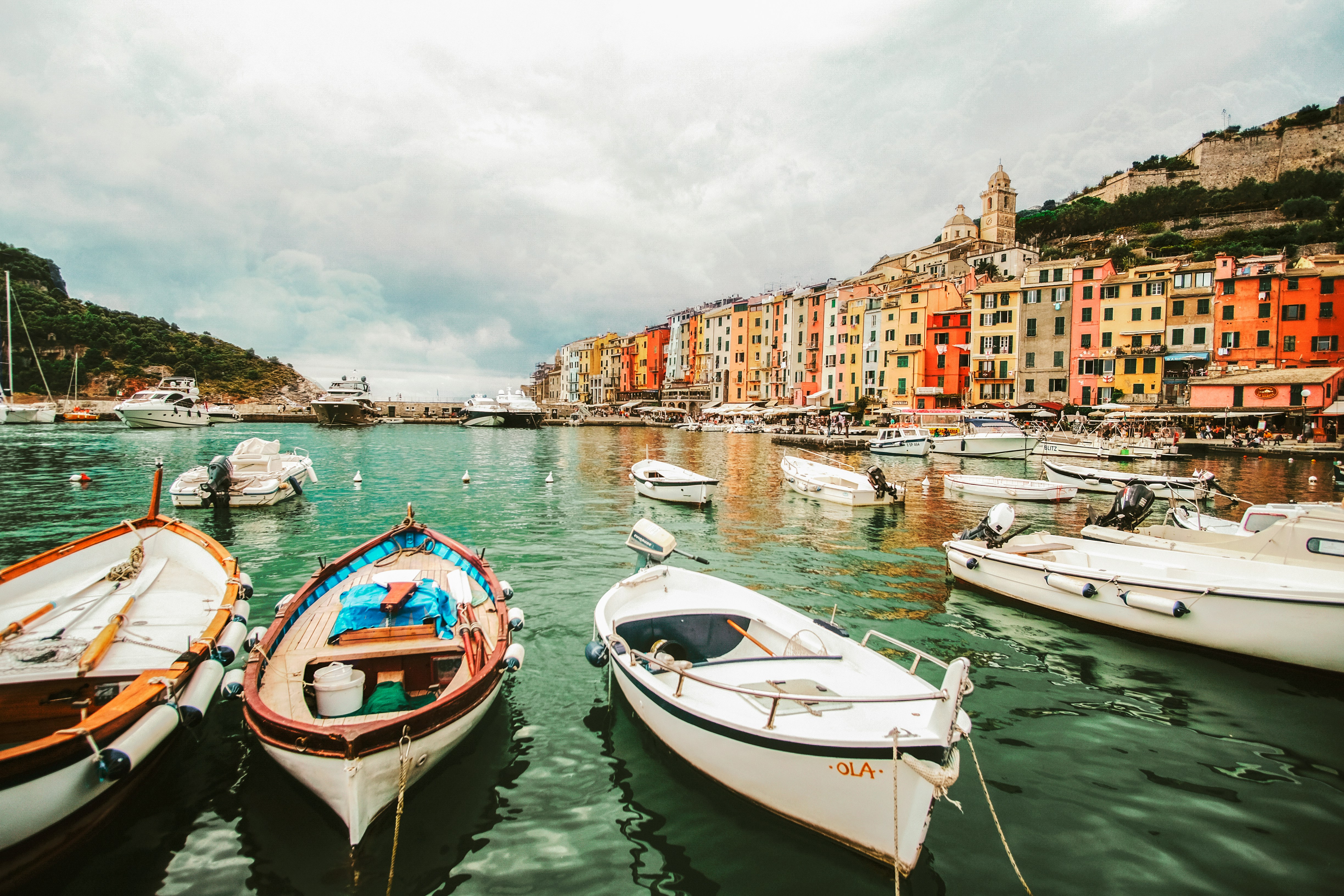
Dubbed the “sixth” Cinque Terre town, Portovenere is a World Heritage-listed beauty that has an extraordinary, picturesque coastline, narrow streets winding through a medieval town and sweeping views of the Mediterranean. It’s a hidden gem that is less frequented, allowing you the space to relax and experience the town for all that it is. Previously used as a Roman naval station, there is a lot of history for you to explore along this rugged coast. Popular poets and writers such as Byron, Shelley and Lawrence are known to have fallen in love with the charm of this town. 

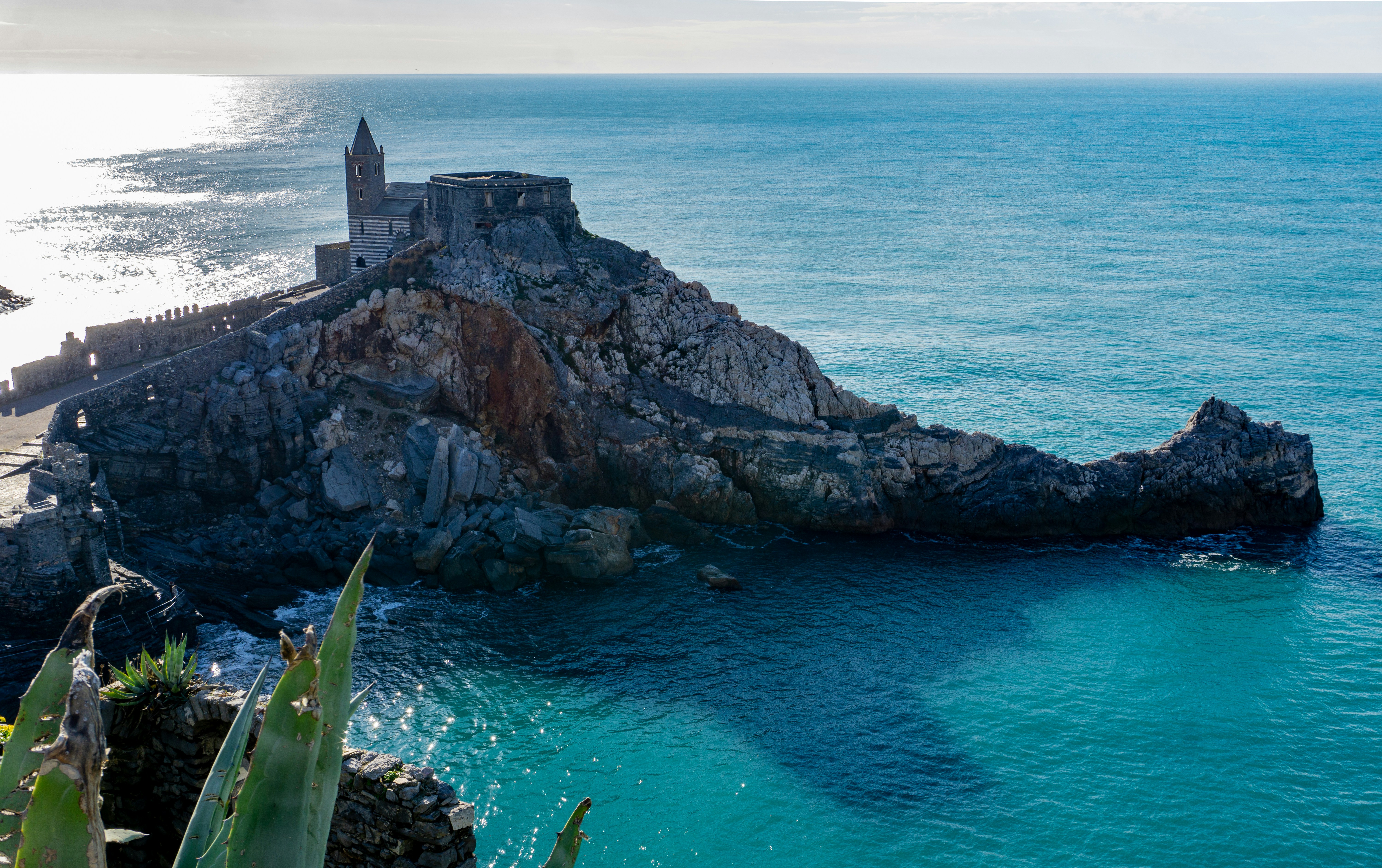
The colorful facades and pedestrians-only calata (promenade) make Portovenere the quintessential Ligurian seaside village. As a UNESCO World Heritage Site, its harbor is lined with tall, thin "terratetto" houses that date from as far back as the 11th century and are connected in a wall-like formation to protect against attacks by the Pisans and local pirates. Its tiny, carruggi (alley-like passageways) lead to an array of charming shops, homes, and gardens and eventually to the village's impressive Castle Doria high on the olive tree covered hill. To the west standing guard over the Mediterranean is the picturesque medieval Chiesa di San Pietro, once the site of a temple to Venus (Venere in Italian), from which Portovenere gets its name. Nearby, in a rocky area leading to the sea, is Byron's Cave, a favorite spot that the poet loved to swim out into the sea from.

Portovenere, Sp, Italia
Portovenere, Sp, ItaliaPhoto by Federico Di Dio photography on Unsplash
Portovenere, Italy
Portovenere, ItalyPhoto by Cristina Gottardi on Unsplash
Portovenere, Sp, Italia
Portovenere, Sp, ItaliaPhoto by VINCENZO INZONE on Unsplash

Day 14 - Livorno

The vibrant city of Livorno has been welcoming sailors and traders from around the globe for over 400 years. As one of Italy's most cosmopolitan cities, Livorno serves as the gateway to the magnificent Tuscany region, renowned for its picturesque landscapes, delectable cuisine and rich artistic heritage. Located conveniently close to Florence (birthplace of the Renaissance) and Pisa, Livorno offers easy access to these iconic destinations.   

Livorno is a gritty city with a long and interesting history. In the early Middle Ages it alternately belonged to Pisa and Genoa. In 1421 Florence, seeking access to the sea, bought it. Cosimo I (1519–74) started construction of the harbor in 1571, putting Livorno on the map. After Ferdinando I de' Medici (1549–1609) proclaimed Livorno a free city, it became a haven for people suffering from religious persecution; Roman Catholics from England and Jews and Moors from Spain and Portugal, among others, settled here. The Quattro Mori (Four Moors), also known as the Monument to Ferdinando I, commemorates this. (The statue of Ferdinando I dates from 1595, the bronze Moors by Pietro Tacca from the 1620s.)In the following centuries, and particularly in the 18th, Livorno boomed as a port. In the 19th century the town drew a host of famous Britons passing through on their grand tours. Its prominence continued up to World War II, when it was heavily bombed. Much of the town's architecture, therefore, postdates the war, and it's somewhat difficult to imagine what it might have looked like before. Livorno has recovered from the war, however, as it's become a huge point of departure for container ships, as well as the only spot in Tuscany for cruise ships to dock for the day.Most of Livorno's artistic treasures date from the 17th century and aren't all that interesting unless you dote on obscure baroque artists. Livorno's most famous native artist, Amedeo Modigliani (1884–1920), was of much more recent vintage. Sadly, there's no notable work by him in his hometown.There may not be much in the way of art, but it's still worth strolling around the city. The Mercato Nuovo, which has been around since 1894, sells all sorts of fruits, vegetables, grains, meat, and fish. Outdoor markets nearby are also chock-full of local color. The presence of Camp Darby, an American military base just outside town, accounts for the availability of many American products.If you have time, Livorno is worth a stop for lunch or dinner at the very least.

Itliv   Livorno   Paddleboat At Sunset   Tim Vanderhoydonck
Itliv Livorno Paddleboat At Sunset Tim VanderhoydonckTim Vanderhoydonck
Itliv   Livorno   Winter Sun Over The Sea   Filippo Ascione
Itliv Livorno Winter Sun Over The Sea Filippo AscioneFilippo Ascione

Day 15 - Civitavecchia

Your Signature Yacht Cruise concludes this morning in Civitavecchia, an ancient port dating back to the second century and serving as the gateway to Rome. Explore the timeless beauty of the ‘Eternal City’, where historic monuments and ornate churches sit alongside busy cafes and designer boutiques, and every corner tells a story of empires past.   

After savouring a final delightful breakfast on board, it will be time to disembark and commence your onward journey or return home, carrying cherished memories with you.   

Please book your flight to depart out of Rome after 12:00 PM.

#Spa treatments and services at additional cost. Daily activities may be subject to change; please consult your Daily Wonder for updates. +All drinks on board, including those stocked in your mini bar, are included, except for a very small number of rare, fine and vintage wines, Champagnes and spirits. Specialty restaurants require a reservation, enquire on board.
^Experiences on board our helicopters and submersible are at additional cost, subject to regulatory approval, availability, weight restrictions, medical approval and weather conditions.

Helicopter not operational in France. Submersible not operational in Europe.

The itinerary is a guide only and may be amended for operational reasons. As such Scenic cannot guarantee the voyage will operate unaltered from the itinerary stated above. Please refer to our terms and conditions for further information.

Italy's vibrant capital lives in the present, but no other city on earth evokes its past so powerfully. For over 2,500 years, emperors, popes, artists, and common citizens have left their mark here. Archaeological remains from ancient Rome, art-stuffed churches, and the treasures of Vatican City vie for your attention, but Rome is also a wonderful place to practice the Italian-perfected il dolce far niente, the sweet art of idleness. Your most memorable experiences may include sitting at a caffè in the Campo de' Fiori or strolling in a beguiling piazza.

Itrom   Rome   Colosseum   Mathew Schwartz
Itrom Rome Colosseum Mathew SchwartzPhotograph by Matthew Schwartz
Itrom   Rome   Navona Square   Fototeca Enit
Itrom Rome Navona Square Fototeca EnitFototeca ENIT
Itrom   Rome   S.Pietro & S.Angelo Bridge   Fototeca Enit
Itrom Rome S.Pietro & S.Angelo Bridge Fototeca Enit Fototeca ENIT
Itrom   Rome   Sant'angelo Bridge   Fototeca Enit
Itrom Rome Sant'angelo Bridge Fototeca EnitFototeca ENIT
Itrom   Rome   Tempio Del Divo Claudio   Nicole Reyes
Itrom Rome Tempio Del Divo Claudio Nicole ReyesPhotograph by Nicole Reyes
Itrom   Rome   Trevi Fountain   Christopher Czermak
Itrom Rome Trevi Fountain Christopher CzermakPhotograph by Christopher Czermak
Itrom   Rome   Vatican City   Caleb Miller
Itrom Rome Vatican City Caleb MillerPhotograph by Caleb Miller
Itrom   Rome   Vatican City   Christopher Czermak
Itrom Rome Vatican City Christopher CzermakPhotograph by Christopher Czermak

Suites & Deck Plans

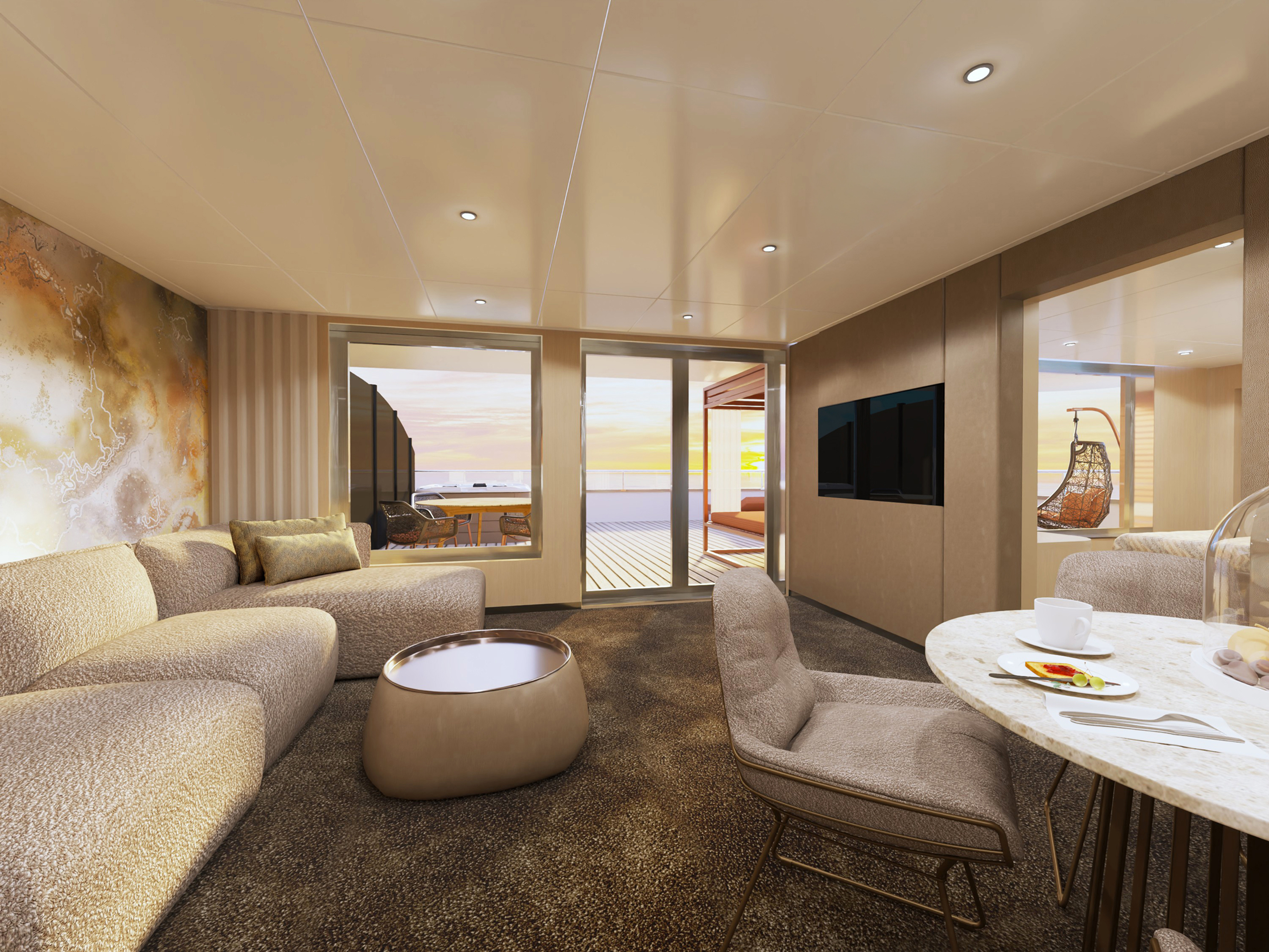
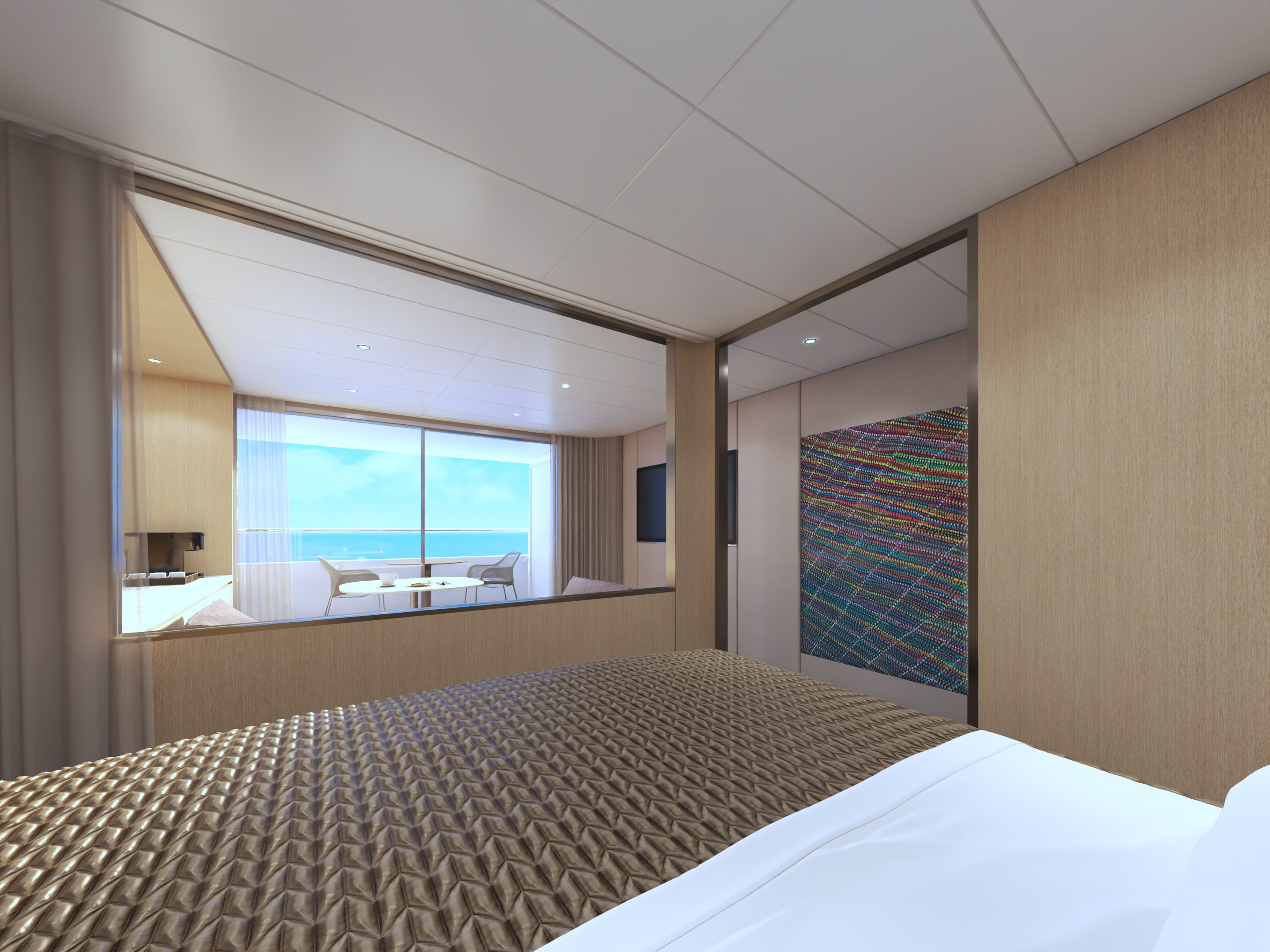
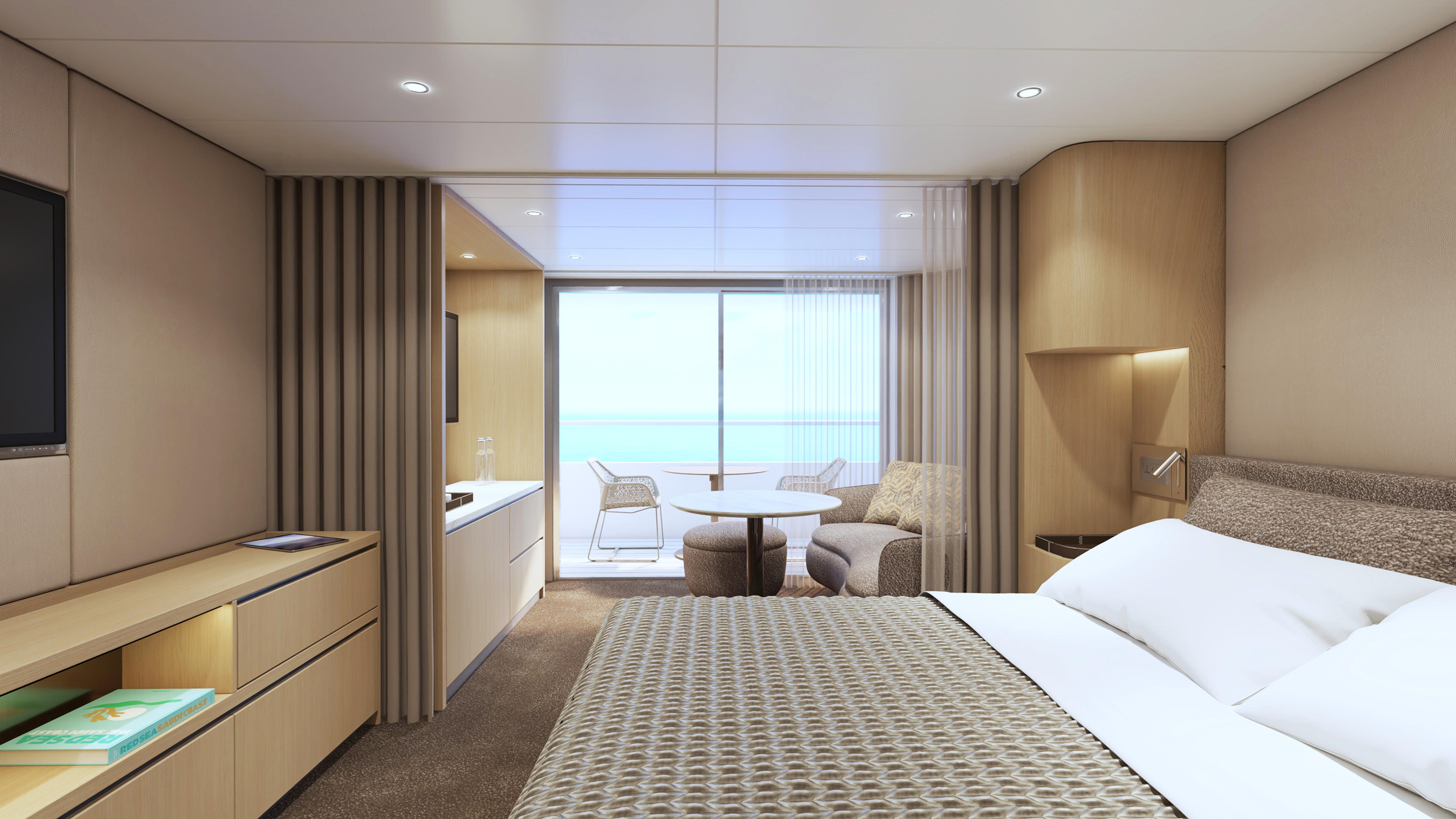
Suite

Your own private residence at sea.

The lounge is thoughtfully appointed areas for relaxation, dining, and entertaining, with a fully appointed bar island: delight in anything your heart desires — from crafted cocktails to wellness-inspired refreshments and light dining — all served discreetly by your private butler. The suite features a master bedroom plus a wellness studio with in-suite ESPA spa services and private fitness amenities. Which can transform into a second bedroom for family or guests. The bathroom is enhanced with steam and infrared experiences for ultimate wellbeing and indulgence with full-size baths and double vanities, ensuring the utmost in comfort and indulgence. A spacious walk-in wardrobe and private Glam Bar, fully appointed with Dyson’s advanced hair care tools and elevated ESPA amenities, complete the suite, offering effortless luxury and the ultimate in oceanfront living. An expansive terrace with Jacuzzi, private cabana, and outdoor lounge and dining areas provides the perfect space to relax or entertain under open skies.

2690 sq ft
Accommodates 4 guests
Ikon Penthouse

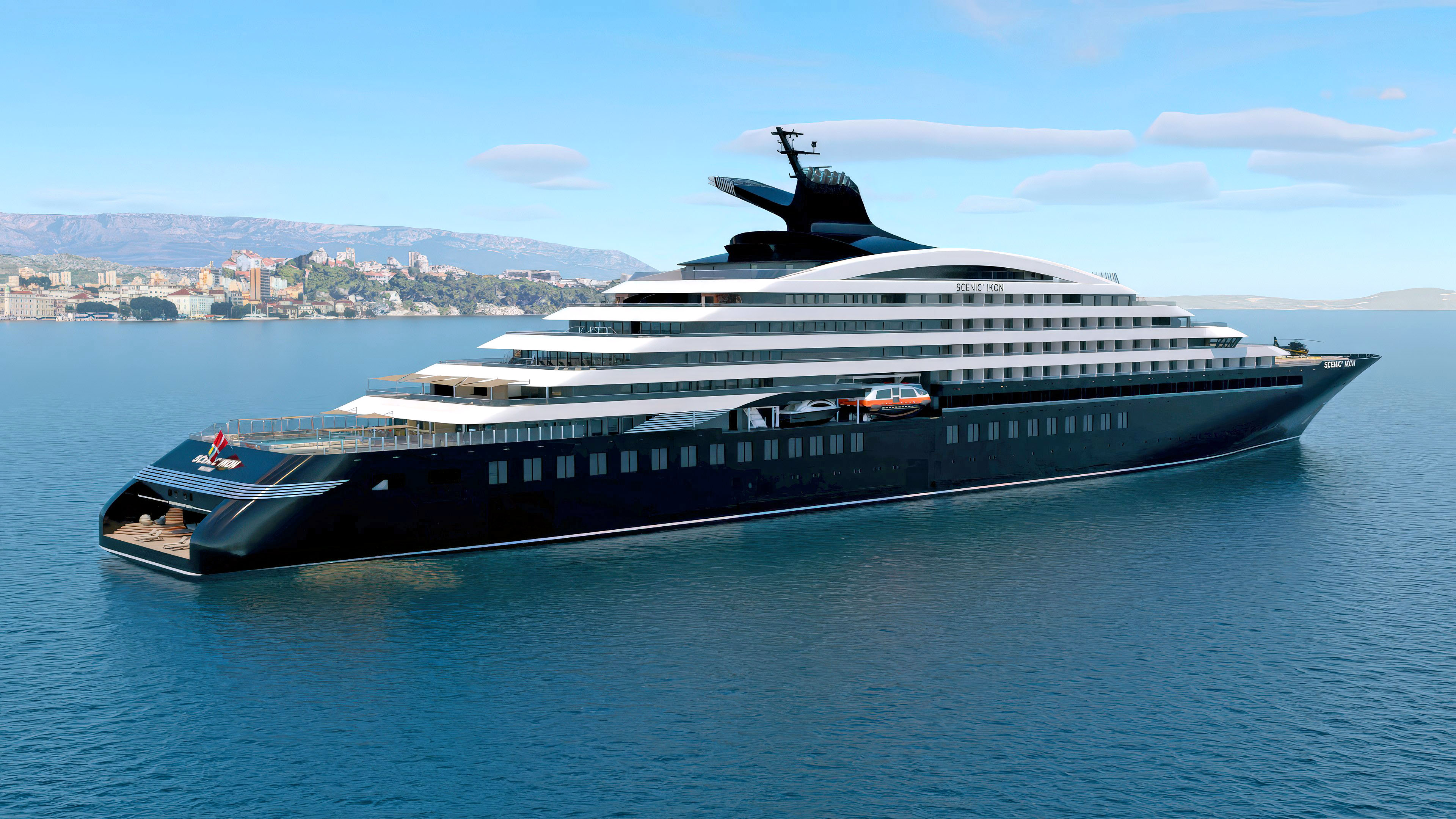
Scenic Ikon

Scenic Ikon

Client testimonials

I have worked with Lore Doick for more than 20 years, and she has booked over 30 cruises for me. Her expertise, care, and attention to every travel detail have made her an invaluable advisor and friend over the years.”

Tina B.

We are now in our second generation working with Cheri Ozimac at Tully Luxury Travel. From Antarctica to Greece, she has handled every detail with expertise, responsiveness, and care…

Earl M.

My wife and I have worked with Tully since 2007, and Kit Neil and her team went far beyond expectations while helping us navigate multiple cruise and flight cancellations. Their advocacy, care, and support during a difficult time were extraordinary.

Carri F.

Cheri Ozimac organized our Seabourn cruise flawlessly, from the hotel recommendation to every travel arrangement. She was responsive, attentive, and an excellent advocate throughout the process…

Cyn S.

We discovered Tully Luxury Travel after years of booking cruises through US agents and were impressed by their competitive pricing, exceptional service, and Canadian based support. Their team is always available, offers excellent value, and makes booking the right cruise seamless.

Peter C.

GoogleAverage Customer Rating:

The Tully Difference

Why travel with us


Tully Luxury Travel was built on access, discretion, and trust. For our clients, that means ease at every step, with distinctions that turn exceptional voyages into defining moments.

Recognized expertise

A renowned agency worldwide in luxury land and small-ship cruising, consistently trusted by the industry’s most prestigious brands.