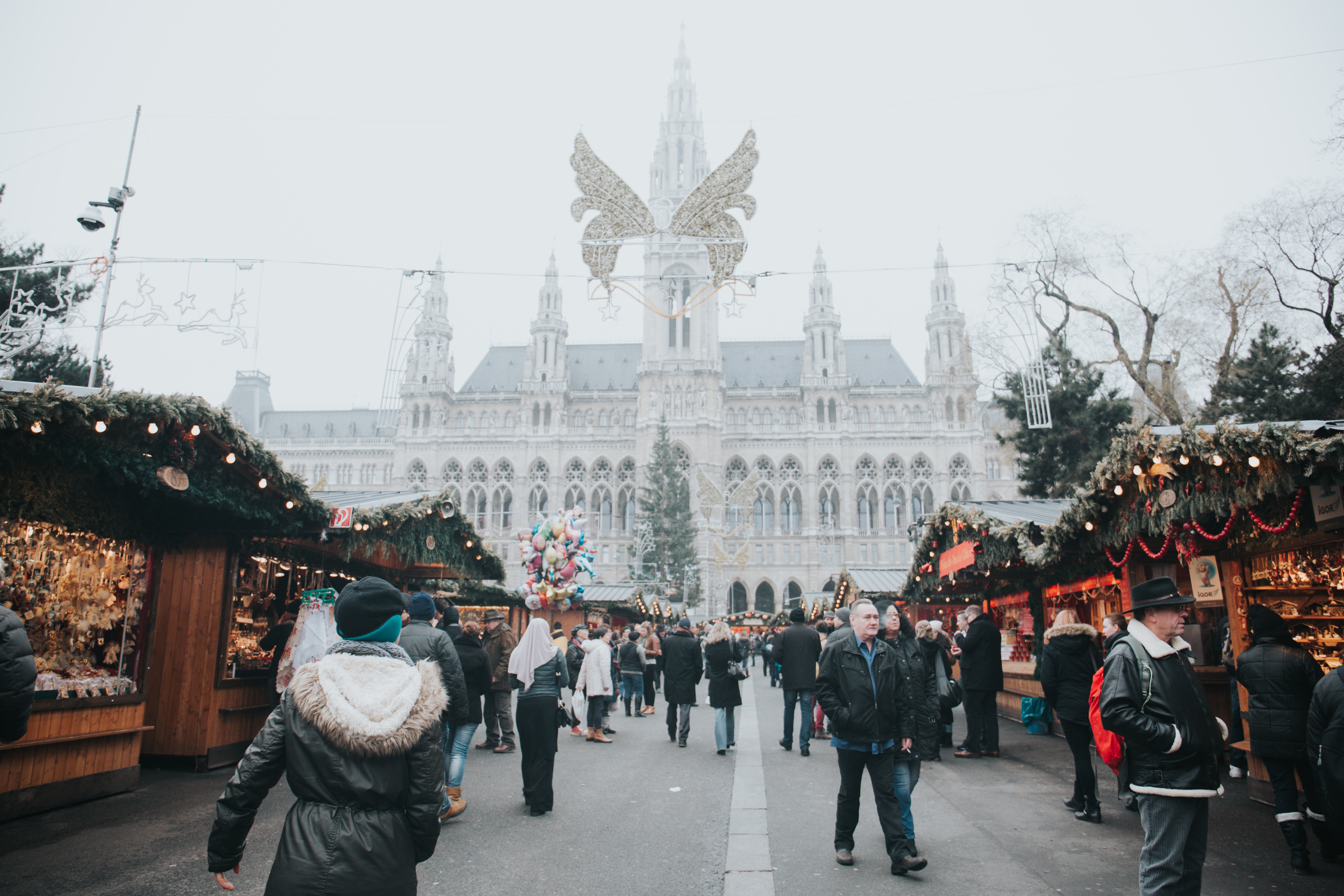
This afternoon, arrive in picturesque Amsterdam. Getting lost in its labyrinth of narrow laneways and canals lined with beautifully preserved 17th century buildings and charming cafes is one of the great ways to spend a day. You’ll be able to and marvel at the festive Christmas trees decorating historic squares.
The Netherlands’ capital is a treasure trove of architectural beauty, galleries filled with masterpieces, 16th century canals, narrow cobbled laneways, and streets busy with cyclists. Much of the city’s World Heritage-listed canal system exists today as it did hundreds of years ago, lined with well-preserved houses and intersected by charming bridges.
Scenic Freechoice:
Choose from the following Scenic Freechoice activities:
Canal cruise: Amsterdam has more than 100 kilometres of canals. See some of the most charming sights of the city on a one hour cruise along these historic waterways. Admire Golden Age mansions, grand warehouses and narrow bridges. Stay warm inside your canal boat as you take in the city from a different perspective.
City walking tour: Explore Amsterdam on foot, discovering the maze of canals and bridges in the city centre. Your guide will be covering history, modern lifestyle and Dutch culture. You also get to taste herring, a local delicacy not to be missed.
Excursion to Schermerhorn & Alkmaar: Windmills are an iconic feature of Dutch culture, so get out of town, enjoy the sweeping countryside landscape and explore the nearby villages of Schermerhorn, home to a number of World Heritage-listed windmills dating back to the 16th century, and Alkmaar.
Amsterdam combines the unrivaled beauty of the 17th-century Golden Age city center with plenty of museums and art of the highest order, not to mention a remarkably laid-back atmosphere. It all comes together to make this one of the world's most appealing and offbeat metropolises in the world. Built on a latticework of concentric canals like an aquatic rainbow, Amsterdam is known as the City of Canals—but it's no Venice, content to live on moonlight serenades and former glory. Quite the contrary: on nearly every street here you'll find old and new side by side—quiet corners where time seems to be holding its breath next to streets like neon-lit Kalverstraat, and Red Light ladies strutting by the city's oldest church. Indeed, Amsterdam has as many lovely facets as a 40-carat diamond polished by one of the city's gem cutters. It's certainly a metropolis, but a rather small and very accessible one. Locals tend to refer to it as a big village, albeit one that happens to pack the cultural wallop of a major world destination. There are scores of concerts every day, numerous museums, summertime festivals, and, of course, a legendary year-round party scene. It's pretty much impossible to resist Amsterdam's charms. With 7,000 registered monuments, most of which began as the residences and warehouses of humble merchants, set on 160 man-made canals, and traversed by 1,500 or so bridges, Amsterdam has the largest historical inner city in Europe. Its famous circle of waterways, the grachtengordel, was a 17th-century urban expansion plan for the rich and is a lasting testament to the city’s Golden Age. This town is endearing because of its kinder, gentler nature—but a reputation for championing sex, drugs, and rock ’n’ roll does not alone account for Amsterdam's being one of the most popular destinations in Europe: consider that within a single square mile the city harbors some of the greatest achievements in Western art, from Rembrandt to Van Gogh. Not to mention that this is one of Europe's great walking cities, with so many of its treasures in the untouted details: tiny alleyways barely visible on the map, hidden garden courtyards, shop windows, floating houseboats, hidden hofjes(courtyards with almshouses), sudden vistas of church spires, and gabled roofs that look like so many unframed paintings. And don’t forget that the joy lies in details: elaborate gables and witty gable stones denoting the trade of a previous owner. Keep in mind that those XXX symbols you see all over town are not a mark of the city's triple-X reputation. They're part of Amsterdam's official coat of arms—three St. Andrew's crosses, believed to represent the three dangers that have traditionally plagued the city: flood, fire, and pestilence. The coat's motto ("Valiant, determined, compassionate") was introduced in 1947 by Queen Wilhelmina in remembrance of the 1941 February Strike in Amsterdam—the first time in Europe that non-Jewish people protested against the persecution of Jews by the Nazi regime.