Regent Seven Seas Cruises logo

Canals, Castles & Coasts

Itinerary: Civitavecchia, Naples, Messina, Valletta, Cruising the Mediterranean Sea, Katakolon, Cruising the Ionian Sea, Kotor, Dubrovnik, Zadar, Fusina See full itinerary

11 Apr 28
10 nights

Voyage Details

Duration:
10 nights
Departure:
11 Apr 2028
Embarkation:
Civitavecchia, Italy
Cruise code:
VOY280411
Voyage code:
VOY280411

Your Itinerary, Day-By-Day

Special Chapters of Your Journey

Day 1 - Civitavecchia

Italy's vibrant capital lives in the present, but no other city on earth evokes its past so powerfully. For over 2,500 years, emperors, popes, artists, and common citizens have left their mark here. Archaeological remains from ancient Rome, art-stuffed churches, and the treasures of Vatican City vie for your attention, but Rome is also a wonderful place to practice the Italian-perfected il dolce far niente, the sweet art of idleness. Your most memorable experiences may include sitting at a caffè in the Campo de' Fiori or strolling in a beguiling piazza.

Itrom   Rome   Colosseum   Mathew Schwartz
Itrom Rome Colosseum Mathew SchwartzPhotograph by Matthew Schwartz
Itrom   Rome   Navona Square   Fototeca Enit
Itrom Rome Navona Square Fototeca EnitFototeca ENIT
Itrom   Rome   S.Pietro & S.Angelo Bridge   Fototeca Enit
Itrom Rome S.Pietro & S.Angelo Bridge Fototeca Enit Fototeca ENIT
Itrom   Rome   Sant'angelo Bridge   Fototeca Enit
Itrom Rome Sant'angelo Bridge Fototeca EnitFototeca ENIT
Itrom   Rome   Tempio Del Divo Claudio   Nicole Reyes
Itrom Rome Tempio Del Divo Claudio Nicole ReyesPhotograph by Nicole Reyes
Itrom   Rome   Trevi Fountain   Christopher Czermak
Itrom Rome Trevi Fountain Christopher CzermakPhotograph by Christopher Czermak
Itrom   Rome   Vatican City   Caleb Miller
Itrom Rome Vatican City Caleb MillerPhotograph by Caleb Miller
Itrom   Rome   Vatican City   Christopher Czermak
Itrom Rome Vatican City Christopher CzermakPhotograph by Christopher Czermak

Day 2 - Naples

Naples, in the Campania region, is Italy's third largest city. Its claim to fame is the spectacular location along one of the world's most splendid bays, backed by the perfect cone of Mount Vesuvius. In addition to its beautiful setting, Naples' surprises with other outstanding attractions such as the Royal Palace, San Carlos Opera House, the impressive National Archaeological Museum and the Castel Nuovo, dating from the 13th-century. The city's central area is best explored on foot. Chaotic traffic conditions make driving around the city a very frustrating experience. Naples provides a convenient starting point for trips to such favored destinations as Pompeii, Herculaneum and Mount Vesuvius. The Isle of Capri can be reached via a 45-minute hydrofoil service. The region of Campania was home to Greeks settlers some 300 years before Rome was founded. Pompeii, too, was a Greek town before being conquered by the Romans during the 5th century BC. It was under the Romans that Pompeii flourished and grew prosperous. When Mount Vesuvius erupted in 79 AD, the population of 20,000 was wiped out, but dozens of buildings were preserved under layers of cinder more than 20 feet deep. The most important finds from Pompeii are displayed in Naples' National Archaeological Museum. A visit here will no doubt enhance a visit to ancient Pompeii.

Itnap   Naples   Castello Aragonese Ischia   Fototeca Enit
Itnap Naples Castello Aragonese Ischia Fototeca Enit©FOTOTECA ENIT
Itnap   Naples   Colourful Aerial Of Naples
Itnap Naples Colourful Aerial Of Naples
Itnap   Naples   Pompeii
Itnap Naples Pompeii
Itnap   Naples   Stacks In Capri   Fototeca Enit
Itnap Naples Stacks In Capri Fototeca Enit©FOTOTECA ENIT

Day 3 - Messina

Home to the Museo Regionale of Messina, known for featuring two of Caravaggio's paintings, the city is also famous for having been the capital of the ancient kingdom of Sicily.

Itmsn   Messina, Italy Pc To Alex Subias 1
Itmsn Messina, Italy Pc To Alex Subias 1Alex Subias
Itmsn   Messina, Italy Pc To Alex Subias
Itmsn Messina, Italy Pc To Alex SubiasAlex Subias
Itmsn   Messina, Italy Photo Credit Belongs To Luca N 1
Itmsn Messina, Italy Photo Credit Belongs To Luca N 1Luca N
Itmsn   Messina, Italy Photo Credit Belongs To Luca N
Itmsn Messina, Italy Photo Credit Belongs To Luca NLuca N

Day 4 - Valletta

Malta's capital, the minicity of Valletta, has ornate palaces and museums protected by massive fortifications of honey-color limestone. Houses along the narrow streets have overhanging wooden balconies for people-watching from indoors. Generations ago they gave housebound women a window on the world of the street. The main entrance to town is through the City Gate (where all bus routes end), which leads onto Triq Repubblika (Republic Street), the spine of the grid-pattern city and the main shopping street. Triq Mercante (Merchant Street) parallels Repubblika to the east and is also good for strolling. From these two streets, cross streets descend toward the water; some are stepped. Valletta's compactness makes it ideal to explore on foot. City Gate and the upper part of Valletta are experiencing vast redevelopment that includes a new Parliament Building and open-air performance venue. The complex, completed mid-2013, has numerous pedestrian detours in place along with building noise and dust. Before setting out along Republic Street, stop at the tourist information office on Merchant Street for maps and brochures.

Valletta, Alleyway
Valletta, Alleyway
Valletta, Cobblestone Path
Valletta, Cobblestone Staircase
Valletta, Gothic Church
Valletta, Grand Habour
Valletta, Harbor
Valletta, Harbor
Valletta, Lighthouse
Valletta, Monument To Sir Alexander Ball
Valletta, Shopping District
Valletta, St
Valletta, St
Valletta
Valletta

Day 5 - Cruising the Mediterranean Sea

Further details for this day are not available.

Day 6 - Katakolon

Katakolon could not seem less of a cruise port if it tried. A tiny enclave clinging to the western Peloponnese coast, it's a sleepy place except when ships dock. But it's a popular cruise destination because of its proximity to Olympia. Ancient Olympia was one of the most important cities in classical Greece. The Sanctuary of Zeus was the city's raison d'être, and attracted pilgrims from around the eastern Mediterranean, and later the city played host to Olympic Games, the original athletic games that were the inspiration for today's modern sporting pan-planetary meet. At the foot of the tree-covered Kronion hill, in a valley near two rivers, Katakolon is today one of the most popular ancient sites in Greece. If you don't want to make the trip to Olympia, then Katakolon is an ideal place for a leisurely Greek lunch while you watch the fishermen mend their nets, but there's just not much else to do there.

Grkak   Katakolon, Greece   Viola '
Grkak Katakolon, Greece Viola '
Grkak   Katakolon   By Ingrid Und Stefan Melichar   Pixabay
Grkak Katakolon By Ingrid Und Stefan Melichar Pixabay

Day 7 - Cruising the Ionian Sea

Further details for this day are not available.

Day 8 - Kotor

Backed by imposing mountains, tiny Kotor lies hidden from the open sea, tucked into the deepest channel of the Bokor Kotorska (Kotor Bay), which is Europe's most southerly fjord. To many, this town is more charming than its sister UNESCO World Heritage Site, Dubrovnik, retaining more authenticity, but with fewer tourists and spared the war damage and subsequent rebuilding which has given Dubrovnik something of a Disney feel.Kotor's medieval Stari Grad (Old Town) is enclosed within well-preserved defensive walls built between the 9th and 18th centuries and is presided over by a proud hilltop fortress. Within the walls, a labyrinth of winding cobbled streets leads through a series of splendid paved piazzas, rimmed by centuries-old stone buildings. The squares are now haunted by strains from buskers but although many now house trendy cafés and chic boutiques, directions are still given medieval-style by reference to the town’s landmark churches.In the Middle Ages, as Serbia's chief port, Kotor was an important economic and cultural center with its own highly regarded schools of stonemasonry and iconography. From 1391 to 1420 it was an independent city-republic and later, it spent periods under Venetian, Austrian, and French rule, though it was undoubtedly the Venetians who left the strongest impression on the city's architecture. Since the breakup of Yugoslavia, some 70% of the stone buildings in the romantic Old Town have been snapped up by foreigners, mostly Brits and Russians. Porto Montenegro, a new marina designed to accommodate some of the world’s largest super yachts, opened in nearby Tivat in 2011, and along the bay are other charming seaside villages, all with better views of the bay than the vista from Kotor itself where the waterside is congested with cruise ships and yachts. Try sleepy Muo or the settlement of Prčanj in one direction around the bay, or Perast and the Roman mosaics of Risan in the other direction.

Mekot   Kotor, Montenegro Photo Credit Belongs To George Kedenburg Iii
Mekot Kotor, Montenegro Photo Credit Belongs To George Kedenburg Iii
Mekot   Kotor, Montenegro Photo Credit Belongs To Marcel Painchaud
Mekot Kotor, Montenegro Photo Credit Belongs To Marcel Painchaud
Mekot   Kotor, Montenegro Photo Credit Belongs To Marco Costa
Mekot Kotor, Montenegro Photo Credit Belongs To Marco CostaMarco Costa
Mekot   Kotor, Montenegro Photo Credit Belongs To Robin Van Holst 1
Mekot Kotor, Montenegro Photo Credit Belongs To Robin Van Holst 1Robin van Holst
Mekot   Kotor, Montenegro Photo Credit Belongs To Wladislaw Peljuchno
Mekot Kotor, Montenegro Photo Credit Belongs To Wladislaw PeljuchnoWladislaw Peljuchno

Day 9 - Dubrovnik

Nothing can prepare you for your first sight of Dubrovnik. Lying 216 km (135 miles) southeast of Split and commanding a jaw-dropping coastal location, it is one of the world's most beautiful fortified cities. Its massive stone ramparts and fortress towers curve around a tiny harbor, enclosing graduated ridges of sun-bleached orange-tiled roofs, copper domes, and elegant bell towers. Your imagination will run wild picturing what it looked like seven centuries ago when the walls were built, without any suburbs or highways around it, just this magnificent stone city rising out of the sea.In the 7th century AD, residents of the Roman city Epidaurum (now Cavtat) fled the Avars and Slavs of the north and founded a new settlement on a small rocky island, which they named Laus, and later Ragusa. On the mainland hillside opposite the island, the Slav settlement called Dubrovnik grew up. In the 12th century the narrow channel separating the two settlements was filled in (now the main street through the Old Town, called Stradun), and Ragusa and Dubrovnik became one. The city was surrounded by defensive walls during the 13th century, and these were reinforced with towers and bastions in the late 15th century.From 1358 to 1808 the city thrived as a powerful and remarkably sophisticated independent republic, reaching its golden age during the 16th century. In 1667 many of its splendid Gothic and Renaissance buildings were destroyed by an earthquake. The defensive walls survived the disaster, and the city was rebuilt in baroque style.Dubrovnik lost its independence to Napoléon in 1808, and in 1815 passed to Austria-Hungary. During the 20th century, as part of Yugoslavia, the city became a popular tourist destination, and in 1979 it was listed as a UNESCO World Heritage Site. During the war for independence, it came under heavy siege. Thanks to careful restoration, few traces of damage remain; however, there are maps inside the Pile and Ploče Gates illustrating the points around the city where damage was done. It’s only when you experience Dubrovnik yourself that you can understand what a treasure the world nearly lost

Hrdbv   Dubrovnik   Cathedral
Hrdbv Dubrovnik Cathedral
Hrdbv   Dubrovnik   Citadel
Hrdbv Dubrovnik Citadel
Hrdbv   Dubrovnik   Cliff
Hrdbv Dubrovnik Cliff
Hrdbv   Dubrovnik   Nightlife
Hrdbv Dubrovnik Nightlife
Hrdbv   Dubrovnik   Old Town Bells
Hrdbv Dubrovnik Old Town Bells
Hrdbv   Dubrovnik   Street
Hrdbv Dubrovnik Street

Day 10 - Zadar

Dalmatia's capital for more than 1,000 years, Zadar is all too often passed over by travelers on their way to Split or Dubrovnik. What they miss out on is a city of more than 73,000 that is remarkably lovely and lively despite—and, in some measure, because of—its tumultuous history. The Old Town, separated from the rest of the city on a peninsula some 4 km (2½ miles) long and just 1,640 feet wide, is bustling and beautiful: the marble pedestrian streets are replete with Roman ruins, medieval churches, palaces, museums, archives, and libraries. Parts of the new town are comparatively dreary, a testament to what a world war followed by decades of communism, not to mention a civil war, can do to the architecture of a city that is 3,000 years old. A settlement had already existed on the site of the present-day city for some 2,000 years when Rome finally conquered Zadar in the 1st century BC; the foundations of the forum can be seen today. Before the Romans came the Liburnians had made it a key center for trade with the Greeks and Romans for 800 years. In the 3rd century BC the Romans began to seriously pester the Liburnians, but required two centuries to bring the area under their control. During the Byzantine era, Zadar became the capital of Dalmatia, and this period saw the construction of its most famous church, the 9th-century St. Donat's Basilica. It remained the region's foremost city through the ensuing centuries. The city then experienced successive onslaughts and occupations—both long and short—by the Osogoths, the Croatian-Hungarian kings, the Venetians, the Turks, the Habsburgs, the French, the Habsburgs again, and finally the Italians before becoming part of Yugoslavia and, in 1991, the independent republic of Croatia. Zadar was for centuries an Italian-speaking city, and Italian is still spoken widely, especially by older people. Indeed, it was ceded to Italy in 1921 under the Treaty of Rapallo (and reverted to its Italian name of Zara). Its occupation by the Germans from 1943 led to intense bombing by the Allies during World War II, which left most of the city in ruins. Zadar became part of Tito's Yugoslavia in 1947, prompting many Italian residents to leave. Zadar's most recent ravages occurred during a three-month siege by Serb forces and months more of bombardment during the Croatian-Serbian war between 1991 and 1995. But you'd be hard-pressed to find outward signs of this today in what is a city to behold. There are helpful interpretive signs in English all around the Old Town, so you certainly won't feel lost when trying to make sense of the wide variety of architectural sites you might otherwise pass by with only a cursory look.
Hrzad Zadar Sea
Hrzad Zadar Sea
Hrzad Zadar Church
Hrzad Zadar Church

Day 11 - Fusina

Further details for this day are not available.

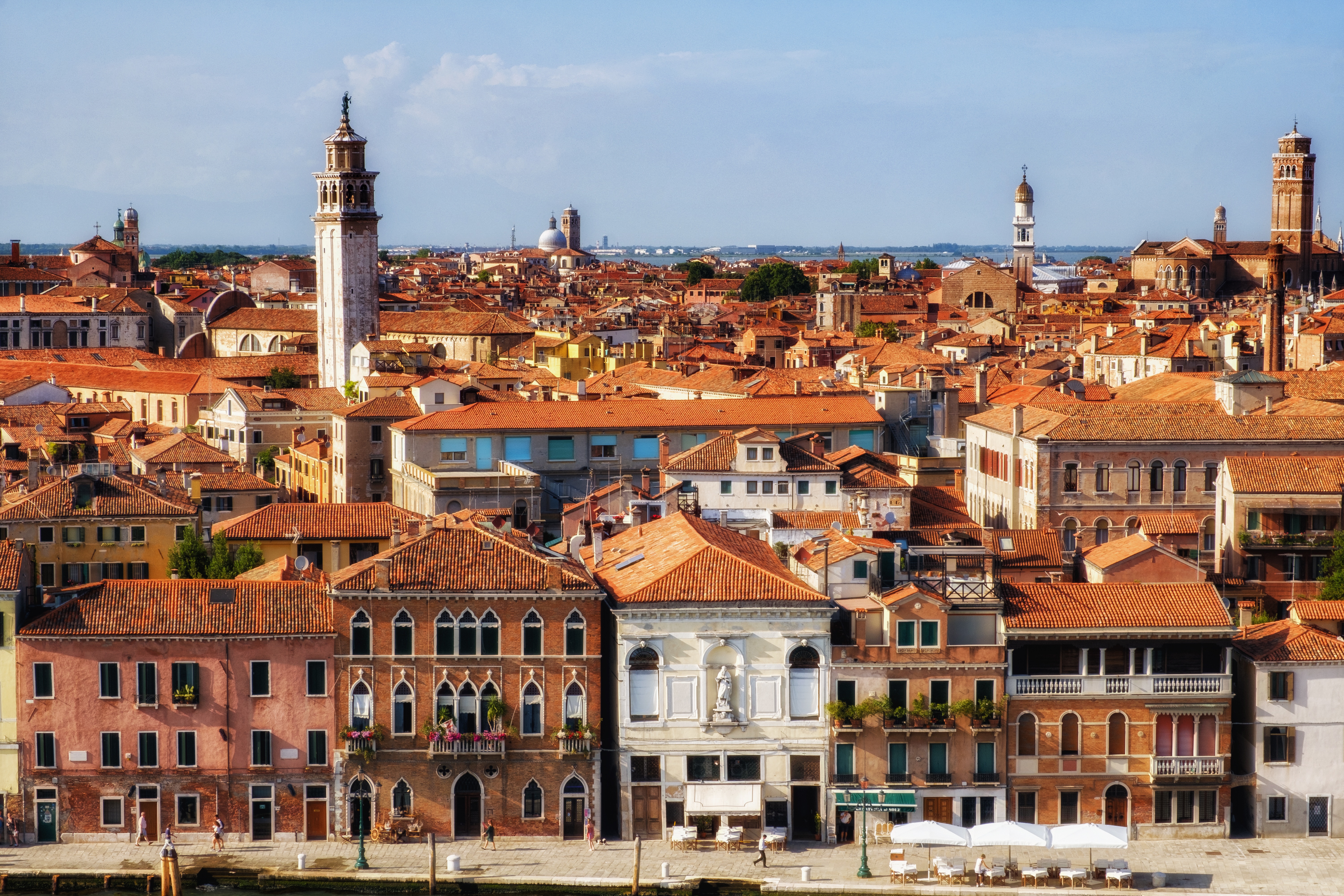
Fusina, Port For Venice
Fusina, Port For VeniceImage by wild0wild from Pixabay
Fusina  Venice , Italy
Fusina Venice , ItalyImage by Bruno from Pixabay

Suites & Deck Plans

Suite

Enter and be enveloped by the sophisticated comfort of rosewood furniture, luxe fabrics and a crystal chandelier. A pair of private balconies make this spacious, elegant suite a natural for entertaining.

You’ll find Park Avenue chic onboard Seven Seas Voyager® in this spectacular suite. Elegant rosewood furniture, luxe fabrics and a crystal chandelier create sophisticated comfort, while a personal butler is available to fulfil whatever requests you may have. With two bedrooms, two-and-a-half baths, a large living room and two private balconies, this sublime suite is perfect for hosting new friends in luxury.

Layout

  • 2 Spacious Bedroom with a European King-Size Elite Slumber® Bed
  • 2 1/2 Marble & Stone Detailed Bathrooms
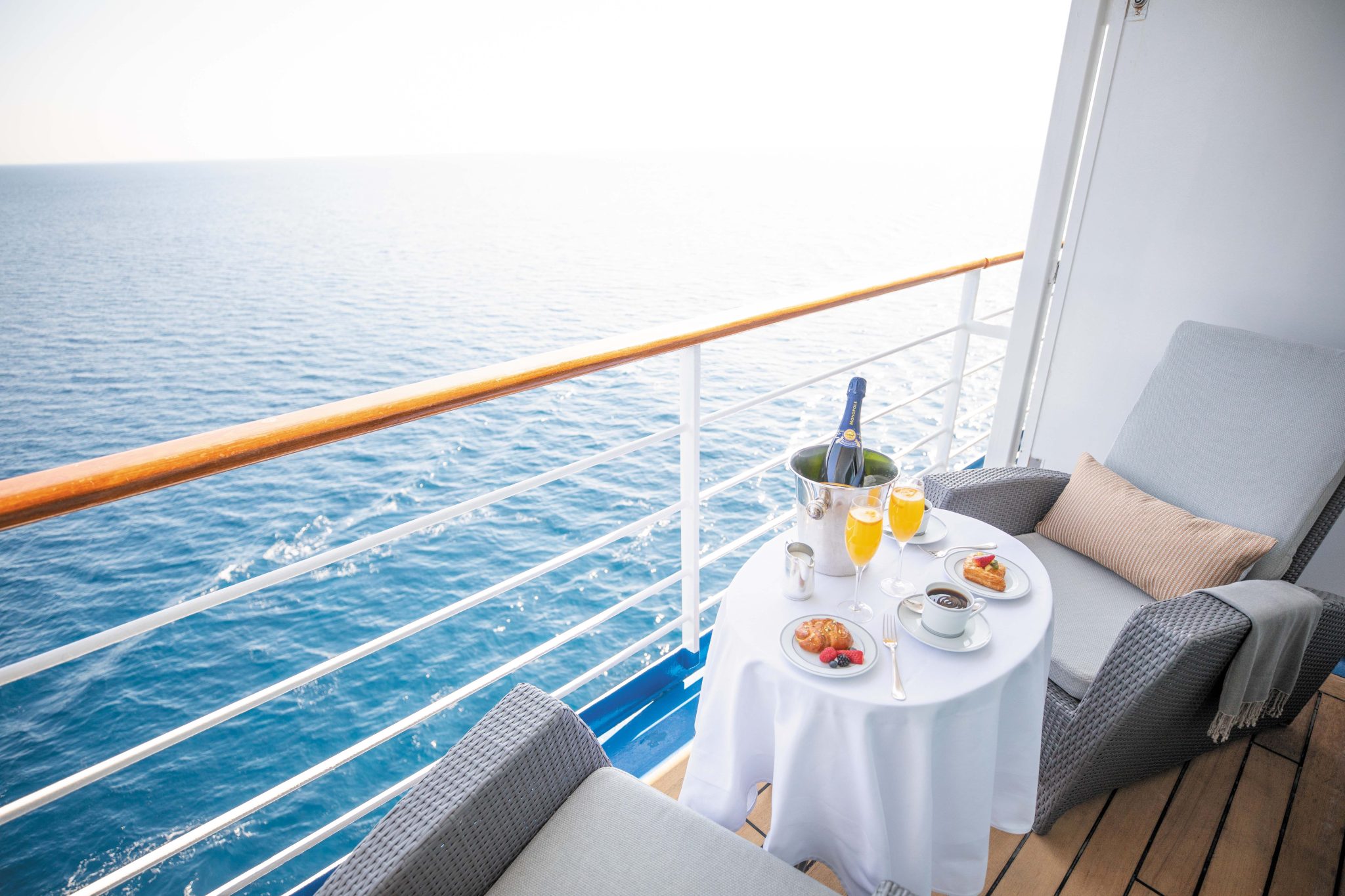
  • Private Balcony
  • Sitting Area
  • Walk-In Closet with Safe
  • Includes Up To 6 Guests

The suite pictured may differ from the suite booked, as layouts and designs vary by ship, deck, and suite location.

Amenities

  • 1-Night Pre-Cruise: Hotel Package Including:

  • - Breakfast
  • - Porterage
  • Unlimited WiFi* and Streaming Package for up to Four Devices
  • Valet Laundry Service
  • 24-hour In-Suite Dining
  • Fresh Orchid Arrangement
  • Regent Plush Bathrobe & Slippers
  • Interactive Flat-Screen Television & Direct-Dial Satellite Phone
  • Priority Access to Online Shore Excursion Reservations
  • Priority Access to Online Dining Reservations
  • Binoculars
  • illy® Espresso Maker
  • Cashmere Blankets
  • Regent Special Gift
  • Vanity & Hair Dryer
  • Shoe Shine Service

Additional Discounts:

  • - 10% Discount on Ultra Premium Wine and Liquor
  • - 5% Savings on Pre- or Post-Cruise Hotel or Land Programs
  • - 5% Savings on Regent Choice Shore Excursions

Additional Signature Suite Amenities:

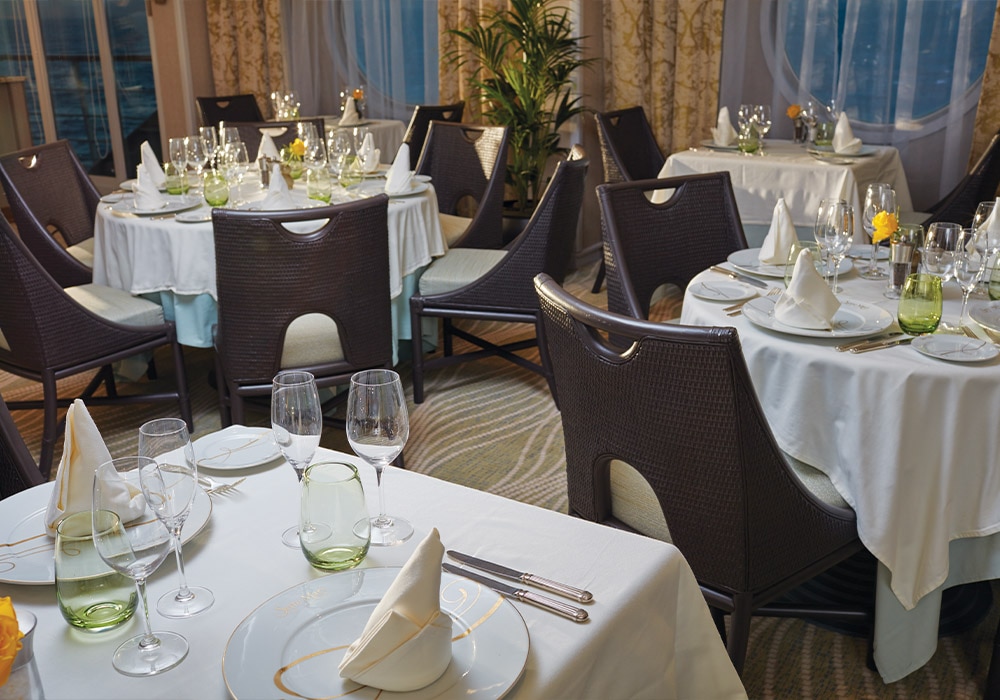
  • Guaranteed Reservation Each Night in Specialty Restaurant of Your Choice
  • Welcome Letter from the President and General Manager
  • Personal Butler for an Elevated In-suite Experience
  • - In-Suite Dining Menu Including Specialty Restaurant Selections During Dining Hours
  • Priority Boarding on Embarkation Day with Suite Access at Noon
  • Welcome Bottle of Premium Champagne
  • Personalized In-Suite Full-Liquor Bar Set-Up
  • A Sumptuous In-Suite Caviar Service Once During Cruises
  • Complimentary In-Suite Cocktail Party for 8
  • Complimentary 25-Minute Personal Fitness Session at the Serene Spa & Wellness™ Fitness Center
  • Onboard Press Reader App Access
  • Daily Canapés
  • Tea Forté Set-Up
  • Luxe Fruit Arrangement with Chocolate Leonidas
  • Luxurious Designer Bath Amenities & Men's Unscented Shaving Kit
  • Hairdryer
  • Selection of Fig & Tea Leaves Bath Salts
  • Bath Scale Setup
  • Bose® SoundLink Mini II Bluetooth Speaker
  • Selection of Bed Pillow Styles
  • Complimentary Garment Pressing on First Night
  • Personalized Stationery upon request
  • Elegant Weather Clock
  • Excursion Bag

1335-1404 sq ft
Accommodates 6 guests
Signature Suite

Seven Seas Voyager

Seven Seas Voyager

Life on board

The Onboard Experience

Client testimonials

I have worked with Lore Doick for more than 20 years, and she has booked over 30 cruises for me. Her expertise, care, and attention to every travel detail have made her an invaluable advisor and friend over the years.”

Tina B.

We are now in our second generation working with Cheri Ozimac at Tully Luxury Travel. From Antarctica to Greece, she has handled every detail with expertise, responsiveness, and care…

Earl M.

My wife and I have worked with Tully since 2007, and Kit Neil and her team went far beyond expectations while helping us navigate multiple cruise and flight cancellations. Their advocacy, care, and support during a difficult time were extraordinary.

Carri F.

Cheri Ozimac organized our Seabourn cruise flawlessly, from the hotel recommendation to every travel arrangement. She was responsive, attentive, and an excellent advocate throughout the process…

Cyn S.

We discovered Tully Luxury Travel after years of booking cruises through US agents and were impressed by their competitive pricing, exceptional service, and Canadian based support. Their team is always available, offers excellent value, and makes booking the right cruise seamless.

Peter C.

GoogleAverage Customer Rating:

The Tully Difference

Why travel with us


Tully Luxury Travel was built on access, discretion, and trust. For our clients, that means ease at every step, with distinctions that turn exceptional voyages into defining moments.

Recognized expertise

A renowned agency worldwide in luxury land and small-ship cruising, consistently trusted by the industry’s most prestigious brands.