Regent Seven Seas Cruises logo

Croatian Culture & Cuisine

Itinerary: Civitavecchia, Salerno, Messina, Cruising the Ionian Sea, Kotor, Dubrovnik, Rijeka, Trieste See full itinerary

9 Sep 27
7 nights

Voyage Details

Duration:
7 nights
Departure:
9 Sept 2027
Embarkation:
Civitavecchia, Italy
Cruise code:
PRT270909
Voyage code:
PRT270909

Your Itinerary, Day-By-Day

Special Chapters of Your Journey

Day 1 - Civitavecchia

Italy's vibrant capital lives in the present, but no other city on earth evokes its past so powerfully. For over 2,500 years, emperors, popes, artists, and common citizens have left their mark here. Archaeological remains from ancient Rome, art-stuffed churches, and the treasures of Vatican City vie for your attention, but Rome is also a wonderful place to practice the Italian-perfected il dolce far niente, the sweet art of idleness. Your most memorable experiences may include sitting at a caffè in the Campo de' Fiori or strolling in a beguiling piazza.

Itrom   Rome   Colosseum   Mathew Schwartz
Itrom Rome Colosseum Mathew SchwartzPhotograph by Matthew Schwartz
Itrom   Rome   Navona Square   Fototeca Enit
Itrom Rome Navona Square Fototeca EnitFototeca ENIT
Itrom   Rome   S.Pietro & S.Angelo Bridge   Fototeca Enit
Itrom Rome S.Pietro & S.Angelo Bridge Fototeca Enit Fototeca ENIT
Itrom   Rome   Sant'angelo Bridge   Fototeca Enit
Itrom Rome Sant'angelo Bridge Fototeca EnitFototeca ENIT
Itrom   Rome   Tempio Del Divo Claudio   Nicole Reyes
Itrom Rome Tempio Del Divo Claudio Nicole ReyesPhotograph by Nicole Reyes
Itrom   Rome   Trevi Fountain   Christopher Czermak
Itrom Rome Trevi Fountain Christopher CzermakPhotograph by Christopher Czermak
Itrom   Rome   Vatican City   Caleb Miller
Itrom Rome Vatican City Caleb MillerPhotograph by Caleb Miller
Itrom   Rome   Vatican City   Christopher Czermak
Itrom Rome Vatican City Christopher CzermakPhotograph by Christopher Czermak

Day 2 - Salerno

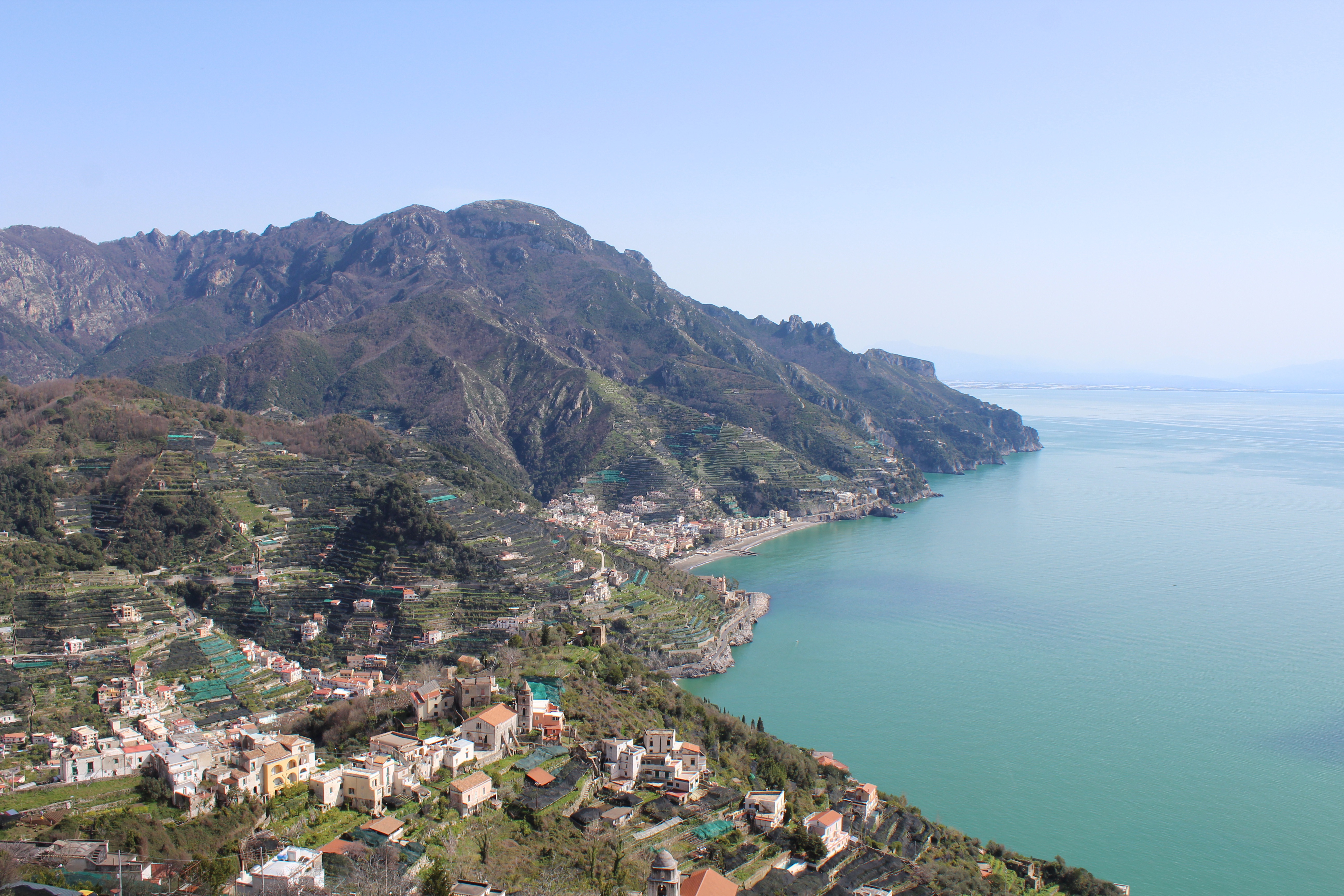
Salerno is an Italian city located on the Gulf of Salerno. Famous for being home to the first medical university, Salerno is a great destination for anyone looking for gorgeous sea views filled with sunshine and Italian food.

Salerno, Italy
Salerno, ItalyImage by SALVATORE MONETTI from Pixabay
Salerno, Italy
Salerno, ItalyImage by Valter Cirillo from Pixabay

Day 3 - Messina

Home to the Museo Regionale of Messina, known for featuring two of Caravaggio's paintings, the city is also famous for having been the capital of the ancient kingdom of Sicily.

Itmsn   Messina, Italy Pc To Alex Subias 1
Itmsn Messina, Italy Pc To Alex Subias 1Alex Subias
Itmsn   Messina, Italy Pc To Alex Subias
Itmsn Messina, Italy Pc To Alex SubiasAlex Subias
Itmsn   Messina, Italy Photo Credit Belongs To Luca N 1
Itmsn Messina, Italy Photo Credit Belongs To Luca N 1Luca N
Itmsn   Messina, Italy Photo Credit Belongs To Luca N
Itmsn Messina, Italy Photo Credit Belongs To Luca NLuca N

Day 4 - Cruising the Ionian Sea

Further details for this day are not available.

Day 5 - Kotor

Backed by imposing mountains, tiny Kotor lies hidden from the open sea, tucked into the deepest channel of the Bokor Kotorska (Kotor Bay), which is Europe's most southerly fjord. To many, this town is more charming than its sister UNESCO World Heritage Site, Dubrovnik, retaining more authenticity, but with fewer tourists and spared the war damage and subsequent rebuilding which has given Dubrovnik something of a Disney feel.Kotor's medieval Stari Grad (Old Town) is enclosed within well-preserved defensive walls built between the 9th and 18th centuries and is presided over by a proud hilltop fortress. Within the walls, a labyrinth of winding cobbled streets leads through a series of splendid paved piazzas, rimmed by centuries-old stone buildings. The squares are now haunted by strains from buskers but although many now house trendy cafés and chic boutiques, directions are still given medieval-style by reference to the town’s landmark churches.In the Middle Ages, as Serbia's chief port, Kotor was an important economic and cultural center with its own highly regarded schools of stonemasonry and iconography. From 1391 to 1420 it was an independent city-republic and later, it spent periods under Venetian, Austrian, and French rule, though it was undoubtedly the Venetians who left the strongest impression on the city's architecture. Since the breakup of Yugoslavia, some 70% of the stone buildings in the romantic Old Town have been snapped up by foreigners, mostly Brits and Russians. Porto Montenegro, a new marina designed to accommodate some of the world’s largest super yachts, opened in nearby Tivat in 2011, and along the bay are other charming seaside villages, all with better views of the bay than the vista from Kotor itself where the waterside is congested with cruise ships and yachts. Try sleepy Muo or the settlement of Prčanj in one direction around the bay, or Perast and the Roman mosaics of Risan in the other direction.

Mekot   Kotor, Montenegro Photo Credit Belongs To George Kedenburg Iii
Mekot Kotor, Montenegro Photo Credit Belongs To George Kedenburg Iii
Mekot   Kotor, Montenegro Photo Credit Belongs To Marcel Painchaud
Mekot Kotor, Montenegro Photo Credit Belongs To Marcel Painchaud
Mekot   Kotor, Montenegro Photo Credit Belongs To Marco Costa
Mekot Kotor, Montenegro Photo Credit Belongs To Marco CostaMarco Costa
Mekot   Kotor, Montenegro Photo Credit Belongs To Robin Van Holst 1
Mekot Kotor, Montenegro Photo Credit Belongs To Robin Van Holst 1Robin van Holst
Mekot   Kotor, Montenegro Photo Credit Belongs To Wladislaw Peljuchno
Mekot Kotor, Montenegro Photo Credit Belongs To Wladislaw PeljuchnoWladislaw Peljuchno

Day 6 - Dubrovnik

Nothing can prepare you for your first sight of Dubrovnik. Lying 216 km (135 miles) southeast of Split and commanding a jaw-dropping coastal location, it is one of the world's most beautiful fortified cities. Its massive stone ramparts and fortress towers curve around a tiny harbor, enclosing graduated ridges of sun-bleached orange-tiled roofs, copper domes, and elegant bell towers. Your imagination will run wild picturing what it looked like seven centuries ago when the walls were built, without any suburbs or highways around it, just this magnificent stone city rising out of the sea.In the 7th century AD, residents of the Roman city Epidaurum (now Cavtat) fled the Avars and Slavs of the north and founded a new settlement on a small rocky island, which they named Laus, and later Ragusa. On the mainland hillside opposite the island, the Slav settlement called Dubrovnik grew up. In the 12th century the narrow channel separating the two settlements was filled in (now the main street through the Old Town, called Stradun), and Ragusa and Dubrovnik became one. The city was surrounded by defensive walls during the 13th century, and these were reinforced with towers and bastions in the late 15th century.From 1358 to 1808 the city thrived as a powerful and remarkably sophisticated independent republic, reaching its golden age during the 16th century. In 1667 many of its splendid Gothic and Renaissance buildings were destroyed by an earthquake. The defensive walls survived the disaster, and the city was rebuilt in baroque style.Dubrovnik lost its independence to Napoléon in 1808, and in 1815 passed to Austria-Hungary. During the 20th century, as part of Yugoslavia, the city became a popular tourist destination, and in 1979 it was listed as a UNESCO World Heritage Site. During the war for independence, it came under heavy siege. Thanks to careful restoration, few traces of damage remain; however, there are maps inside the Pile and Ploče Gates illustrating the points around the city where damage was done. It’s only when you experience Dubrovnik yourself that you can understand what a treasure the world nearly lost

Hrdbv   Dubrovnik   Cathedral
Hrdbv Dubrovnik Cathedral
Hrdbv   Dubrovnik   Citadel
Hrdbv Dubrovnik Citadel
Hrdbv   Dubrovnik   Cliff
Hrdbv Dubrovnik Cliff
Hrdbv   Dubrovnik   Nightlife
Hrdbv Dubrovnik Nightlife
Hrdbv   Dubrovnik   Old Town Bells
Hrdbv Dubrovnik Old Town Bells
Hrdbv   Dubrovnik   Street
Hrdbv Dubrovnik Street

Day 7 - Rijeka

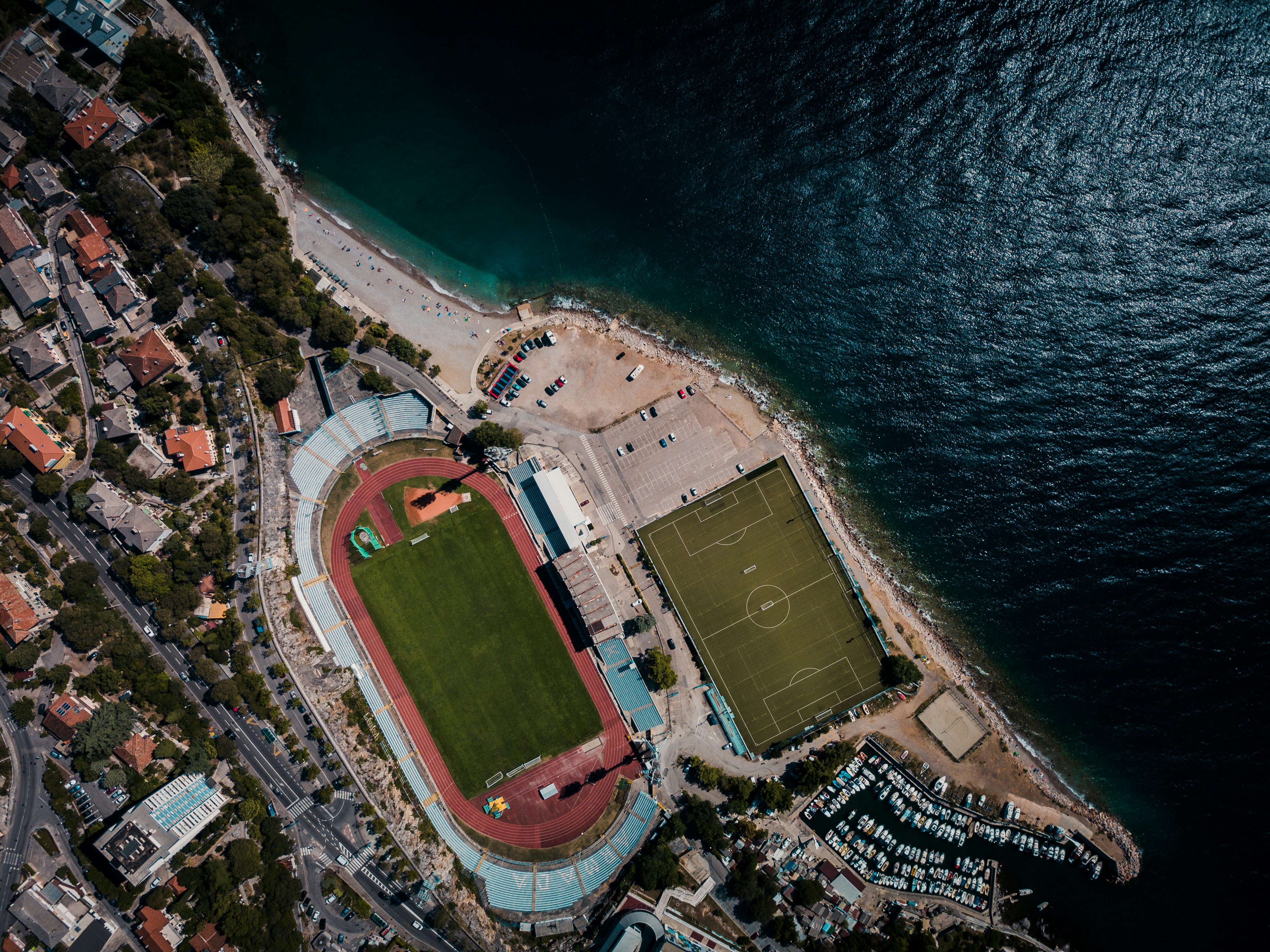
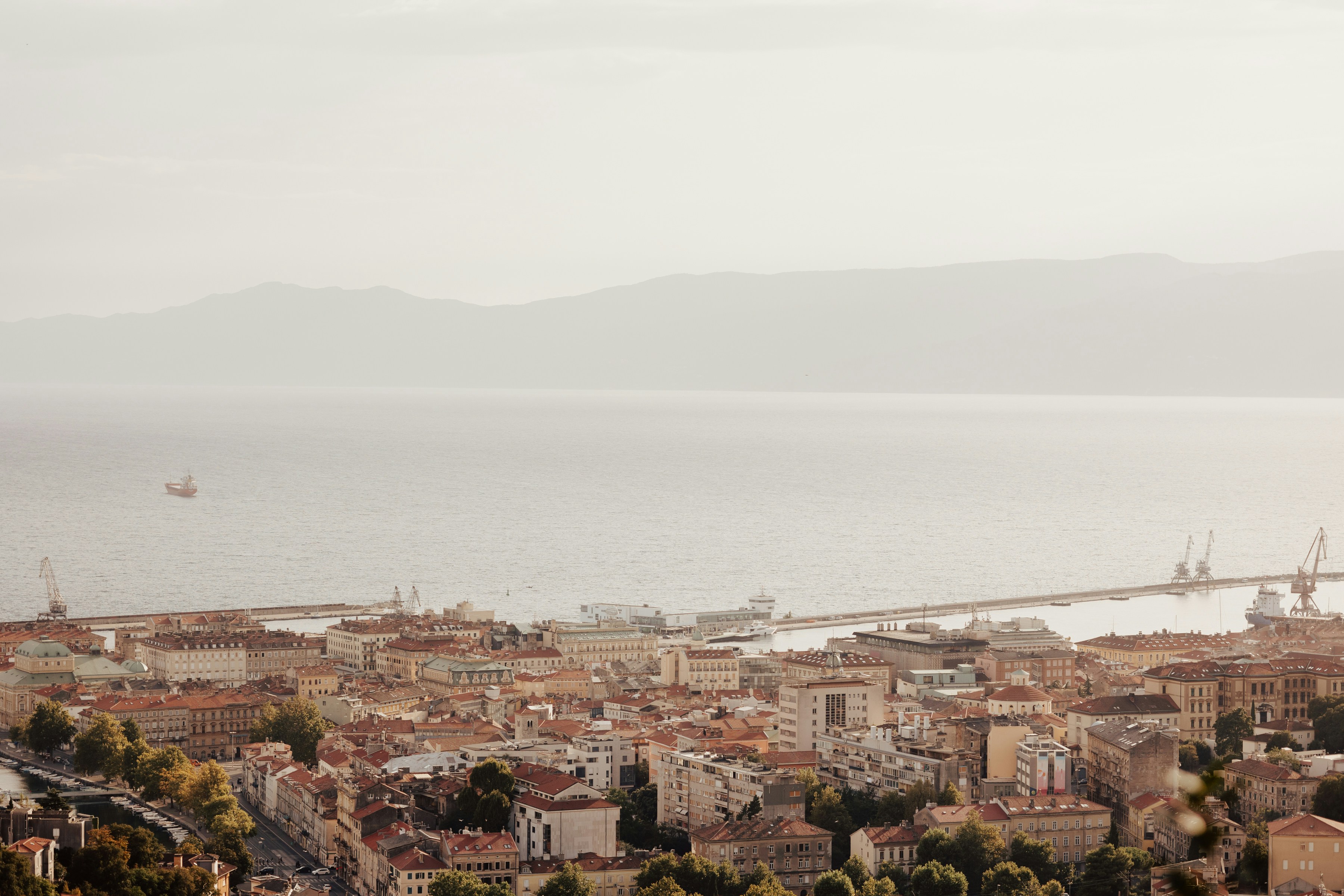
Water is the essence of Kvarner, and the region's largest city expresses this simply. Whether in Croatian or Italian (Fiume) the translation of the name to English is the same: river. Although the history of Croatia's third city goes back to the days of Imperial Rome, modern Rijeka evolved under the rule of Austria-Hungary. The historic core retains vestiges of the old Habsburg monarchy from the time when Rijeka served as the empire's outlet to the Adriatic. During the 1960s, under Yugoslavia, the suburbs expanded rapidly. Rijeka is the country's largest port, with a huge shipyard, massive dry-dock facilities, refineries, and other heavy industries offering large-scale employment. Since the breakup of Yugoslavia, however, Rijeka's role as a shipping town has declined significantly. Much business shifted north to the smaller Slovene ports during the crippling wars of the 1990s, and although some has returned, the volume remains less than half that seen in 1980.

Rijeka, Croatia
Rijeka, CroatiaPhoto by daniel james on Unsplash
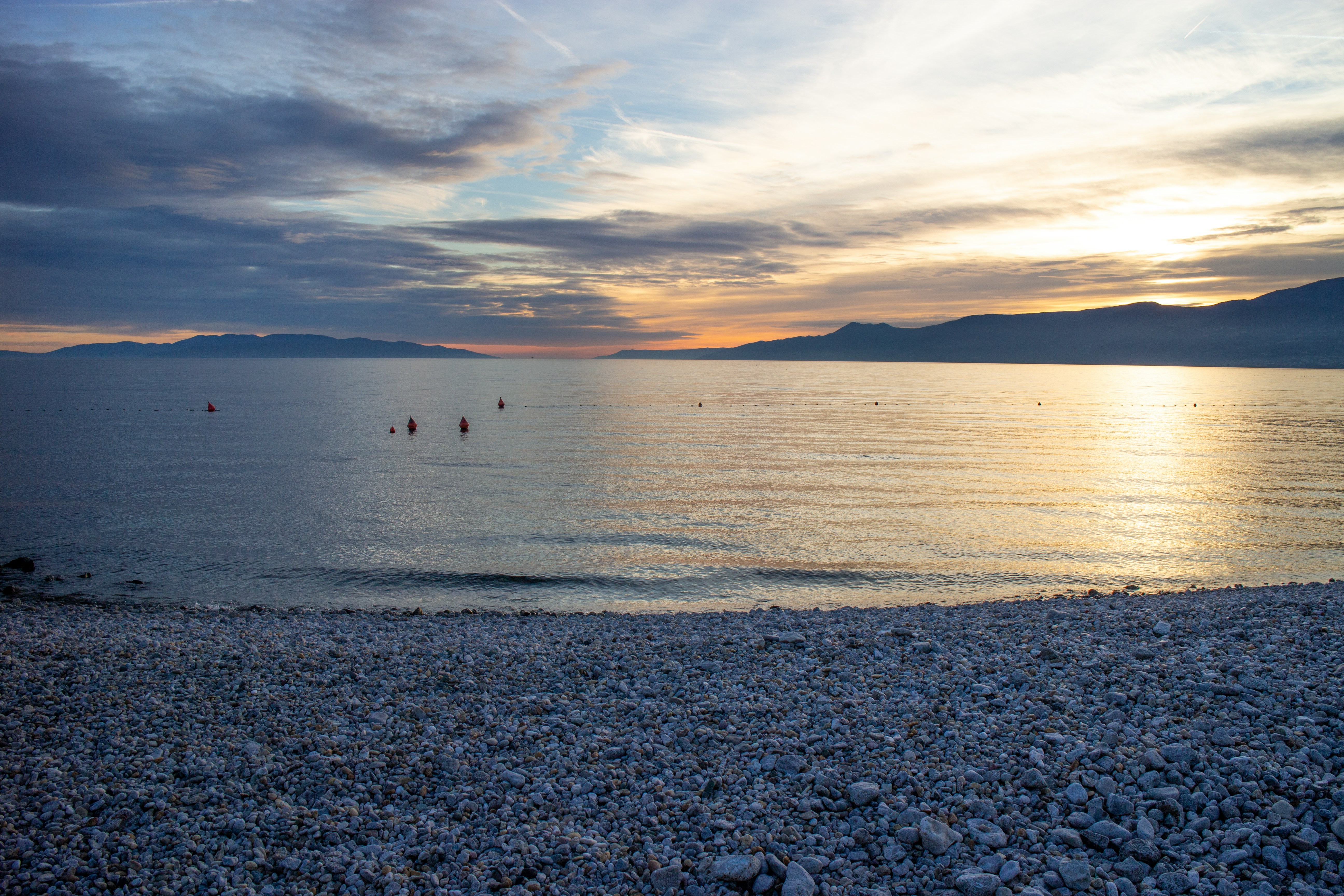
Rijeka, Croatia
Rijeka, CroatiaPhoto by Ozren Cuculic on Unsplash
Rijeka, Croatia
Rijeka, CroatiaPhoto by Barbora Likavska on Unsplash

Day 8 - Trieste

Up until the end of World War I, Trieste was the only port of the vast Austro-Hungarian Empire and therefore a major industrial and financial center. In the early years of the 20th century, Trieste and its surroundings also became famous by their association with some of the most important names of Italian literature, such as Italo Svevo, and English and German letters. James Joyce drew inspiration from the city's multiethnic population, and Rainer Maria Rilke was inspired by the seacoast west of the city. Although it has lost its importance as a port and a center of finance, it has never fully lost its roll as an intellectual center. The streets hold a mix of monumental, neoclassical, and art-nouveau architecture built by the Austrians during Trieste's days of glory, granting an air of melancholy stateliness to a city that lives as much in the past as the present.

Trieste
Trieste

Suites & Deck Plans

Suite

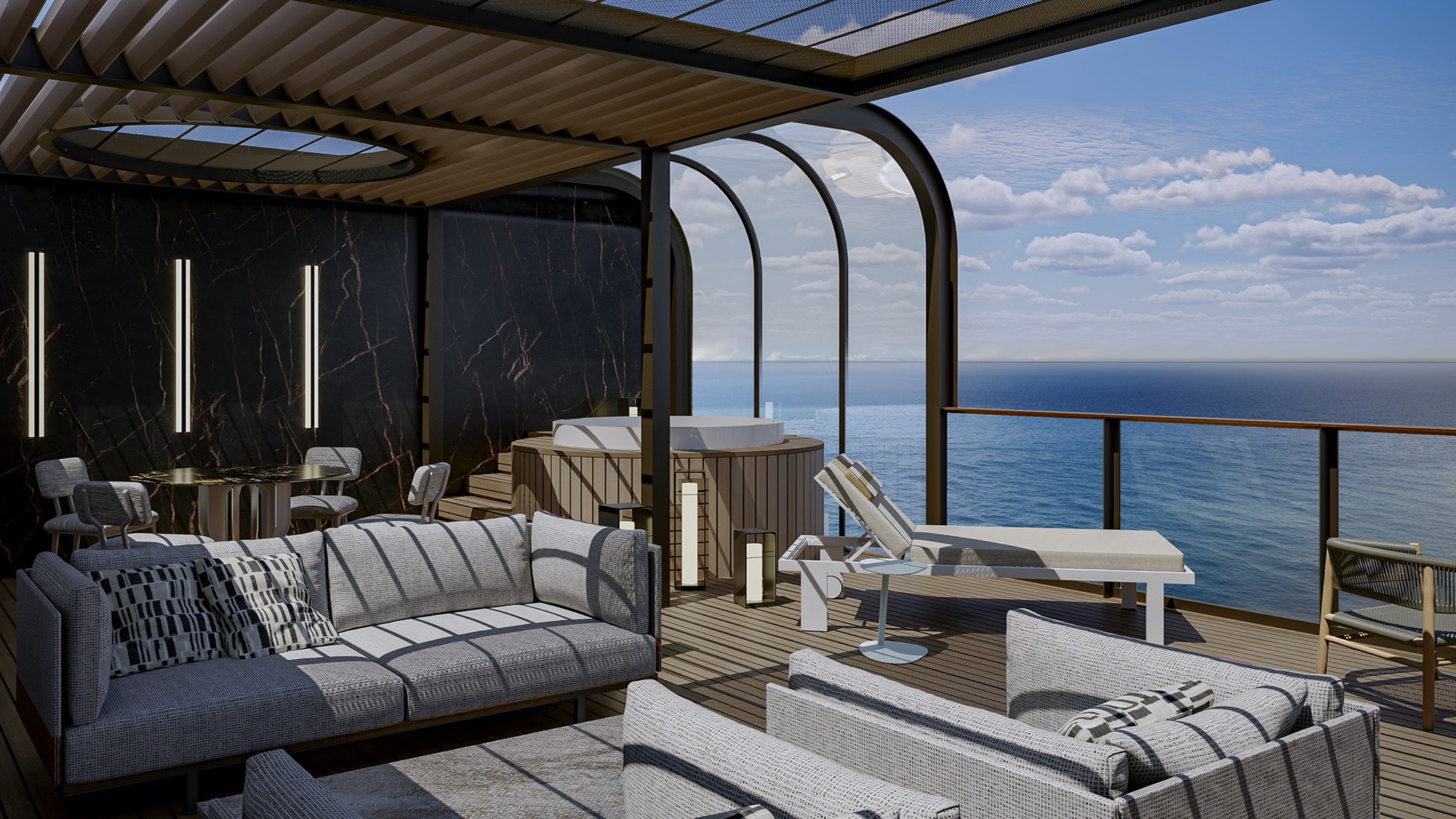
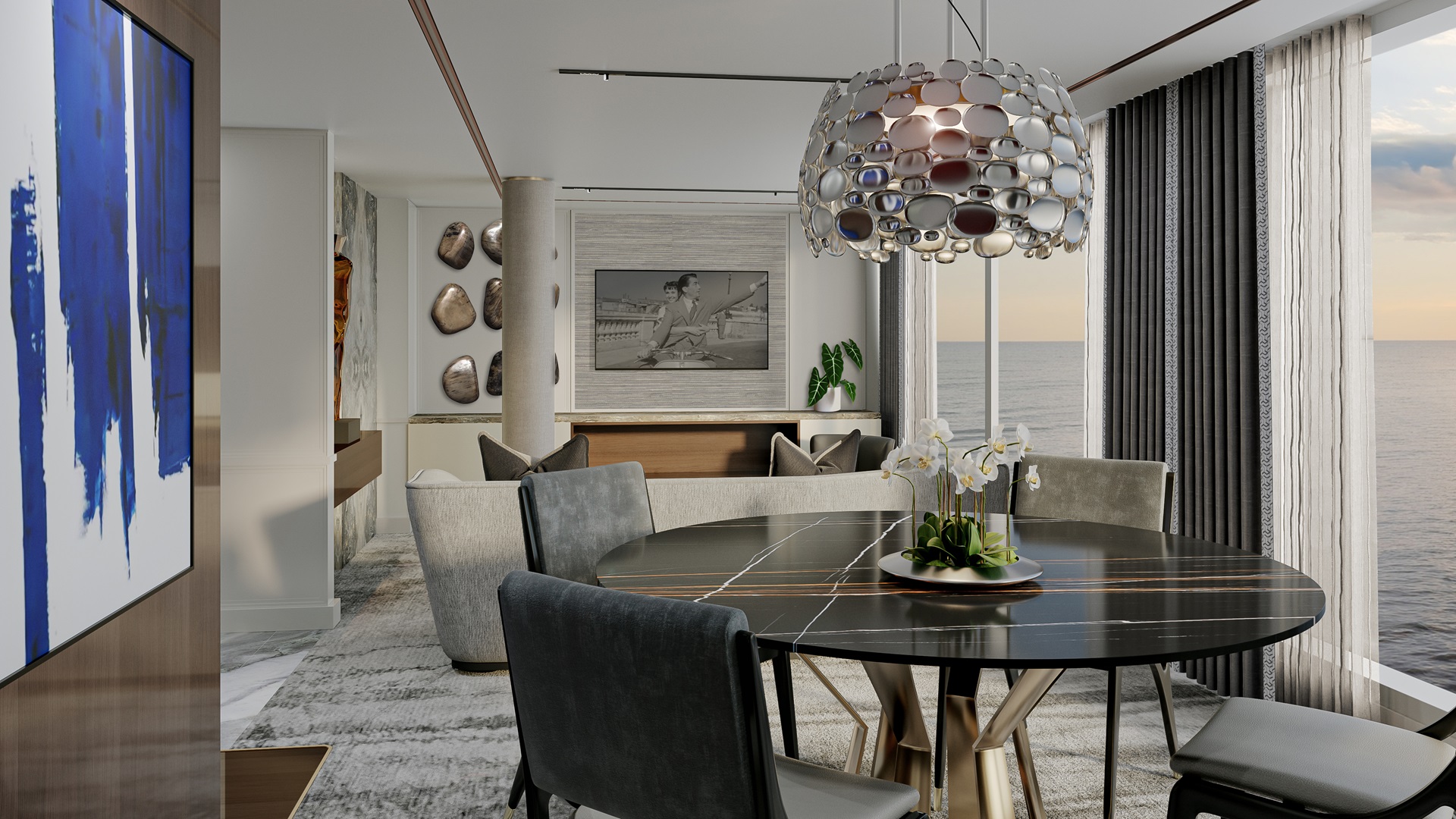
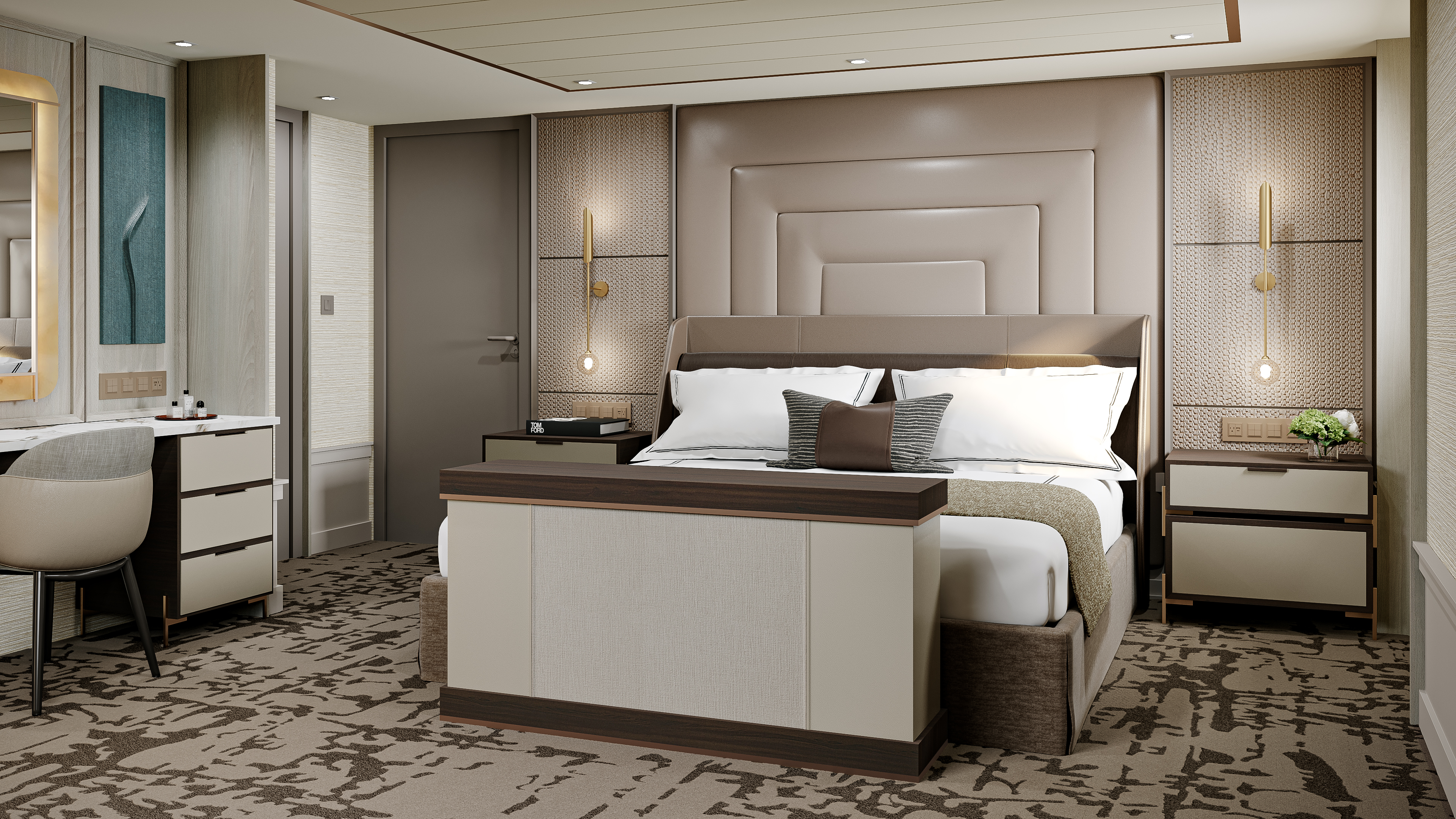
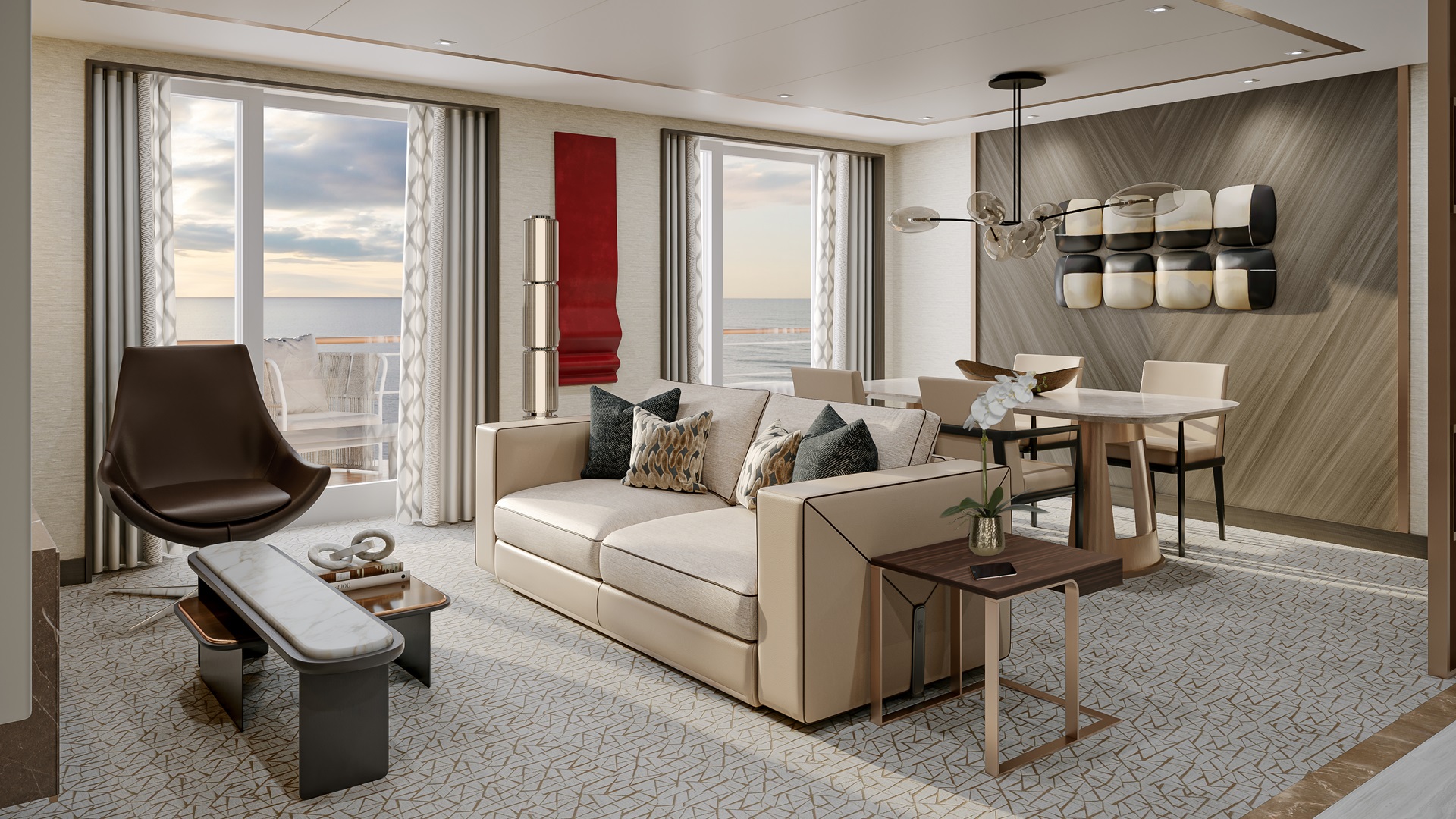
As the door opens and you enter the foyer, a hush of awe takes hold — before you stretches a world of space, light and sea. Welcome to the Skyview Regent Suite, The Most Exclusive Address at Sea®.

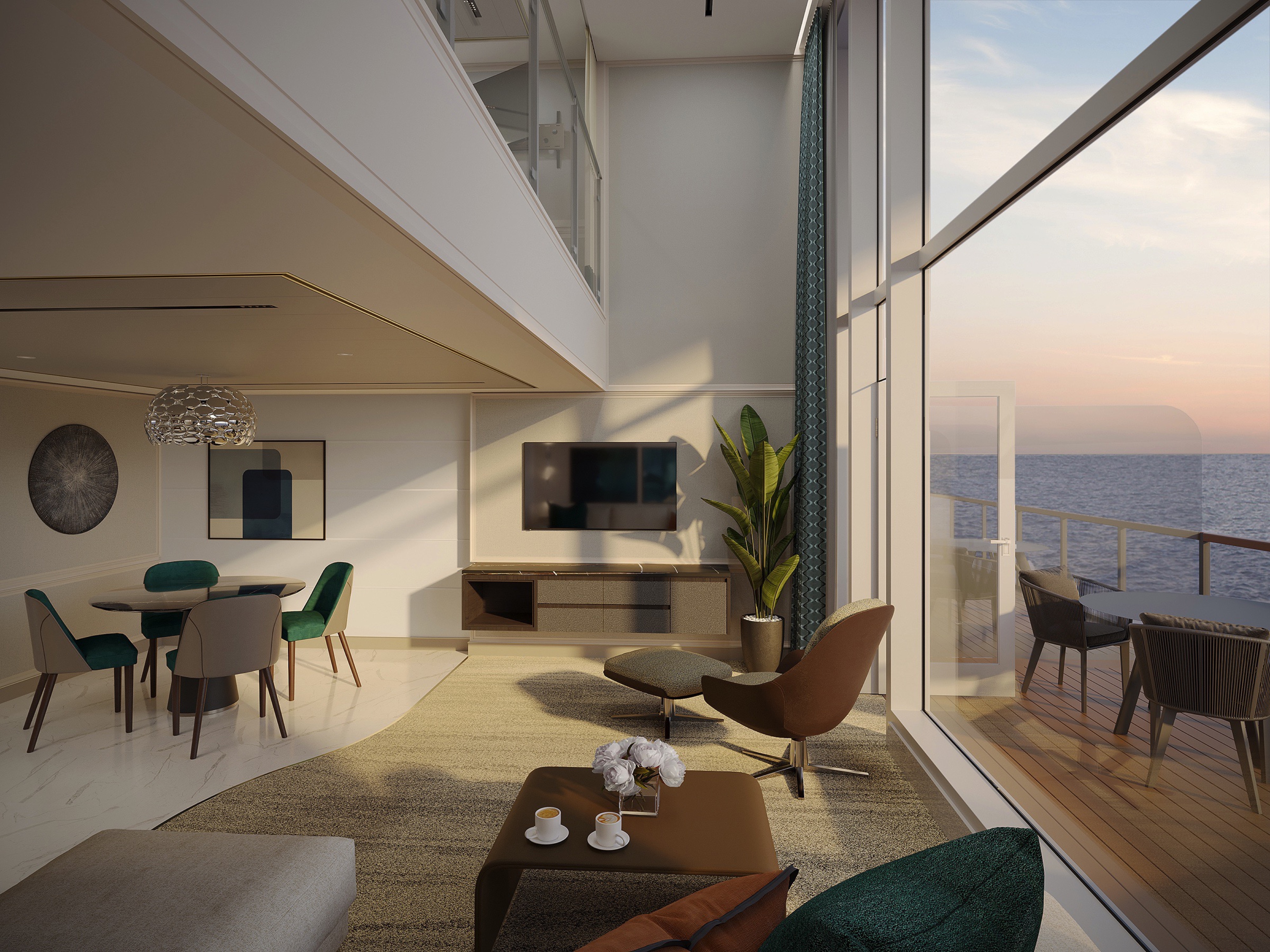
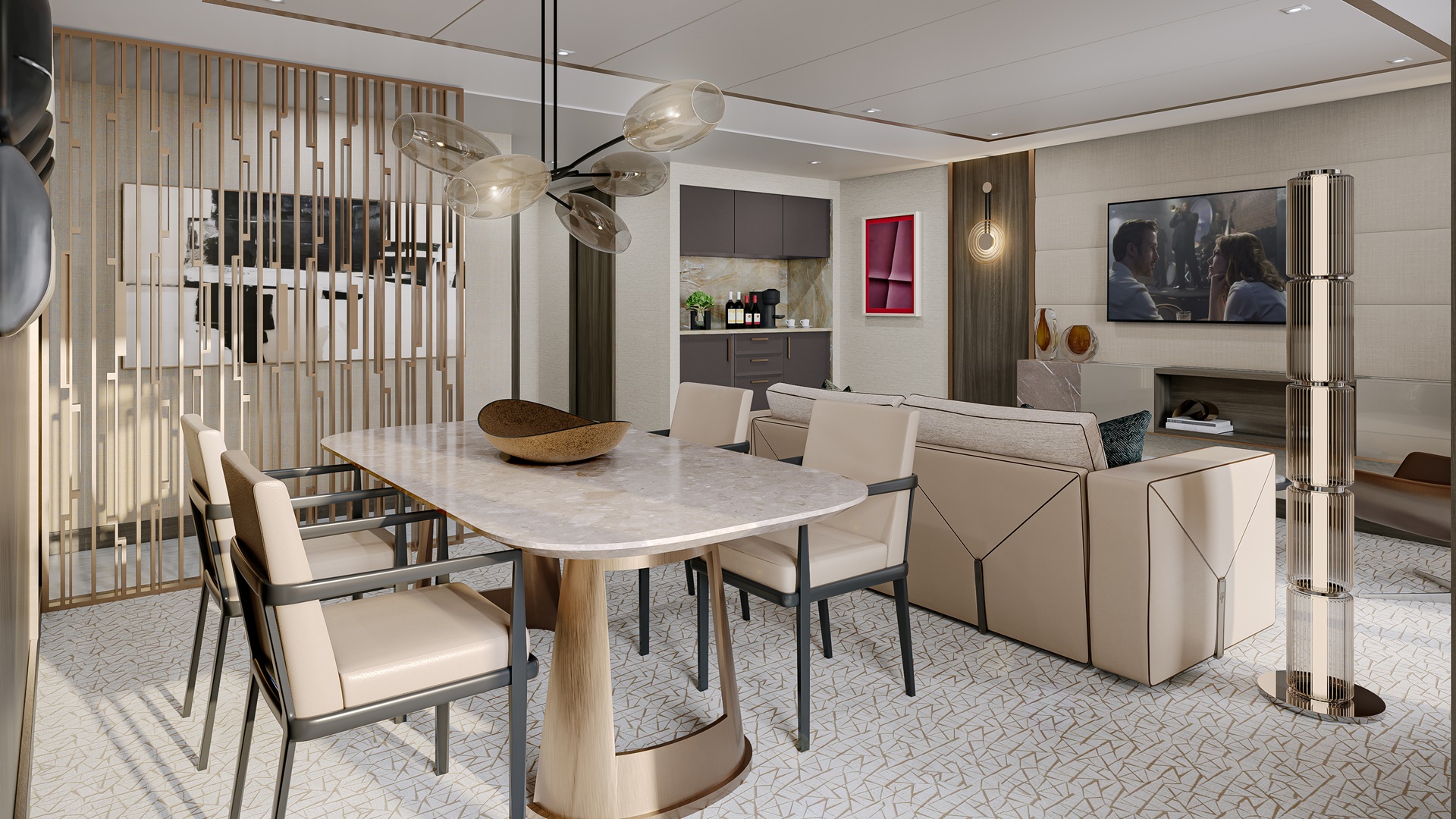
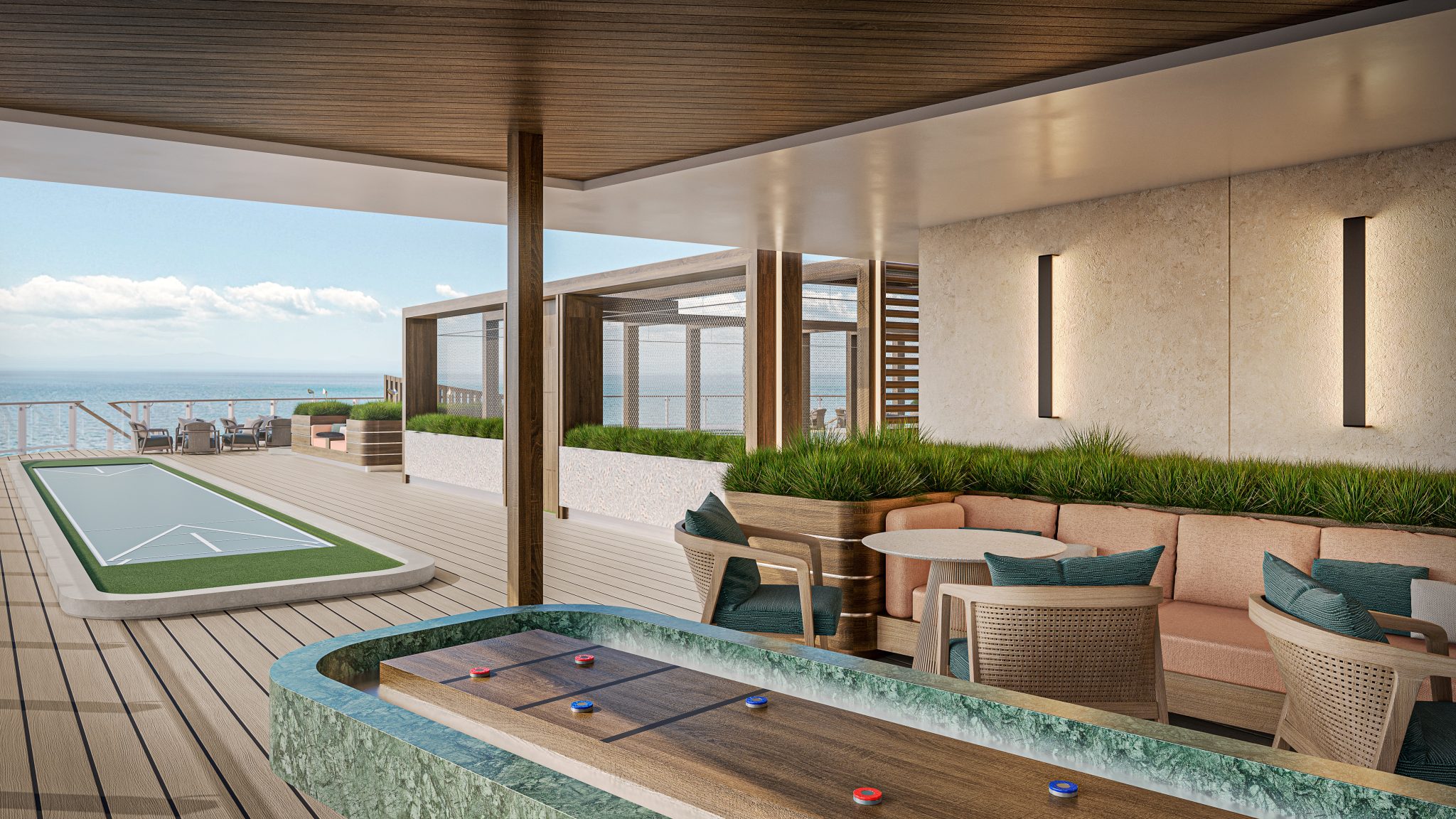
The morning light illuminates across two stories of wraparound balconies. Use your private in-suite elevator to glide between levels, offering effortless access to your personal sanctuary. Whether you’re enjoying breakfast beneath the sky or entertaining friends in your grand living room with marble bar and ocean views, every detail is a study in rarefied living.

When the sky turns violet, and hours pass in a swirl of night air and briny mist, you will be dreaming of the places that await your exploration. Rest with ease in a bed hand-crafted in Italy that has been thoughtfully chosen to cradle you in the kind of comfort that only dreams dare describe.

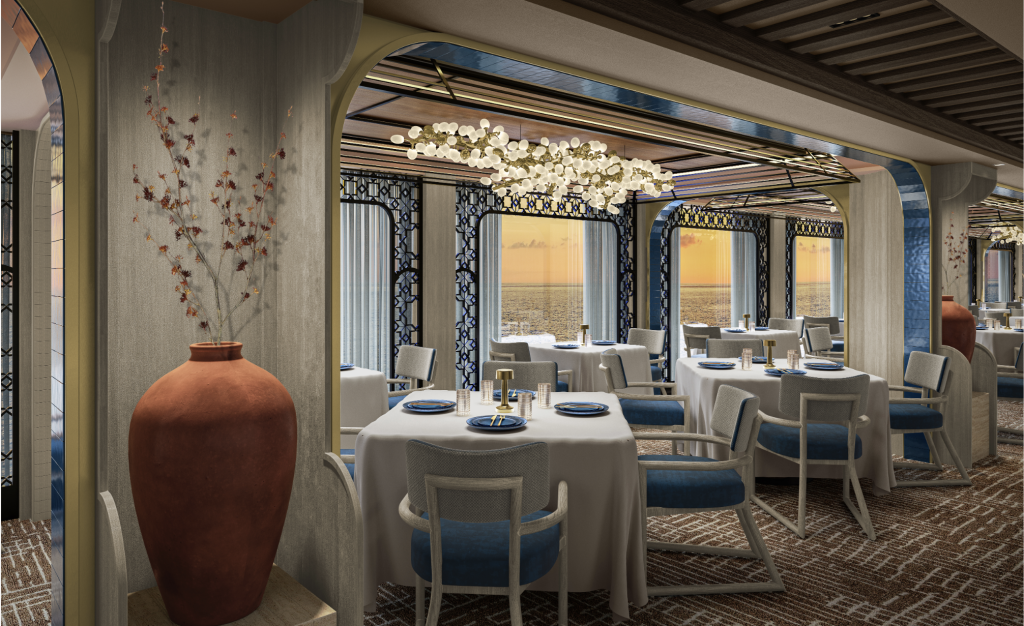
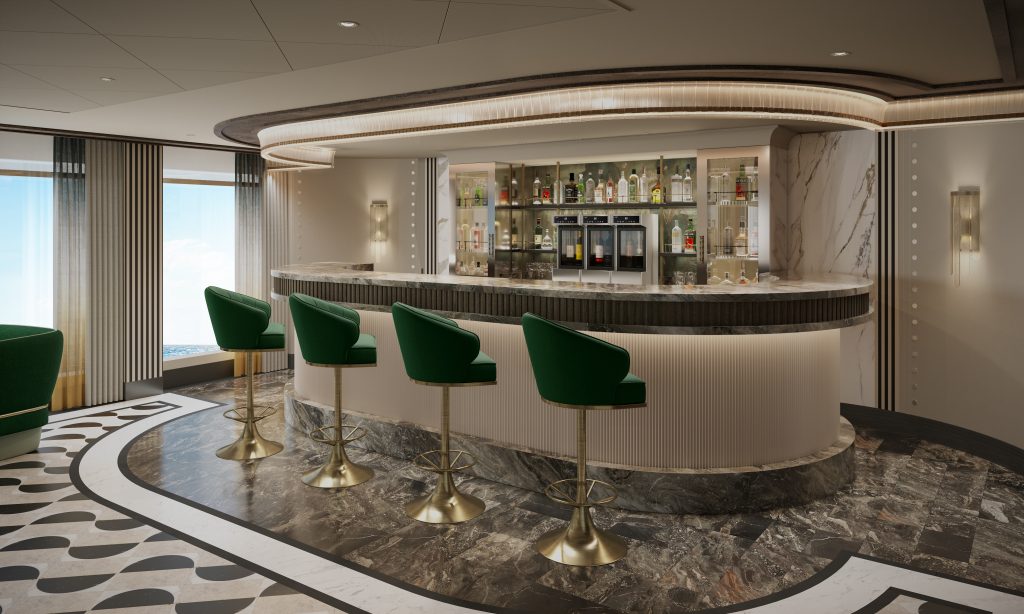
The largest suite of The World’s Most Luxurious Fleet® features a sculptural living room, a floating natural stone staircase plus a private in-suite elevator, and a formal dining area complemented by a glass-enclosed bar. Guests also enjoy exclusive access to The Study, an intimate dining venue that accommodates up to 12 guests, offering a refined setting for private gatherings. The primary suite upstairs offers unparalleled ocean views, a free-standing tub and a spa-inspired bathroom adorned with marble and onyx. Highlights include a private gym, sauna and a full guest suite with private bath.

CATEGORY RS

  • 817m2 (8,794 sq. ft.)
  • Suite: 413m2 (4,445 sq. ft.)
  • Balcony: 344m2 (3,703 sq. ft.)
  • The Study: 60m2 (646 sq. ft.)

Suite includes 2 spacious bedrooms and 2.5 marble and stone bathrooms
8794 sq ft
Accommodates 2 guests
Skyview Regent Suite

Seven Seas Prestige

Seven Seas Prestige

Life on board

The Onboard Experience

Client testimonials

I have worked with Lore Doick for more than 20 years, and she has booked over 30 cruises for me. Her expertise, care, and attention to every travel detail have made her an invaluable advisor and friend over the years.”

Tina B.

We are now in our second generation working with Cheri Ozimac at Tully Luxury Travel. From Antarctica to Greece, she has handled every detail with expertise, responsiveness, and care…

Earl M.

My wife and I have worked with Tully since 2007, and Kit Neil and her team went far beyond expectations while helping us navigate multiple cruise and flight cancellations. Their advocacy, care, and support during a difficult time were extraordinary.

Carri F.

Cheri Ozimac organized our Seabourn cruise flawlessly, from the hotel recommendation to every travel arrangement. She was responsive, attentive, and an excellent advocate throughout the process…

Cyn S.

We discovered Tully Luxury Travel after years of booking cruises through US agents and were impressed by their competitive pricing, exceptional service, and Canadian based support. Their team is always available, offers excellent value, and makes booking the right cruise seamless.

Peter C.

GoogleAverage Customer Rating:

The Tully Difference

Why travel with us


Tully Luxury Travel was built on access, discretion, and trust. For our clients, that means ease at every step, with distinctions that turn exceptional voyages into defining moments.

Recognized expertise

A renowned agency worldwide in luxury land and small-ship cruising, consistently trusted by the industry’s most prestigious brands.