The Iconic Northwest Passage – Across the Top of the World (2028)

Itinerary: Vancouver, British Columbia, Nome, Alaska, Cruising Beaufort Sea, Herschel Island, Yukon, Smoking Hills, Northwest Territories, Ulukhaktok, Northwest Territories, Cruising, Cambridge Bay, Nunavut, Jen... See full itinerary

24 Aug 28
24 nights

Voyage Details

Duration:
24 nights
Departure:
24 Aug 2028
Embarkation:
Vancouver, British Columbia, Canada
Voyage code:
RANWP03R-280824

Your Itinerary, Day-By-Day

Special Chapters of Your Journey

Day 1 - Vancouver, British Columbia

Vancouver is a delicious juxtaposition of urban sophistication and on-your-doorstep wilderness adventure. The mountains and seascape make the city an outdoor playground for hiking, skiing, kayaking, cycling, and sailing—and so much more—while the cuisine and arts scenes are equally diverse, reflecting the makeup of Vancouver's ethnic (predominantly Asian) mosaic. Vancouver is consistently ranked as one of the world's most livable cities, and it's easy for visitors to see why. It's beautiful, it's outdoorsy, and there's a laidback West Coast vibe. On the one hand, there's easy access to a variety of outdoor activities, a fabulous variety of beaches, and amazing parks. At the same time, the city has a multicultural vitality and cosmopolitan flair. The attraction is as much in the range of food choices—the fresh seafood and local produce are some of North America's best—as it is in the museums, shopping, and nightlife.Vancouver's landscaping also adds to the city's walking appeal. In spring, flowerbeds spill over with tulips and daffodils while sea breezes scatter scented cherry blossoms throughout Downtown; in summer office workers take to the beaches, parks, and urban courtyards for picnic lunches and laptop meetings. More than 8 million visitors each year come to Vancouver, Canada's third-largest metropolitan area. Because of its peninsula location, traffic flow is a contentious issue. Thankfully, Vancouver is wonderfully walkable, especially in the downtown core. The North Shore is a scoot across the harbor, and the rapid-transit system to Richmond and the airport means that staying in the more affordable ’burbs doesn't have to be synonymous with sacrificing convenience. The mild climate, exquisite natural scenery, and relaxed outdoor lifestyle keep attracting residents, and the number of visitors is increasing for the same reasons. People often get their first glimpse of Vancouver when catching an Alaskan cruise, and many return at some point to spend more time here.
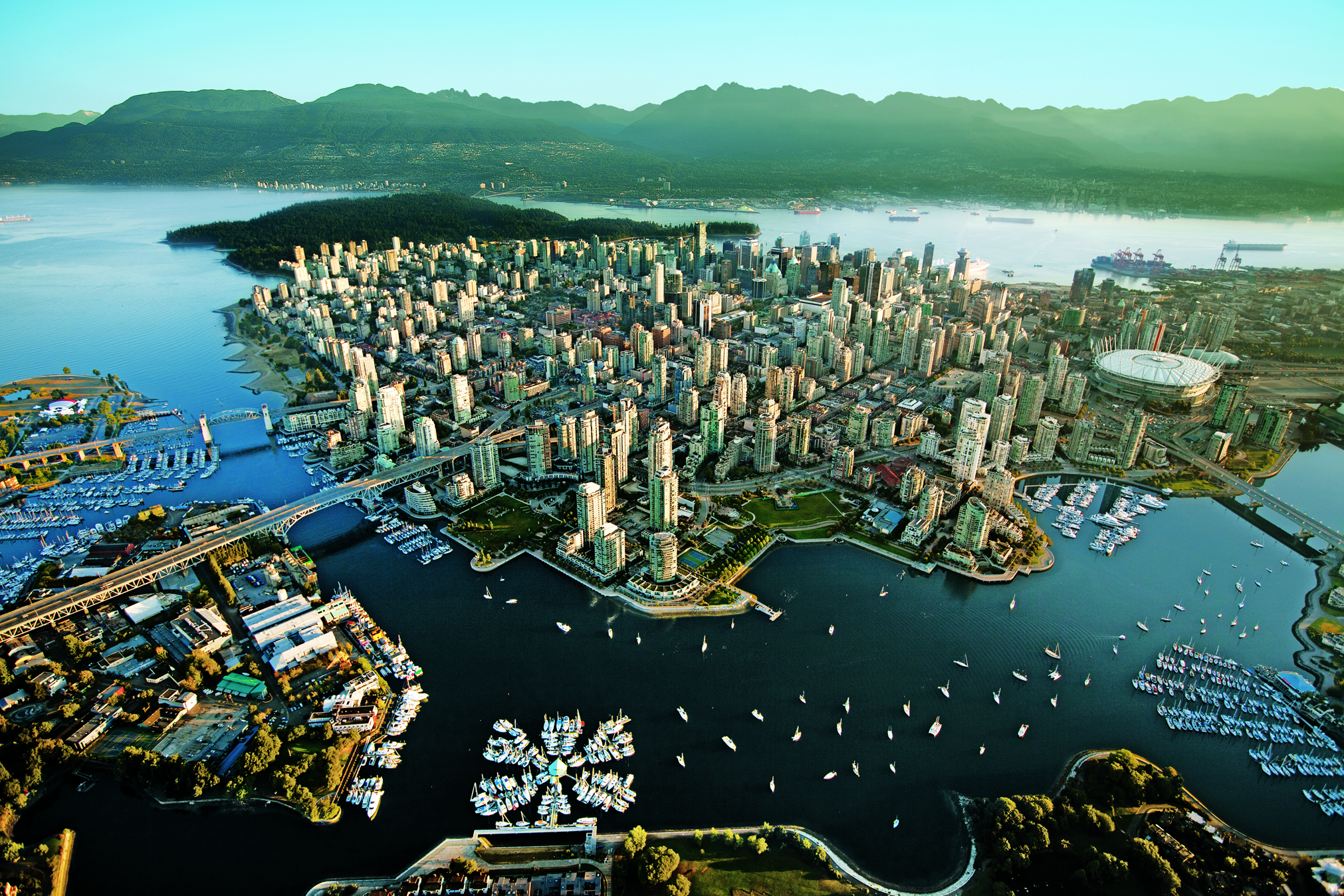
Cavan   Vancouver   City   Tourism Vancouver Albert Normandin
Cavan Vancouver City Tourism Vancouver Albert NormandinAlbert Normandin ©Tourism Vancouver
Cavan   Vancouver   Grouse Mountain   Tourism Vancouver Coast Mountain Photography
Cavan Vancouver Grouse Mountain Tourism Vancouver Coast Mountain Photography©Tourism Vancouver Coast Mountain Photography
Cavan   Vancouver   Stanley Park   Tourism Vancouver Coast Mountain Photography
Cavan Vancouver Stanley Park Tourism Vancouver Coast Mountain Photography©Tourism Vancouver Coast Mountain Photography

Day 2 - Nome, Alaska

Nome is located on the edge of the Bering Sea, on the southwest side of the Seward Peninsula. Unlike other towns which are named for explorers, heroes or politicians, Nome was named as a result of a 50 year-old spelling error. In the 1850's an officer on a British ship off the coast of Alaska noted on a manuscript map that a nearby prominent point was not identified. He wrote "? Name" next to the point. When the map was recopied, another draftsman thought that the “?” was a C and that the “a” in "Name" was an o, and thus a map-maker in the British Admiralty christened "Cape Nome." The area has an amazing history dating back 10,000 years of Inupiaq Eskimo use for subsistence living. Modern history started in 1898 when "Three Lucky Swedes”, Jafet Lindberg, Erik Lindblom and John Brynteson, discovered gold in Anvil Creek…the rush was on! In 1899 the population of Nome swelled from a handful to 28,000. Today the population is just over 3,500. Much of Nome's gold rush architecture remains.

Nome, Alaska
Nome, AlaskaImage by Ed Hathaway from Pixabay

Day 3 - Cruising Beaufort Sea

Further details for this day are not available.

Day 4 - Cruising Beaufort Sea

Further details for this day are not available.

Day 5 - Cruising Beaufort Sea

Further details for this day are not available.

Day 6 - Cruising Beaufort Sea

Further details for this day are not available.

Day 7 - Herschel Island, Yukon

Further details for this day are not available.

Day 8 - Smoking Hills, Northwest Territories

Further details for this day are not available.

Day 9 - Ulukhaktok, Northwest Territories

Further details for this day are not available.

Day 10 - Cruising

Further details for this day are not available.

Day 11 - Cambridge Bay, Nunavut

Further details for this day are not available.

Day 12 - Jenny Lind Island, Nunavut

Further details for this day are not available.

Day 13 - Gjoa Haven, Nunavut

Further details for this day are not available.

Day 15 - Prince of Wales Island, Alaska

Further details for this day are not available.

Day 16 - Flexure Bay, Nunavut

Further details for this day are not available.

Day 17 - Beechey Island, Nunavut

Beechey Island is a small island off the southwest coast of Devon Island, separated by a narrow waterway called the Barrow Strait. Captain William Edward Parry was the first European to visit the island in 1819. His lieutenant, Frederick William Beechey, named the island after his father, the artist William Beechey (1753–1839). Beechey Island played a significant role in the history of Arctic Exploration. During the winter of 1845-46, Sir John Franklin and his men camped on the island as part of their ill-fated quest to find the Northwest Passage. Mummified remains of three of Franklin’s crew were discovered, giving a better understanding of what happened before the disappearance of the expedition. In 1850 Edward Belcher used the island as a base while surveying the area. Later, in 1903, Norwegian explorer Roald Amundsen stopped at the island at the beginning of his successful voyage in search for the Northwest Passage. Subsequently, Beechey Island has been declared a "Territorial Historic Site" since 1975 by the Northwest Territories government

Beechey Island, Nunavut
Beechey Island, NunavutPhoto by Rusty Watson on Unsplash

Day 17 - Radstock Bay, Devon Island

Devon Island is Canada’s sixth largest island and was first seen by Europeans in the early 17th century. The Thule culture had already settled there many centuries before, and left behind qarmat homes, made of rocks, whale bones, rock and sod walls, and skins for roofs that tell a story of over 800 years of human habitation. Other striking finds in this area are the many fossils of corals, crinoids and nautiloids that can be seen. Just across Lancaster Sound is Prince Leopold Island, a Canadian Important Bird Area, a federally listed migratory bird sanctuary, and a Key Migratory Bird Terrestrial Habitat site with large numbers of Thick-billed Murres, Northern Fulmars and Black-legged Kittiwakes that breed there.

Day 18 - Maxwell Bay

Further details for this day are not available.

Day 19 - Dundas Harbour, Devon Island, Nunavut

Dundas Harbour is located in the southeast of Devon Island, Canada’s 6th largest island. It is a forlorn but starkly beautiful spot. The island was first sighted by Europeans in 1616 by the English explorers Robert Bylot and William Baffin. But it did not appear on maps until after explorer William Edward Parry’s exploration in the 1820’s. Parry named it after Devon, England. In the local Inuktitut language, the place is called Talluruti, which translates as “a woman’s chin with tattoos on it.” This refers to the deep crevasses and streaks on Devon Island, which from a distance resemble traditional facial tattoos. On land there are remains of a Thule settlement dating back to 1000 A.D., including tent rings, middens and a gravesite. There are also much more recent remains a Royal Canadian Mounted Police outpost. The first post was established in 1924 to monitor and control illegal activities, such as foreign whaling, in the eastern entrance to the Northwest Passage. But conditions were so isolated and severe that the post was abandoned in 1933. It was reopened in 1945, but again closed, this time permanently, in 1951. Today, Devon Island is the largest uninhabited island in the world.

Devon Island, Nunavut
Devon Island, NunavutPhoto by Isaac Demeester on Unsplash

Day 20 - Pond Inlet, Nunavut

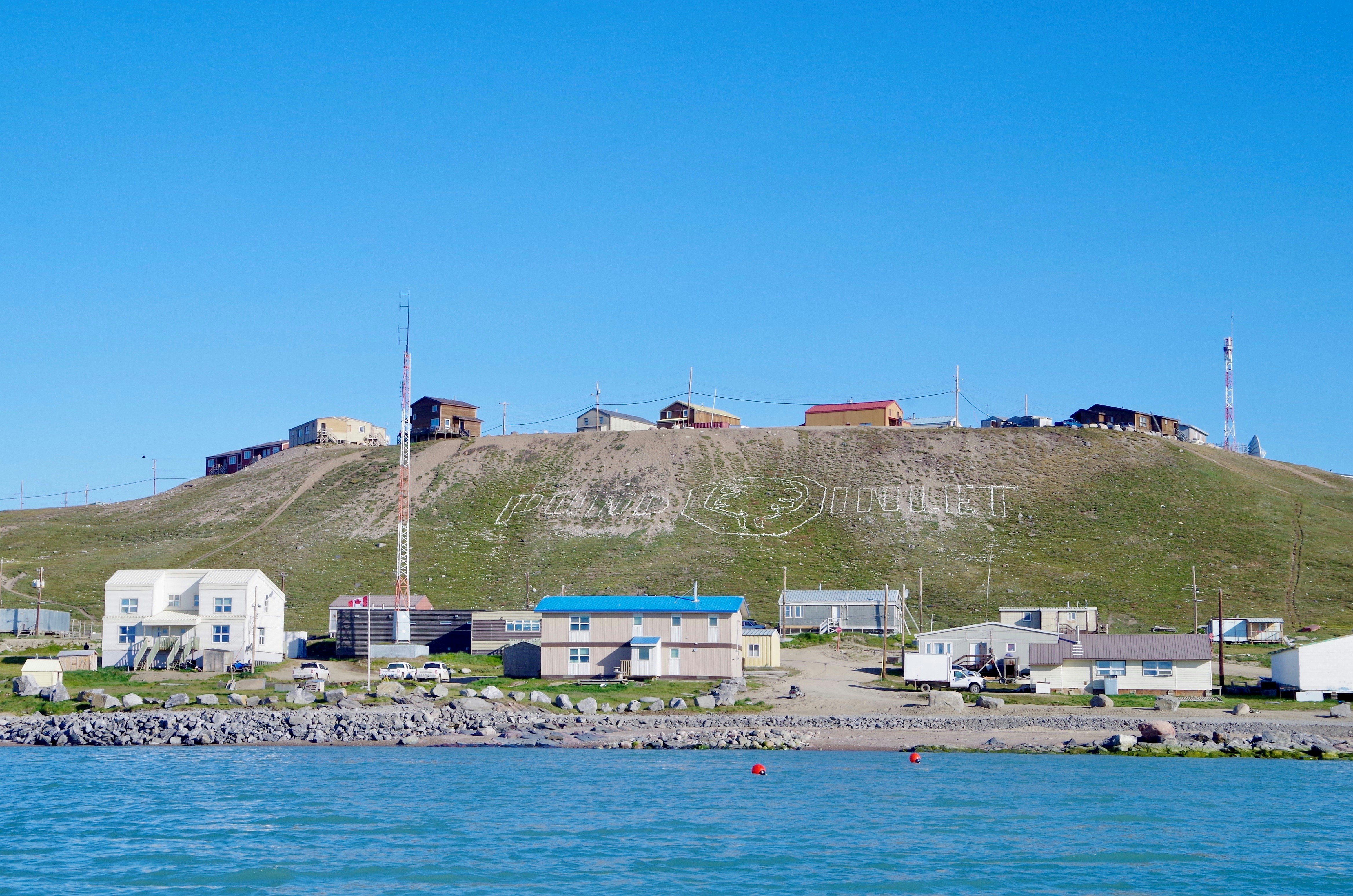
Located in northern Baffin Island, Pond Inlet is a small, predo¬minantly Inuit community, with a population of roughly 1,500 inhabitants. In 1818, the British explorer John Ross named a bay in the vicinity after the English astronomer John Pond. Today Pond Inlet is considered one of Canada's "jewels of the North" thanks to several picturesque glaciers and mountain ranges nearby. Many archaeological sites of ancient Dorset and Thule peoples can be found near Pond Inlet. The Inuit hunted caribou, ringed and harp seals, fish, polar bears, walrus, narwhals, geese, ptarmigans and Arctic hares, long before European and American whalers came here to harvest bowhead whales. Pond Inlet is also known as a major center of Inuit art, especially the printmaking and stone carving that are featured in the town’s art galleries.

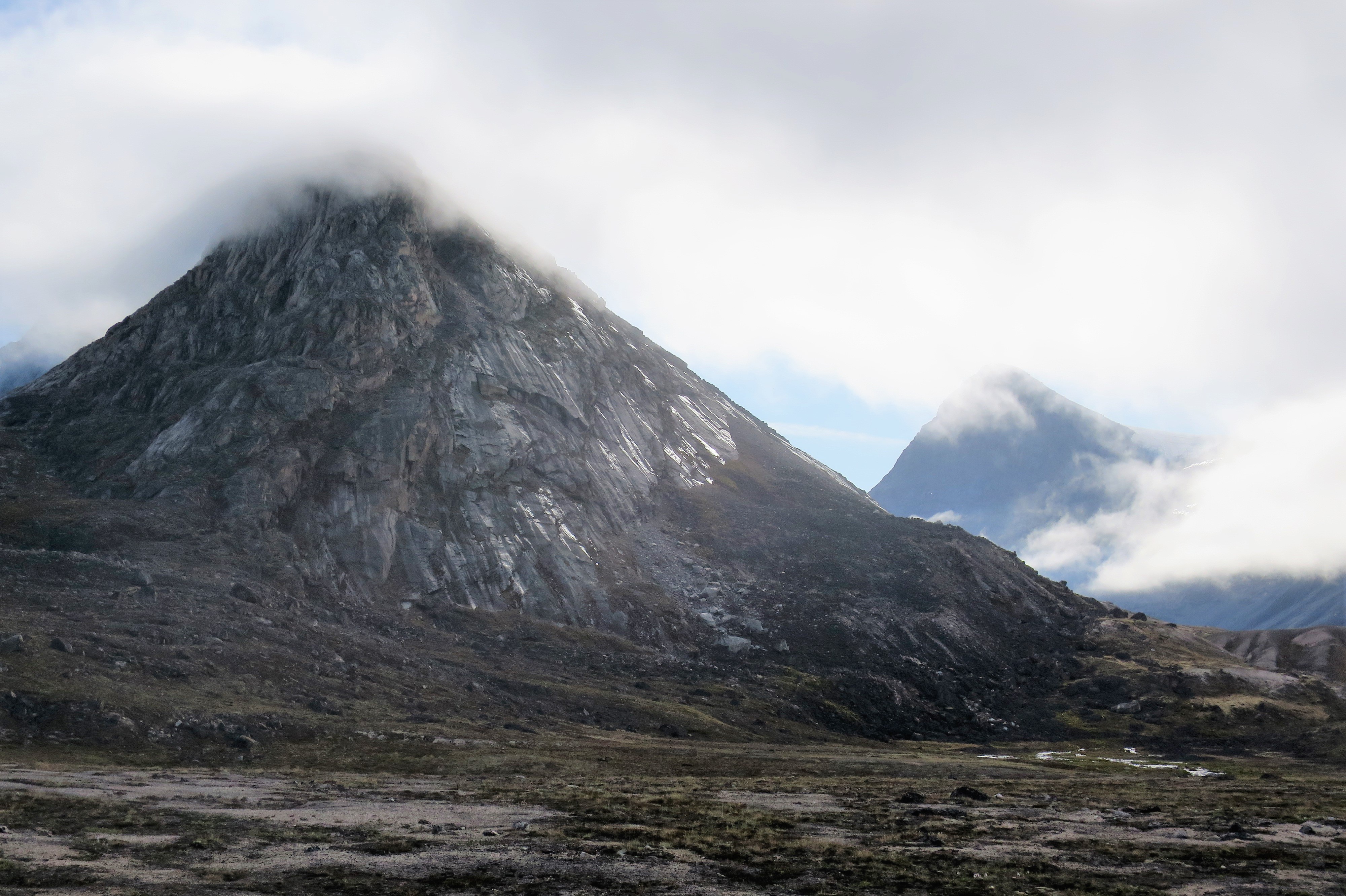
Nunavut, Canada
Nunavut, CanadaPhoto by Damon On Road on Unsplash
Pond Inlet, Nunavet
Pond Inlet, NunavetPhoto by Isaac Demeester on Unsplash

Day 21 - North Arm Fjord, Canada, Nunavut

Further details for this day are not available.

Day 22 - Fecham Bay

Further details for this day are not available.

Day 23 - Baffin Bay, Nunavut

Further details for this day are not available.

Baffin, Nunavut
Baffin, NunavutImage by highflyer100 from Pixabay

Day 24 - Baffin Bay, Nunavut

Further details for this day are not available.

Baffin, Nunavut
Baffin, NunavutImage by highflyer100 from Pixabay

Day 25 - Nuuk (Godthaab)

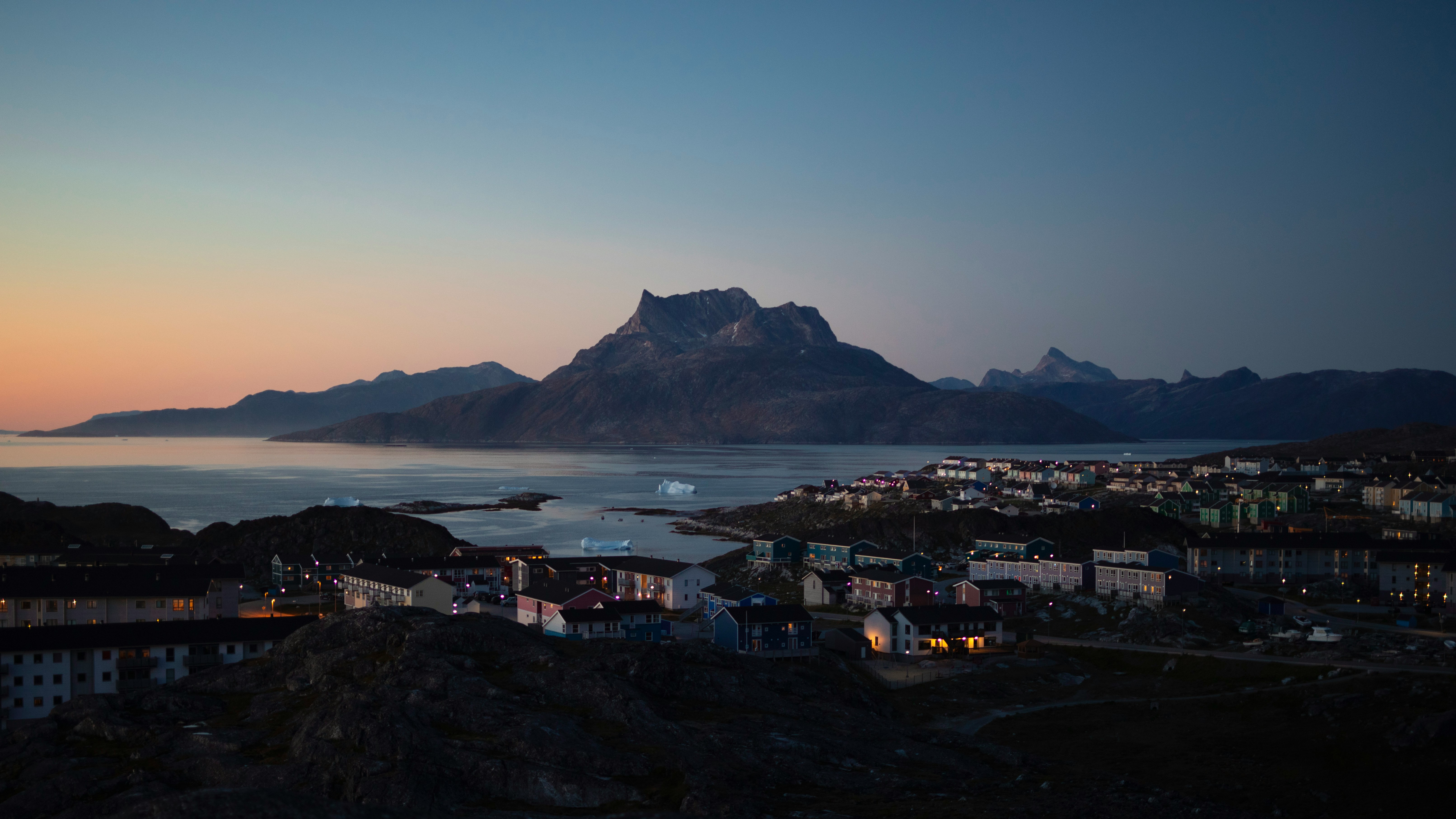
Nuuk, meaning “the cape”, was Greenland’s first town (1728). Started as a fort and later mission and trading post some 240 kilometers south of the Arctic Circle, it is the current capital. Almost 30% of Greenland’s population lives in the town. Not only does Nuuk have great natural beauty in its vicinity, but there are Inuit ruins, Hans Egede’s home, the parliament, and the Church of our Saviour as well. The Greenlandic National Museum has an outstanding collection of Greenlandic traditional dresses, as well as the famous Qilakitsoq mummies. The Katuaq Cultural Center’s building was inspired by the undulating Northern Lights and can house 10% of Nuuk’s inhabitants.

Nuuk, Greenland
Nuuk, GreenlandPhoto by Aningaaq Rosing Carlsen on Unsplash
Nuuk, Greenland
Nuuk, GreenlandPhoto by Bogomil Shopov - Бого on Unsplash

Suites & Deck Plans

Suite

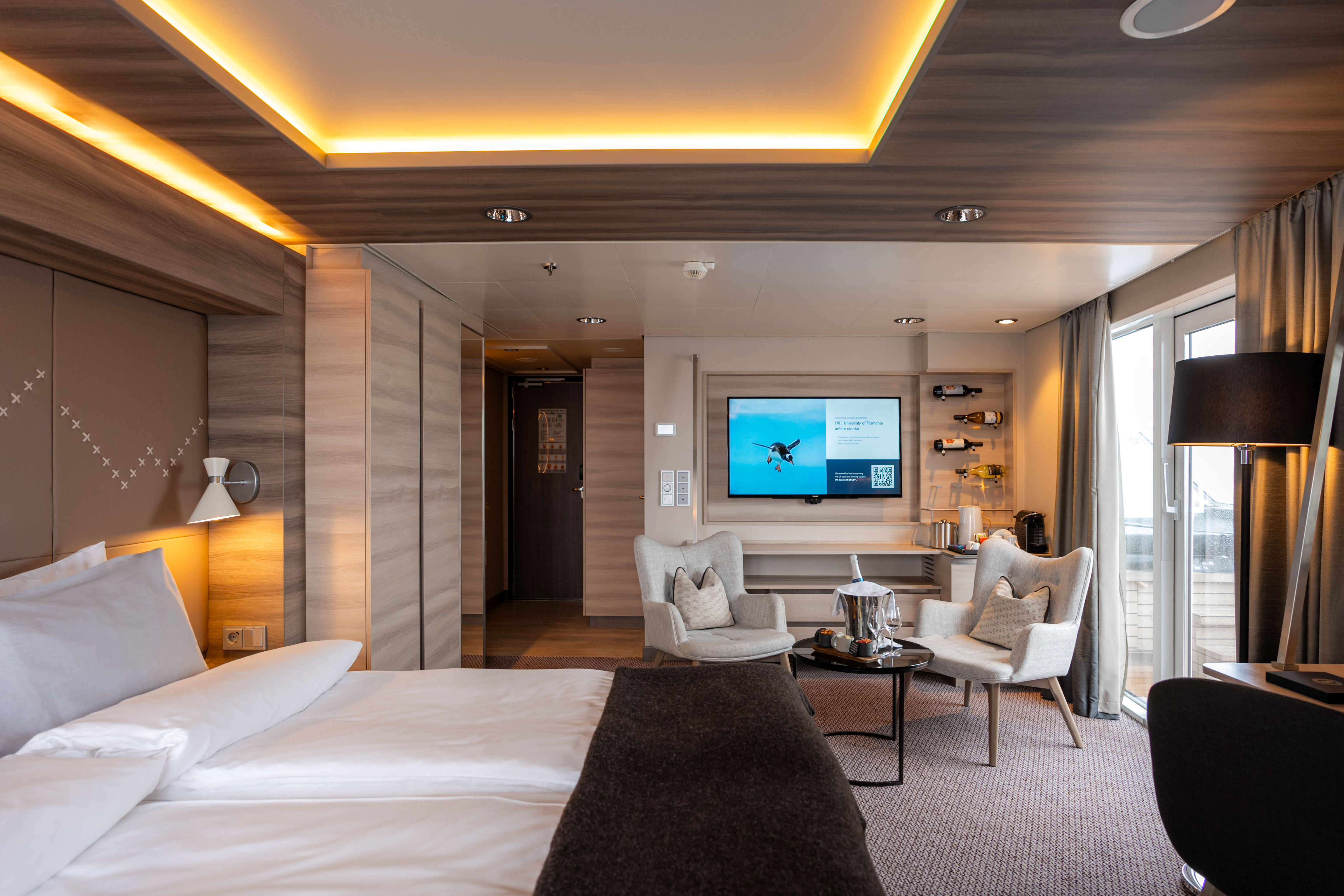
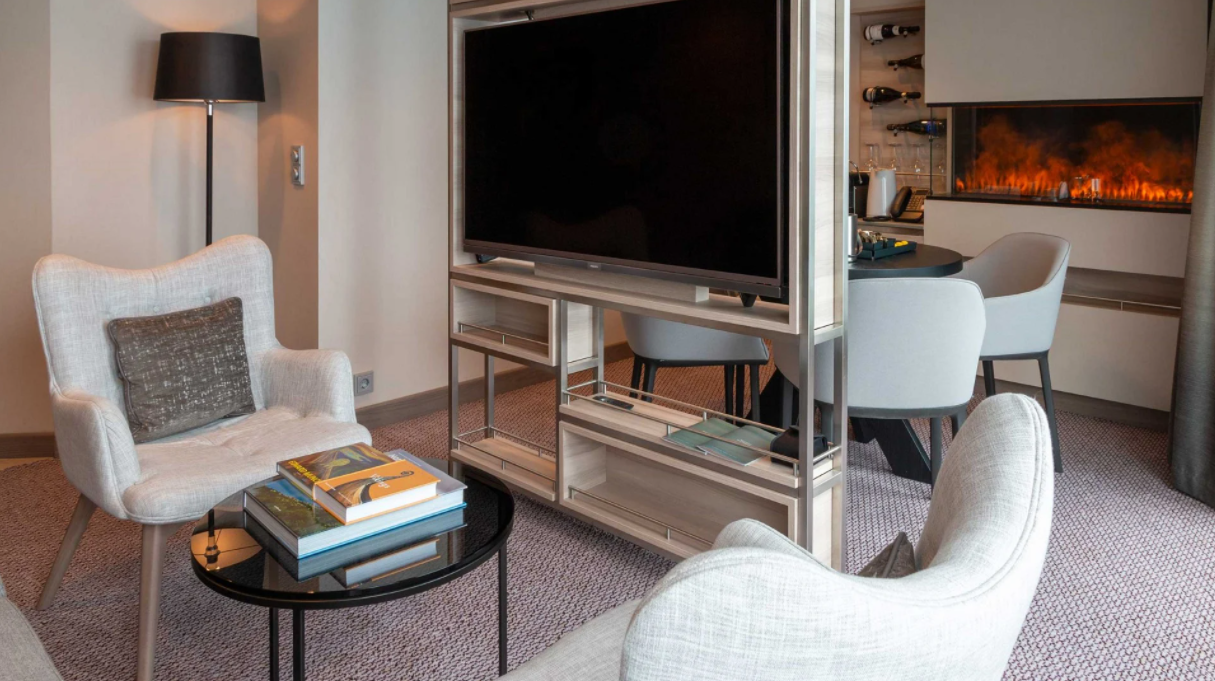
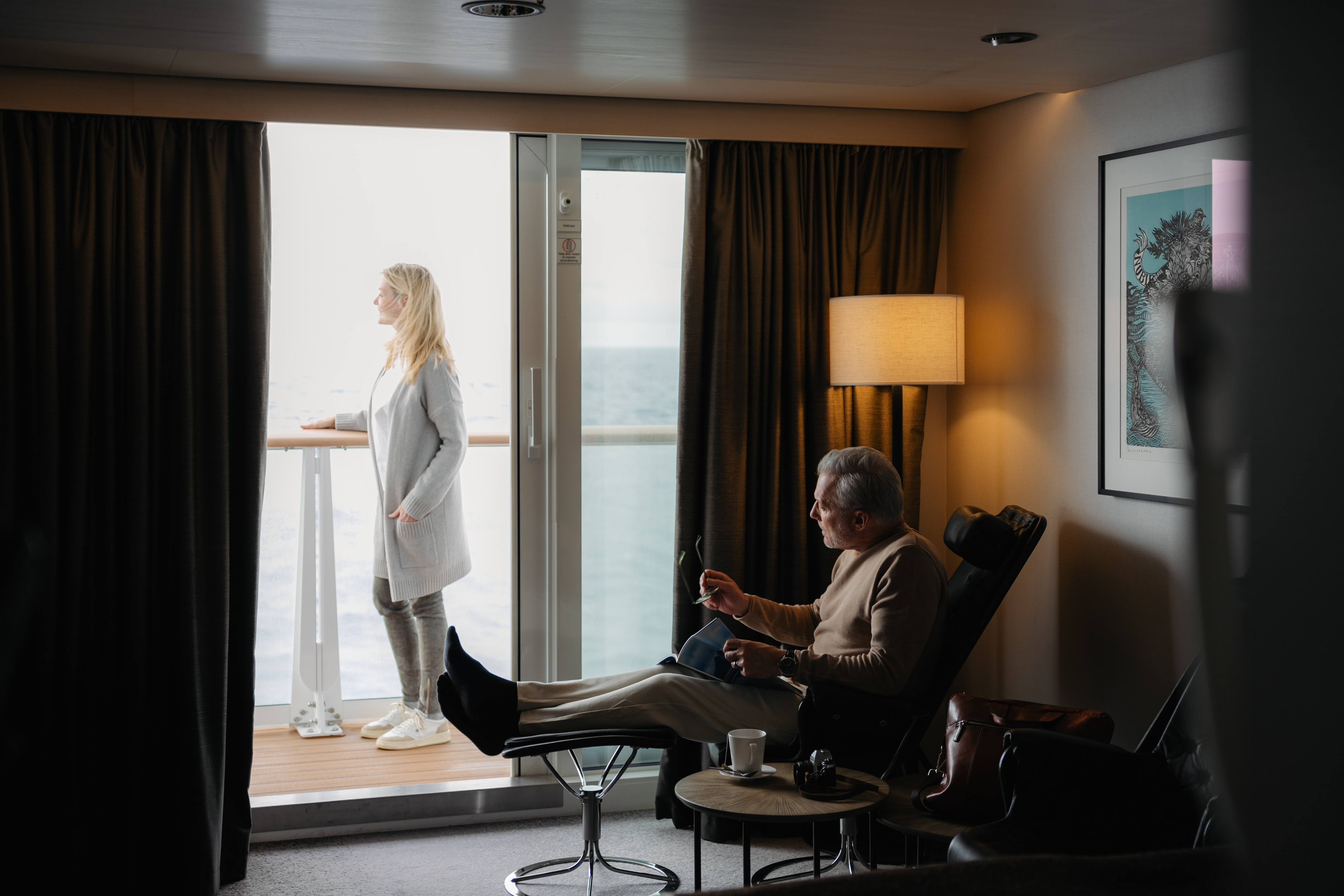
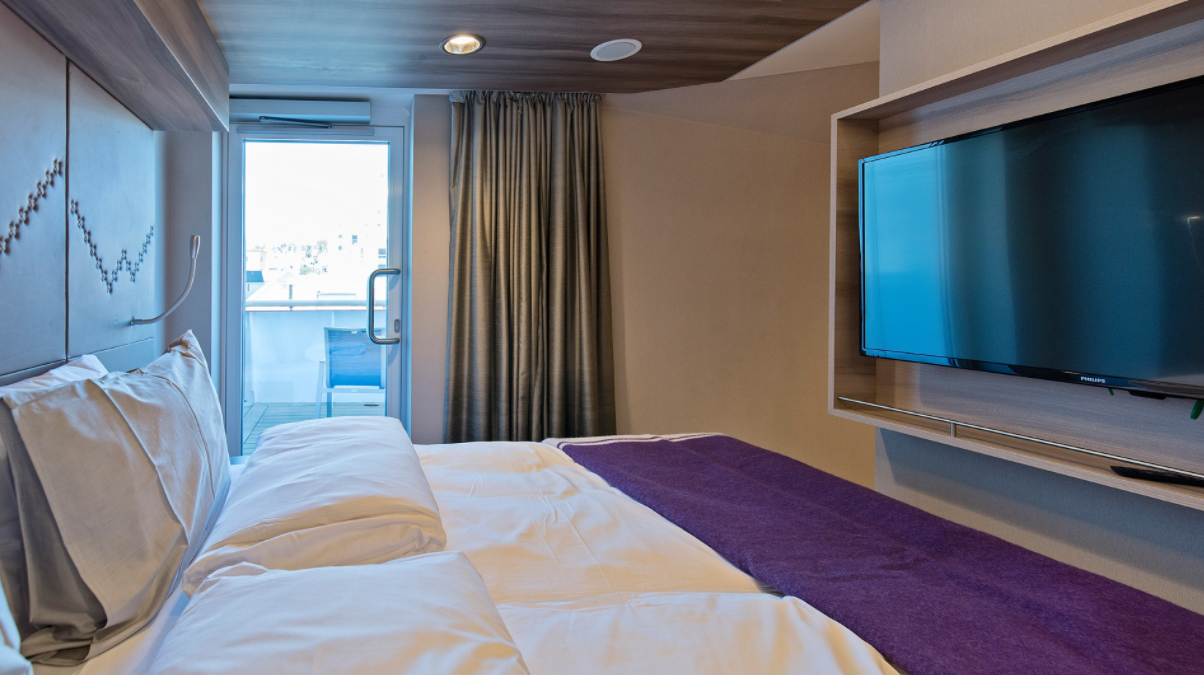
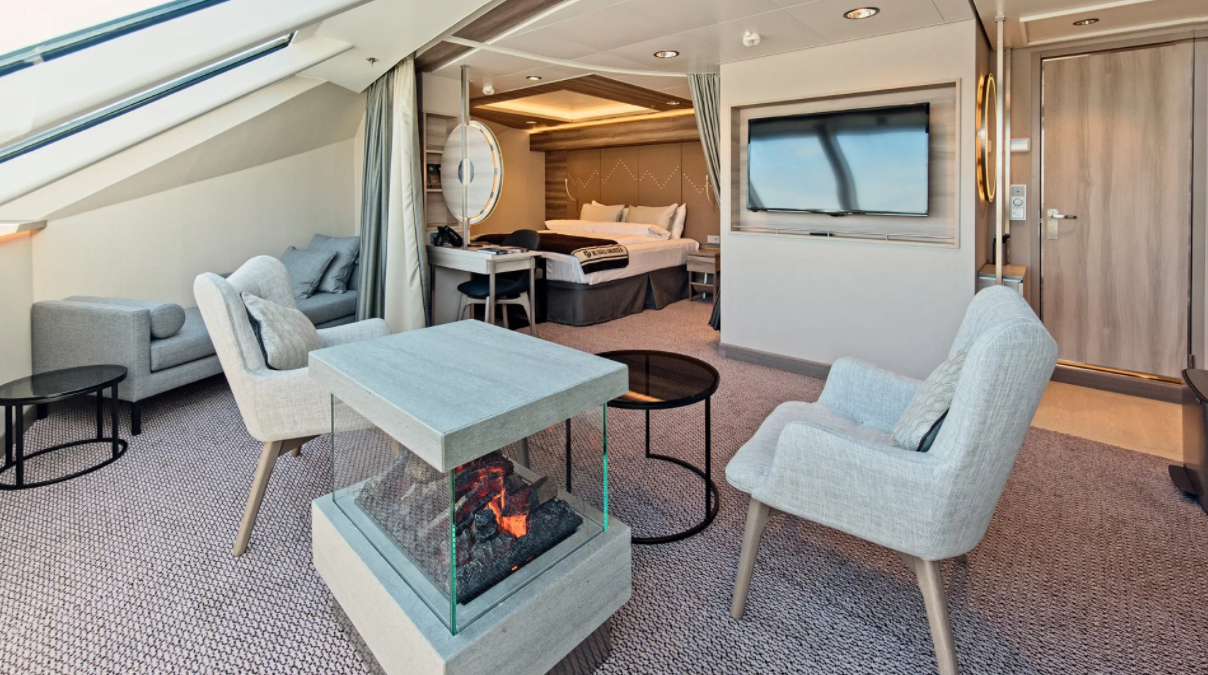
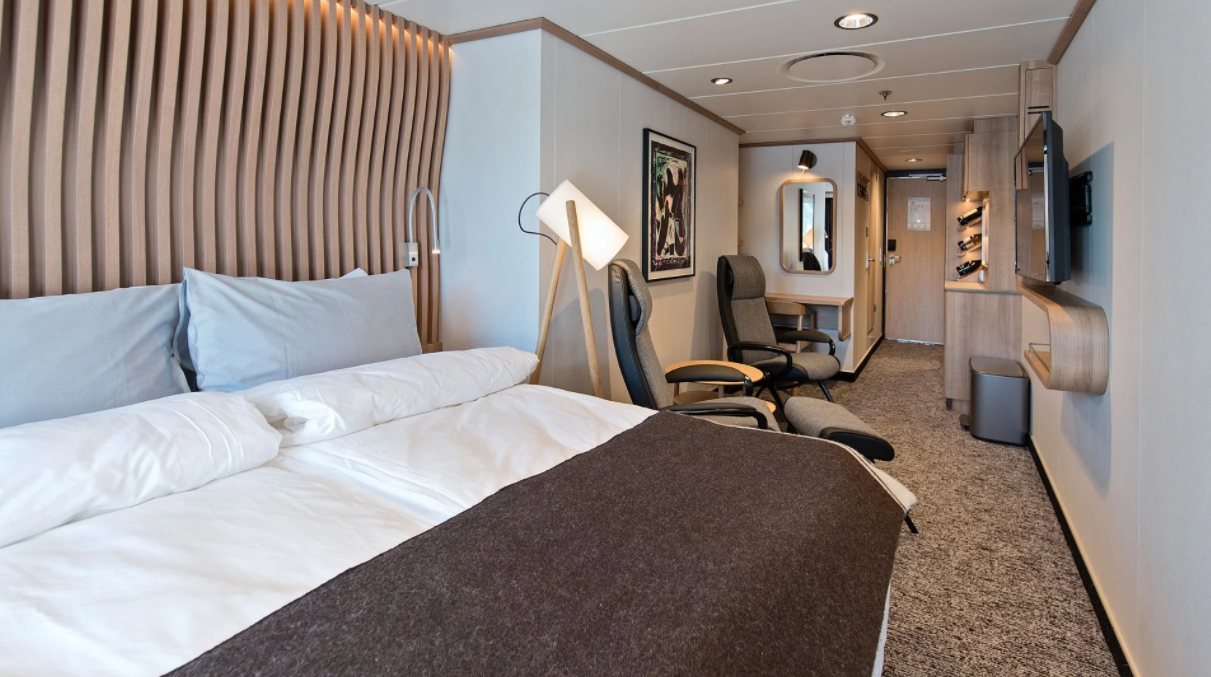
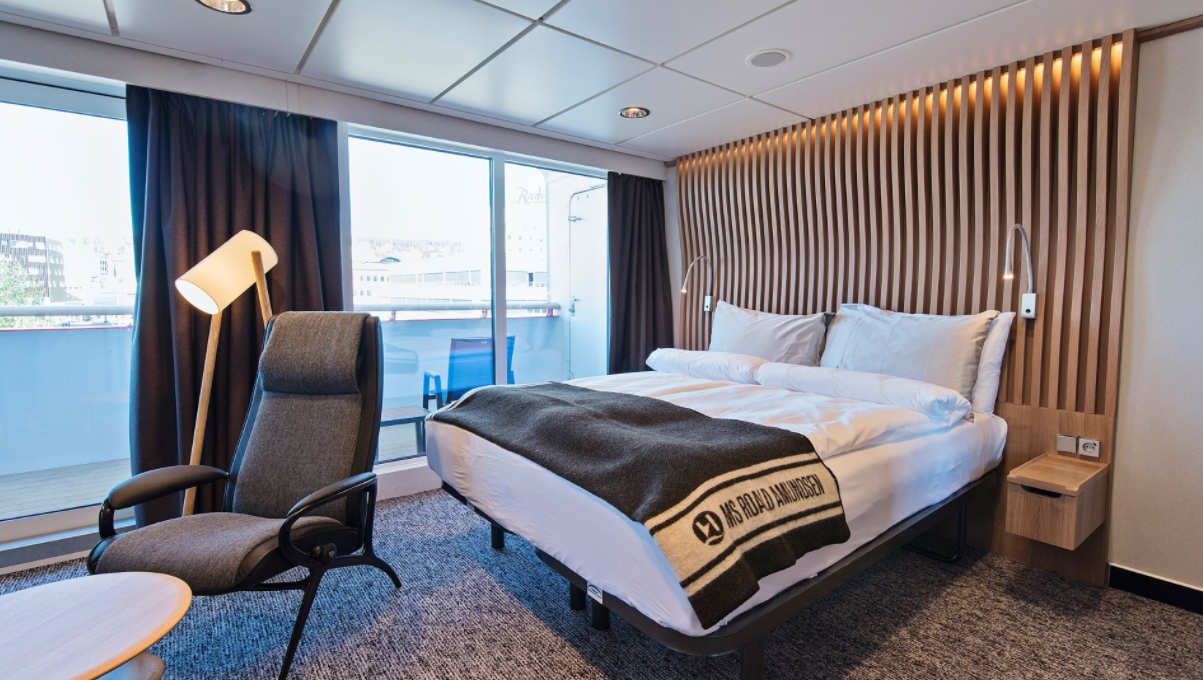
Extra Large Corner Suite with private balcony. Ship’s most spacious cabins with large windows, flexible sleeping arrangements, sofabed, TV, minibar, bathrobe, kettle, tea and coffee, espresso maker. The first minibar setup is included for each item, each replenishment is chargeable.

  • Extra-large upper-deck corner suite
  • Private balcony
  • Large windows
  • Double bed (optional twin)
  • Sofa bed
  • Bathrobes and slippers available on request 
  • Guests: up to 4 | Size: 46-48 m2
  • Cabin Code: MA

495-517 sq ft
Accommodates 4 guests
Expedition Suite | XL Suite - With balcony

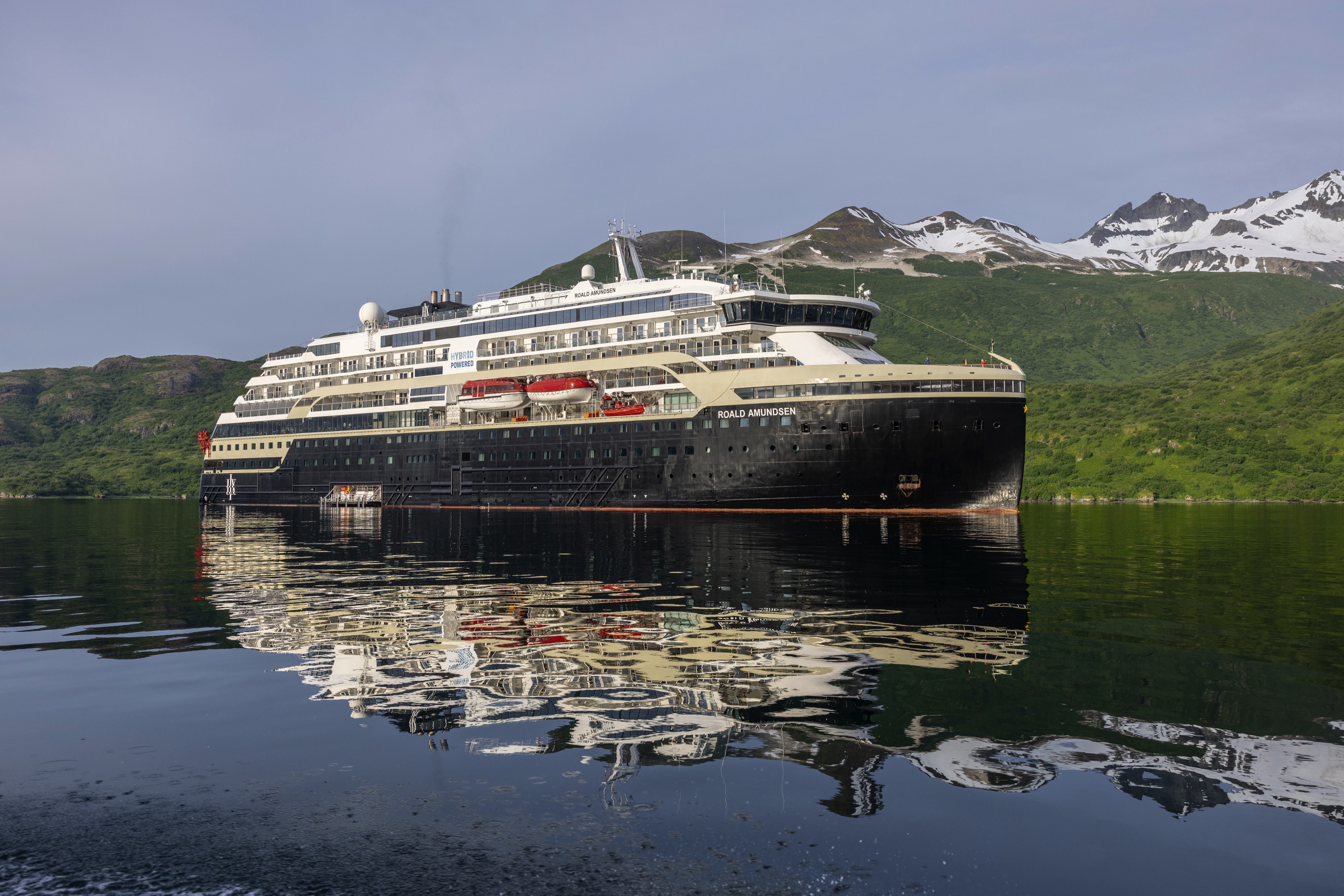
MS Roald Amundsen

MS Roald Amundsen

Client testimonials

I have worked with Lore Doick for more than 20 years, and she has booked over 30 cruises for me. Her expertise, care, and attention to every travel detail have made her an invaluable advisor and friend over the years.”

Tina B.

We are now in our second generation working with Cheri Ozimac at Tully Luxury Travel. From Antarctica to Greece, she has handled every detail with expertise, responsiveness, and care…

Earl M.

My wife and I have worked with Tully since 2007, and Kit Neil and her team went far beyond expectations while helping us navigate multiple cruise and flight cancellations. Their advocacy, care, and support during a difficult time were extraordinary.

Carri F.

Cheri Ozimac organized our Seabourn cruise flawlessly, from the hotel recommendation to every travel arrangement. She was responsive, attentive, and an excellent advocate throughout the process…

Cyn S.

We discovered Tully Luxury Travel after years of booking cruises through US agents and were impressed by their competitive pricing, exceptional service, and Canadian based support. Their team is always available, offers excellent value, and makes booking the right cruise seamless.

Peter C.

GoogleAverage Customer Rating:

The Tully Difference

Why travel with us


Tully Luxury Travel was built on access, discretion, and trust. For our clients, that means ease at every step, with distinctions that turn exceptional voyages into defining moments.

Recognized expertise

A renowned agency worldwide in luxury land and small-ship cruising, consistently trusted by the industry’s most prestigious brands.