A Grand Journey Across the Atlantic to Brazil’s Radiant Shores

Itinerary: Barcelona, At Sea, Málaga, Tangier, Casablanca, Santa Cruz de Tenerife, Recife, Maceió, Salvador de Bahia, Buzios, Rio de Janeiro See full itinerary

29 Nov 28
17 nights

Voyage Details

Duration:
17 nights
Departure:
29 Nov 2028
Embarkation:
Barcelona, Spain
Voyage code:
EP20281129BCNRIO

Your Itinerary, Day-By-Day

Special Chapters of Your Journey

Day 1 - Barcelona

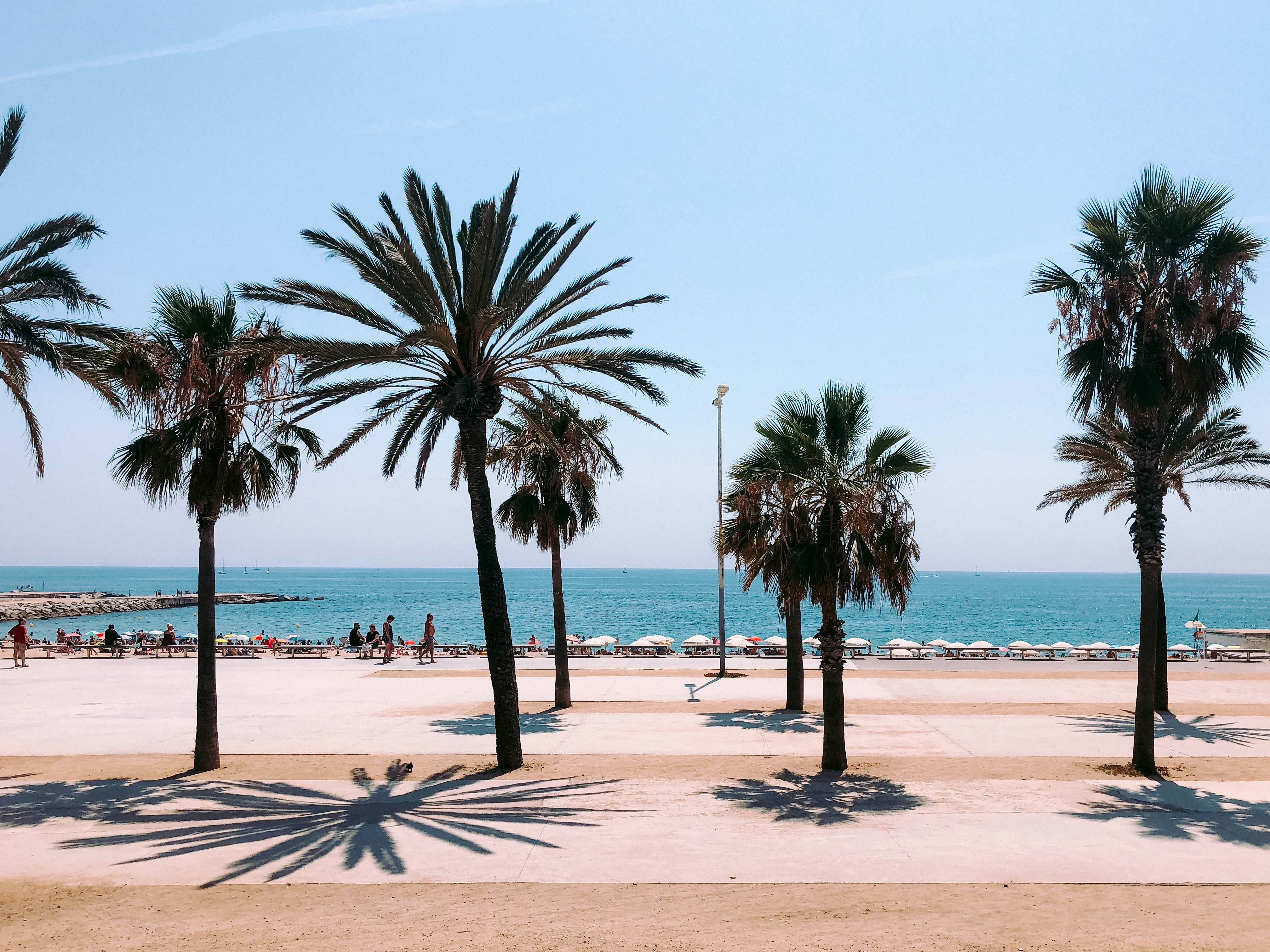
The infinite variety of street life, the nooks and crannies of the medieval Barri Gòtic, the ceramic tile and stained glass of Art Nouveau facades, the art and music, the throb of street life, the food (ah, the food!)—one way or another, Barcelona will find a way to get your full attention. The capital of Catalonia is a banquet for the senses, with its beguiling mix of ancient and modern architecture, tempting cafés and markets, and sun-drenched Mediterranean beaches. A stroll along La Rambla and through waterfront Barceloneta, as well as a tour of Gaudí's majestic Sagrada Famíliaand his other unique creations, are part of a visit to Spain's second-largest city. Modern art museums and chic shops call for attention, too. Barcelona's vibe stays lively well into the night, when you can linger over regional wine and cuisine at buzzing tapas bars.

Barcelona Beach
Barcelona BeachEnes F, Unsplash
Barcelona Beach
Barcelona BeachLucrezia Carnelos, Unsplash
Barcelona Aerial Logan Armstrong
Barcelona Skyline Apasaric

Day 2 - At Sea

Further details for this day are not available.

Day 3 - Málaga

As you sail into Malaga you will notice what an idyllic setting the city enjoys on the famous Costa del Sol. To the east of this provincial capital, the coast along the region of La Axarqua is scattered with villages, farmland and sleepy fishing hamlets - the epitome of traditional rural Spain. To the west stretches a continuous city where the razzmatazz and bustle creates a colourful contrast that is easily recognisable as the Costa del Sol. Surrounding the region, the Penibéetica Mountains provide an attractive backdrop overlooking the lower terraced slopes which yield olives and almonds. This spectacular mountain chain shelters the province from cold northerly winds, giving it a reputation as a therapeutic and exotic place in which to escape from cold northern climes. Malaga is also the gateway to many of Andalusia's enchanting historic villages, towns and cities.

Esagp Malaga Empty Seats And Tables In Between Buildings During Daytime Jonas Hoss
Esagp Malaga Empty Seats And Tables In Between Buildings During Daytime Jonas HossJonas Hoss
Esagp Malaga Round Stadium Surrounded By Buildings Near The Sea Christian Moller
Esagp Malaga Round Stadium Surrounded By Buildings Near The Sea Christian MollerChristian Moller
Esagp Malaga Sunset Quino Al
Esagp Malaga Sunset Quino AlQuino Al

Day 4 - Tangier

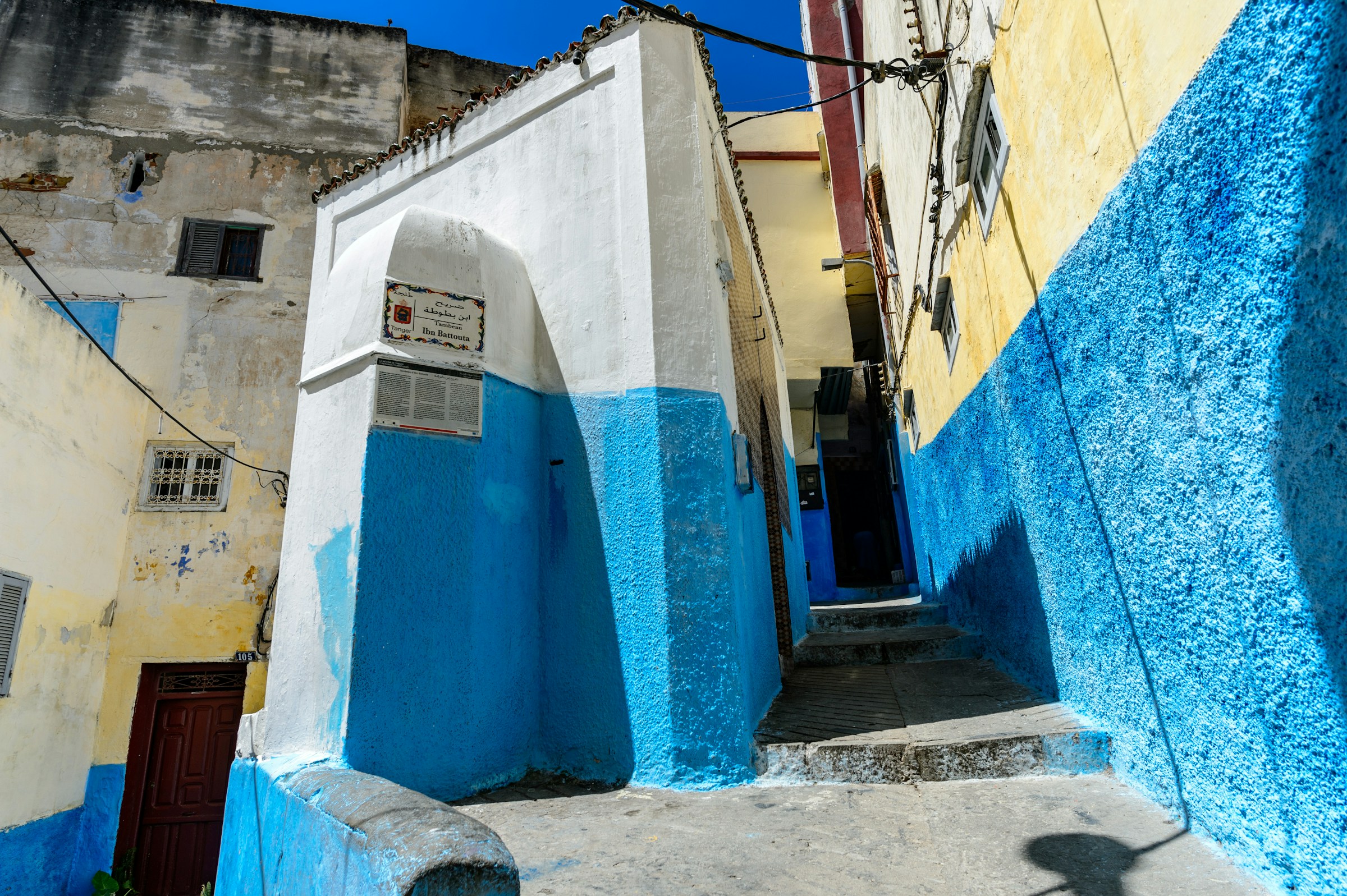
Tangier can trace its origins back to the Phoenicians and ancient Greeks. It was named after Tinge, the mother of Hercules’ son, and its beginnings are embedded in mythology. It was subsequently a Roman province, and after Vandal and Byzantine influences, was occupied by the Arabs with Spain, Portugal, France and England also playing a part in the city’s history. With such a diverse past it is perhaps not surprising that Tangier is such an individual city. Overlooking the Straits of Gibraltar, the city lies on a bay between two promontories. With its old Kasbah, panoramic views, elegant buildings, squares and places of interest, there is much to discover in both the new and old parts of the city.

Tangier, Morocco
Tangier, Moroccoby Robert Brands from Unsplash
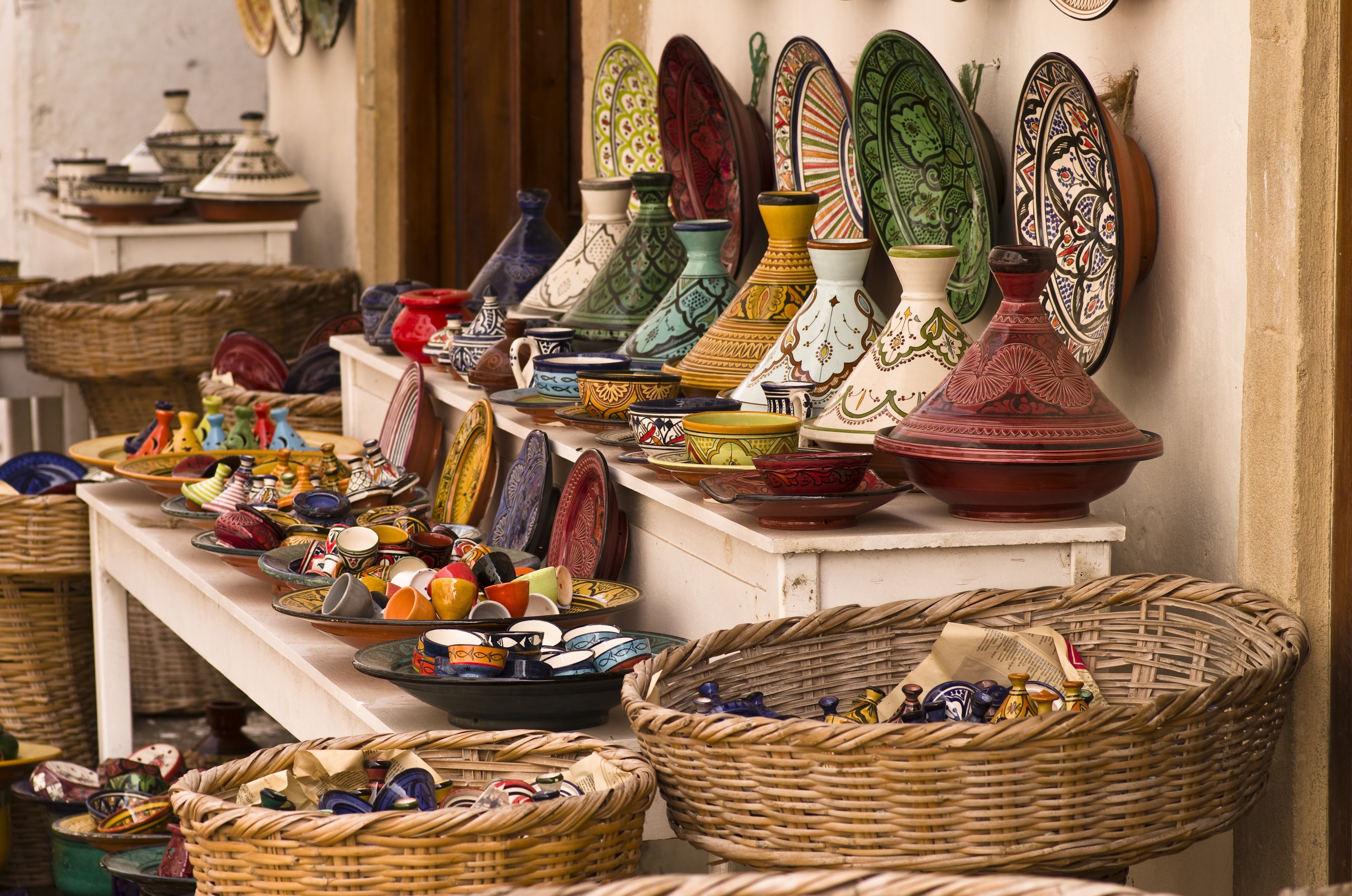
Market Stall In Tangier
Market Stall In TangierImage by Daniel Wanke from Pixabay

Day 5 - Casablanca

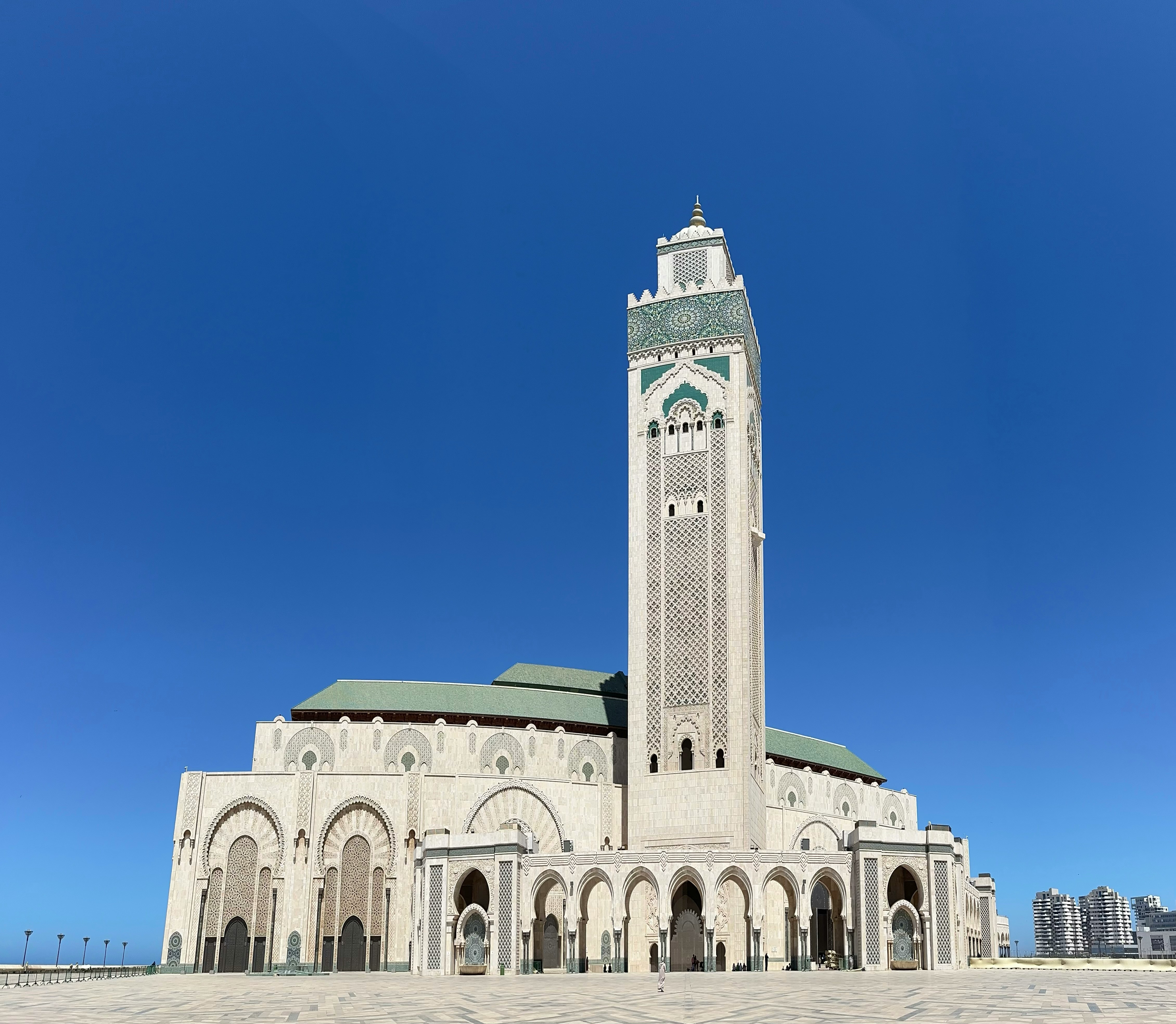
The original settlement formed on the site of Casablanca by the Berbers became the kingdom of Anfa, and during the 15th century harboured pirates who raided the Portuguese coast. In retaliation for the attacks, the Portuguese destroyed Anfa and founded the town they called Casa Branca (white house). They remained here until an earthquake in 1755 and the town was subsequently rebuilt by Mohammed ben Abdallah, whose legacy of mosques and houses can still be seen in the old Medina. Casablanca acquired its present-day name when the Spanish obtained special port privileges in 1781. The French landed here in 1907, later establishing a protectorate and modelling the town on the port of Marseilles. Today Casablanca is Morocco’s largest city, its most significant port and the centre of commerce and industry. The city is a vibrant fusion of European, African and Arabian influences and its French colonial architecture and art deco buildings seamlessly blend in with the busy, colourful markets. Please note that vendors in the souks can be very persistent and eager to make a sale.

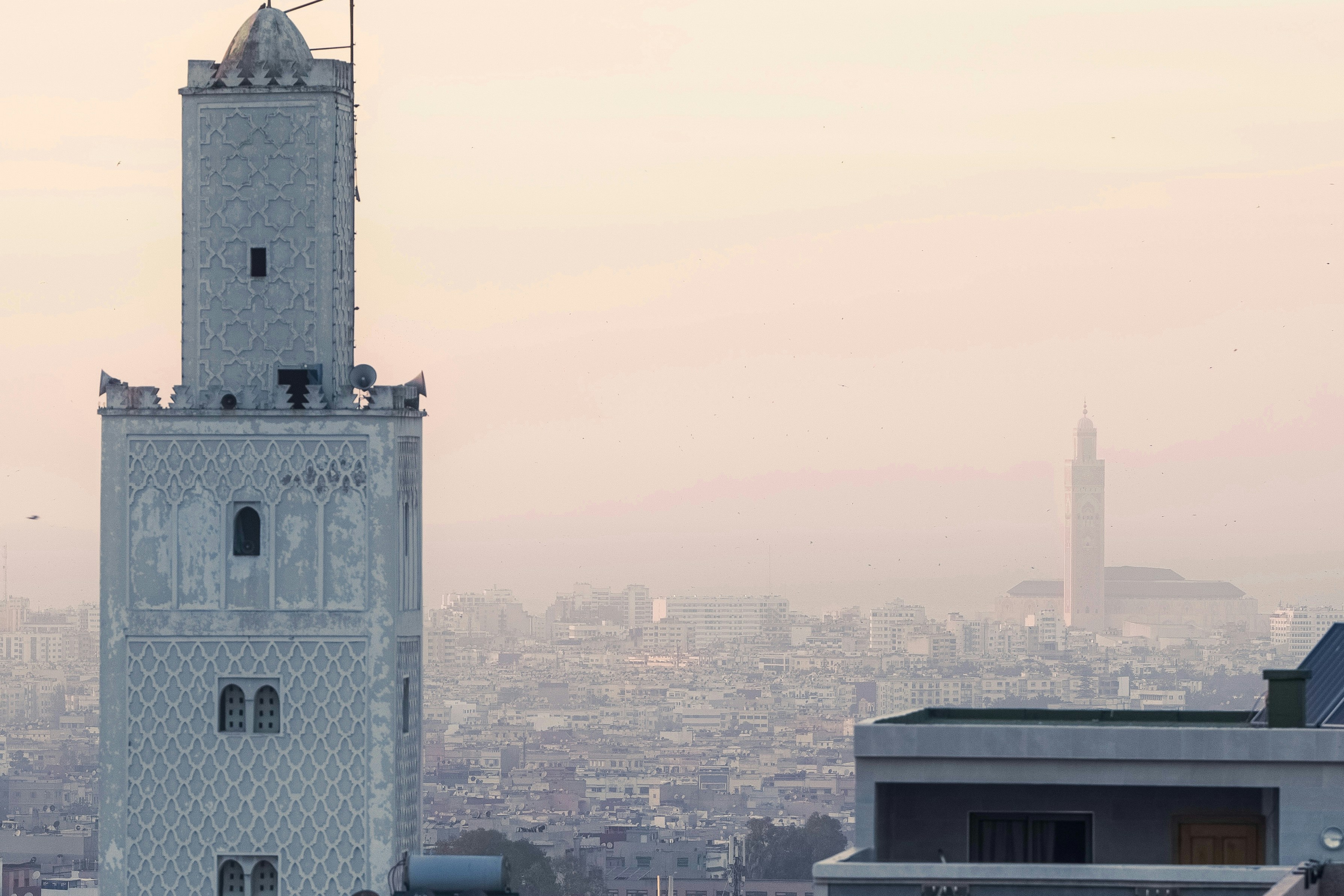
Hassan Ii Mosque, Casablanca, Morocco
Hassan Ii Mosque, Casablanca, MoroccoPhoto by Chaoyue Ding on Unsplash
Views From Hay Ousra Of Mosque Hassan Ii, Casablanca, Morocco
Views From Hay Ousra Of Mosque Hassan Ii, Casablanca, MoroccoPhoto by Imad Ghazal on Unsplash
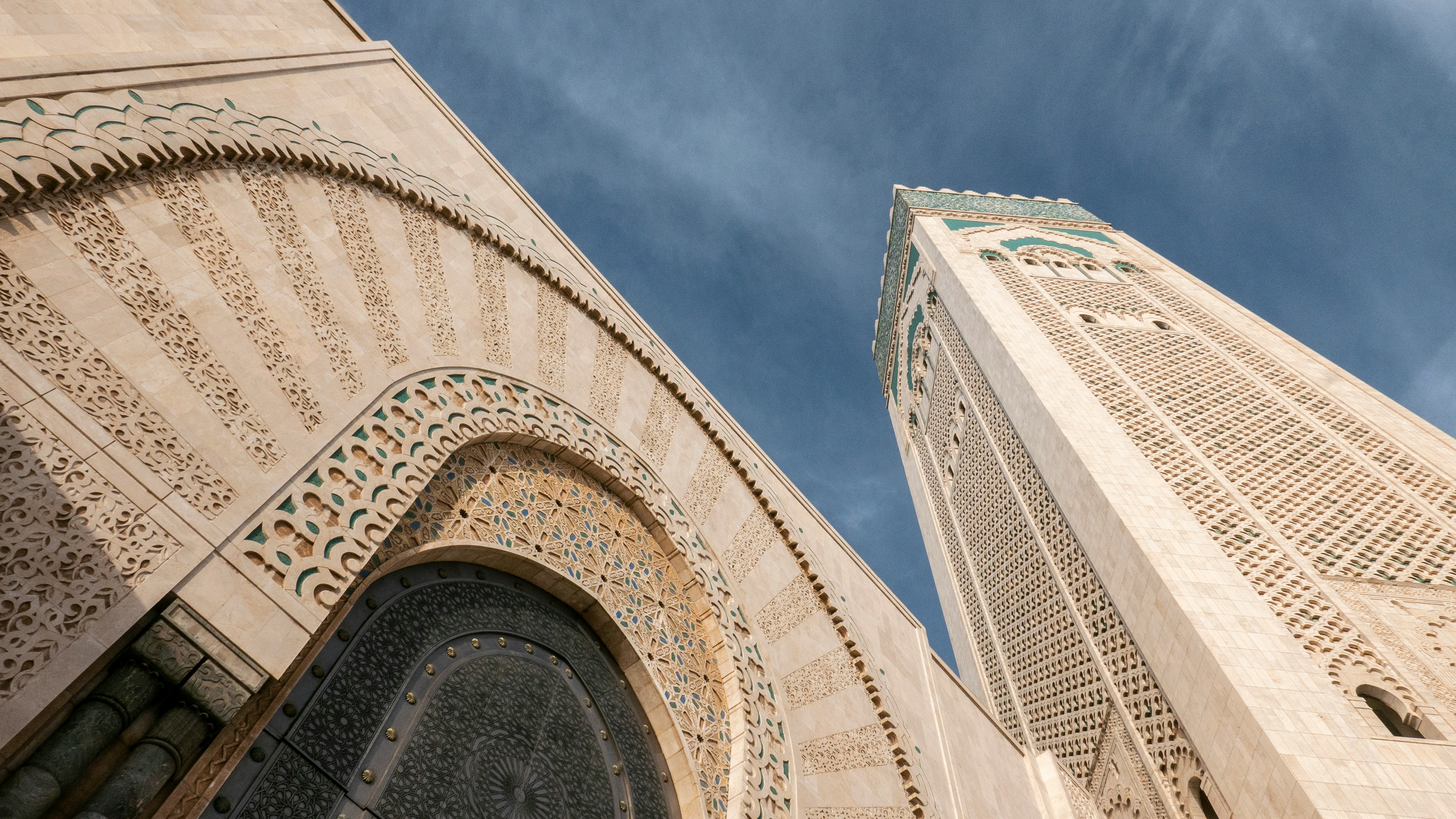
Hassan Ii, Casablanca, Morocco
Hassan Ii, Casablanca, MoroccoPhoto by Fabio Santaniello Bruun on Unsplash

Day 6 - At Sea

Further details for this day are not available.

Day 7 - Santa Cruz de Tenerife

The largest of the Canary Islands, Tenerife is a beautiful and scenic island which enjoys year-round sunshine and is dominated by Mount Teide. The mountain range runs through the centre of the island, with fertile valleys on the northern side. In the central part of the range is the gigantic natural crater of the Cañadas del Teide, about 14 miles in diameter. Santa Cruz, the island’s pretty capital, was originally a small fishing village but has now grown into a modern city, and also contains 16th-century civic buildings and ornate private mansions. Near the pier is the Santa Cruz Palmetum, a Botanical Garden covering an area of 29 acres, specialising in palms.

Essct   Santa Cruz De Tenerife, Spain   Photo Credit Belongs To Christian Buehner
Essct Santa Cruz De Tenerife, Spain Photo Credit Belongs To Christian BuehnerChristian Buehner
Essct   Santa Cruz De Tenerife, Spain   Photo Credit Belongs To Ilya Kazakov
Essct Santa Cruz De Tenerife, Spain Photo Credit Belongs To Ilya Kazakov Ilya Kazakov
Essct   Santa Cruz De Tenerife, Spain   Photo Credit Belongs To Ivanna Hrytsiuk
Essct Santa Cruz De Tenerife, Spain Photo Credit Belongs To Ivanna HrytsiukIvanna Hrytsiuk
Essct   Santa Cruz De Tenerife, Spain   Photo Credit Belongs To Joshua H.
Essct Santa Cruz De Tenerife, Spain Photo Credit Belongs To Joshua H. Joshua H
Essct   Santa Cruz De Tenerife, Spain   Photo Credit Belongs To Rafael Barquero
Essct Santa Cruz De Tenerife, Spain Photo Credit Belongs To Rafael BarqueroRafael Barquero
Essct   Santa Cruz De Tenerife, Spain   Photo Credit Belongs To Svetlana Gumerova
Essct Santa Cruz De Tenerife, Spain Photo Credit Belongs To Svetlana GumerovaSvetlana Gumerova

Day 8 - At Sea

Further details for this day are not available.

Day 9 - At Sea

Further details for this day are not available.

Day 10 - At Sea

Further details for this day are not available.

Day 11 - At Sea

Further details for this day are not available.

Day 12 - At Sea

Further details for this day are not available.

Day 13 - Recife

This vibrant metropolis has a spirit that's halfway between that of the modern cities of Brazil's South and of the traditional northeastern centers. It offers both insight on the past and a window to the future.It was in Pernambuco State, formerly a captaincy, that the most violent battles between the Dutch and the Portuguese took place. Under the Portuguese, the capital city was the nearby community of Olinda. But beginning in 1637 and during the Dutch turn at the reins (under the powerful count Maurício de Nassau), both Olinda and Recife were greatly developed.The city has beautiful buildings alongside the rivers that remind many visitors of Europe. Unfortunately, huge swathes of 19th-century buildings were razed to make way for modern structures. As a result, the center of the city has pockets of neocolonial splendor surrounded by gap-toothed modern giants. Today Recife is a leader in health care and has benefited from significant government investment in recent years, resulting in a boom in infrastructure and construction industries. It's also Brazil's third-largest gastronomic center—it's almost impossible to get a bad meal here.Recife is built around three rivers and connected by 49 bridges. Its name comes from the recifes (reefs) that line the coast. Because of this unique location, water and light often lend the city interesting textures. In the morning, when the tide recedes from Boa Viagem Beach, the rocks of the reefs slowly reappear. Pools of water are formed, fish flap around beachgoers, and the rock formations dry into odd colors. And if the light is just right on the Rio Capibaribe, the ancient buildings of Recife Antigo (Old Recife) are reflected off the river's surface in a watercolor display.

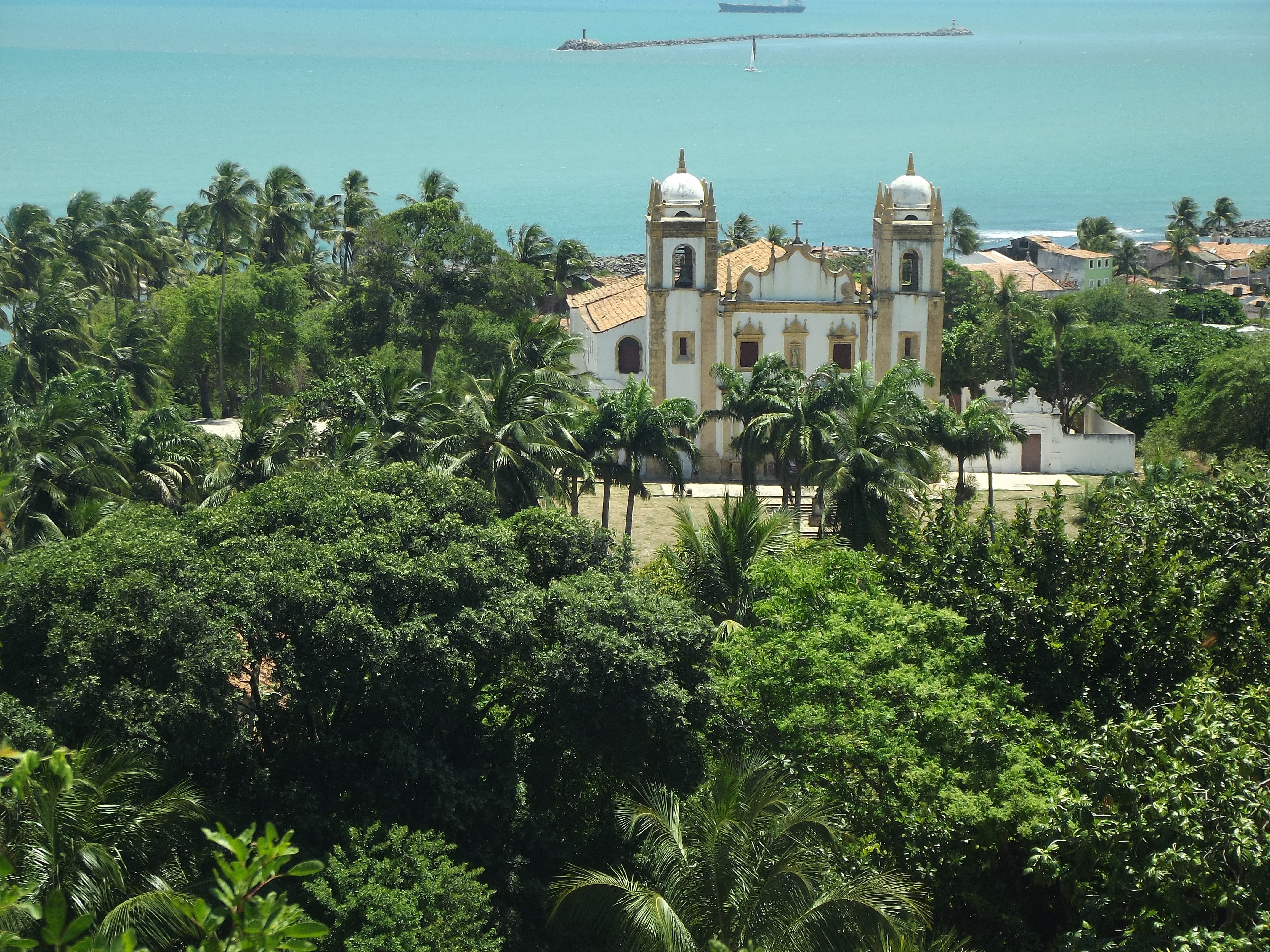
Recofe, Brazil
Recofe, BrazilImage by Matheus Araújo Machado de Freitas from Pixabay

Day 14 - Maceió

Maceió, city, capital of Alagoas estado (state), northeastern Brazil. It is situated below low bluffs on a level strip of land between the Atlantic Ocean and the Norte (or Mundaú) Lagoon, a shallow body of water extending inward for several miles. Formerly called Macayo, the city dates from 1815, when a small settlement there was made a villa. In 1839 it became capital of Alagoas (then a provincia) and was given city status.

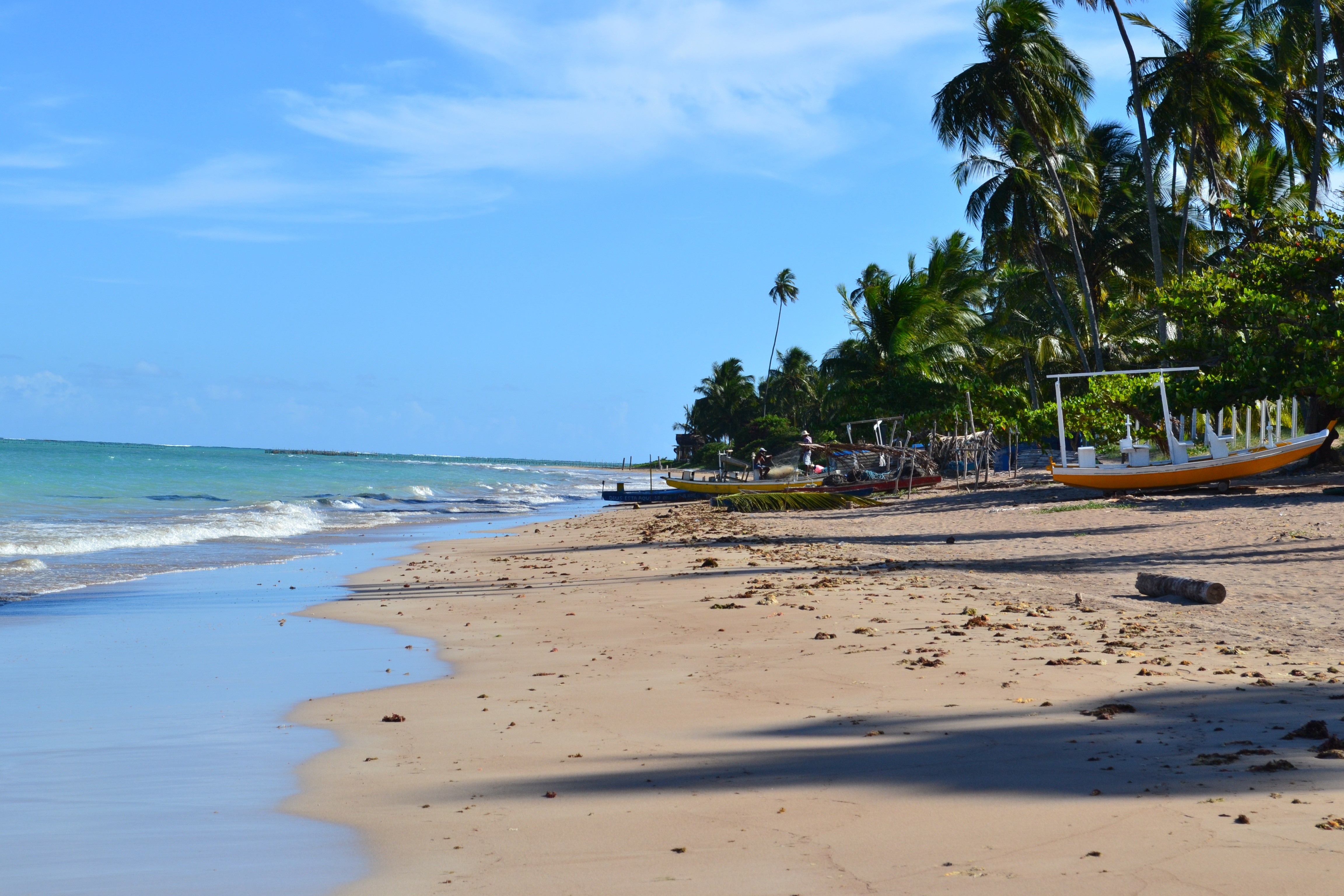
Beach At Maceio
Beach At MaceioImage by tupesa from Pixabay

Day 15 - Salvador de Bahia

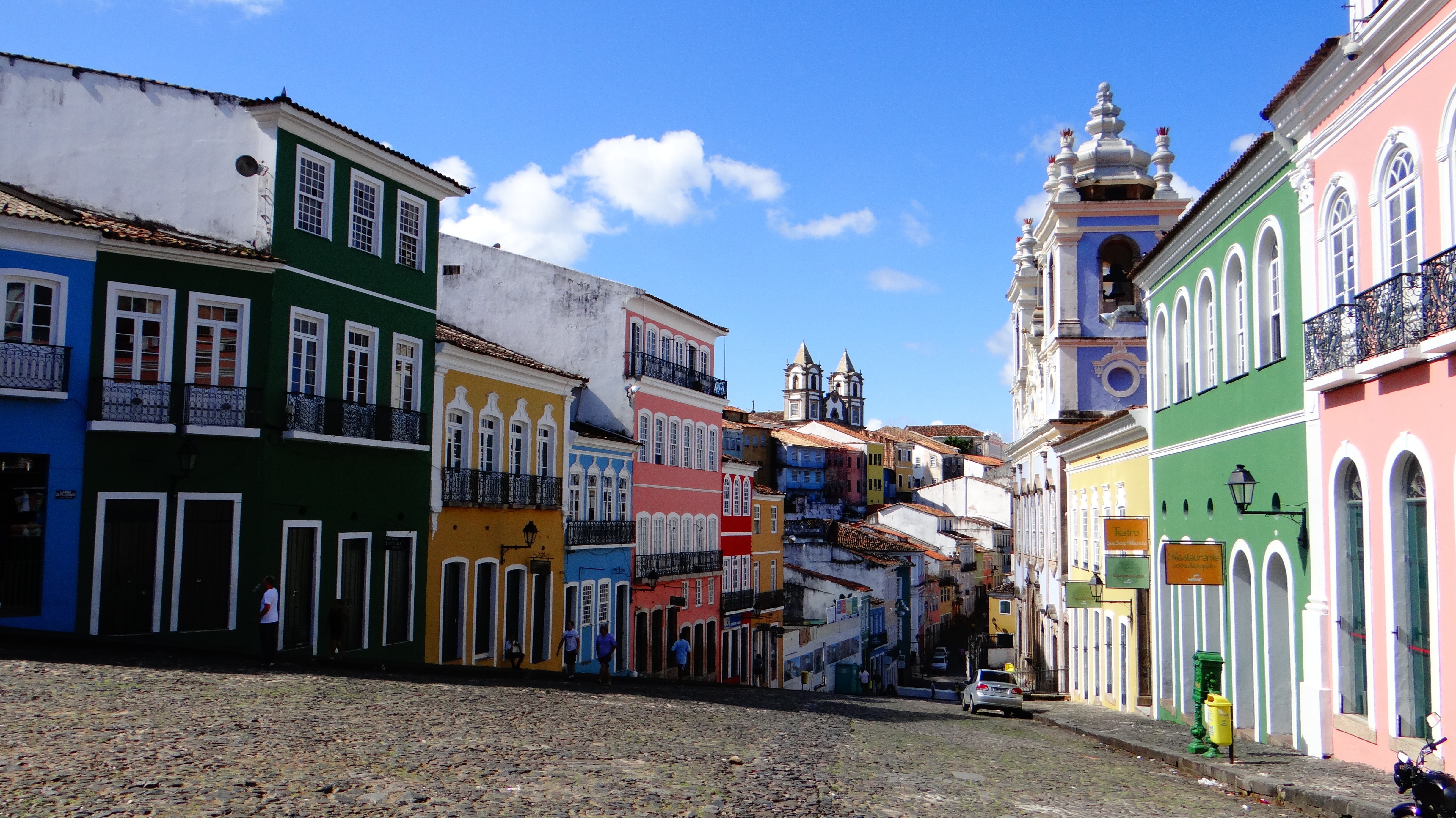
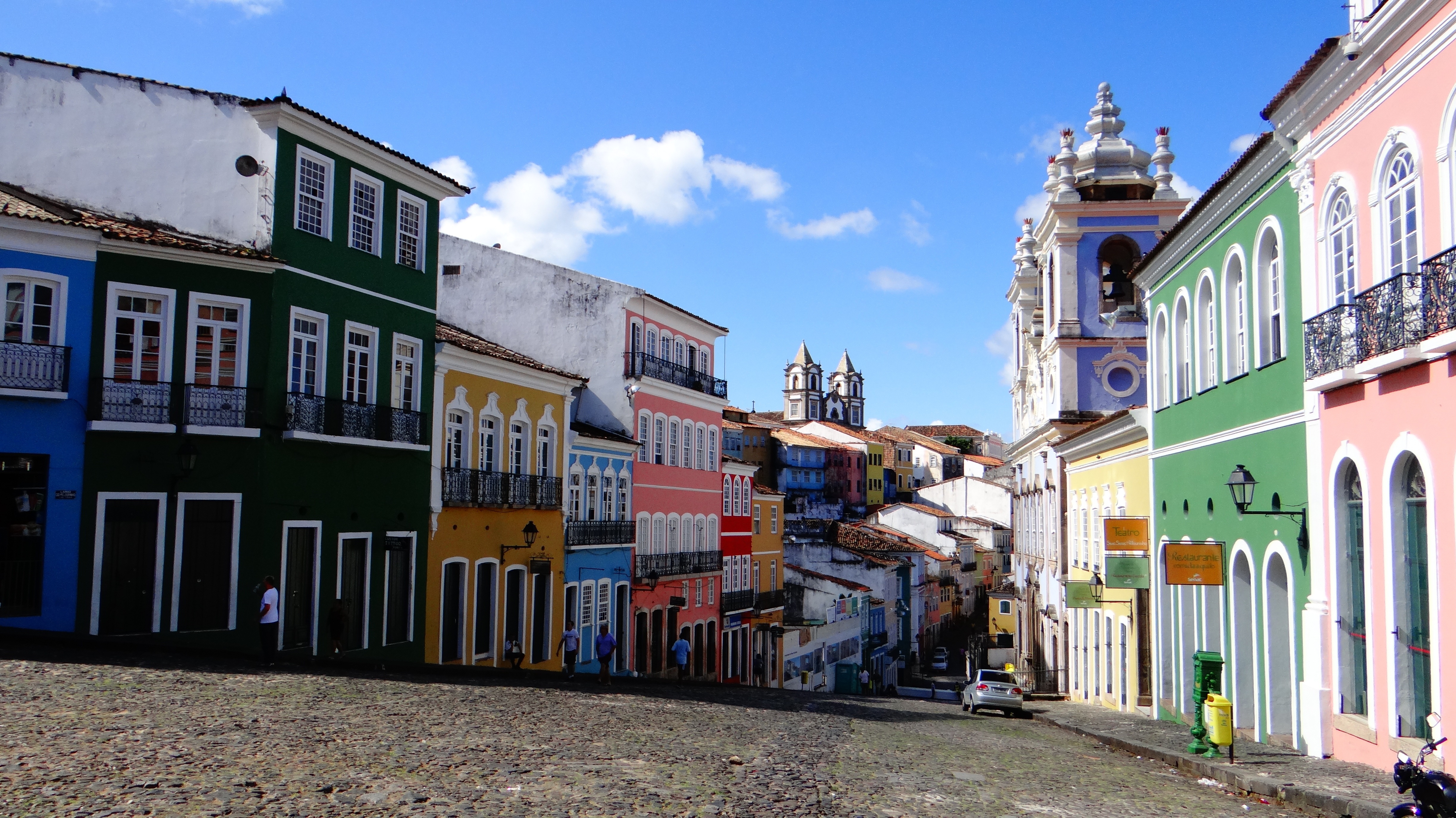
According to Salvador's adopted son Jorge Amado, "In Salvador, magic becomes part of the every-day." From the shimmering golden light of sunset over the Baía do Todos os Santos, to the rhythmic beats that race along the streets, Salvador, while no longer Brazil's capital, remains one of its most captivating cities. A large dose of its exoticism comes down to its African heritage—at least 70% of its 2,675,000 population is classified as Afro-Brazilian—and how it has blended into Brazil's different strands, from the native Indians to the Christian colonizers. Salvadorans may tell you that you can visit a different church every day of the year, which is almost true—the city has about 300. Churches whose interiors are covered with gold leaf were financed by the riches of the Portuguese colonial era, when slaves masked their traditional religious beliefs under a thin Catholic veneer. And partly thanks to modern-day acceptance of those beliefs, Salvador has become the fount of Candomblé, a religion based on personal dialogue with the orixás, a family of African deities closely linked to nature and the Catholic saints. The influence of Salvador's African heritage on Brazilian music has also turned the city into one of the musical capitals of Brazil, resulting in a myriad of venues to enjoy live music across the city, along with international acclaim for exponents like Gilberto Gil, Caetano Veloso, and Daniela Mercury. Salvador's economy today is focused on telecommunications and tourism. The still-prevalent African culture draws many tourists—this is the best place in Brazil to hear African music, learn or watch African dance, and see capoeira, a martial art developed by slaves. In the district of Pelourinho, many colorful 18th- and 19th-century houses remain, part of the reason why this is the center of the tourist trade. Salvador sprawls across a peninsula surrounded by the Baía de Todos os Santos on one side and the Atlantic Ocean on the other. The city has about 50 km (31 miles) of coastline. The original city, referred to as the Centro Histórica (Historical Center), is divided into the Cidade Alta (Upper City), also called Pelourinho, and Cidade Baixa (Lower City). The Cidade Baixa is a commercial area—known as Comércio—that runs along the port and is the site of Salvador's indoor market, Mercado Modelo. You can move between the upper and lower cities on foot, via the landmark Elevador Lacerda, behind the market, or on the Plano Inclinado, a funicular lift, which connects Rua Guindaste dos Padres on Comércio with the alley behind Cathedral Basílica. From the Cidade Histórica you can travel north along the bay to the hilltop Igreja de Nosso Senhor do Bonfim. You can also head south to the point, guarded by the Forte Santo Antônio da Barra, where the bay waters meet those of the Atlantic. This area on Salvador's southern tip is home to the trendy neighborhoods of Barra, Ondina, and Rio Vermelho, with many museums, theaters, shops, and restaurants. Beaches along the Atlantic coast and north of Forte Santo Antônio da Barra are among the city's cleanest. Many are illuminated at night and have bars and restaurants that stay open late.
Salvador De Bahia
Salvador De BahiaImage by soel84 from Pixabay
Salvador De Bahia, Brazil
Salvador De Bahia, BrazilImage by soel84 from Pixabay

Day 16 - At Sea

Further details for this day are not available.
Day 17 - Buzios

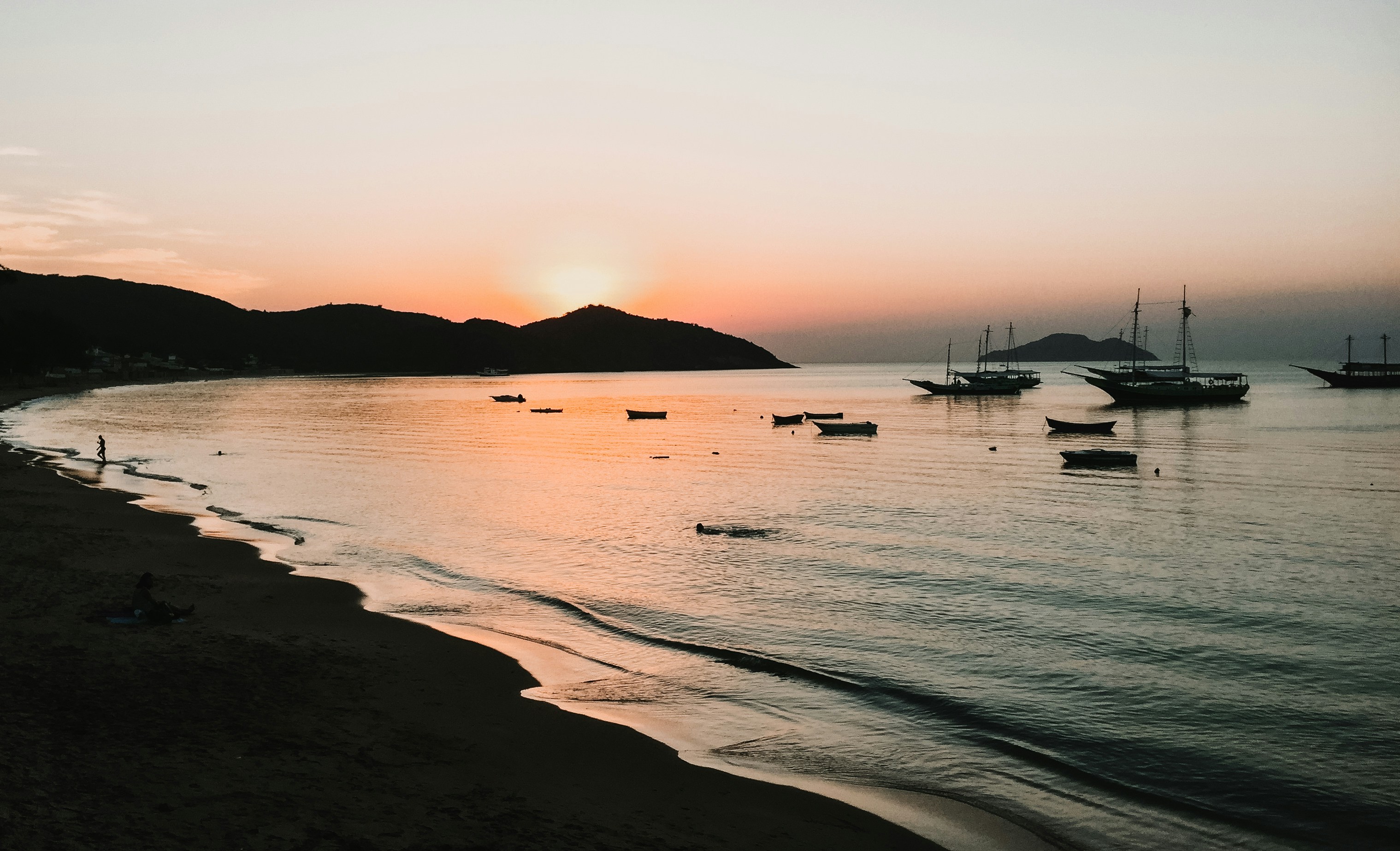
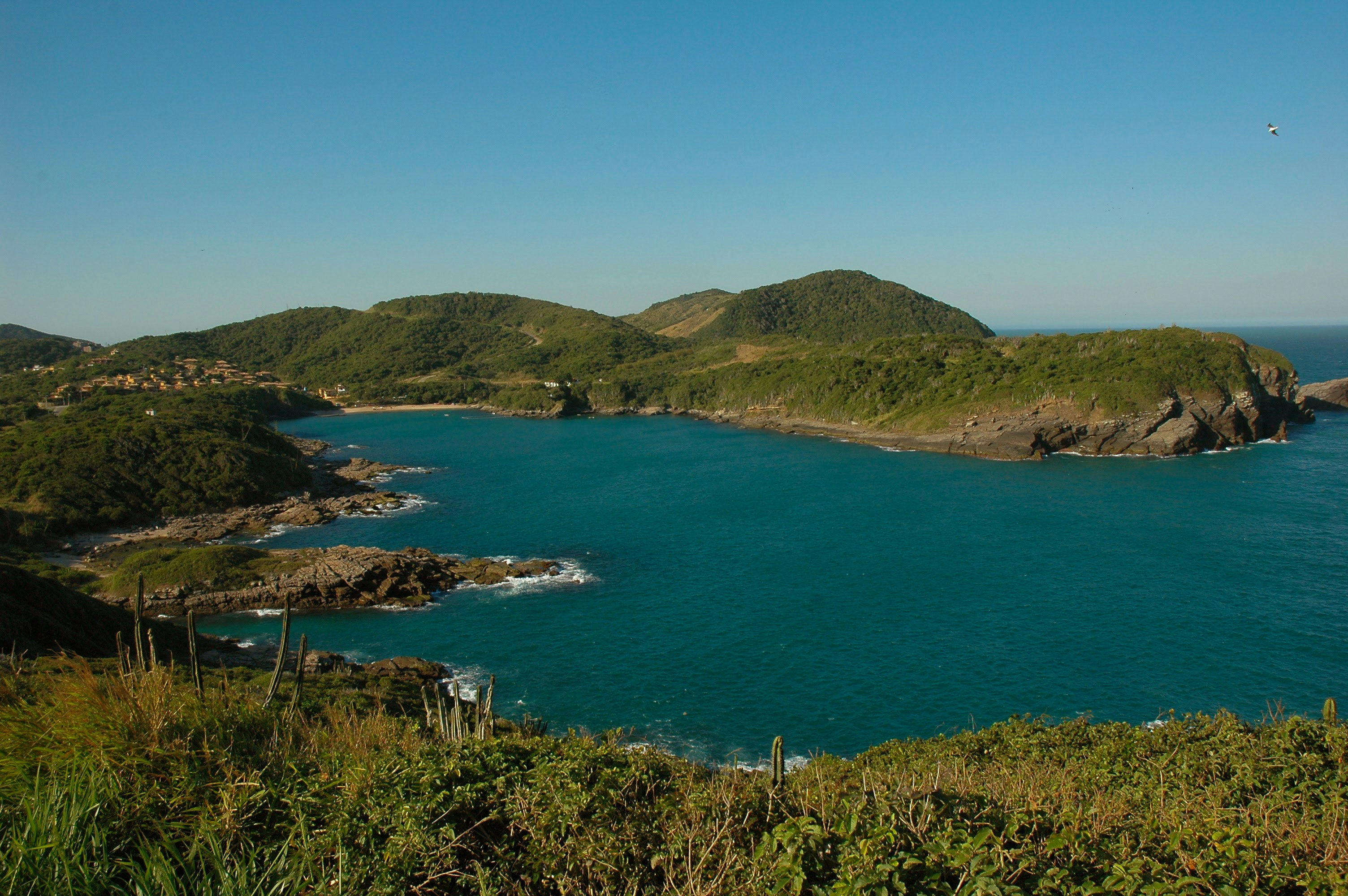
Around two hours from Rio de Janeiro, Búzios is a string of beautiful beaches on an 8-km-long (5-mile-long) peninsula. It was the quintessential sleepy fishing village until the 1960s, when the French actress Brigitte Bardot holidayed here to escape the paparazzi and the place almost instantly transformed into a vacation sensation. Búzios has something for everyone. Some hotels cater specifically to families and provide plenty of activities and around-the-clock child care. Many have spa facilities, and some specialize in weeklong retreats. For outdoor enthusiasts, Búzios offers surfing, windsurfing, kitesurfing, diving, hiking, and mountain biking, as well as leisurely rounds of golf.
Buzios, Armação Dos Búzios   State Of Rio De Janeiro, Brazil
Buzios, Armação Dos Búzios State Of Rio De Janeiro, BrazilPhoto by Luca Lago on Unsplash
Buzios, Armação Dos Búzios   State Of Rio De Janeiro, Brazil
Buzios, Armação Dos Búzios State Of Rio De Janeiro, BrazilPhoto by Roberto Huczek on Unsplash
Buzios, Brazil
Buzios, BrazilImage by Pexels from Pixabay

Day 18 - Rio de Janeiro

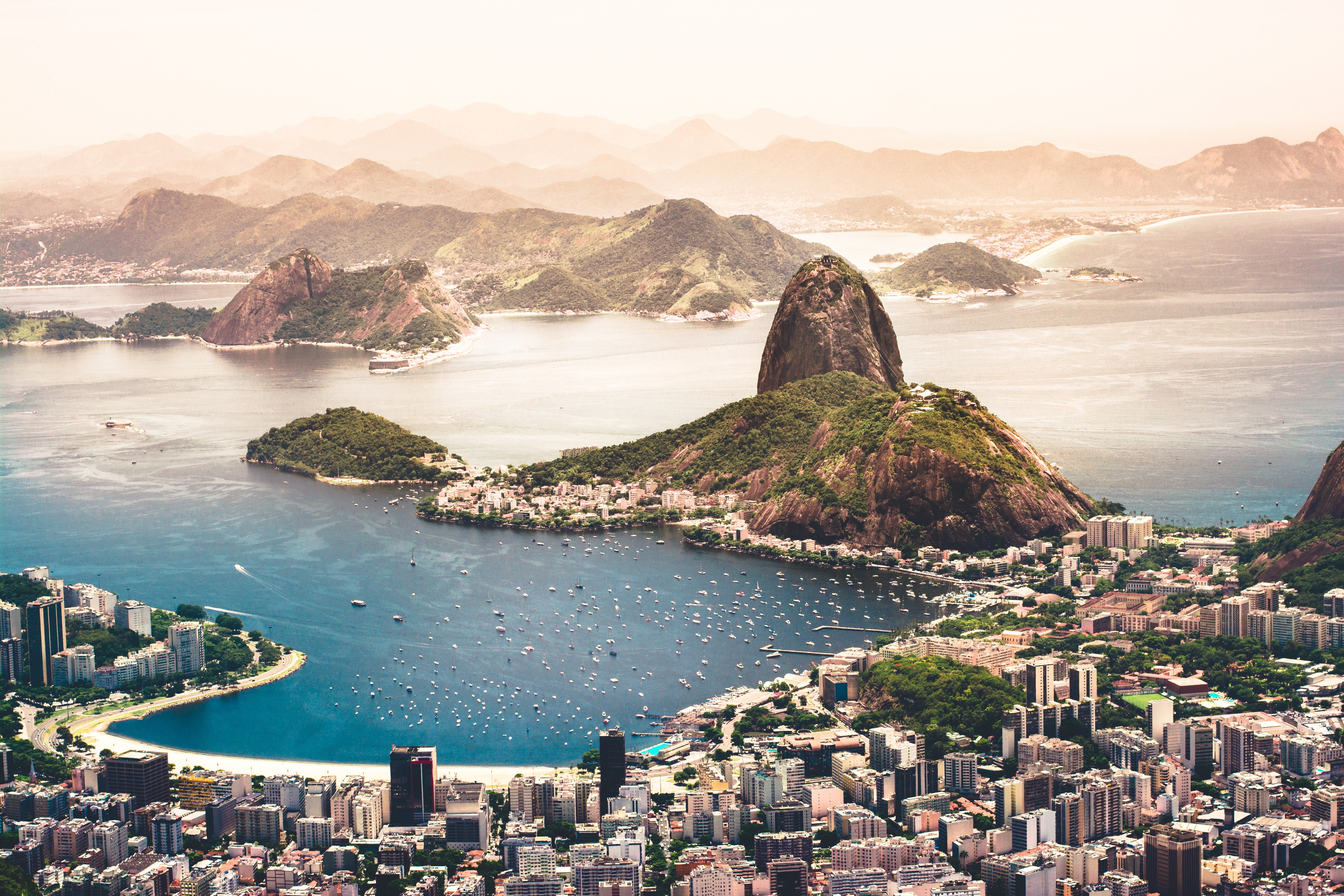
Welcome to the Cidade Maravilhosa, or the Marvelous City, as Rio is known in Brazil. Synonymous with the girl from Ipanema, the dramatic views from Christ the Redeemer atop Corcovado mountain, and fabulously flamboyant Carnival celebrations, Rio is a city of stunning architecture, abundant museums, and marvelous food. Rio is also home to 23 beaches, an almost continuous 73-km (45-mile) ribbon of sand.As you leave the airport and head to Rio's beautiful Zona Sul (the touristic South Zone), you'll drive for about 40 minutes on a highway from where you'll begin to get a sense of the dramatic contrast between beautiful landscape and devastating poverty. In this teeming metropolis of 12 million people (6.2 million of whom live in Rio proper), the very rich and the very poor live in uneasy proximity. You'll drive past seemingly endless cinder-block favela, but by the time you reach Copacabana's breezy, sunny Avenida Atlântica—flanked on one side by white beach and azure sea and on the other by condominiums and hotels—your heart will leap with expectation as you begin to recognize the postcard-famous sights. Now you're truly in Rio, where cariocas (Rio residents) and tourists live life to its fullest.Enthusiasm is contagious in Rio. Prepare to have your senses engaged and your inhibitions untied. Rio seduces with a host of images: the joyous bustle of vendors at Sunday's Feira Hippie (Hippie Fair); the tipsy babble at sidewalk cafés as patrons sip their last glass of icy beer under the stars; the blanket of lights beneath the Pão de Açúcar (Sugarloaf Mountain); the bikers, joggers, strollers, and power walkers who parade along the beach each morning. Borrow the carioca spirit for your stay; you may find yourself reluctant to give it back.

Brrio Rio De Janeiro Aerial Photography Of Cityscape Near Sea Agustin Diaz
Brrio Rio De Janeiro Aerial Photography Of Cityscape Near Sea Agustin DiazAgustin Diaz
Brrio Rio De Janeiro Group Of People Sunbathing On Beach Joao Pedro Vergara
Brrio Rio De Janeiro Group Of People Sunbathing On Beach Joao Pedro VergaraJoao Pedro Vergara
Brrio Rio De Janeiro Christ The Redemer Statue Cerqueira
Brrio Rio De Janeiro Christ The Redemer Statue Cerqueiracerqueira

Suites & Deck Plans

Suite

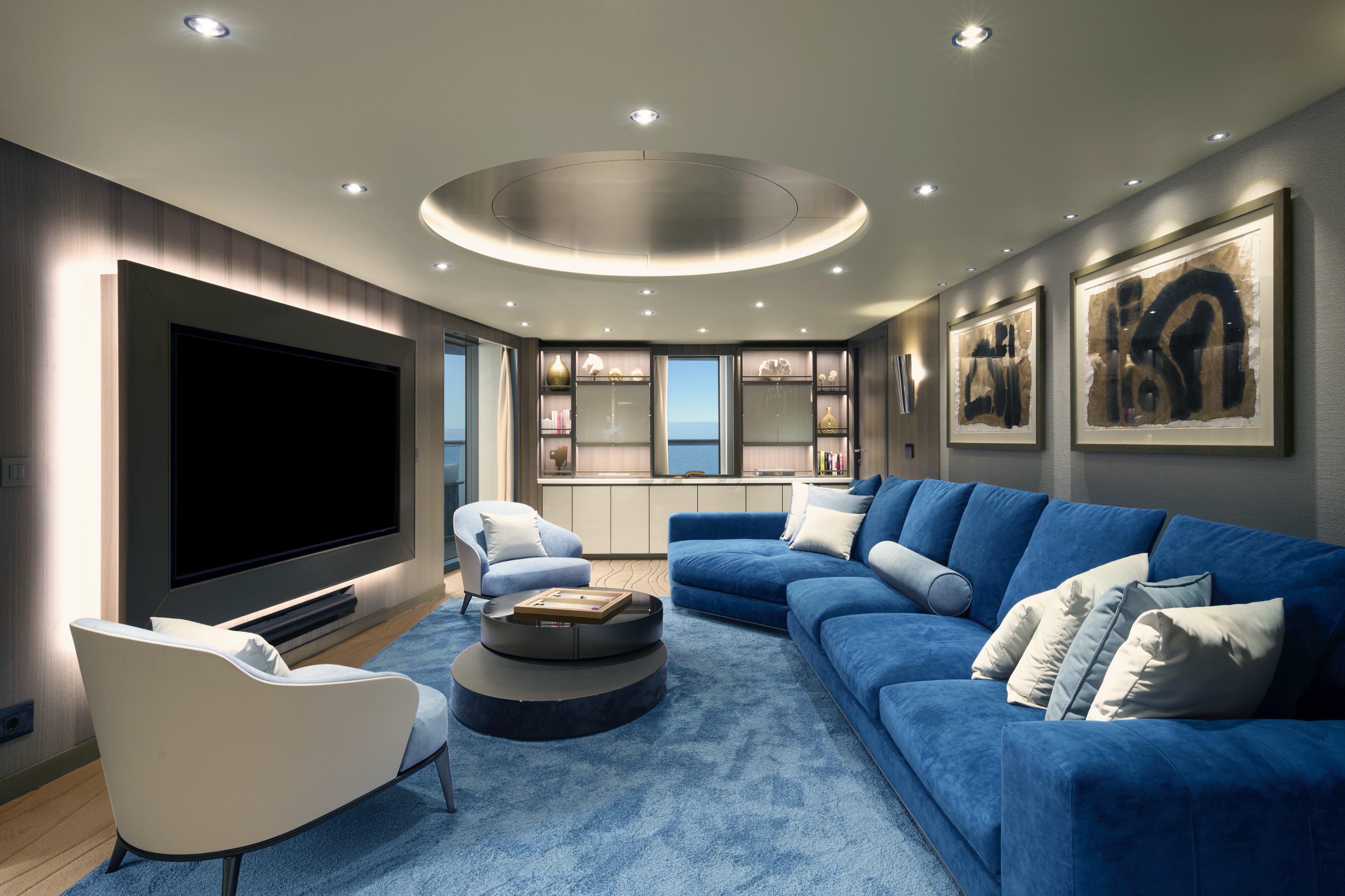
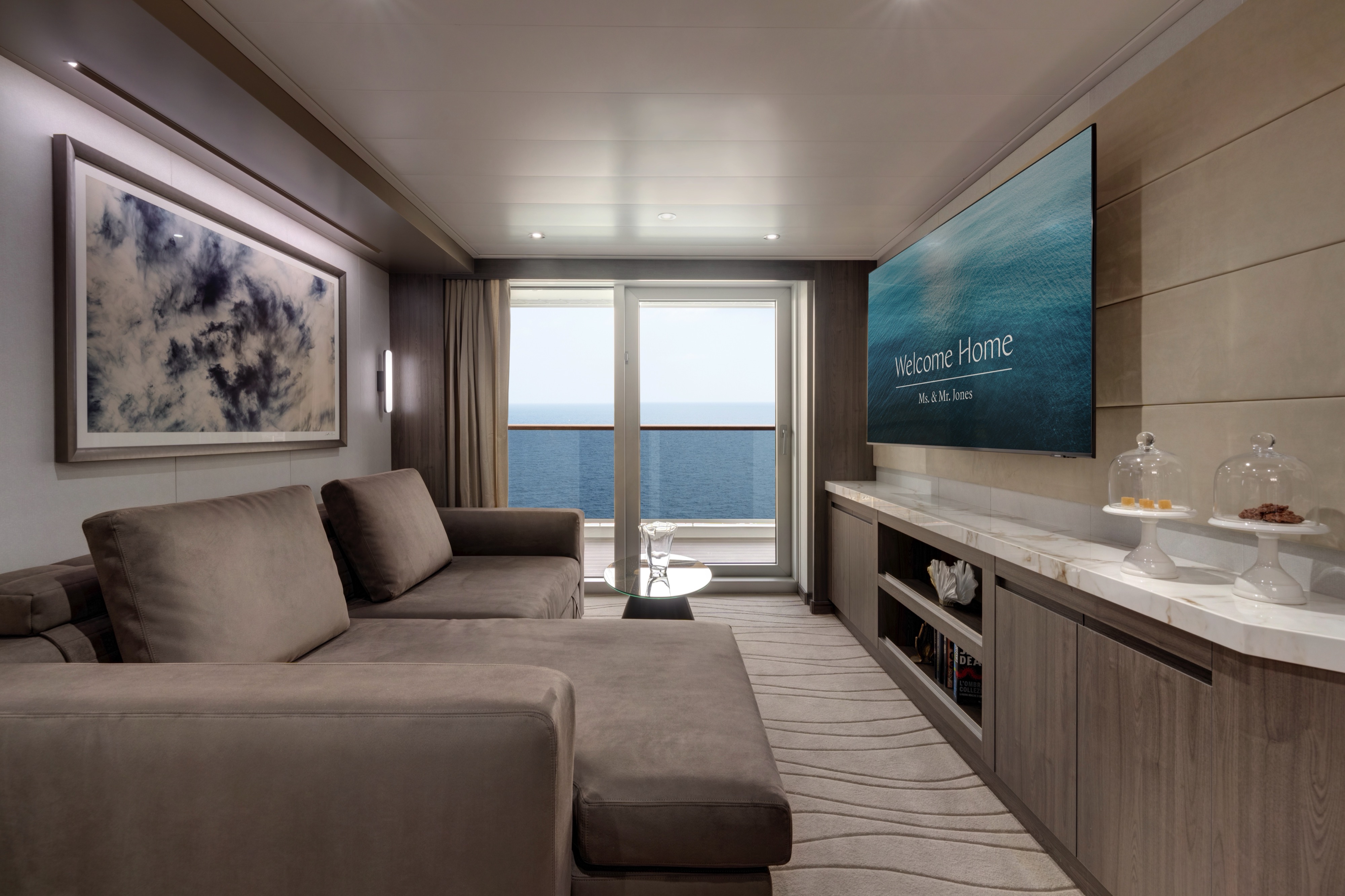
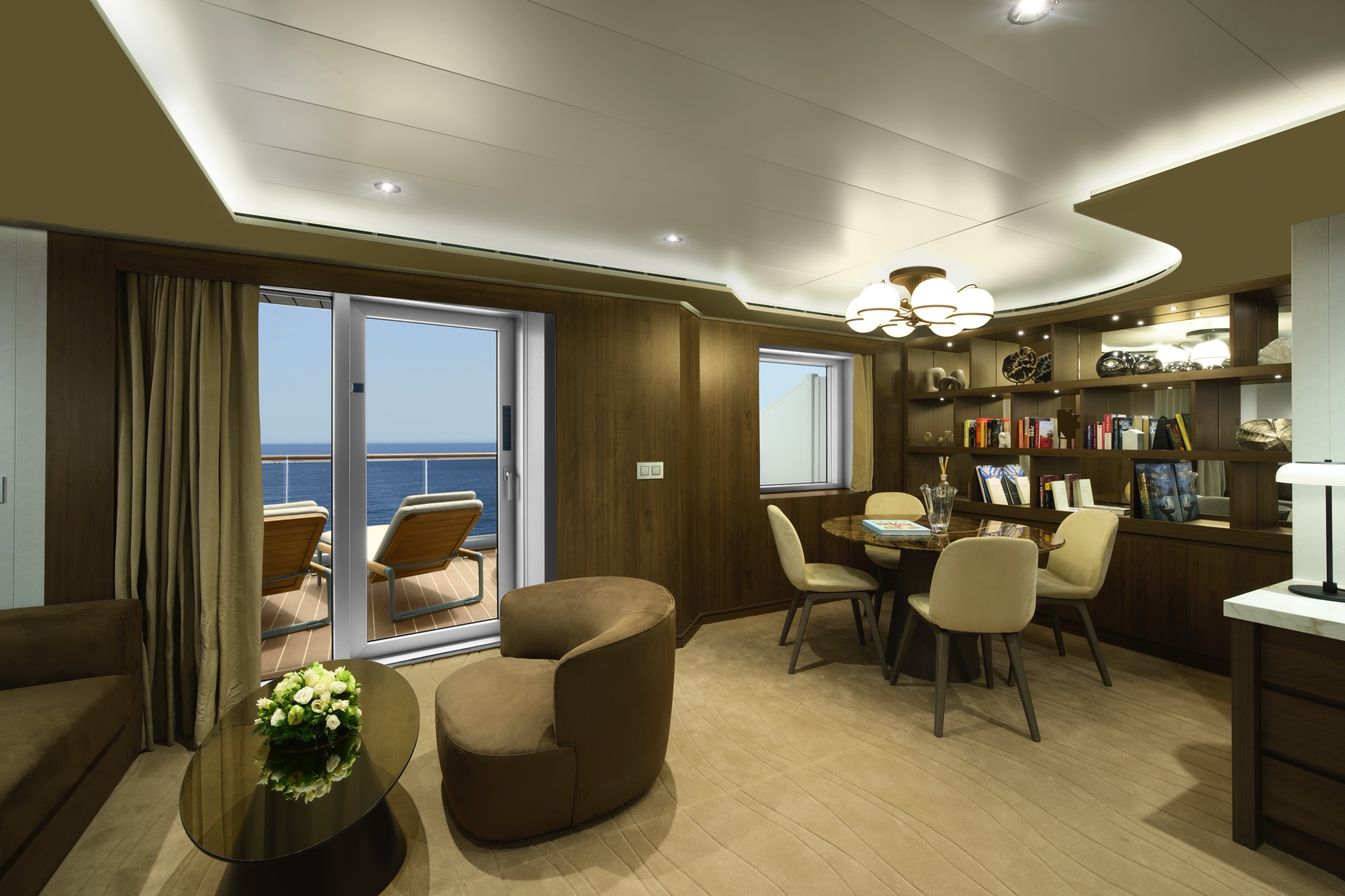
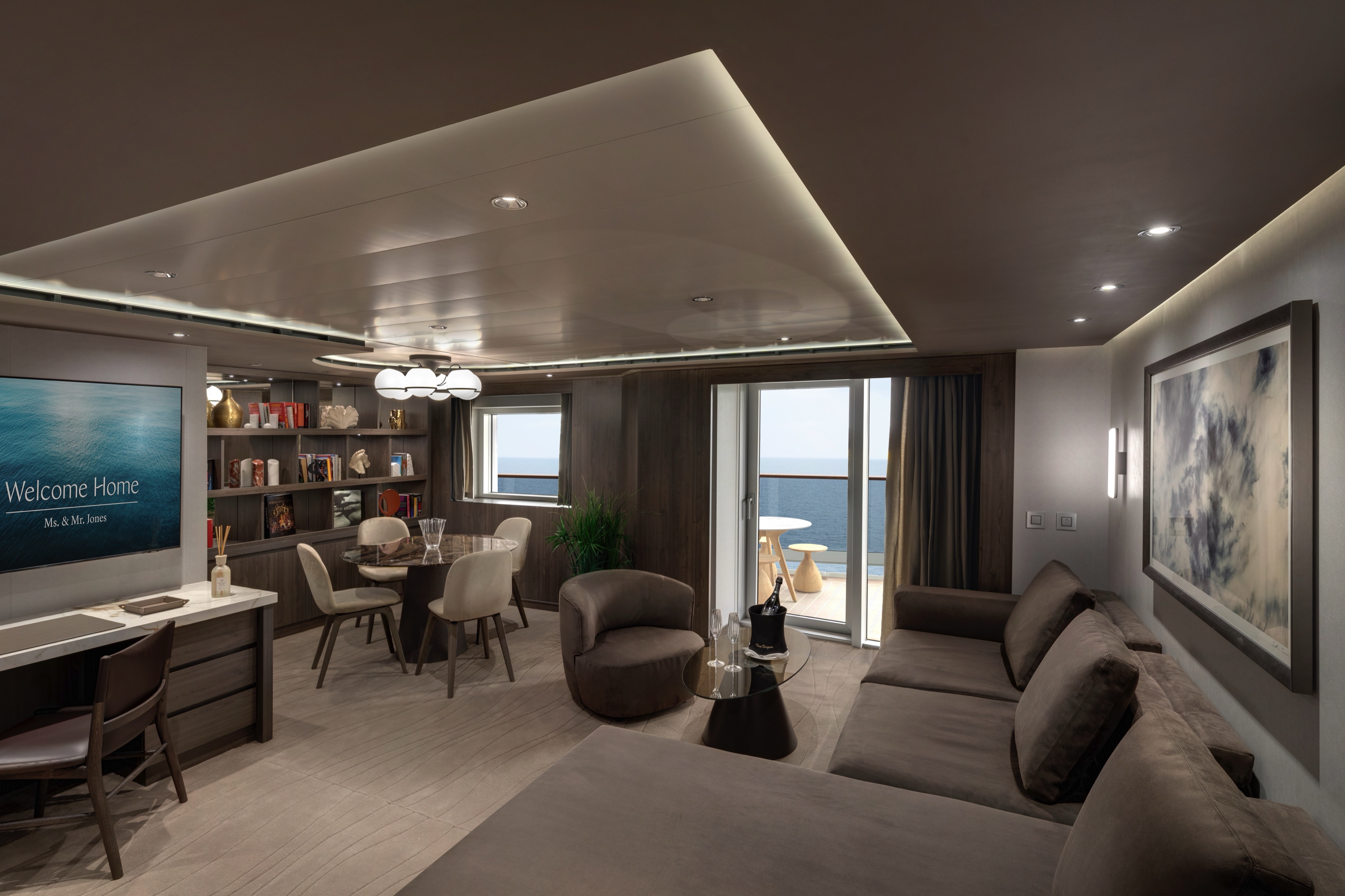
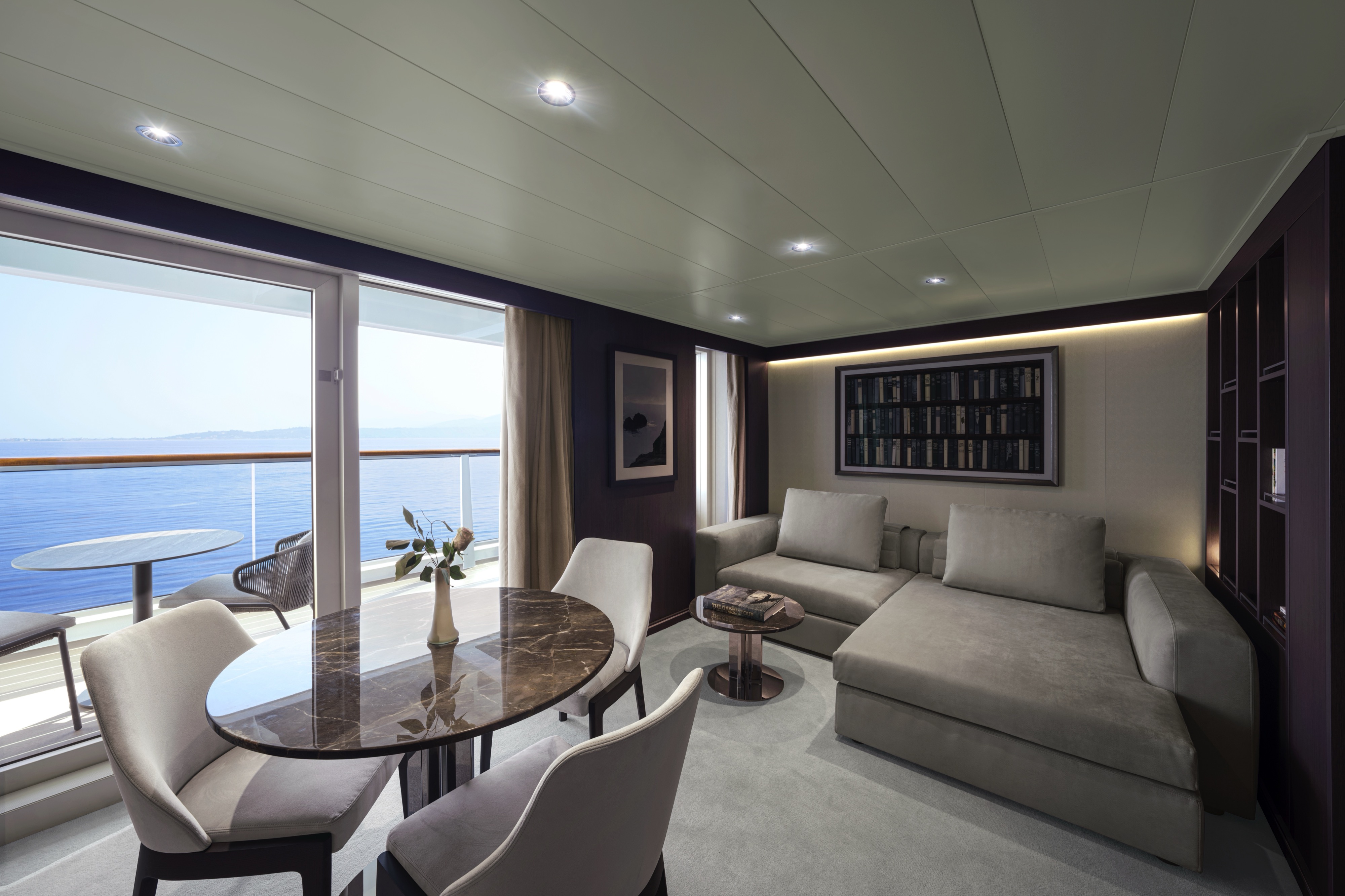
The iconic Owner’s Residence creates the largest living space on-board, with multiple harmonious indoor and outdoor spaces in which to relax, entertain and unwind, including dedicated Residence Manager overseeing every detail of your stay.

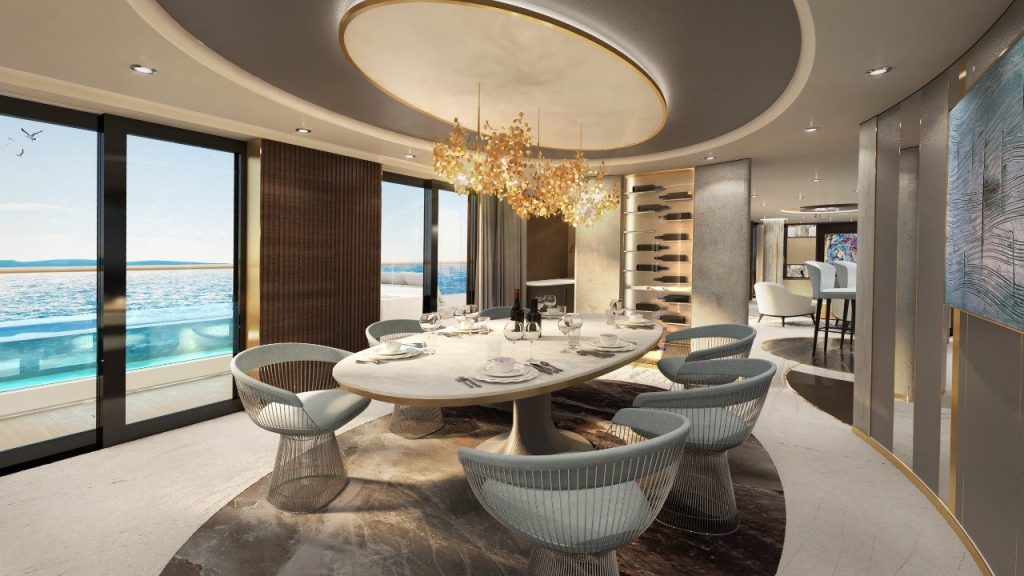
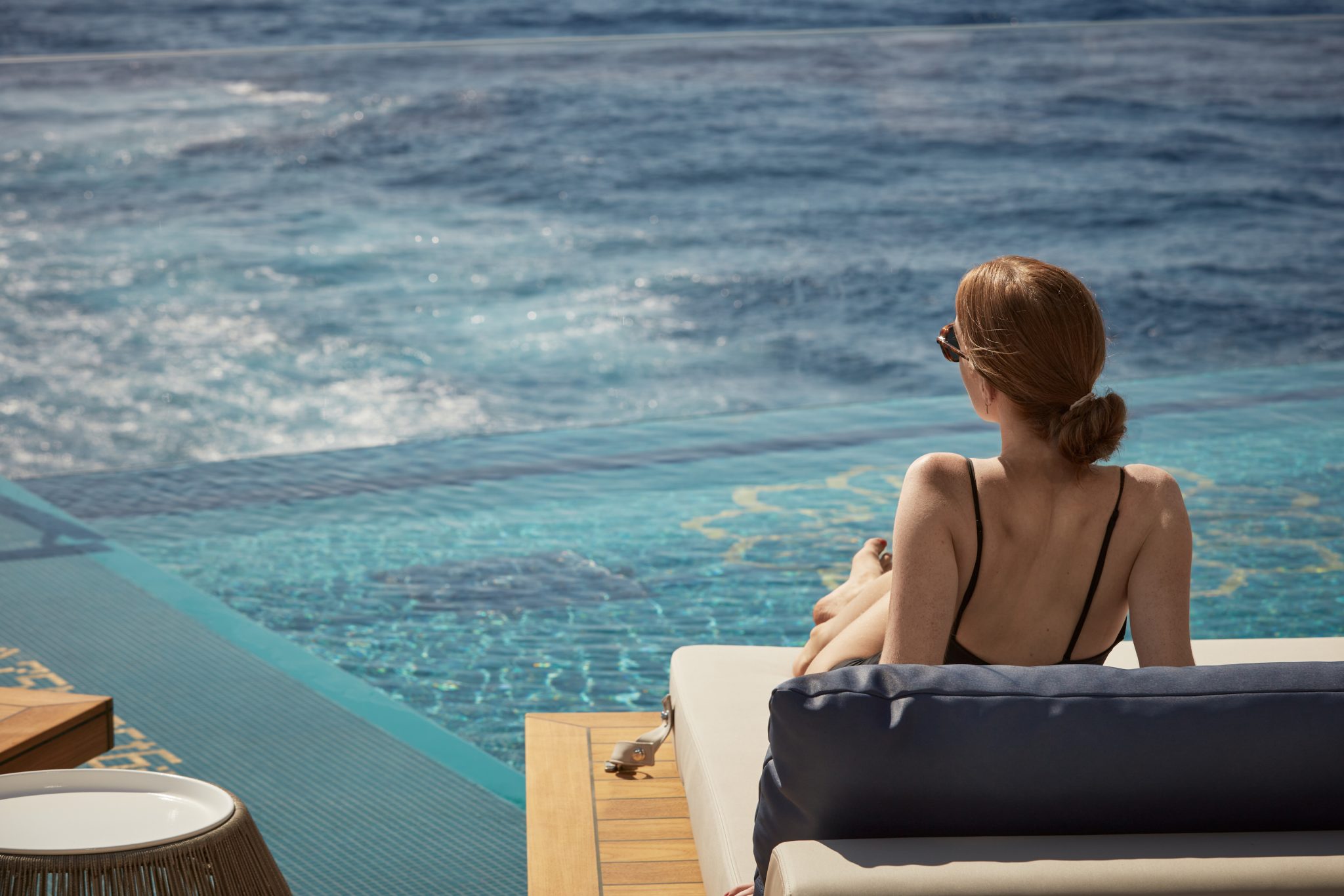
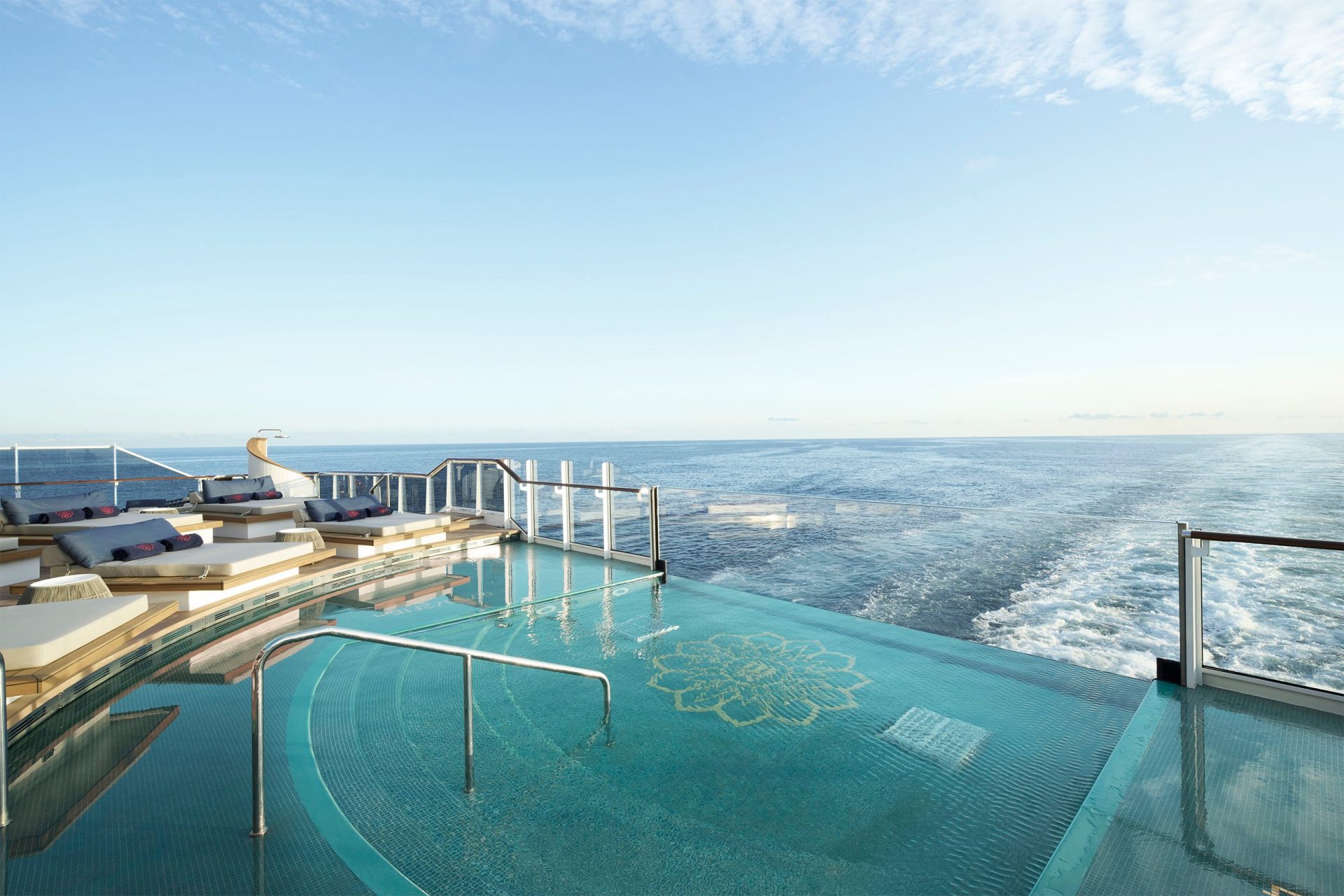
Stand in awe of the panoramic ocean views from your expansive private terrace – extending over the full ship's aft width – with a spacious infinity whirlpool and elegant outdoor dining and lounging areas exquisitely designed by Manutti.

Every aspect of the ambiance of the Owner’s Residence reflects the meticulous curation of all details, conscious at all times of our commitment to sustainability; curated and handpicked decorative elements, sofas and chairs are by Knoll and Molteni&C, and sophisticated lighting solutions designed by Astep.

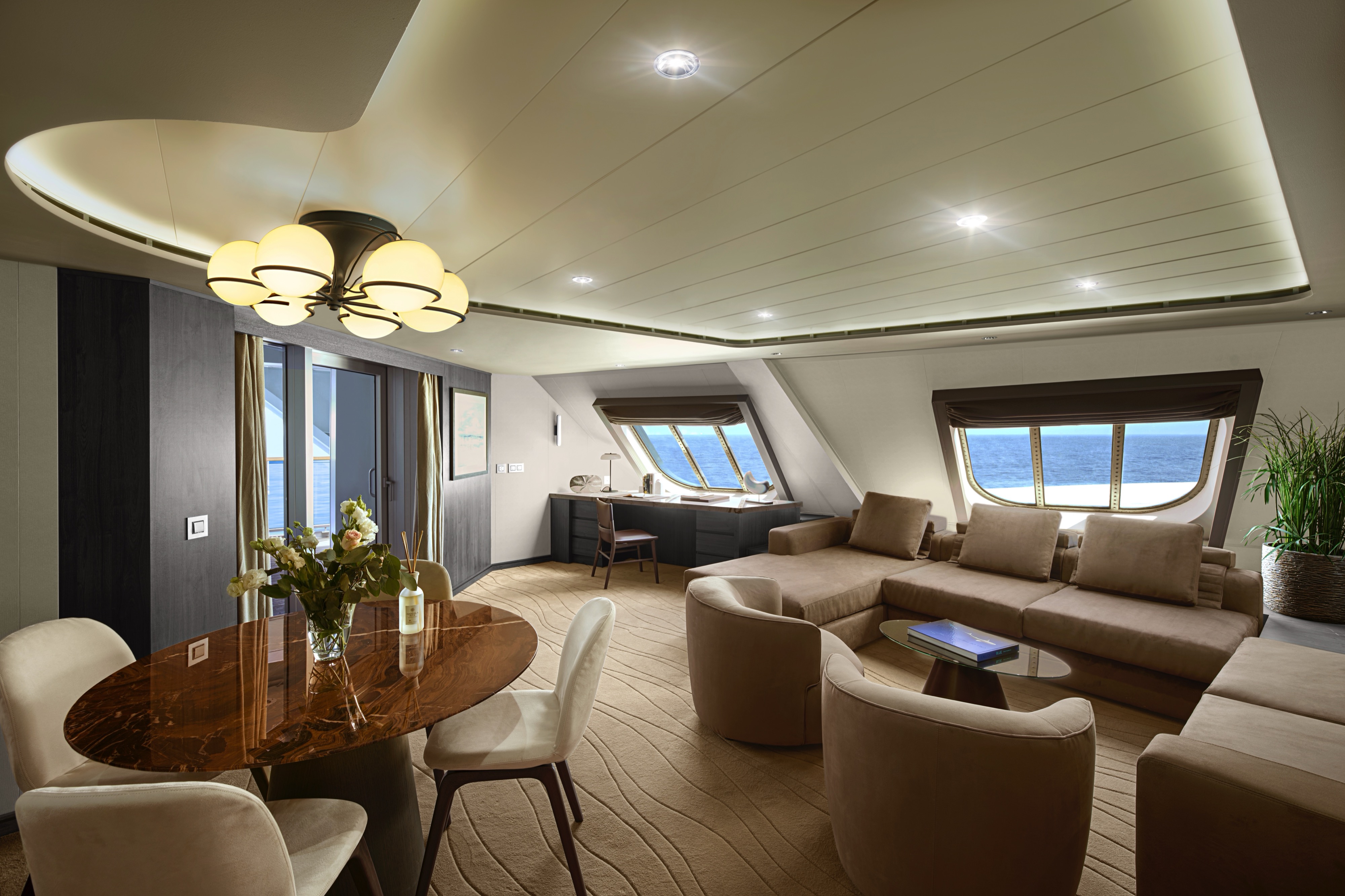
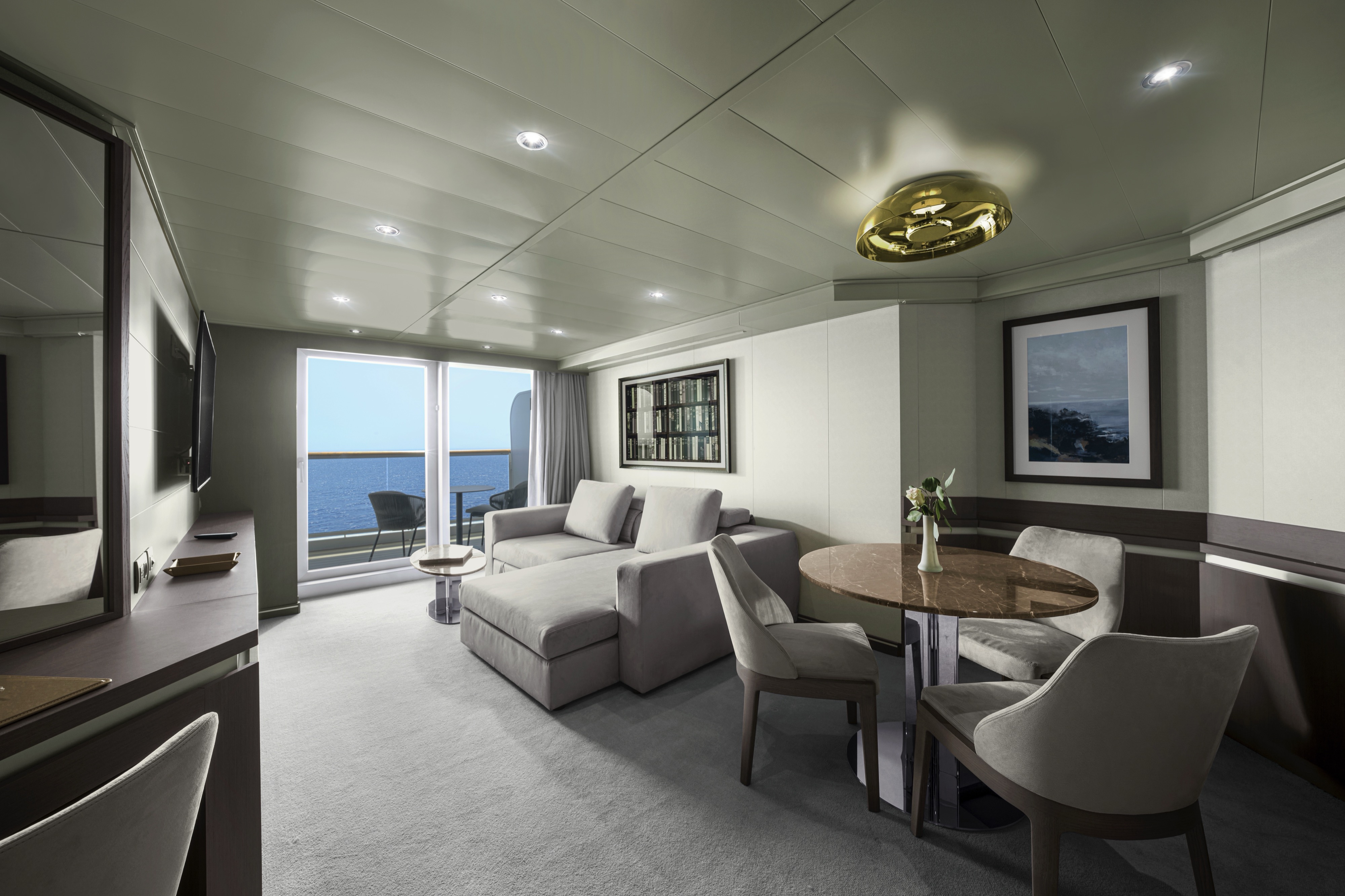
The Owner's Residence features an expansive stylishly decorated living area, a comfortable dining area for eight guests, a separate spacious bedroom with sea views, including a comfortable working space, an en-suite luxurious marble bathroom sculpted from precious Calacatta marble, with a bathtub a separate shower, a private steam room, and a walk-in wardrobe. The suite also features an additional guest powder room.

Features

  • Dedicated Residence Manager overseeing every detail of your stay
  • Oversized floor-to-ceiling windows with views of the sea
  • Separate living, dining and sleeping areas
  • Abundant lounge area
  • Dining table for 8 guests
  • Spacious work desk area
  • In-suite welcome bottle of Dom Pérignon
  • Private bar, replenished according to the guests’ preferences
  • Espresso machine, kettle and teapot with a complimentary selection of coffee and teas
  • Complimentary personal refillable water bottle for each guest
  • Pair of binoculars for guests’ use during their journey
  • Technogym Bench and Technogym Case Kit for an efficient in-suite fitness experience
  • Safe accommodating most tablets and laptops
  • Residence Manager service area
  • Steamery steamer for effortless garment care

Outdoors

  • Panoramic ocean-front terrace covering the full ship’s width, with a private spacious whirlpool, day beds, a dining table, a scenic lounge area, shower

Bedroom

  • Bespoke king-sized bed sleep system - size: 200 x 200 cm (79 x 79 in)
  • Down duvets and pillows
  • Fine bed linens
  • Extensive pillow selection
  • Oversized dressing room

Bathroom

  • Luxurious marble double vanity bathroom
  • Spacious bathtub and separate shower room
  • Private steam room
  • Plush bathrobes and bath linens
  • Mandala Blue custom bath toiletries and amenities for Explora Journeys
  • Dyson SupersonicTM hairdryer and illuminated make-up/shaving mirror
  • Additional guest powder room

Dedicated Residence Manager

  • Packing and unpacking, arranged according to your preferences
  • Personal communication via your preferred messenger platform
  • Pressing, laundry and garment care assistance
  • Private In-Suite Dining arrangements for you and your guests
  • Daily itinerary and transport planning
  • Assistance with planning your personal events and celebrations
  • Assistance with onboard and ashore reservations

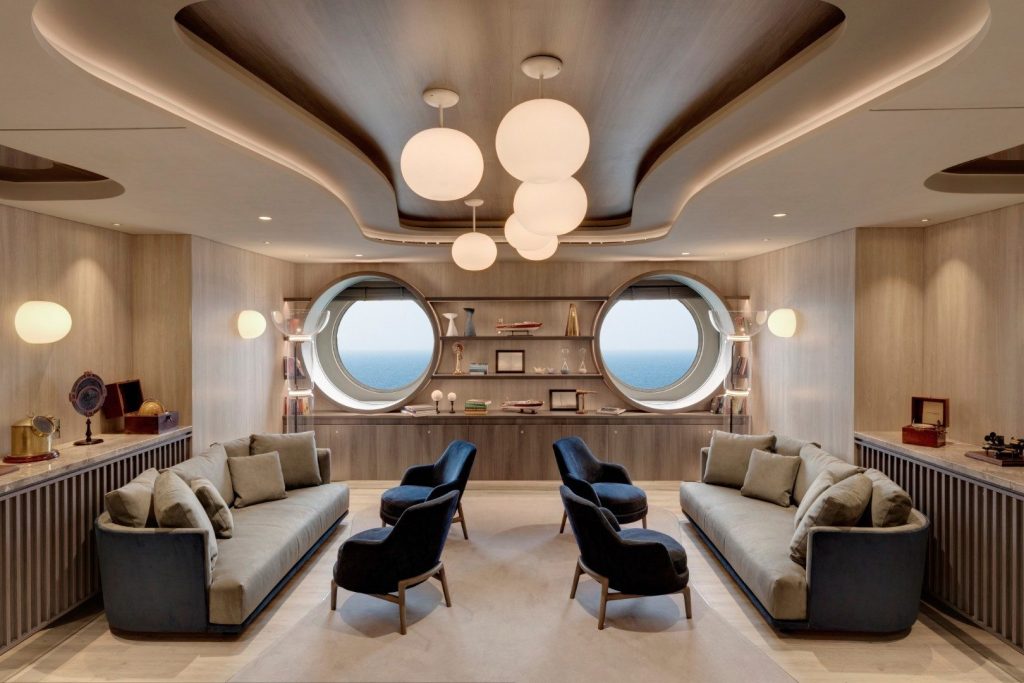
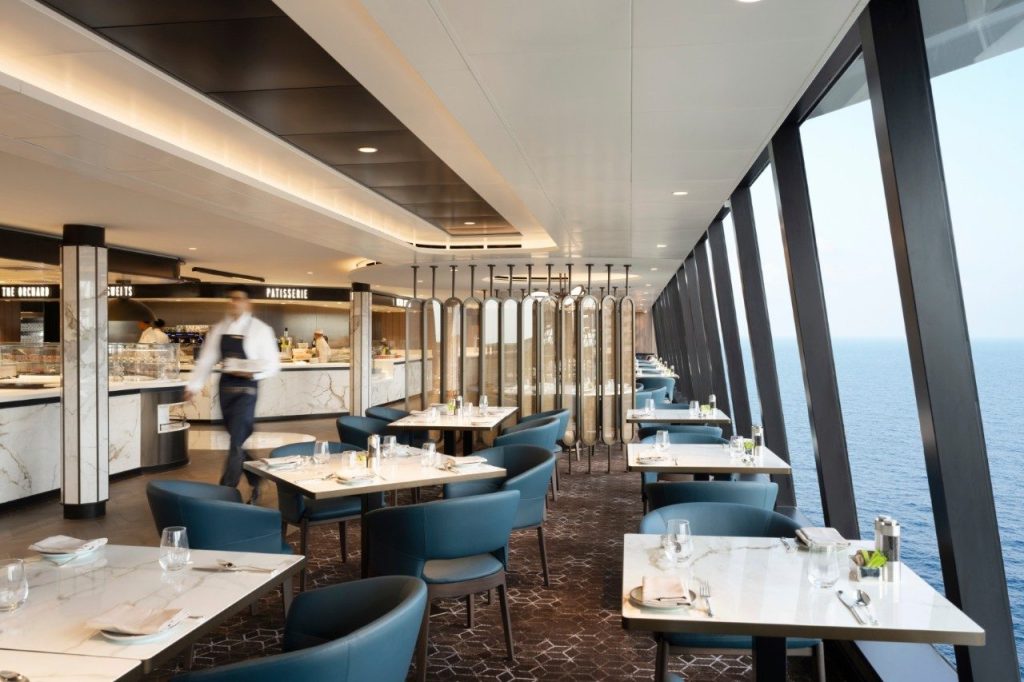
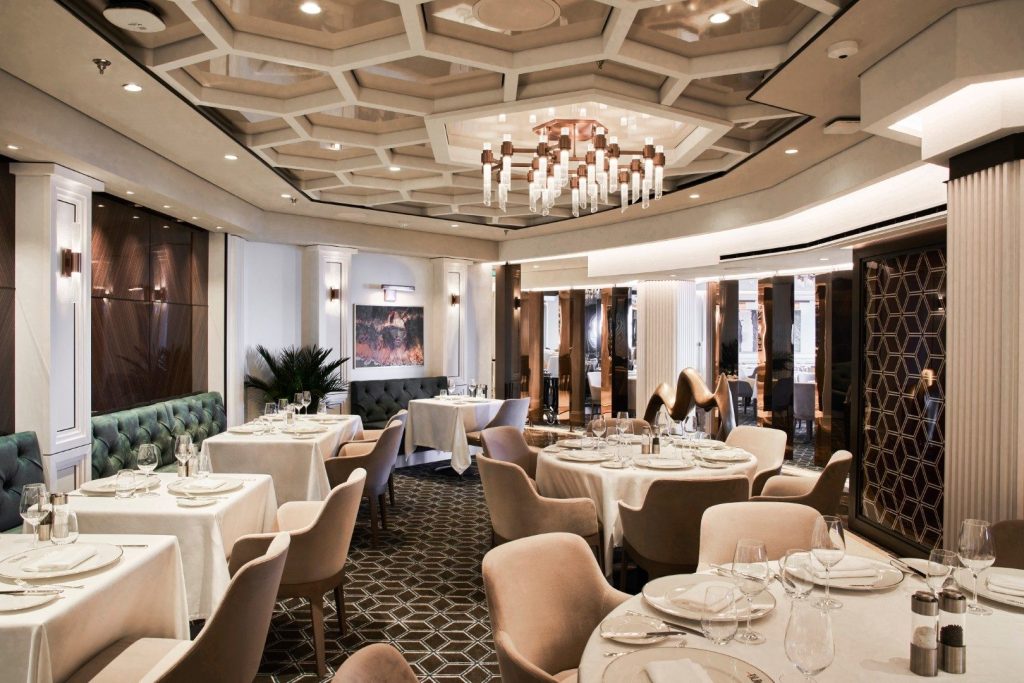
*All images are a combination of photography and artist renderings.

The artist representations and interior decorations, finishes, and furnishings are provided for illustrative purposes only.

3014 sq ft
Accommodates 4 guests
Owner's Residence

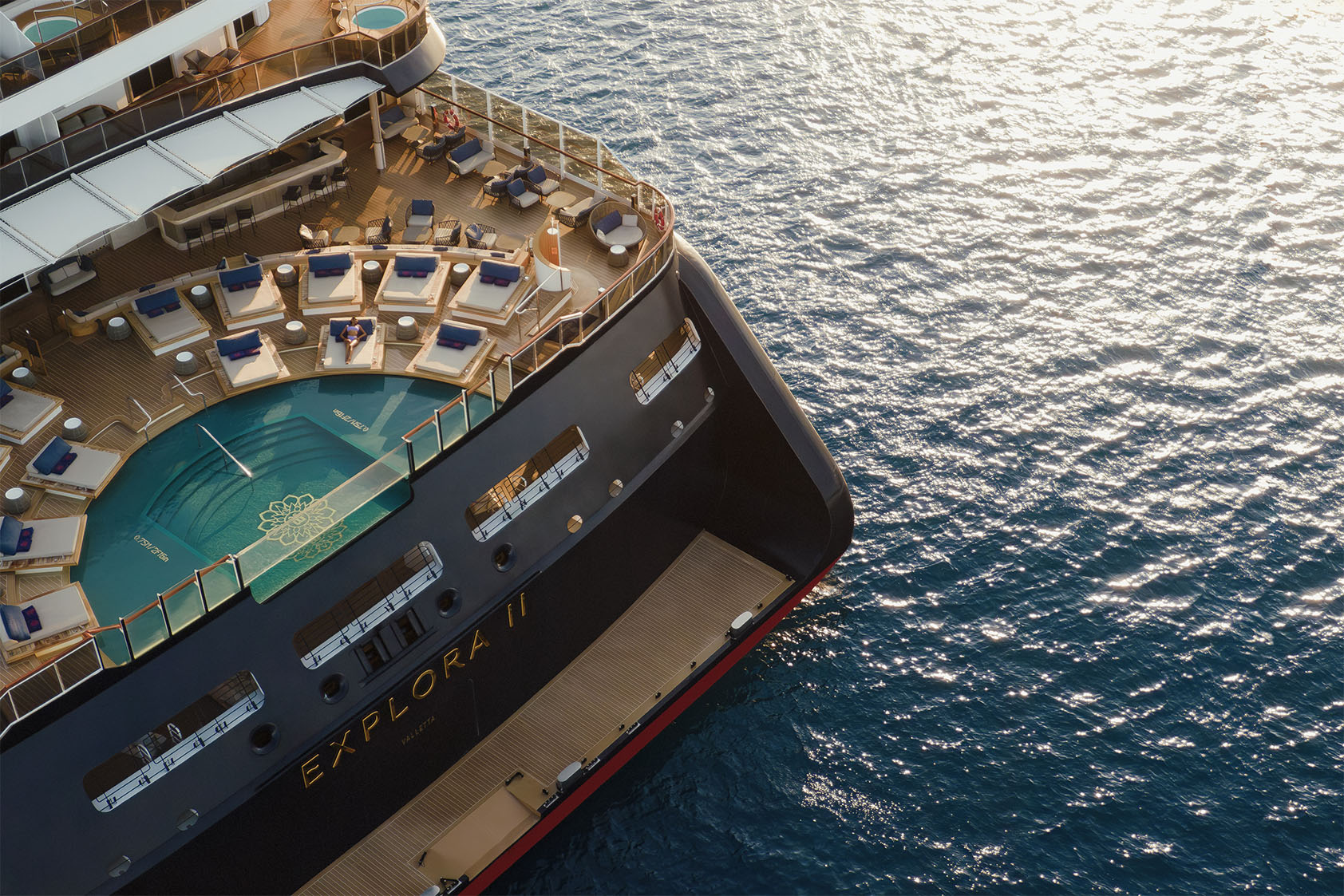
EXPLORA II

EXPLORA II

Life on board

The Onboard Experience

Client testimonials

I have worked with Lore Doick for more than 20 years, and she has booked over 30 cruises for me. Her expertise, care, and attention to every travel detail have made her an invaluable advisor and friend over the years.”

Tina B.

We are now in our second generation working with Cheri Ozimac at Tully Luxury Travel. From Antarctica to Greece, she has handled every detail with expertise, responsiveness, and care…

Earl M.

My wife and I have worked with Tully since 2007, and Kit Neil and her team went far beyond expectations while helping us navigate multiple cruise and flight cancellations. Their advocacy, care, and support during a difficult time were extraordinary.

Carri F.

Cheri Ozimac organized our Seabourn cruise flawlessly, from the hotel recommendation to every travel arrangement. She was responsive, attentive, and an excellent advocate throughout the process…

Cyn S.

We discovered Tully Luxury Travel after years of booking cruises through US agents and were impressed by their competitive pricing, exceptional service, and Canadian based support. Their team is always available, offers excellent value, and makes booking the right cruise seamless.

Peter C.

GoogleAverage Customer Rating:

The Tully Difference

Why travel with us


Tully Luxury Travel was built on access, discretion, and trust. For our clients, that means ease at every step, with distinctions that turn exceptional voyages into defining moments.

Recognized expertise

A renowned agency worldwide in luxury land and small-ship cruising, consistently trusted by the industry’s most prestigious brands.