Itinerary: Siem Reap, Rokar Koang, Mekong River Vietnam/Cambodia, Kampong Tralach, Oudong, Phnom Penh, Crossing Cambodia Border, Tân Châu, Giêng Island, My An Hung, Sa Déc, Cái Bè, My Tho, Ho Chi Minh City, Sail... See full itinerary
Your Itinerary, Day-By-Day
Today, start with a visit to Angkor Thom, not a single temple such as the historic sites it neighbours, but rather one of the most remarkable royal cities of the Angkor Period and an architectural wonder. As the last capital of the Khmer Empire, it was a fortified city, home to priests, officials of the palace, military and buildings for administering the kingdom. Afterwards, visit the sacred Temple of Ta Prohm. In an incredible standoff between human creation and nature, the jungle's root systems have reclaimed this spiritual location now enshrouded in wild vegetation. The backdrop to many Hollywood scenes, the incredible Ta Prohm is both a cinematic and contemplative location. This afternoon is free time to visit the markets or try a DiscoverMORE tour.
This evening as part of your EmeraldPLUS programme, attend Phare, The Cambodian Circus, where a combination of acrobatics, music and dance tell a uniquely Cambodian story.
EmeraldPLUS
Phare Cambodian Circus performance.
Included Excursion
Visit to Angkor Thom
Included Excursion
Visit to Ta Prohm Temple
DiscoverMORE
Siem Reap Countryside by Vespa (extra expense)
DiscoverMORE
Evening – Sunset Drinks Gondola Boat at Bayon (extra expense)
DiscoverMORE
Evening - Cambodian Street Food Discovery Tour (extra expense)
DiscoverMORE
Evening – Local Fare at Phare Circus (extra expense)
Rise early and witness the sunrise over Angkor Wat. Afterwards walk through this UNESCO World Heritage-listed site known for its elaborate decorations and intricate carvings throughout. This afternoon, enjoy free time to explore Siem Reap, or join a DiscoverMORE excursion. Later, as part of your EmeraldPLUS experience, enjoy an immersive evening dinner at Satcha Handicraft Centre, accompanied by an Apsara dance performance.
EmeraldPLUS
Apsara dance performance and dinner show
Included Excursion
Sunrise visit to Angkor Wat
DiscoverMORE
Banteay Srei Temple and APOPO (extra expense)
DiscoverMORE
Tonlé Sap and Lotus Workshop (extra expense, operating Aug-Feb only)
DiscoverMORE
Khmer Cooking Class (extra expense)

DiscoverMORE
Senteurs d’Angkor Workshop (extra expense)

Today, leave Siem Reap and venture to the town of Rokar Koang to embark your Emerald Cruises award-winning Star-Ship. En route, stop in Kampong Kdei and see the impressive Angkor Bridge, before having lunch at a local restaurant. On arrival, you’ll be welcomed by your captain and crew. Later, set sail up the Tonle River, past Phnom Penh at night to Kampong Tralach whilst enjoying your first dinner on board with your fellow guests.
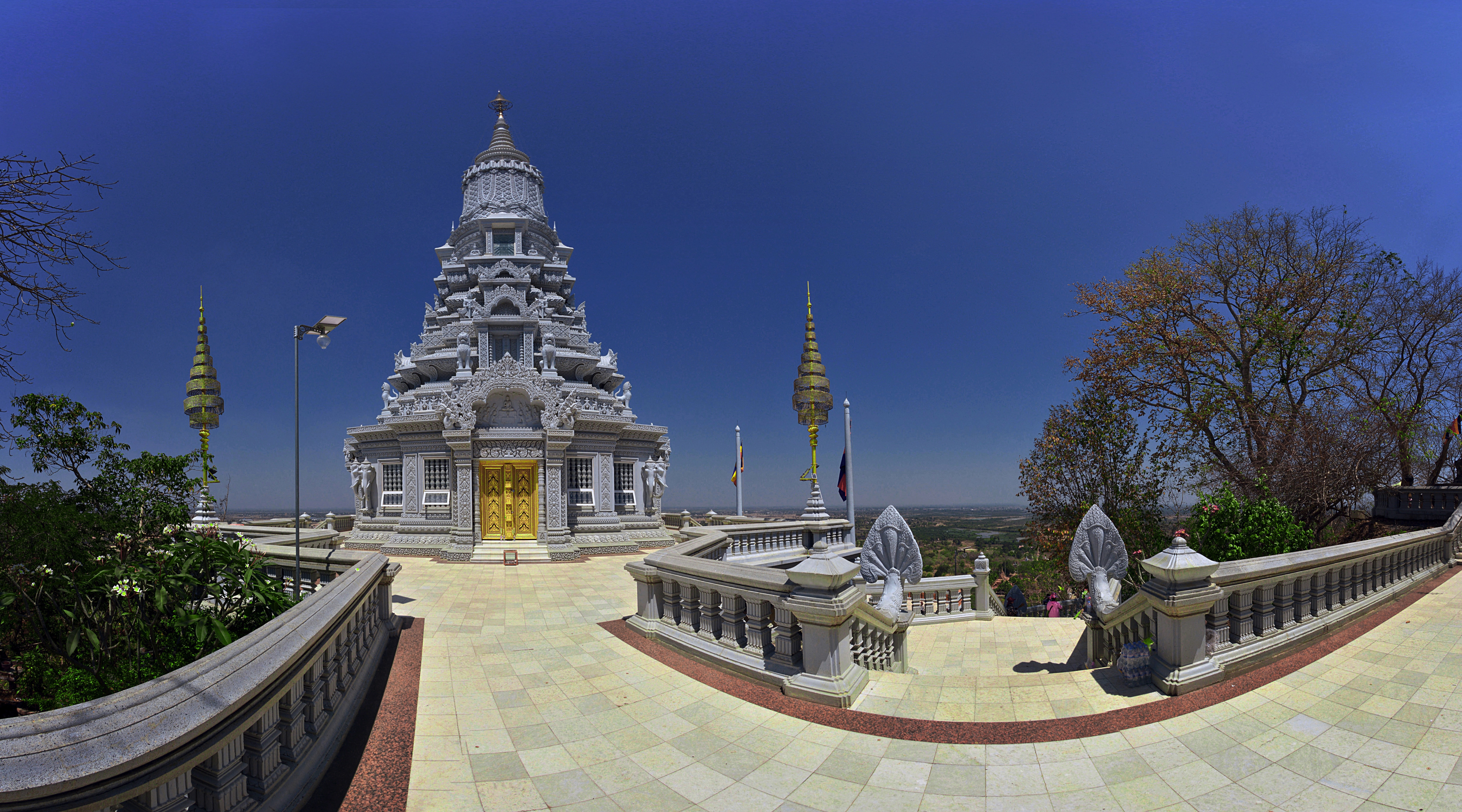
Begin the day with an Ox Cart ride in Kampong Tralach to a local temple before driving to Oudong. Oudong was Cambodia’s former royal capital until it relocated to Phnom Penh in 1866. In Oudong Monastery’s main temple, receive a traditional Buddhist blessing from the resident monks, as part of your EmeraldPLUS experience.
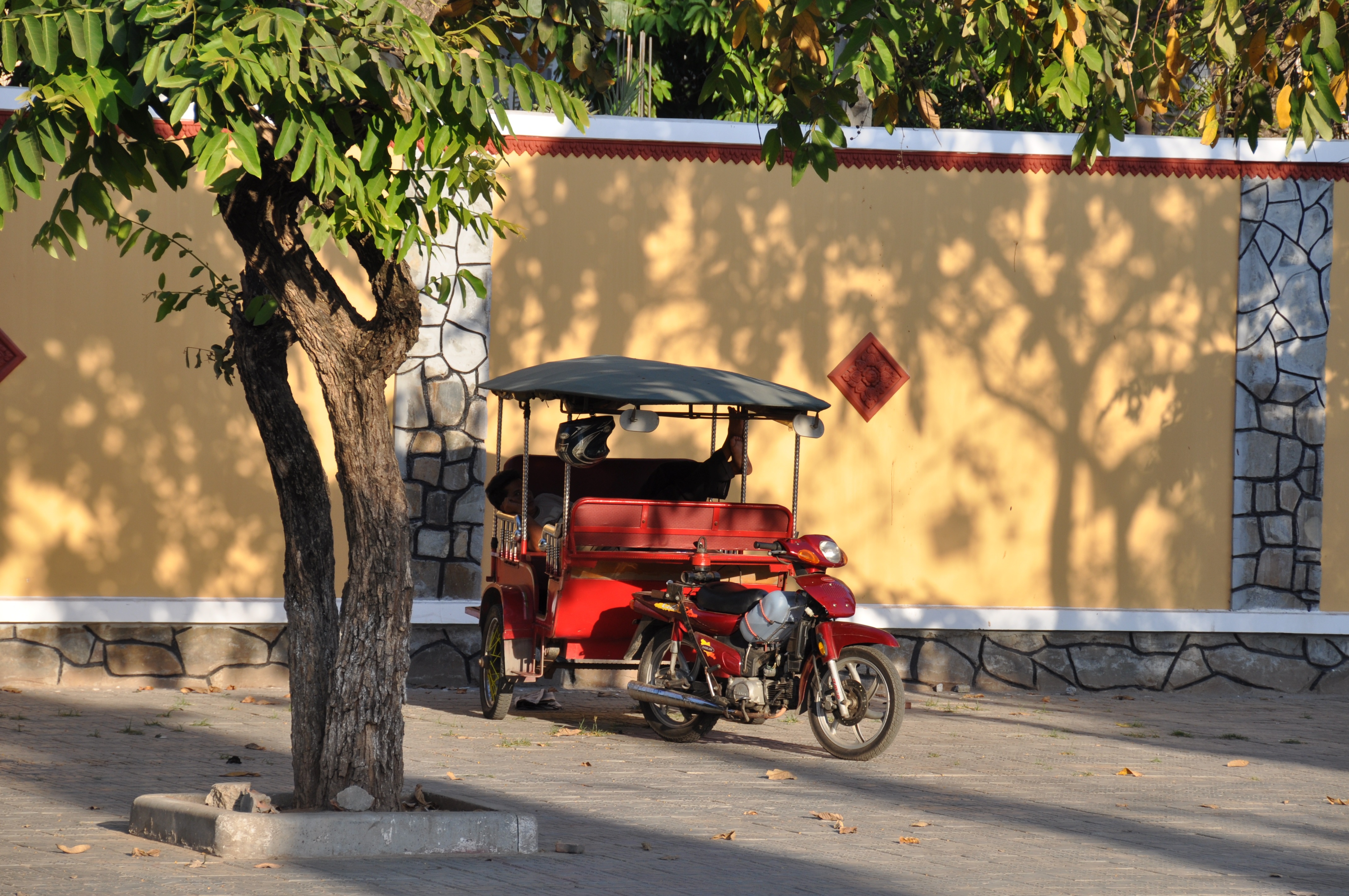
Return to Emerald Harmony and sail to Phnom Penh. Spend the afternoon at leisure, either experiencing one of our DiscoverMORE excursions, visiting the Central Market, or relaxing on board. After dinner, as part of your EmeraldPLUS experience, enjoy Phnom Penh by night on a remork (local Tuk-Tuk) tour.
EmeraldPLUS
A traditional Buddhist Monk blessing
EmeraldPLUS
Phnom Penh by night on a remork (Tuk-Tuk) tour
DiscoverMORE
A silk farm tour at Koh Oknha Tei (extra expense)
DiscoverMORE
Craft Beer Adventure by remork (extra expense)
DiscoverMORE
Samai Distillery (extra expense)
Phnom Penh, Cambodia’s busy capital, sits at the junction of the Mekong and Tonlé Sap rivers. It was a hub for both the Khmer Empire and French colonialists. On its walkable riverfront, lined with parks, restaurants and bars, are the ornate Royal Palace, Silver Pagoda and the National Museum, displaying artifacts from around the country. At the city’s heart is the massive, art deco Central Market.
This morning, learn more about the Khmer Rouge and the darkest days of Cambodia’s history. A short drive will take you to the Killing Fields at Choeung Ek, where you’ll be able to stroll through the fields, visit the memorial and understand more about the country’s sombre chapter. Afterwards, visit the Tuol Sleng Genocide Museum (known as ‘S-21’), a former school converted to the Khmer Rouge’s main prison and torture headquarters. Back on board, savour a Cambodian Street Fair lunch, before visiting the majestic Royal Palace, with its French-inspired gardens. This evening, for your EmeraldPLUS experience, enjoy a cultural performance by the Cambodian Student and Children’s Organisation, before sailing for the border.
EmeraldPLUS
Cultural Performance by the Cambodian Student and Children’s Organisation
Included Excursion
Killing Fields at Choeung Ek and Tuol Sleng Genocide Museum
Included Excursion
A visit to the Royal Palace
Phnom Penh, Cambodia’s busy capital, sits at the junction of the Mekong and Tonlé Sap rivers. It was a hub for both the Khmer Empire and French colonialists. On its walkable riverfront, lined with parks, restaurants and bars, are the ornate Royal Palace, Silver Pagoda and the National Museum, displaying artifacts from around the country. At the city’s heart is the massive, art deco Central Market.
Today, you’ll cross the border into Vietnam and sail on to Tan Chau. Relax on board, or join our DiscoverMORE excursion to Tra Su Bird Sanctuary, before returning for a late lunch on board.
This afternoon, embark on a sampan to Evergreen Island for a stroll through a local village, revealing the lives of the local farming community. Reboard your sampan to travel back to Tan Chau and as part of our EmeraldPLUS, programme, visit the recently renovated Cao Dai temple. The religion of Cao Dai is a syncretic, monotheistic religion established in southern Vietnam in the city of Tây Ninh in 1926. Here, you will learn more about the mix of ideas that form the basis of this fascinating religion. Afterwards ride in a Xe Loi (local form of cyclo) from the temple back to your sampan before returning to Emerald Harmony where, later this evening as part of our EmeraldPLUS, programme, you’ll be delighted by a traditional Lion Dance performance on board.
EmeraldPLUS
A visit to a local Cao Dai Temple and Xe Loi ride
EmeraldPLUS
A Lion Dance performance on board
Included Excursion
A visit to Evergreen Island
DiscoverMORE
A visit to Tra Su Bird Sanctuary (extra expense)
Known as ‘Mango Island,’ Cu Lao Gieng is a small, scenic island untouched by tourism located along the upper Mekong River. Travel by local motorcycle rickshaw through the island’s villages to visit families who work in a variety of local industries, including mango farming, boat construction and temple incense sticks.
Return to Emerald Harmony by sampan and sail to My An Hung Island. Recognised as a cultural and historical destination, this small rural village specialises in cultivating red-hot chilli and peppers. As part of your EmeraldPLUS experience, listen to local folk singing, wander through coconut farms and immerse yourself in traditional village life.
EmeraldPLUS
Listen to some local folk singing in My An Hung
Included Excursion
See the local industries in Gieng Island
Included Excursion
A visit to My An Hung village
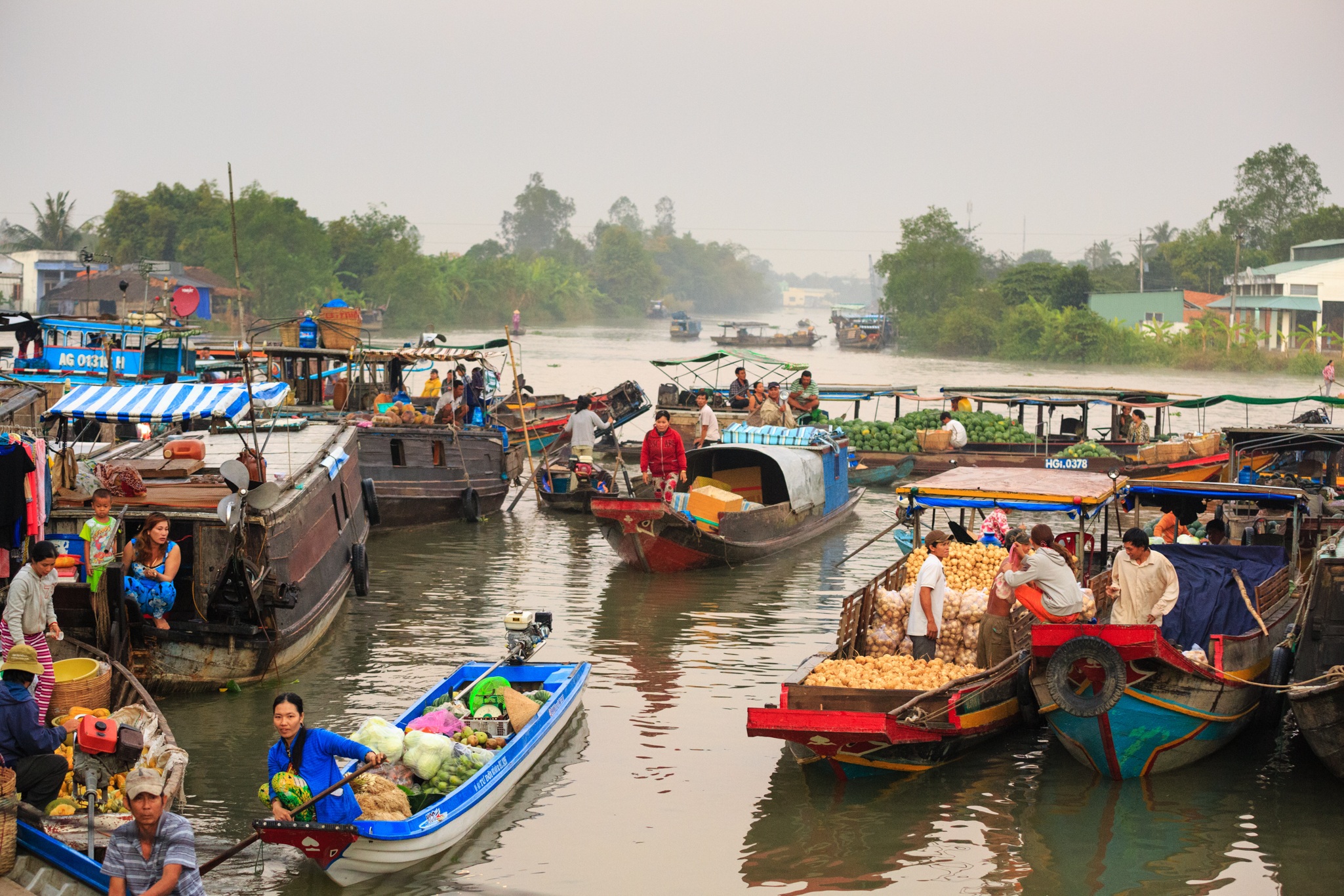
Take a short ride on a sampan to Sa Ðéc, a Mekong Delta hidden gem. Enjoy a walking tour around town with a stop at the home of Mr. Huynh Thuy Le, who inspired Marguerite Duras’ celebrated novel, L’Amant, and a stroll through Sa Ðéc’s bustling central market. Return to Emerald Harmony by sampan for lunch, while cruising to Cái Bè.
Upon arrival, travel via sampan to Tan Phong, a small island located nearby, rich in alluvial soil suitable for cultivating tropical fruit orchards year-round. At this established ecotourism destination, try a hands-on experience at a workshop specialising in weaving water hyacinth into artistic crafts. Board a motorised buggy for a ride through fruit orchards, stopping to sample tropical fruits. Reboard the sampan and cruise back to Cái Bè, discovering local cottage industries where families produce rice-paper and sweets from pop-corn, pop-rice and coconuts. Return to Emerald Harmony.
Included Excursion
A visit to the bustling Sa Dec Markets and the home of Mr. Huynh Thuy Le
Included Excursion
An excursion to the local industries of Cai Be
After sailing from My Tho, you’ll leave the Mekong Delta and enter the Cho Gao canal, considered one of Vietnam’s major arterial canals that connects Tien Giang Province with Ho Chi Minh City. Today, you’ll be fascinated watching the heavy commercial traffic navigating this important waterway, where upwards of 1,800 vessels transit each day. Relax on board, taking in the everchanging vistas of mangroves, cargo barges and local fishing boats. Tonight, you’ll dock in the heart of Ho Chi Minh City, where you can admire the city lights; due to Vietnamese customs regulations, you'll not be permitted to venture ashore.
Romantically referred to by the French as the Pearl of the Orient, Ho Chi Minh City today is a super-charged city of sensory overload. Motorbikes zoom day and night along the wide boulevards, through the narrow back alleys and past vendors pushing handcarts hawking goods of all descriptions. Still called Saigon by most residents, this is Vietnam's largest city and the engine driving the country's current economic resurgence, but despite its frenetic pace, it's a friendlier place than Hanoi and locals will tell you the food—simple, tasty, and incorporating many fresh herbs—is infinitely better than in the capital.This is a city full of surprises. The madness of the city's traffic—witness the oddball things that are transported on the back of motorcycles—is countered by tranquil pagodas, peaceful parks, quirky coffee shops, and whole neighborhoods hidden down tiny alleyways, although some of these quiet spots can be difficult to track down. Life in Ho Chi Minh City is lived in public: on the back of motorcycles, on the sidewalks, and in the parks. Even when its residents are at home, they're still on display. With many living rooms opening onto the street, grandmothers napping, babies being rocked, and food being prepared, are all in full view of passersby.Icons of the past endure in the midst of the city’s headlong rush into capitalism. The Hotel Continental, immortalized in Graham Greene's The Quiet American, continues to stand on the corner of old Indochina's most famous thoroughfare, the rue Catinat, known to American G.I.s during the Vietnam War as Tu Do (Freedom) Street and renamed Dong Khoi (Uprising) Street by the Communists. The city still has its ornate opera house and its old French city hall, the Hôtel de Ville. The broad colonial boulevards leading to the Saigon River and the gracious stucco villas are other remnants of the French colonial presence. Grisly reminders of the more recent past can be seen at the city's war-related museums. Residents, however, prefer to look forward rather than back and are often perplexed by tourists' fascination with a war that ended 40 years ago.The Chinese influence on the country is still very much in evidence in the Cholon district, the city's Chinatown, but the modern office towers and international hotels that mark the skyline symbolize Vietnam's fixation on the future.
After disembarkation, drive away from Ho Chi Minh City port to Cu Chi Tunnels, watching the city skyline fade into the distance as the road winds through rice paddies, villages and scenes typical to southern Vietnam. Spend a couple of hours walking around Cu Chi’s rugged grounds with a local guide. Upon your return, enjoy a traditional Pho (noodle soup) lunch then check in to the Sheraton Saigon Hotel and Towers for your included two-night stay. Tonight join a DiscoverMORE excursion.
Included Excursion
Cu Chi Tunnels
DiscoverMORE
An evening Saigon Street Food walking tour (extra expense)
DiscoverMORE
Saigon After Dark by Vintage Jeep (extra expense)
Romantically referred to by the French as the Pearl of the Orient, Ho Chi Minh City today is a super-charged city of sensory overload. Motorbikes zoom day and night along the wide boulevards, through the narrow back alleys and past vendors pushing handcarts hawking goods of all descriptions. Still called Saigon by most residents, this is Vietnam's largest city and the engine driving the country's current economic resurgence, but despite its frenetic pace, it's a friendlier place than Hanoi and locals will tell you the food—simple, tasty, and incorporating many fresh herbs—is infinitely better than in the capital.This is a city full of surprises. The madness of the city's traffic—witness the oddball things that are transported on the back of motorcycles—is countered by tranquil pagodas, peaceful parks, quirky coffee shops, and whole neighborhoods hidden down tiny alleyways, although some of these quiet spots can be difficult to track down. Life in Ho Chi Minh City is lived in public: on the back of motorcycles, on the sidewalks, and in the parks. Even when its residents are at home, they're still on display. With many living rooms opening onto the street, grandmothers napping, babies being rocked, and food being prepared, are all in full view of passersby.Icons of the past endure in the midst of the city’s headlong rush into capitalism. The Hotel Continental, immortalized in Graham Greene's The Quiet American, continues to stand on the corner of old Indochina's most famous thoroughfare, the rue Catinat, known to American G.I.s during the Vietnam War as Tu Do (Freedom) Street and renamed Dong Khoi (Uprising) Street by the Communists. The city still has its ornate opera house and its old French city hall, the Hôtel de Ville. The broad colonial boulevards leading to the Saigon River and the gracious stucco villas are other remnants of the French colonial presence. Grisly reminders of the more recent past can be seen at the city's war-related museums. Residents, however, prefer to look forward rather than back and are often perplexed by tourists' fascination with a war that ended 40 years ago.The Chinese influence on the country is still very much in evidence in the Cholon district, the city's Chinatown, but the modern office towers and international hotels that mark the skyline symbolize Vietnam's fixation on the future.
Enjoy a guided tour of Ho Chi Minh City, starting with a visit to the city’s most iconic building, the Reunification, or Independence Palace. Formerly the South Vietnamese Presidential Palace, images of the building were seen around the world on 30 April 1975 when tanks stormed the gates as Saigon fell to the North Vietnamese. Then, stroll through Ho Chi Minh City’s colonial quarter, walking past scenes of everyday life on the way. Admire the beautiful architecture of the Opera House, Notre Dame Cathedral and the old Saigon Post Office and listen to the stories about the glory days of French Indochina and how that era continues to influence aspects of modern Vietnamese culture. Tonight, enjoy your farewell dinner with your fellow guests.
Included Excursion
An orientation tour of Ho Chi Minh City
Romantically referred to by the French as the Pearl of the Orient, Ho Chi Minh City today is a super-charged city of sensory overload. Motorbikes zoom day and night along the wide boulevards, through the narrow back alleys and past vendors pushing handcarts hawking goods of all descriptions. Still called Saigon by most residents, this is Vietnam's largest city and the engine driving the country's current economic resurgence, but despite its frenetic pace, it's a friendlier place than Hanoi and locals will tell you the food—simple, tasty, and incorporating many fresh herbs—is infinitely better than in the capital.This is a city full of surprises. The madness of the city's traffic—witness the oddball things that are transported on the back of motorcycles—is countered by tranquil pagodas, peaceful parks, quirky coffee shops, and whole neighborhoods hidden down tiny alleyways, although some of these quiet spots can be difficult to track down. Life in Ho Chi Minh City is lived in public: on the back of motorcycles, on the sidewalks, and in the parks. Even when its residents are at home, they're still on display. With many living rooms opening onto the street, grandmothers napping, babies being rocked, and food being prepared, are all in full view of passersby.Icons of the past endure in the midst of the city’s headlong rush into capitalism. The Hotel Continental, immortalized in Graham Greene's The Quiet American, continues to stand on the corner of old Indochina's most famous thoroughfare, the rue Catinat, known to American G.I.s during the Vietnam War as Tu Do (Freedom) Street and renamed Dong Khoi (Uprising) Street by the Communists. The city still has its ornate opera house and its old French city hall, the Hôtel de Ville. The broad colonial boulevards leading to the Saigon River and the gracious stucco villas are other remnants of the French colonial presence. Grisly reminders of the more recent past can be seen at the city's war-related museums. Residents, however, prefer to look forward rather than back and are often perplexed by tourists' fascination with a war that ended 40 years ago.The Chinese influence on the country is still very much in evidence in the Cholon district, the city's Chinatown, but the modern office towers and international hotels that mark the skyline symbolize Vietnam's fixation on the future.
After breakfast this morning, you will be transferred to the Ho Chi Minh City airport to catch your onward or homebound flight.
While every effort is made to adhere to the planned itinerary, changes in river conditions, ad hoc local government regulations or local festivities may require journey modifications. These will be made based on the advice of local authorities or for safety reasons. Hotels are indicative and are subject to change.
Romantically referred to by the French as the Pearl of the Orient, Ho Chi Minh City today is a super-charged city of sensory overload. Motorbikes zoom day and night along the wide boulevards, through the narrow back alleys and past vendors pushing handcarts hawking goods of all descriptions. Still called Saigon by most residents, this is Vietnam's largest city and the engine driving the country's current economic resurgence, but despite its frenetic pace, it's a friendlier place than Hanoi and locals will tell you the food—simple, tasty, and incorporating many fresh herbs—is infinitely better than in the capital.This is a city full of surprises. The madness of the city's traffic—witness the oddball things that are transported on the back of motorcycles—is countered by tranquil pagodas, peaceful parks, quirky coffee shops, and whole neighborhoods hidden down tiny alleyways, although some of these quiet spots can be difficult to track down. Life in Ho Chi Minh City is lived in public: on the back of motorcycles, on the sidewalks, and in the parks. Even when its residents are at home, they're still on display. With many living rooms opening onto the street, grandmothers napping, babies being rocked, and food being prepared, are all in full view of passersby.Icons of the past endure in the midst of the city’s headlong rush into capitalism. The Hotel Continental, immortalized in Graham Greene's The Quiet American, continues to stand on the corner of old Indochina's most famous thoroughfare, the rue Catinat, known to American G.I.s during the Vietnam War as Tu Do (Freedom) Street and renamed Dong Khoi (Uprising) Street by the Communists. The city still has its ornate opera house and its old French city hall, the Hôtel de Ville. The broad colonial boulevards leading to the Saigon River and the gracious stucco villas are other remnants of the French colonial presence. Grisly reminders of the more recent past can be seen at the city's war-related museums. Residents, however, prefer to look forward rather than back and are often perplexed by tourists' fascination with a war that ended 40 years ago.The Chinese influence on the country is still very much in evidence in the Cholon district, the city's Chinatown, but the modern office towers and international hotels that mark the skyline symbolize Vietnam's fixation on the future.
Suite
At 42m², this truly spectacular suite boasts separate bedroom and lounge areas, a luxurious en–suite bathroom and a queen– size or twin–style bed, plus a private terrace, with an additional space of 30m2 complete with a hot tub.
Your suite includes:

I have worked with Lore Doick for more than 20 years, and she has booked over 30 cruises for me. Her expertise, care, and attention to every travel detail have made her an invaluable advisor and friend over the years.”
We are now in our second generation working with Cheri Ozimac at Tully Luxury Travel. From Antarctica to Greece, she has handled every detail with expertise, responsiveness, and care…
My wife and I have worked with Tully since 2007, and Kit Neil and her team went far beyond expectations while helping us navigate multiple cruise and flight cancellations. Their advocacy, care, and support during a difficult time were extraordinary.
Cheri Ozimac organized our Seabourn cruise flawlessly, from the hotel recommendation to every travel arrangement. She was responsive, attentive, and an excellent advocate throughout the process…
We discovered Tully Luxury Travel after years of booking cruises through US agents and were impressed by their competitive pricing, exceptional service, and Canadian based support. Their team is always available, offers excellent value, and makes booking the right cruise seamless.
The Tully Difference