
Emerald Cruises logo

Classical Greece

Itinerary: Piraeus, Delos, Mykonos, Bodrum, Rhodes, Santorini, Khania, Hydra See full itinerary

12 Aug 28
7 nights

Voyage Details

Duration:
7 nights
Departure:
12 Aug 2028
Embarkation:
Piraeus, Greece
Cruise code:
E06G
Voyage code:
E06G120828.1

Your Itinerary, Day-By-Day

Special Chapters of Your Journey

Day 1 - Piraeus

Your unforgettable voyage begins in Greece and its ancient capital, Athens. The birthplace of democracy and western civilisation, this enthralling city presents a remarkable blend of rich traditions and modern dynamism. Here, you’ll be transferred to your luxury Emerald yacht to begin an incredible odyssey along the coasts of Greece and Turkey.   

Please book your flight to arrive into Athens prior to 02:00 PM.

Docked: 19:00 

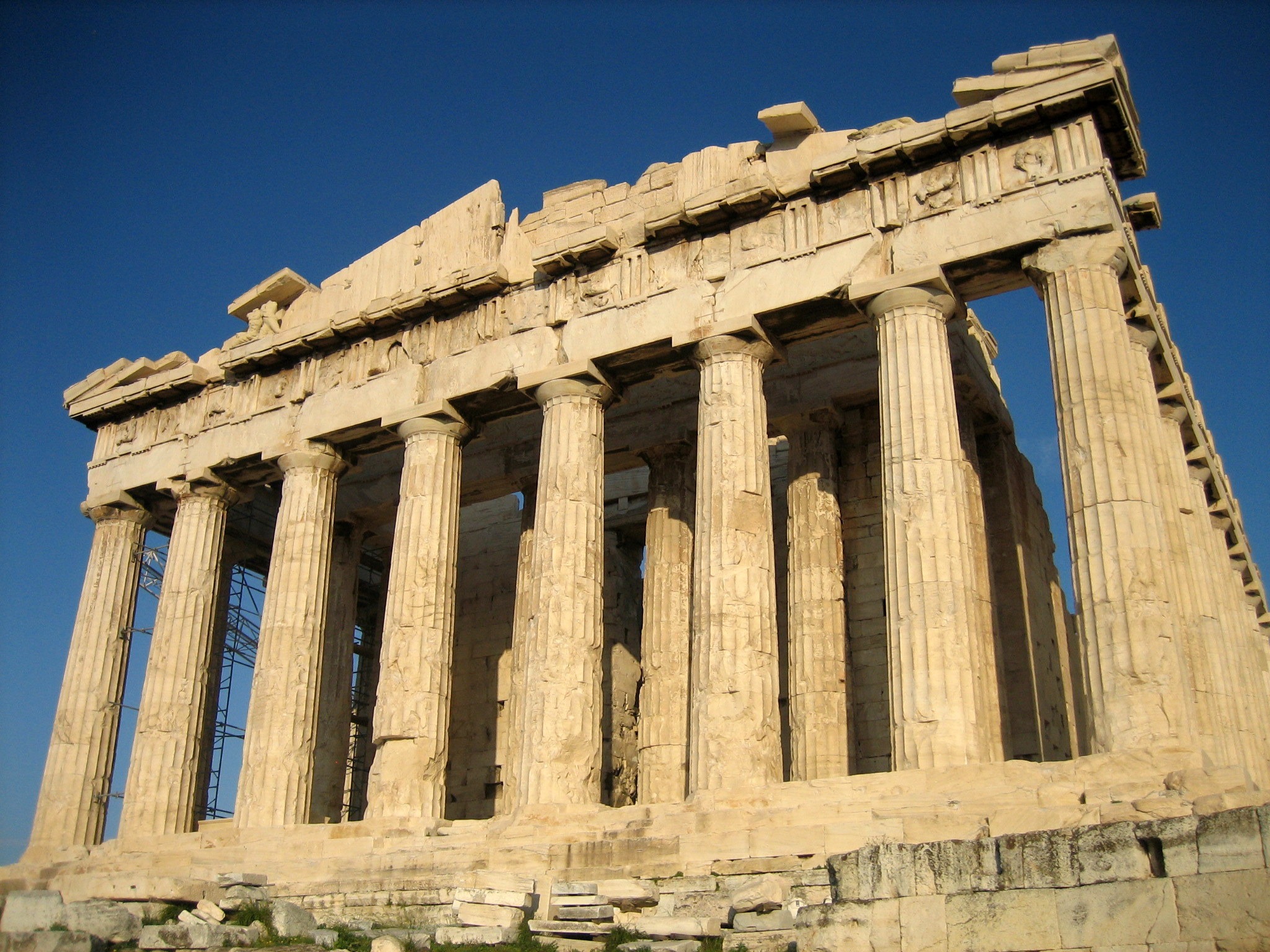
It's no wonder that all roads lead to the fascinating and maddening metropolis of Athens. Lift your eyes 200 feet above the city to the Parthenon, its honey-color marble columns rising from a massive limestone base, and you behold architectural perfection that has not been surpassed in 2,500 years. But, today, this shrine of classical form dominates a 21st-century boomtown. To experience Athens—Athína in Greek—fully is to understand the essence of Greece: ancient monuments surviving in a sea of cement, startling beauty amid the squalor, tradition juxtaposed with modernity. Locals depend on humor and flexibility to deal with the chaos; you should do the same. The rewards are immense. Although Athens covers a huge area, the major landmarks of the ancient Greek, Roman, and Byzantine periods are close to the modern city center. You can easily walk from the Acropolis to many other key sites, taking time to browse in shops and relax in cafés and tavernas along the way. From many quarters of the city you can glimpse "the glory that was Greece" in the form of the Acropolis looming above the horizon, but only by actually climbing that rocky precipice can you feel the impact of the ancient settlement. The Acropolis and Filopappou, two craggy hills sitting side by side; the ancient Agora (marketplace); and Kerameikos, the first cemetery, form the core of ancient and Roman Athens. Along the Unification of Archaeological Sites promenade, you can follow stone-paved, tree-lined walkways from site to site, undisturbed by traffic. Cars have also been banned or reduced in other streets in the historical center. In the National Archaeological Museum, vast numbers of artifacts illustrate the many millennia of Greek civilization; smaller museums such as the Goulandris Museum of Cycladic Art Museum and the Byzantine and Christian Museum illuminate the history of particular regions or periods. Athens may seem like one huge city, but it is really a conglomeration of neighborhoods with distinctive characters. The Eastern influences that prevailed during the 400-year rule of the Ottoman Empire are still evident in Monastiraki, the bazaar area near the foot of the Acropolis. On the northern slope of the Acropolis, stroll through Plaka (if possible by moonlight), an area of tranquil streets lined with renovated mansions, to get the flavor of the 19th-century's gracious lifestyle. The narrow lanes of Anafiotika, a section of Plaka, thread past tiny churches and small, color-washed houses with wooden upper stories, recalling a Cycladic island village. In this maze of winding streets, vestiges of the older city are everywhere: crumbling stairways lined with festive tavernas; dank cellars filled with wine vats; occasionally a court or diminutive garden, enclosed within high walls and filled with magnolia trees and the flaming trumpet-shaped flowers of hibiscus bushes. Formerly run-down old quarters, such as Thission, Gazi and Psirri, popular nightlife areas filled with bars and mezedopoleia (similar to tapas bars), are now in the process of gentrification, although they still retain much of their original charm, as does the colorful produce and meat market on Athinas. The area around Syntagma Square, the tourist hub, and Omonia Square, the commercial heart of the city about 1 km (½ mi) northwest, is distinctly European, having been designed by the court architects of King Otho, a Bavarian, in the 19th century. The chic shops and bistros of ritzy Kolonaki nestle at the foot of Mt. Lycabettus, Athens's highest hill (909 feet). Each of Athens's outlying suburbs has a distinctive character: in the north is wealthy, tree-lined Kifissia, once a summer resort for aristocratic Athenians, and in the south and southeast lie Glyfada, Voula, and Vouliagmeni, with their sandy beaches, seaside bars, and lively summer nightlife. Just beyond the city's southern fringes is Piraeus, a bustling port city of waterside fish tavernas and Saronic Gulf views.
Grath   Athens   Acropolis
Grath Athens Acropolis
Grath   Athens   Athens Sea
Grath Athens Athens Sea
Grath   Athens   City Overview
Grath Athens City Overview
Grath   Athens   Greek Ruins
Grath Athens Greek Ruins
Grath   Athens   Parthenon
Grath Athens Parthenon
Grath   Athens   Ruins And Architecture
Grath Athens Ruins And Architecture
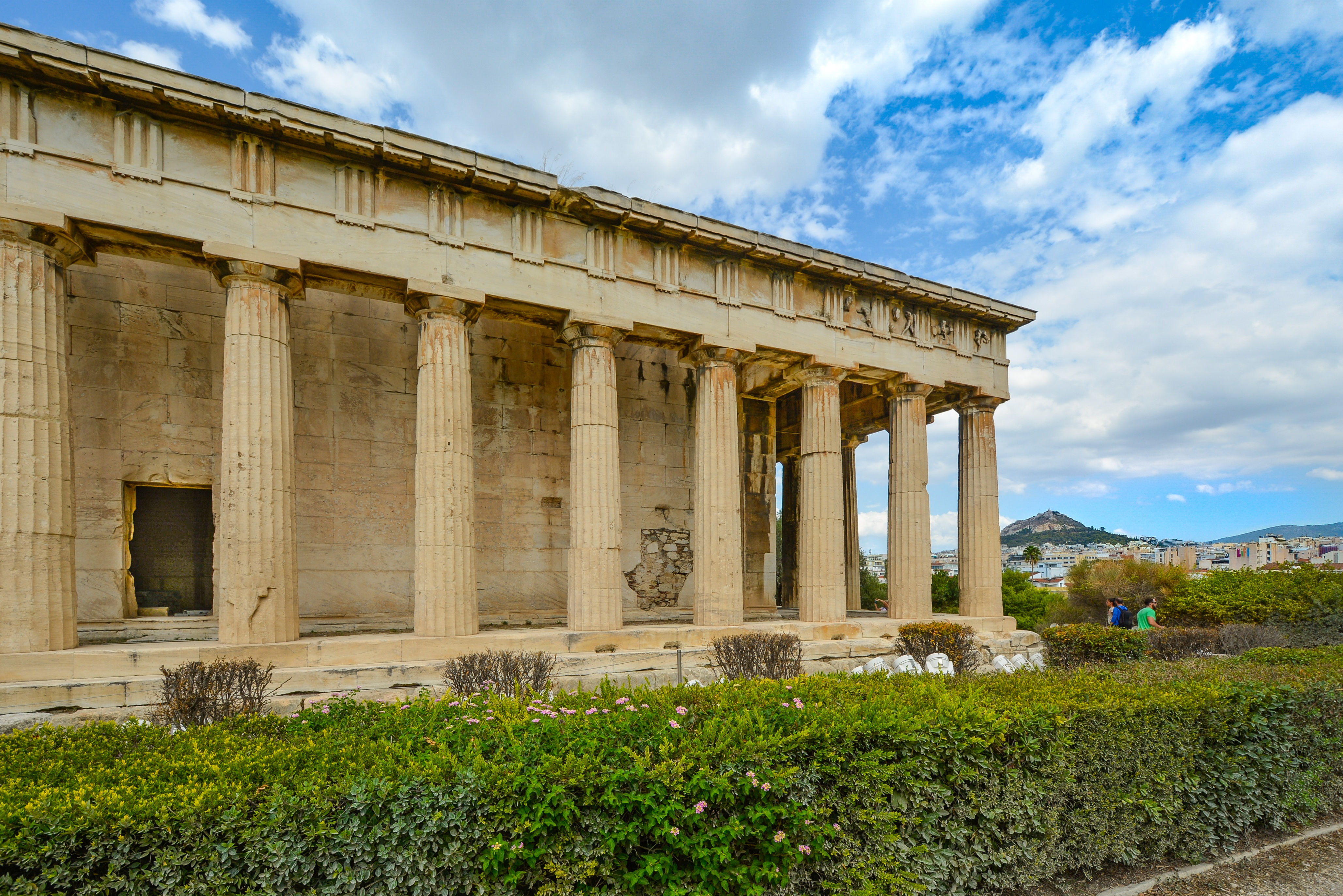
Grath   Athens   Temple Of Hephaestus
Grath Athens Temple Of Hephaestus

Day 2 - Delos

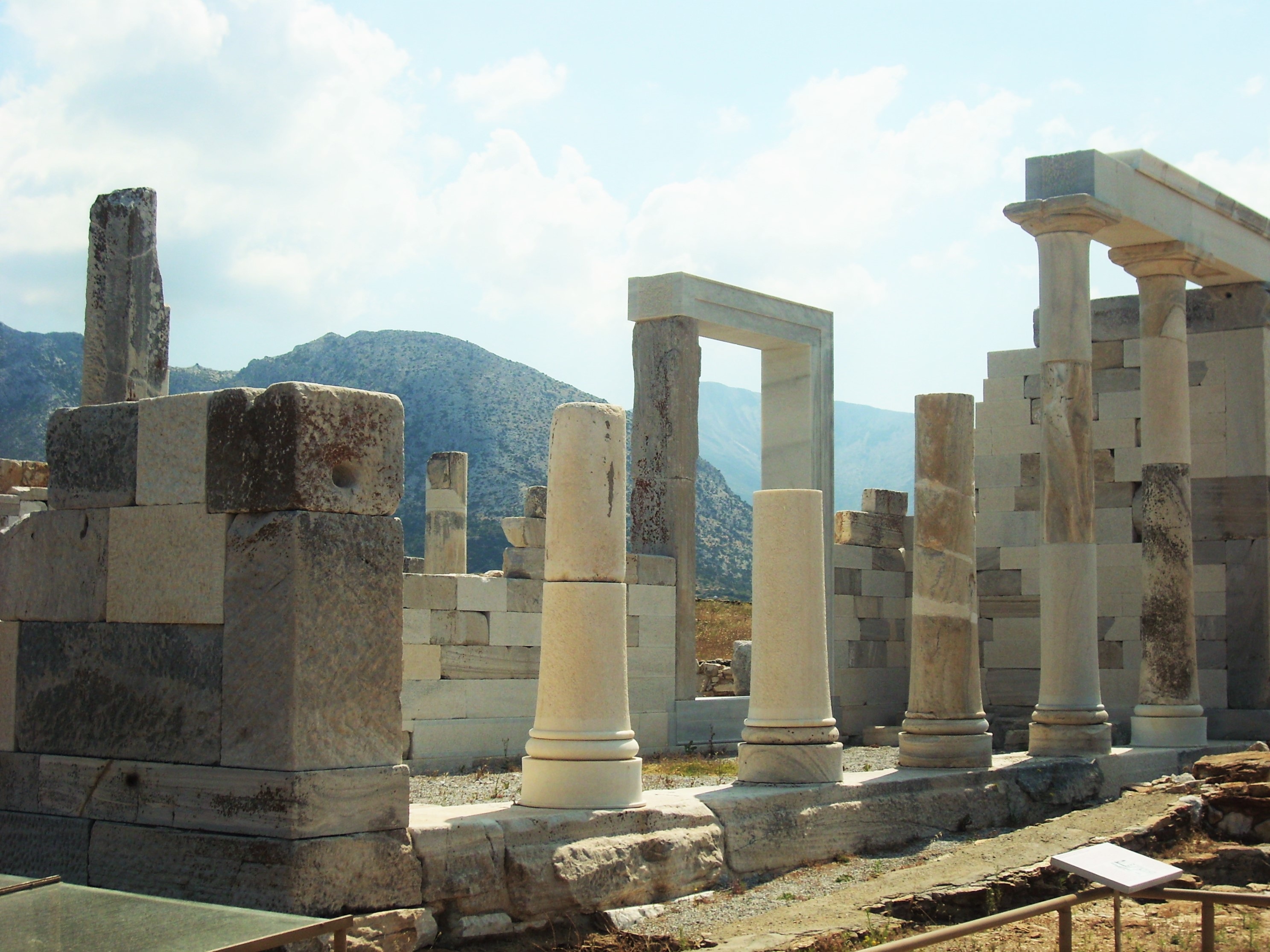
A small rocky island at the heart of the stunning Cyclades archipelago, Delos is one of the most important mythological and archaeological sites in Greece and a World Heritage-listed Site believed to be the birthplace of the Greek God Apollo and his twin sister, Artemis. Wander among remarkably preserved ruins, grand mosaics and ancient temples that paint a vivid picture of classical civilisation. 

Later, sail to glamorous Mykonos, where Cycladic charm meets cosmopolitan flair. Lose yourself in the maze of narrow lanes lined with whitewashed houses and chapels. Discover chic boutiques, waterfront tavernas and the island’s iconic windmills overlooking the Aegean. As evening falls, Mykonos reveals its vibrant energy, offering the ideal blend of tradition and modern sophistication. 

DiscoverMORE
Guided Tour of Delos (extra expense, must be pre-booked)
Discover the extraordinary archaeological treasures of Delos, one of the most important sacred sites of the ancient Greek world and a UNESCO World Heritage Site. For more than a thousand years, Delos was one of the Mediterranean’s most revered religious sanctuaries. According to Greek mythology, it was the birthplace of Apollo and Artemis, attracting pilgrims from across the ancient world and becoming a prosperous centre of religion, commerce, and culture. Join a guided walking tour through this remarkable open-air archaeological site, where exceptionally preserved ruins reveal the island’s rich history from the 3rd millennium BC through the Hellenistic and early Christian periods. Explore ancient temples, sanctuaries, marketplaces, theatres, and elegant residences while gaining insight into the civilizations that shaped this sacred island and the wider Aegean. 
Activity Level: Moderate, Duration: 2 hours 

DiscoverMORE
Explore Mykonos Town Highlights on Foot (extra expense, must be pre-booked)
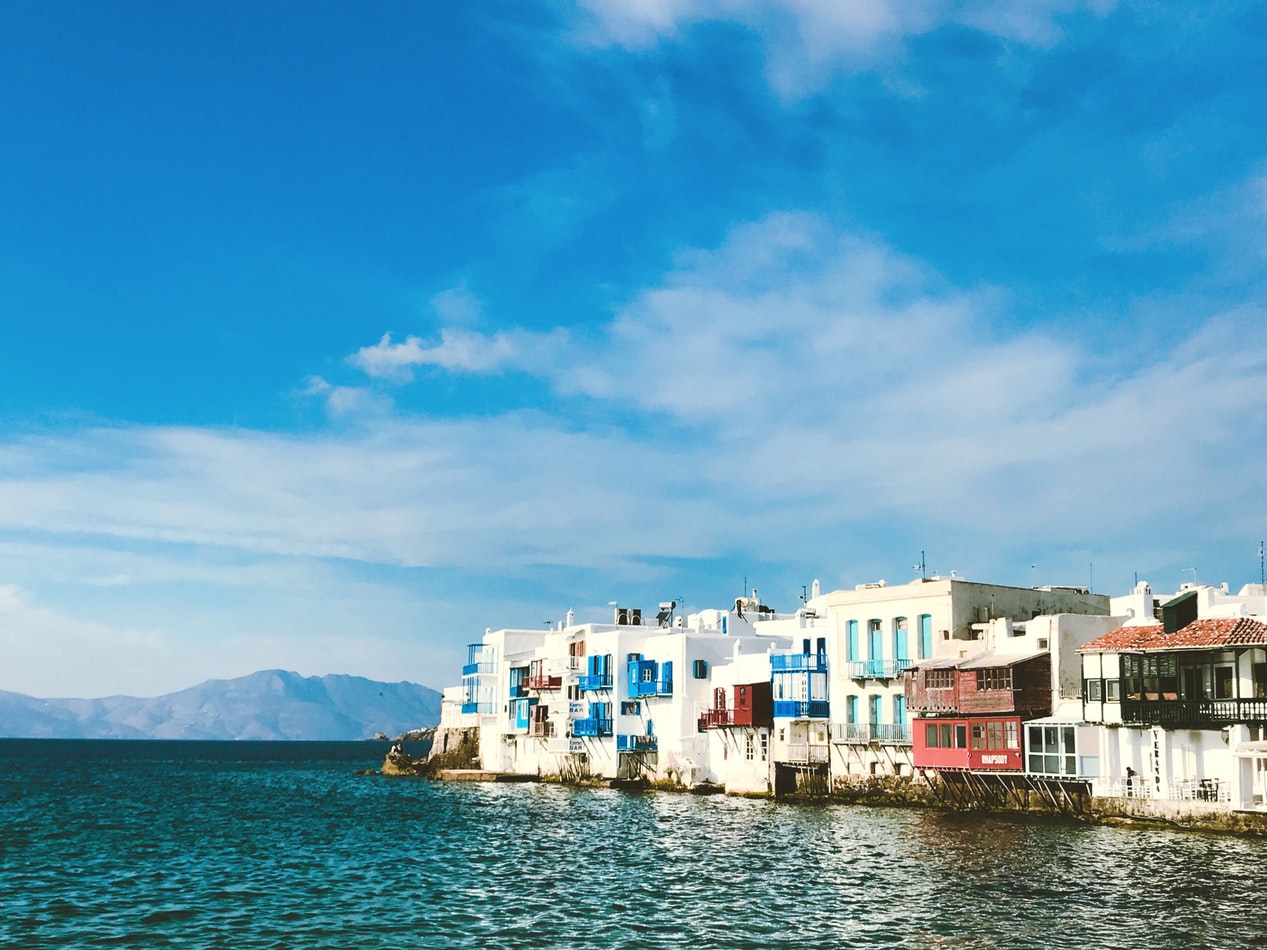
Discover the timeless charm of Mykonos on a leisurely walking tour through the island’s enchanting capital, where traditional Cycladic architecture, rich history, and stunning coastal scenery come together.Explore the maze of whitewashed streets in Mykonos Town (Chora) as your guide shares fascinating insights into the island’s culture and history. Along the way, admire the iconic Panagia Paraportiani, one of Greece’s most photographed churches, and the charming Church of St. Nicholas, overlooking the old harbour. Continue through the picturesque waterfront district of Little Venice, where elegant historic houses line the sea, before reaching the famous Mykonos Windmills, offering panoramic views across the town and the sparkling Aegean.Pause to enjoy a traditional Greek cheese pie at a local bakery and a refreshing drink before free time to browse the boutiques, relax at a café, or continue exploring Mykonos Town at your own pace.
Activity Level: Moderate, Duration: 2 hours 30 minutes 

Anchored: 07:30 – 11:00 | 12:30 – 19:00

Delos, Greece
Delos, GreeceImage from Pixabay

Day 2 - Mykonos

A small rocky island at the heart of the stunning Cyclades archipelago, Delos is one of the most important mythological and archaeological sites in Greece and a World Heritage-listed Site believed to be the birthplace of the Greek God Apollo and his twin sister, Artemis. Wander among remarkably preserved ruins, grand mosaics and ancient temples that paint a vivid picture of classical civilisation. 

Later, sail to glamorous Mykonos, where Cycladic charm meets cosmopolitan flair. Lose yourself in the maze of narrow lanes lined with whitewashed houses and chapels. Discover chic boutiques, waterfront tavernas and the island’s iconic windmills overlooking the Aegean. As evening falls, Mykonos reveals its vibrant energy, offering the ideal blend of tradition and modern sophistication. 

DiscoverMORE
Guided Tour of Delos (extra expense, must be pre-booked)
Discover the extraordinary archaeological treasures of Delos, one of the most important sacred sites of the ancient Greek world and a UNESCO World Heritage Site. For more than a thousand years, Delos was one of the Mediterranean’s most revered religious sanctuaries. According to Greek mythology, it was the birthplace of Apollo and Artemis, attracting pilgrims from across the ancient world and becoming a prosperous centre of religion, commerce, and culture. Join a guided walking tour through this remarkable open-air archaeological site, where exceptionally preserved ruins reveal the island’s rich history from the 3rd millennium BC through the Hellenistic and early Christian periods. Explore ancient temples, sanctuaries, marketplaces, theatres, and elegant residences while gaining insight into the civilizations that shaped this sacred island and the wider Aegean. 
Activity Level: Moderate, Duration: 2 hours 

DiscoverMORE
Explore Mykonos Town Highlights on Foot (extra expense, must be pre-booked)
Discover the timeless charm of Mykonos on a leisurely walking tour through the island’s enchanting capital, where traditional Cycladic architecture, rich history, and stunning coastal scenery come together.Explore the maze of whitewashed streets in Mykonos Town (Chora) as your guide shares fascinating insights into the island’s culture and history. Along the way, admire the iconic Panagia Paraportiani, one of Greece’s most photographed churches, and the charming Church of St. Nicholas, overlooking the old harbour. Continue through the picturesque waterfront district of Little Venice, where elegant historic houses line the sea, before reaching the famous Mykonos Windmills, offering panoramic views across the town and the sparkling Aegean.Pause to enjoy a traditional Greek cheese pie at a local bakery and a refreshing drink before free time to browse the boutiques, relax at a café, or continue exploring Mykonos Town at your own pace.
Activity Level: Moderate, Duration: 2 hours 30 minutes 

Anchored: 07:30 – 11:00 | 12:30 – 19:00

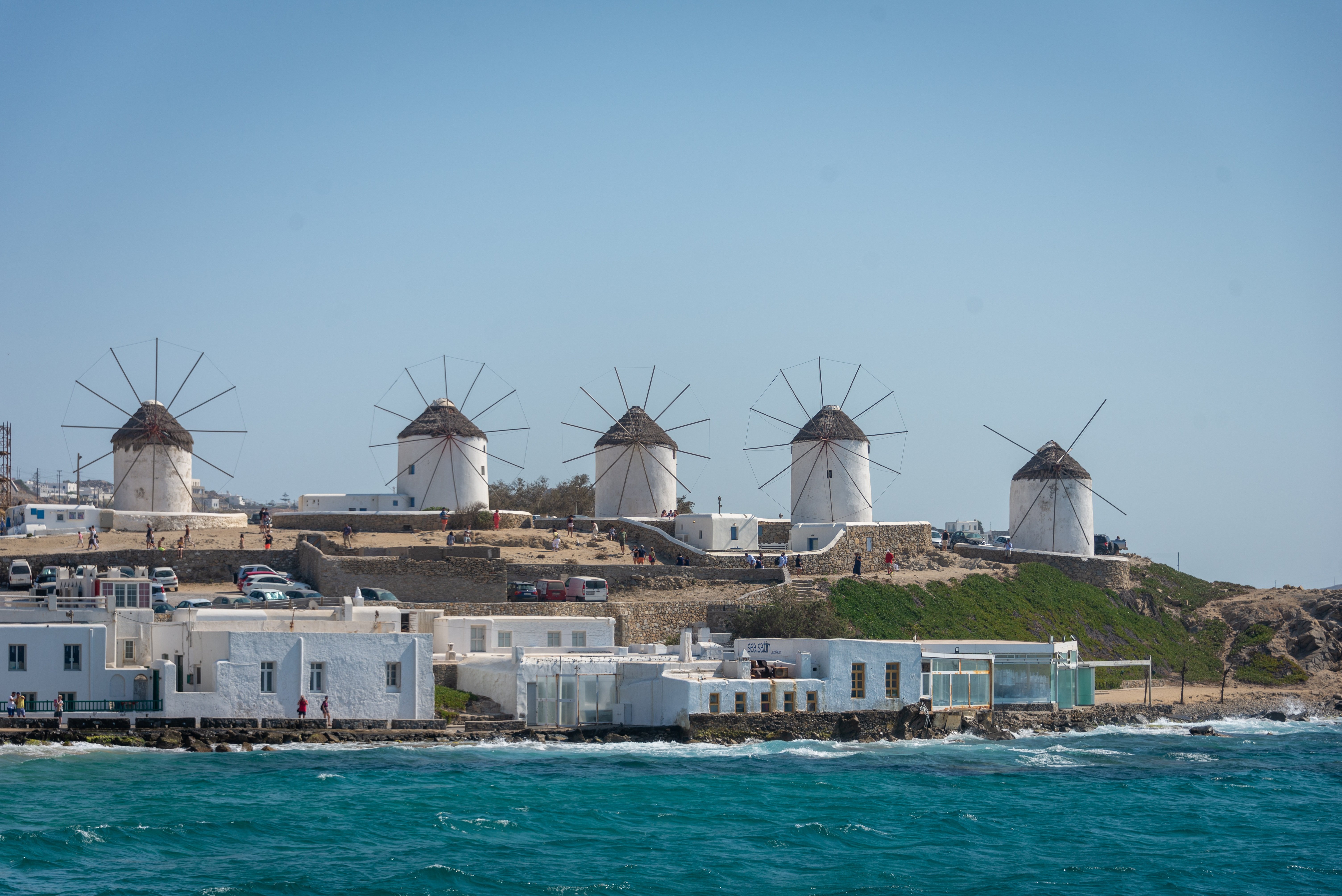
Although the fishing boats still go out in good weather, Mykonos largely makes its living from tourism these days. The summer crowds have turned one of the poorest islands in Greece into one of the richest. Old Mykonians complain that their young, who have inherited stores where their grandfathers once sold eggs or wine, get so much rent that they have lost ambition, and in summer sit around pool bars at night with their friends, and hang out in Athens in winter when island life is less scintillating. Put firmly on the map by Jackie O in the 1960s, Mykonos town—called Hora by the locals—remains the Saint-Tropez of the Greek islands. The scenery is memorable, with its whitewashed streets, Little Venice, the Kato Myli ridge of windmills, and Kastro, the town's medieval quarter. Its cubical two- or three-story houses and churches, with their red or blue doors and domes and wooden balconies, have been long celebrated as some of the best examples of classic Cycladic architecture. Luckily, the Greek Archaeological Service decided to preserve the town, even when the Mykonians would have preferred to rebuild, and so the Old Town has been impressively preserved. Pink oleander, scarlet hibiscus, and trailing green pepper trees form a contrast amid the dazzling whiteness, whose frequent renewal with whitewash is required by law. Any visitor who has the pleasure of getting lost in its narrow streets (made all the narrower by the many outdoor stone staircases, which maximize housing space in the crowded village) will appreciate how its confusing layout was designed to foil pirates—if it was designed at all. After Mykonos fell under Turkish rule in 1537, the Ottomans allowed the islanders to arm their vessels against pirates, which had a contradictory effect: many of them found that raiding other islands was more profitable than tilling arid land. At the height of Aegean piracy, Mykonos was the principal headquarters of the corsair fleets—the place where pirates met their fellows, found willing women, and filled out their crews. Eventually the illicit activity evolved into a legitimate and thriving trade network. Morning on Mykonos town's main quay is busy with deliveries, visitors for the Delos boats, lazy breakfasters, and street cleaners dealing with the previous night's mess. In late morning the cruise-boat people arrive, and the shops are all open. In early afternoon, shaded outdoor tavernas are full of diners eating salads (Mykonos's produce is mostly imported); music is absent or kept low. In mid- and late afternoon, the town feels sleepy, since so many people are at the beach, on excursions, or sleeping in their air-conditioned rooms; even some tourist shops close for siesta. By sunset, people have come back from the beach, having taken their showers and rested. At night, the atmosphere in Mykonos ramps up. The cruise-boat people are mostly gone, coughing three-wheelers make no deliveries in the narrow streets, and everyone is dressed sexy for summer and starting to shimmy with the scene. Many shops stay open past midnight, the restaurants fill up, and the bars and discos make ice cubes as fast as they can. Ready to dive in? Begin your tour of Mykonos town (Hora) by starting out at its heart: Mando Mavrogenous Square.

Grjmk   Mykonos, Greece Photo Credit Belongs To Alex Korolkoff
Grjmk Mykonos, Greece Photo Credit Belongs To Alex Korolkoff
Grjmk   Mykonos, Greece Photo Credit Belongs To Hector J.Rivas
Grjmk Mykonos, Greece Photo Credit Belongs To Hector J.Rivas
Grjmk   Mykonos, Greece Photo Credit Belongs To Jason Blackeye
Grjmk Mykonos, Greece Photo Credit Belongs To Jason Blackeye
Grjmk   Mykonos, Greece Photo Credit Belongs To Jessie Brown
Grjmk Mykonos, Greece Photo Credit Belongs To Jessie Brown
Grjmk   Mykonos, Greece Photo Credit Belongs To Sidharth Bhatia
Grjmk Mykonos, Greece Photo Credit Belongs To Sidharth Bhatia
Windmills, Mykonos
Windmills, MykonosImage by Andrea Spallanzani from Pixabay

Day 3 - Bodrum

Known for its stunning turquoise waters, pebbly and sand beaches, and vibrant nightlife, Bodrum, set along Turkey’s southwest shores, attracts both local and international visitors year-round. 

This alluring town is also steeped in history and home to several historical sites, including the impressive Bodrum Castle, built by the Knights of St. John in the 15th century. The castle now houses the Museum of Underwater Archaeology, displaying artifacts from shipwrecks discovered in the Aegean Sea. 

DiscoverMORE
Turkish Cooking Class (extra expense)
Immerse yourself in the authentic flavours of the Aegean on a memorable culinary experience in the traditional village of Çömlekçi, where local recipes and warm hospitality bring Turkish cuisine to life.Travel through the scenic countryside surrounding Bodrum to the charming rural village of Çömlekçi. Here, discover the secrets of regional Aegean cooking, renowned for its use of fresh herbs, olive oil, and seasonal ingredients. Watch local cooks prepare a selection of traditional dishes, or join in for a hands-on cooking experience while learning about the area’s culinary traditions. Recipes are provided for you to recreate the dishes at home. Following the demonstration, gather around communal tables to enjoy the freshly prepared meal accompanied by local wines, sharing stories and conversation in a relaxed village setting.
Activity Level: Easy, Duration: 5 hours

DiscoverMORE
Knights’ Castle and Mausoleum of Halicarnassus (extra expense)
Explore the remarkable history of Bodrum, where the legacy of one of the Seven Wonders of the Ancient World meets one of Türkiye’s finest medieval castles. Begin with a visit to the ruins of the Mausoleum of Halicarnassus, the monumental tomb built by Artemisia II in honour of King Mausolos. Once one of the Seven Wonders of the Ancient World, the mausoleum gave its name to all monumental tombs and remains one of Bodrum’s most significant archaeological sites. Continue on foot to the impressive Castle of Bodrum, built by the Knights of St. John using stones from the ancient mausoleum. Explore its historic courtyards and the renowned Museum of Underwater Archaeology, where fascinating artefacts recovered from ancient shipwrecks span the Bronze Age to the Middle Ages, including the remains of a 13th-century BC Syrian merchant vessel and the exquisite treasures of the Carian Princess. Conclude your excursion with free time in the heart of Bodrum, where you can browse local shops, enjoy a café overlooking the harbour, or simply soak up the atmosphere of this vibrant seaside town.
Activity Level: Active, Duration: 4 hours 

Docked: 09:00–22:00 

Bodrum, Turkey
Bodrum, TurkeyPhoto by Deniz Vatan on Unsplash

Day 4 - Rhodes

The lovely Greek island of Rhodes harbours a rich history, evident in fascinating landmarks. These include the ancient Acropolis of Lindos and Palace of the Grand Master, one of the few examples of Gothic architecture in Greece, within the Medieval City of Rhodes, a designated World Heritage Site. Rhodes is also popular for its stunning natural scenery, extending to lovely sandy beaches lapped bycrystal-clear waters and lush green hills. Today choose between our Included Excursion or EmeraldACTIVE option.

Included Excursion
Guided tour of Lindos
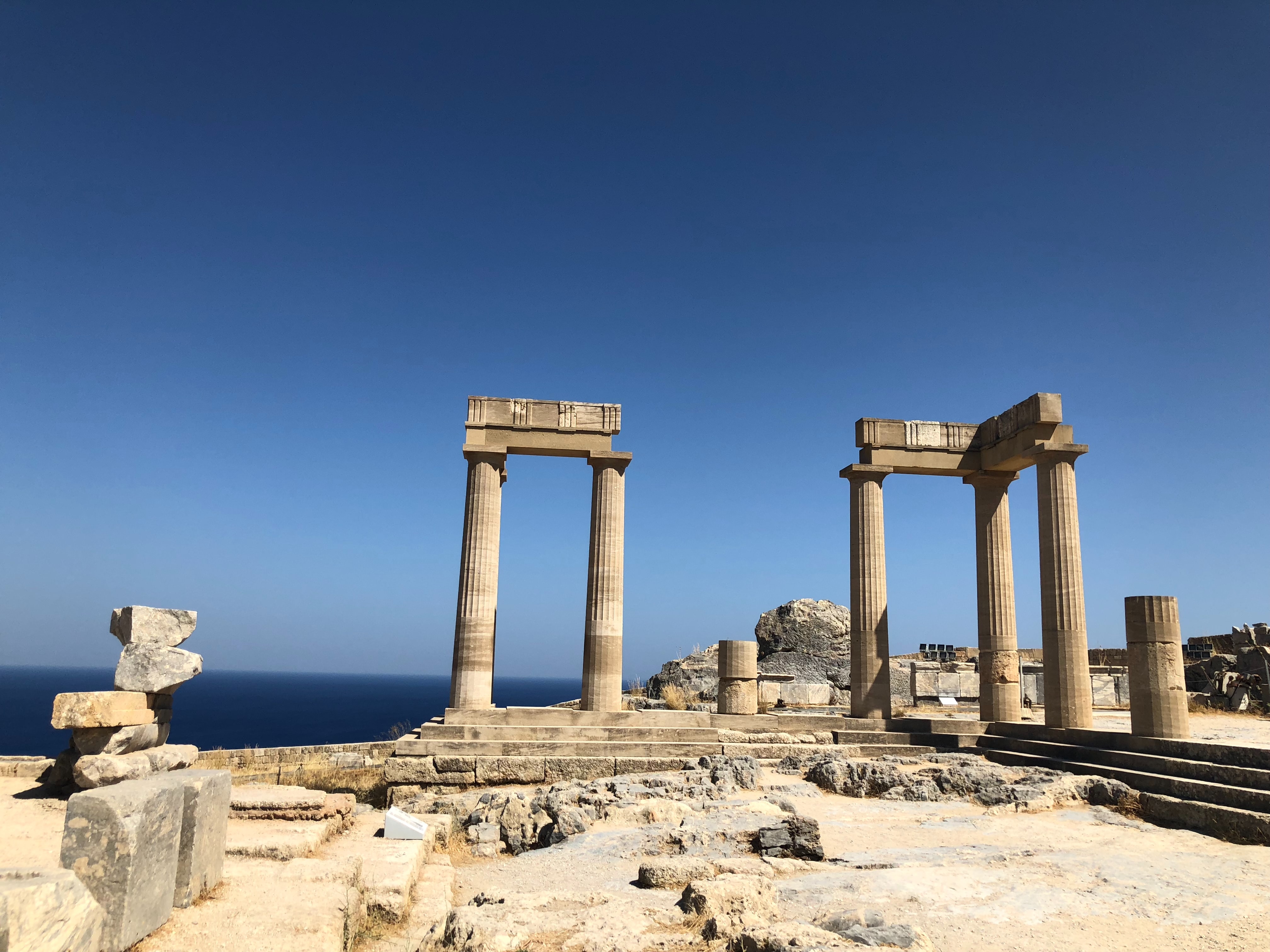
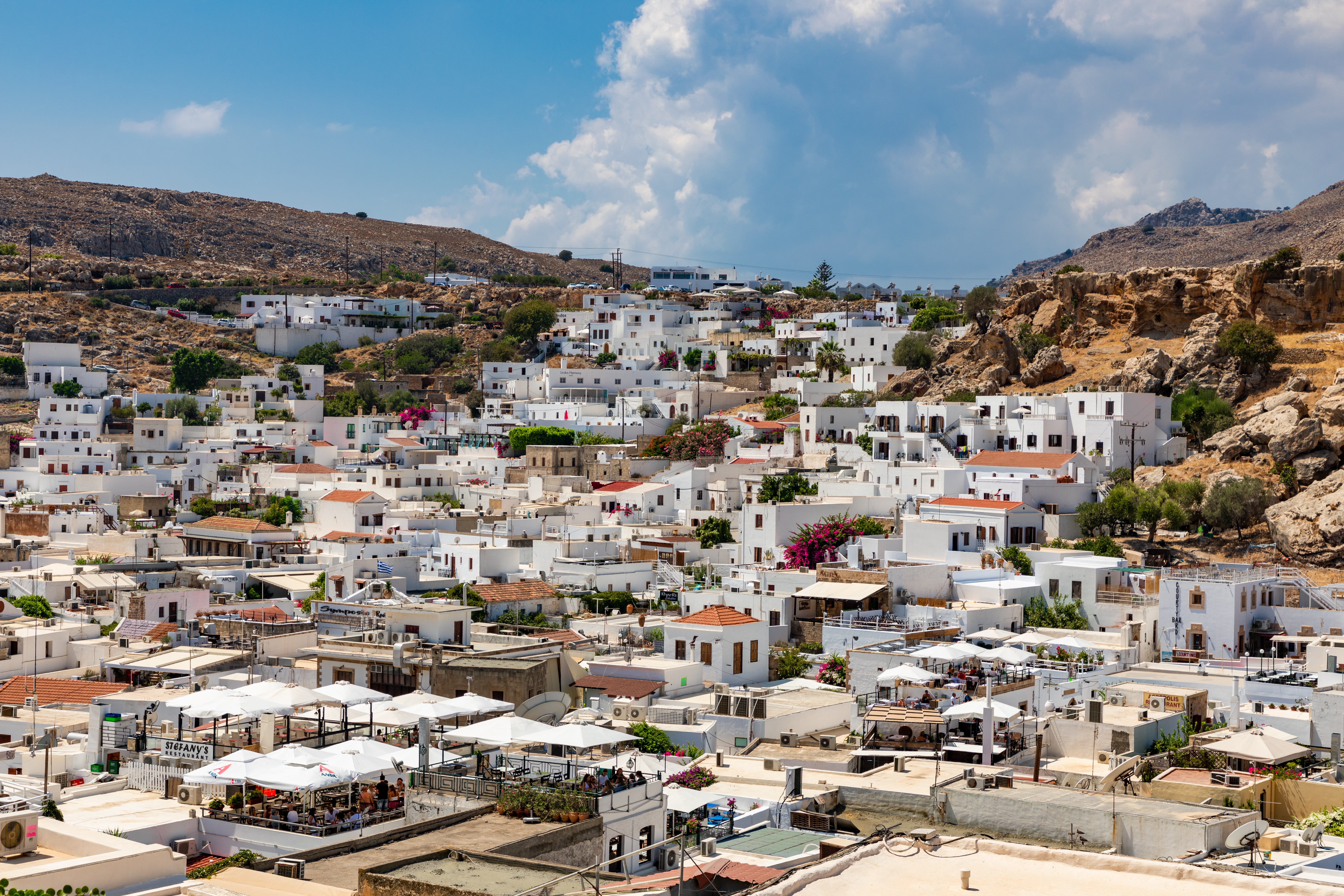
Discover the timeless beauty of Lindos, where ancient history, breathtaking coastal scenery, and traditional island charm combine in one of Rhodes’ most iconic destinations. Travel along the island’s picturesque east coast, passing fragrant citrus groves, vineyards, and ancient olive trees before arriving at the beautiful village of Lindos. From here, make the ascent on foot to the magnificent Acropolis of Lindos, dramatically perched above the village and overlooking the sparkling Aegean Sea. Explore the impressive archaeological site, including the Doric Temple of Athena Lindia, the remains of a Byzantine church, and the fortifications built by the Knights of St. John, while enjoying spectacular panoramic views across the coastline. Afterwards, descend through the charming whitewashed village to the picturesque St. Paul’s Bay, traditionally associated with the Apostle Paul’s arrival in AD 51.
Activity Level: Active, Duration: 4 hours 20 minutes 

EmeraldACTIVE
Walking Tour of Medieval Rhodes and Grand Master’s Palace
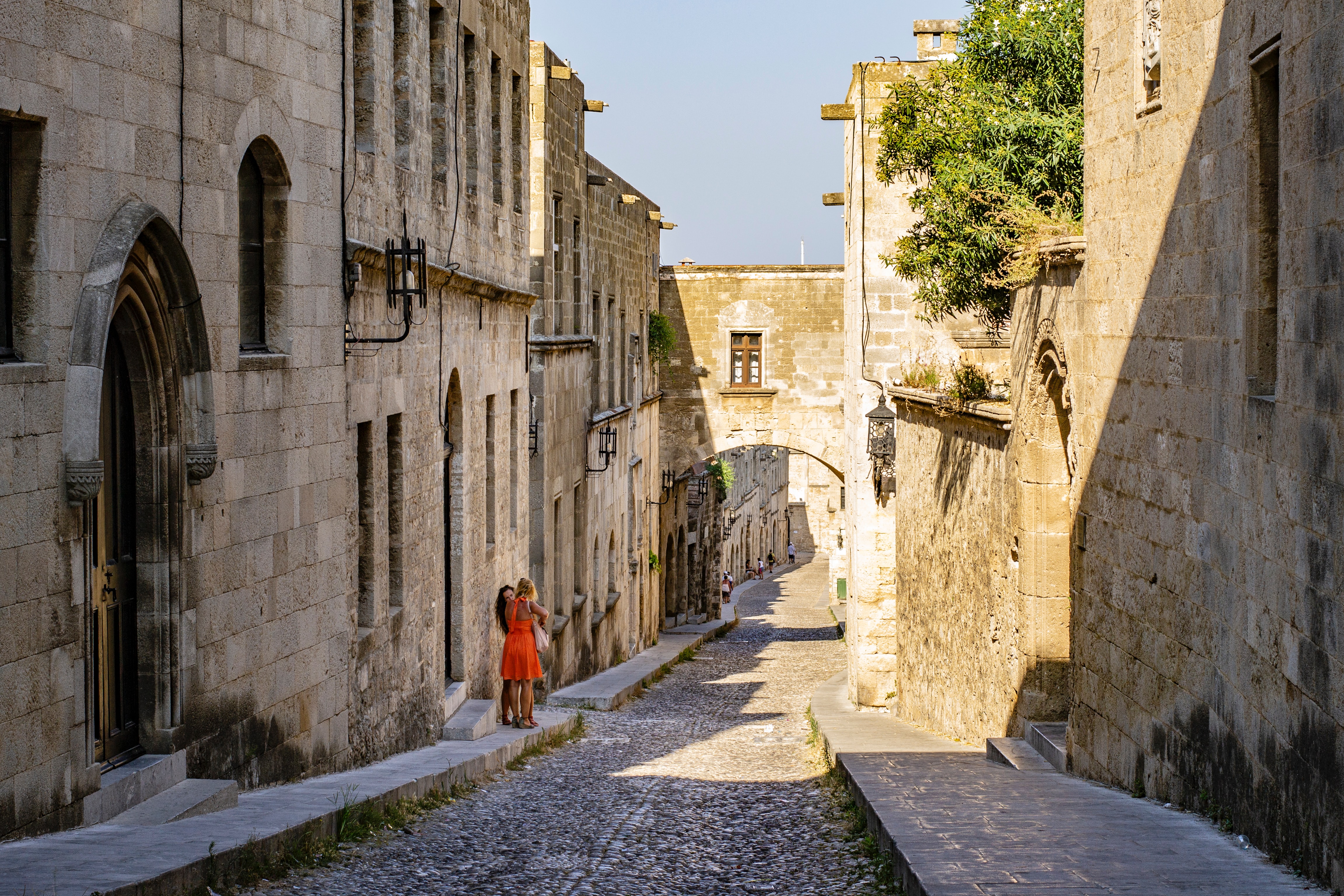
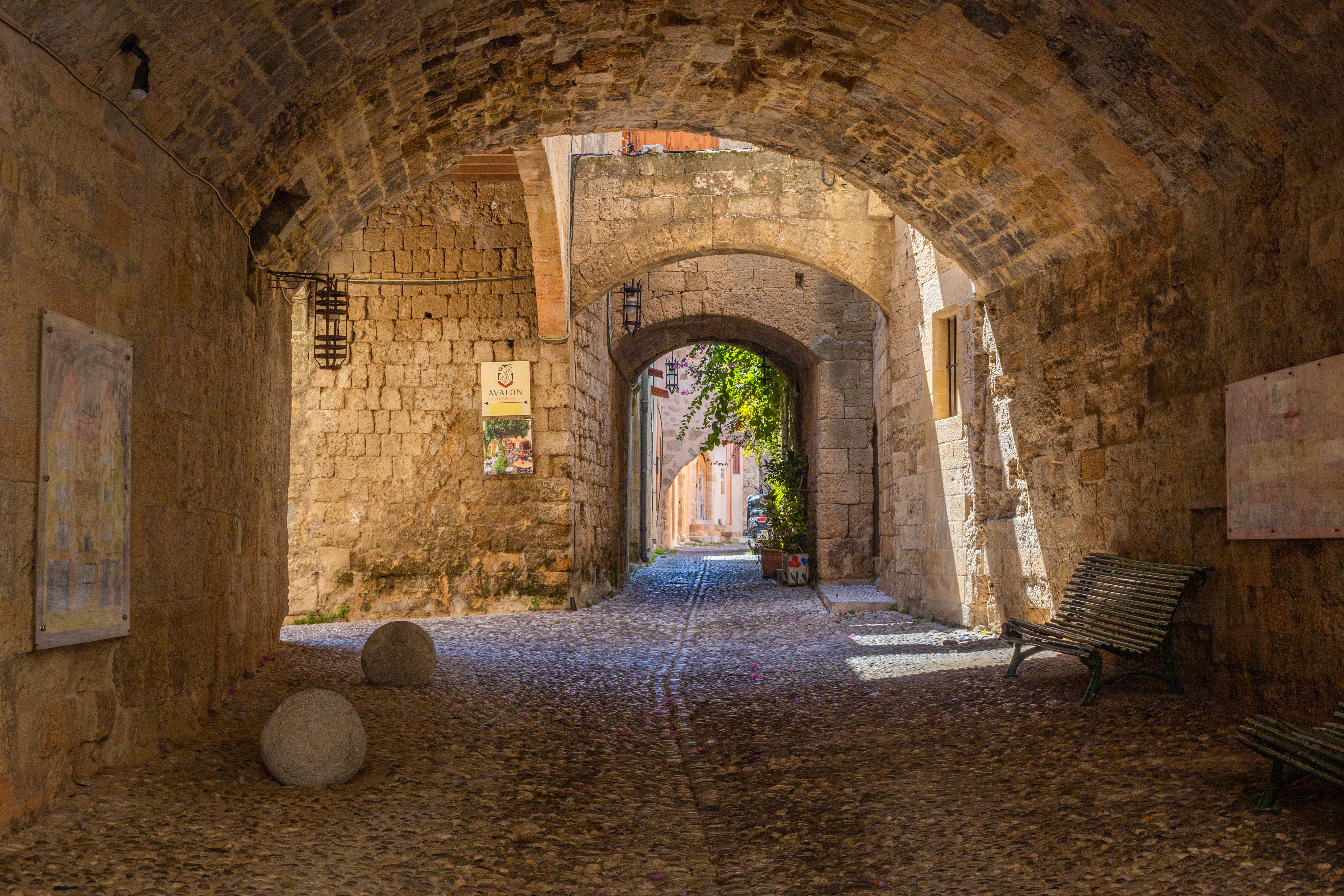
Step into the medieval heart of Rhodes, where imposing fortifications, grand palaces, and centuries of history await within one of Europe’s best-preserved walled cities and a UNESCO World Heritage Site. Enjoy a guided walk from the quayside into the historic Old Town, where narrow cobbled streets and medieval architecture reveal the legacy of the Knights of St. John. Visit the magnificent Palace of the Grand Master, originally built in the 14th century as the residence of the Knights before later serving as an Ottoman fortress and an Italian royal residence. Today, it stands as one of Rhodes’ most important historical landmarks. Continue along the famous Street of the Knights, lined with beautifully preserved inns representing the different nationalities of the Order, before concluding your guided tour with free time to browse the lively Socrates Street bazaar, where local shops offer souvenirs, handicrafts, and traditional products. Following the guided tour, participants may either return to the ship with the group or remain in Rhodes Old Town to explore independently before making their own way back to the ship.
Activity Level: Moderate, Duration: 3 hours 

Docked: 08:00–17:00  

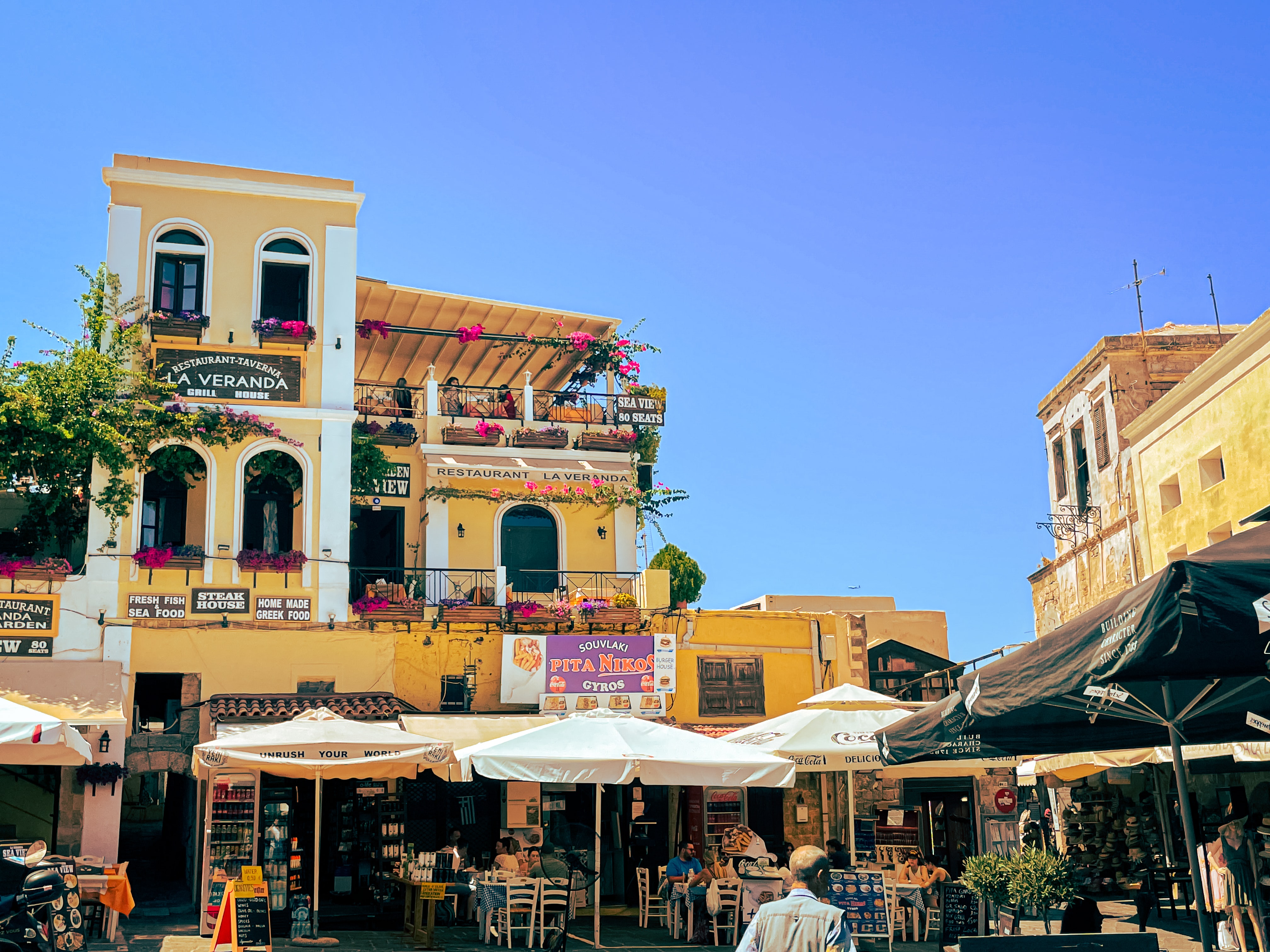
Early travelers described Rhodes as a town of two parts: a castle or high town (Collachium) and a lower city. Today Rhodes town—sometimes referred to as Ródos town—is still a city of two parts: the Old Town, a UNESCO World Heritage site that incorporates the high town and lower city, and the modern metropolis, or New Town, spreading away from the walls that encircle the Old Town. The narrow streets of the Old Town are for the most part closed to cars and are lined with Orthodox and Catholic churches, Turkish houses (some of which follow the ancient orthogonal plan), and medieval public buildings with exterior staircases and facades elegantly constructed of well-cut limestone from Lindos. Careful reconstruction in recent years has enhanced the harmonious effect.

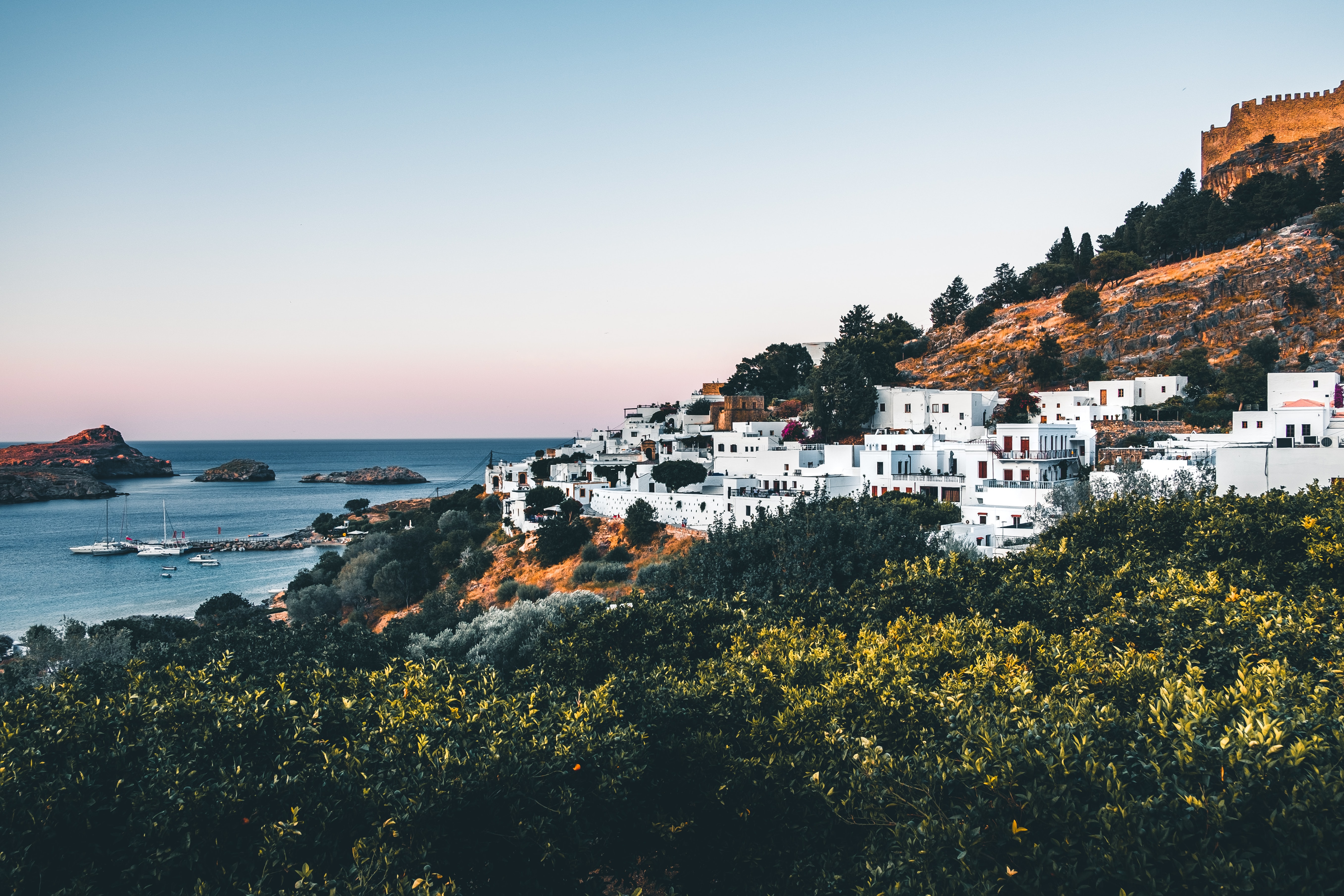
White Buildings By The Sea, Rhodes
White Buildings By The Sea, RhodesPhoto by Serhat Beyazkaya
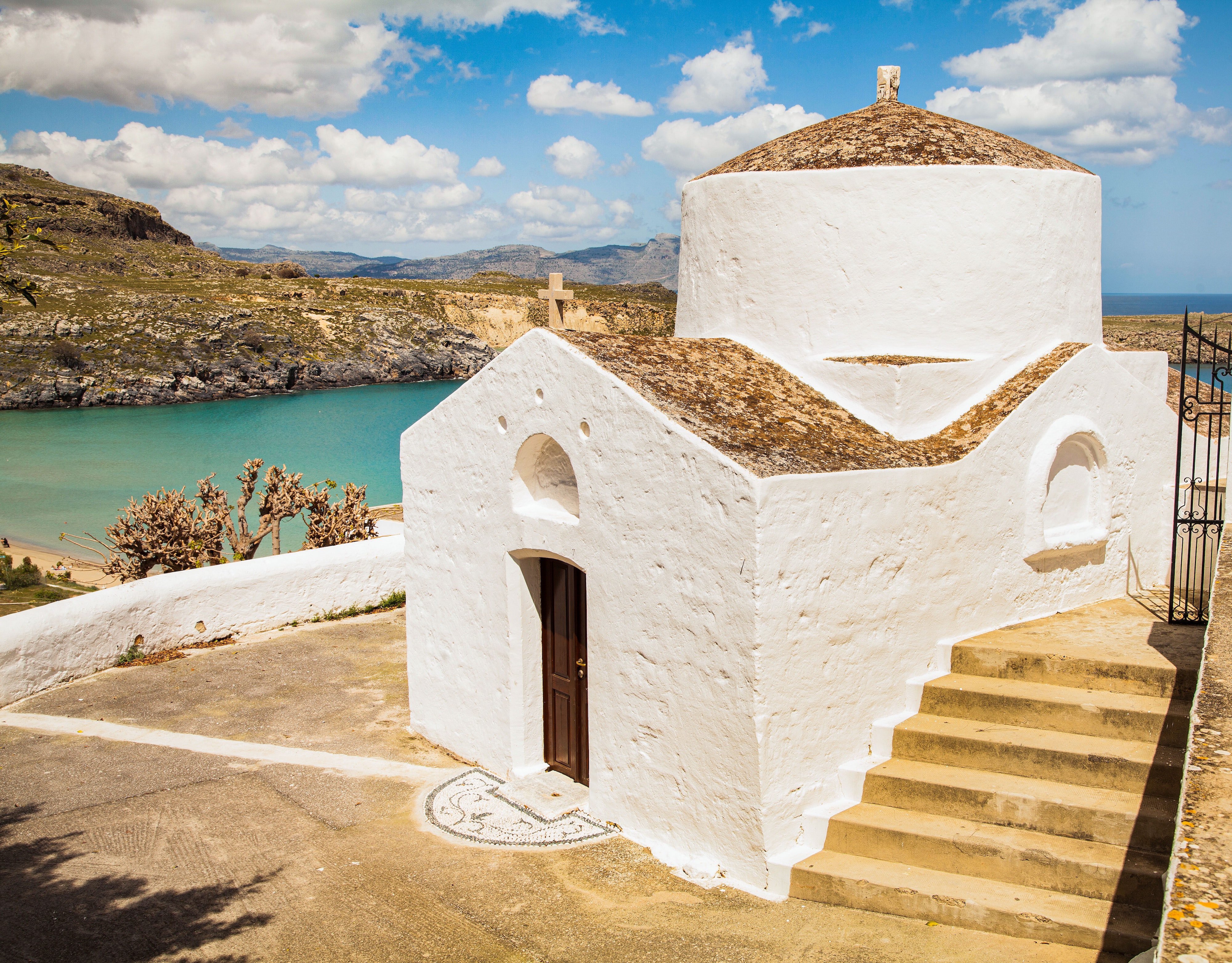
Lindos Acropolis, Rhodes
Lindos Acropolis, RhodesPhoto by LA khai-way
Cobblestone Street, Rhodes
Cobblestone Street, RhodesPhoto by Andrew Vvedenskij
Central Medieval City, Rhodes
Central Medieval City, RhodesPhoto by Sipan Hamed
Old Town, Rhodes
Old Town, RhodesPhoto by Carl Raw
Chapel Of Saint George Pahimahiotis, Rhodes
Chapel Of Saint George Pahimahiotis, RhodesPhoto by 3DVisu
Overview Of Lindos Near Rhodes
Overview Of Lindos Near RhodesPhoto by Dim Hou

Day 5 - Santorini

One of the world’s most photogenic islands, Santorini enchants with its whitewashed buildings cascading down dramatic cliffs overlooking the Aegean. Arriving by sea at Santorini offers a breathtaking first impression. Visit the main town of Fira for breathtaking caldera views or charming Oia, where blue-domed churches and cascading bougainvillea create postcard-worthy scenes in narrow lanes. Relax on distinctive volcanic-sand beaches or sample crisp local wines cultivated in mineral-rich soil. As you sail away, the sun sinks into the Aegean and Santorini’s legendary sunset paints the sky in hues of gold and crimson – a moment to cherish forever. 

DiscoverMORE
Akrotiri, Winery & Oia (extra expense)
Journey through the history, flavours, and iconic landscapes of Santorini as you discover one of the Aegean’s most captivating islands. Begin with a visit to the remarkable archaeological site of Akrotiri, often referred to as the ‘Greek Pompeii.’ Buried beneath volcanic ash following the island’s great eruption, this exceptionally preserved Bronze Age settlement reveals sophisticated multi-storey buildings, advanced drainage systems, and fascinating insights into one of the ancient Mediterranean’s most advanced civilisations. Continue to a traditional Santorini winery, where you will learn about the island’s unique volcanic viticulture and enjoy a tasting of locally produced wines while overlooking the spectacular caldera. Complete your excursion in the picturesque village of Oia, famous for its whitewashed houses, blue-domed churches, and breathtaking views across the volcanic caldera and Thirassia Island. Afterwards, continue to Fira, where you may either return with the group or remain to explore the island’s capital independently before taking the cable car back to the Old Port at your convenience.
Activity Level: Moderate, Duration: 5 hours 30 minutes 

Included Excursion
Round-trip cable-car ticket to Thira
Experience one of Santorini’s most iconic journeys with a roundtrip cable car ride between the Old Port of Gialos and Fira, offering spectacular views over the island’s dramatic caldera. After tendering from the ship, proceed to the Old Port of Gialos, where the Santorini Cable Car (Teleferico) provides a quick and scenic ascent up the steep caldera cliffs, connecting the port with Fira, the island’s lively capital. As the gondola rises, enjoy sweeping views of volcanic rock faces, whitewashed villages perched high above the cliffs, and the deep blue Aegean Sea below. Upon arrival in Fira, time is available to explore independently—stroll along the caldera rim, browse local shops, enjoy panoramic viewpoints, or relax at a café overlooking the breathtaking scenery. When ready, use the return cable car ticket to descend comfortably back to the Old Port and tender back to the ship.
Activity Level: Easy, Duration: At your leisure  

Anchored: 08:00–22:00 

Undoubtedly the most extraordinary island in the Aegean, crescent-shape Santorini remains a mandatory stop on the Cycladic tourist route—even if it's necessary to enjoy the sensational sunsets from Ia, the fascinating excavations, and the dazzling white towns with a million other travelers. Called Kállisti (the "Loveliest") when first settled, the island has now reverted to its subsequent name of Thira, after the 9th-century-BC Dorian colonizer Thiras. The place is better known, however, these days as Santorini, a name derived from its patroness, St. Irene of Thessaloniki, the Byzantine empress who restored icons to Orthodoxy and died in 802. You can fly conveniently to Santorini, but to enjoy a true Santorini rite of passage, opt instead for the boat trip here, which provides a spectacular introduction. After the boat sails between Sikinos and Ios, your deck-side perch approaches two close islands with a passage between them. The bigger one on the left is Santorini, and the smaller on the right is Thirassia. Passing between them, you see the village of Ia adorning Santorini's northernmost cliff like a white geometric beehive. You are in the caldera (volcanic crater), one of the world's truly breathtaking sights: a demilune of cliffs rising 1,100 feet, with the white clusters of the towns of Fira and Ia perched along the top. The bay, once the high center of the island, is 1,300 feet in some places, so deep that when boats dock in Santorini's shabby little port of Athinios, they do not drop anchor. The encircling cliffs are the ancient rim of a still-active volcano, and you are sailing east across its flooded caldera. On your right are the Burnt isles, the White isle, and other volcanic remnants, all lined up as if some outsize display in a geology museum. Hephaestus's subterranean fires smolder still—the volcano erupted in 198 BC, about 735, and there was an earthquake in 1956. Indeed, Santorini and its four neighboring islets are the fragmentary remains of a larger landmass that exploded about 1600 BC: the volcano's core blew sky high, and the sea rushed into the abyss to create the great bay, which measures 10 km by 7 km (6 mi by 4½ mi) and is 1,292 feet deep. The other pieces of the rim, which broke off in later eruptions, are Thirassia, where a few hundred people live, and deserted little Aspronissi ("White isle"). In the center of the bay, black and uninhabited, two cones, the Burnt Isles of Palea Kameni and Nea Kameni, appeared between 1573 and 1925. There has been too much speculation about the identification of Santorini with the mythical Atlantis, mentioned in Egyptian papyri and by Plato (who says it's in the Atlantic), but myths are hard to pin down. This is not true of old arguments about whether tidal waves from Santorini's cataclysmic explosion destroyed Minoan civilization on Crete, 113 km (70 mi) away. The latest carbon-dating evidence, which points to a few years before 1600 BC for the eruption, clearly indicates that the Minoans outlasted the eruption by a couple of hundred years, but most probably in a weakened state. In fact, the island still endures hardships: since antiquity, Santorini has depended on rain collected in cisterns for drinking and irrigating—the well water is often brackish—and the serious shortage is alleviated by the importation of water. However, the volcanic soil also yields riches: small, intense tomatoes with tough skins used for tomato paste (good restaurants here serve them); the famous Santorini fava beans, which have a light, fresh taste; barley; wheat; and white-skin eggplants.

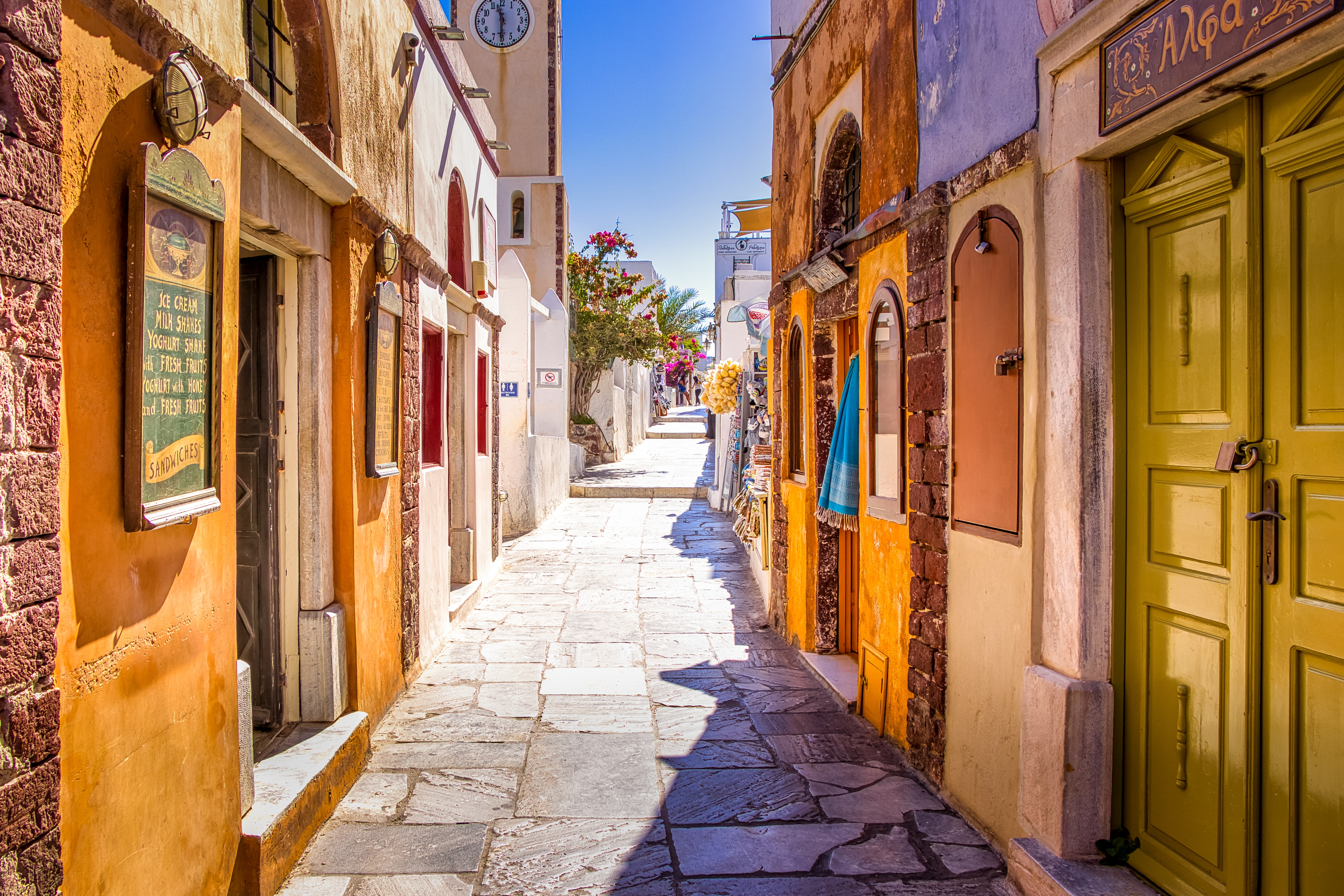
Gratn   Santorini   Street Buildings
Gratn Santorini Street Buildings
Gratn   Santorini   Cluster Of Homes
Gratn Santorini Cluster Of Homes
Gratn   Santorini   Building By The Sea
Gratn Santorini Building By The Sea
Gratn   Santorini   View Of The Sea
Gratn Santorini View Of The Sea
Gratn   Santorini   Sunset
Gratn Santorini Sunset

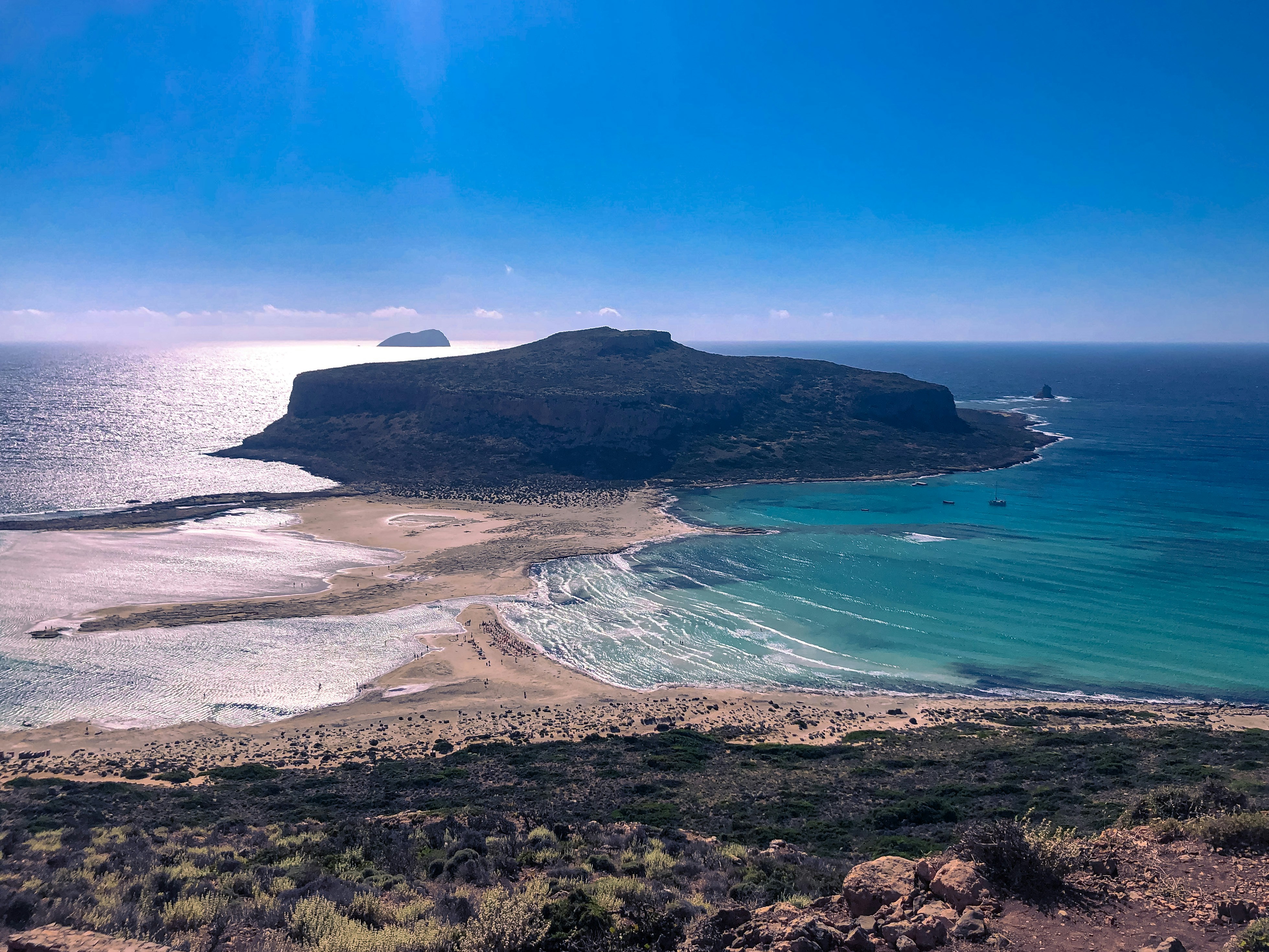
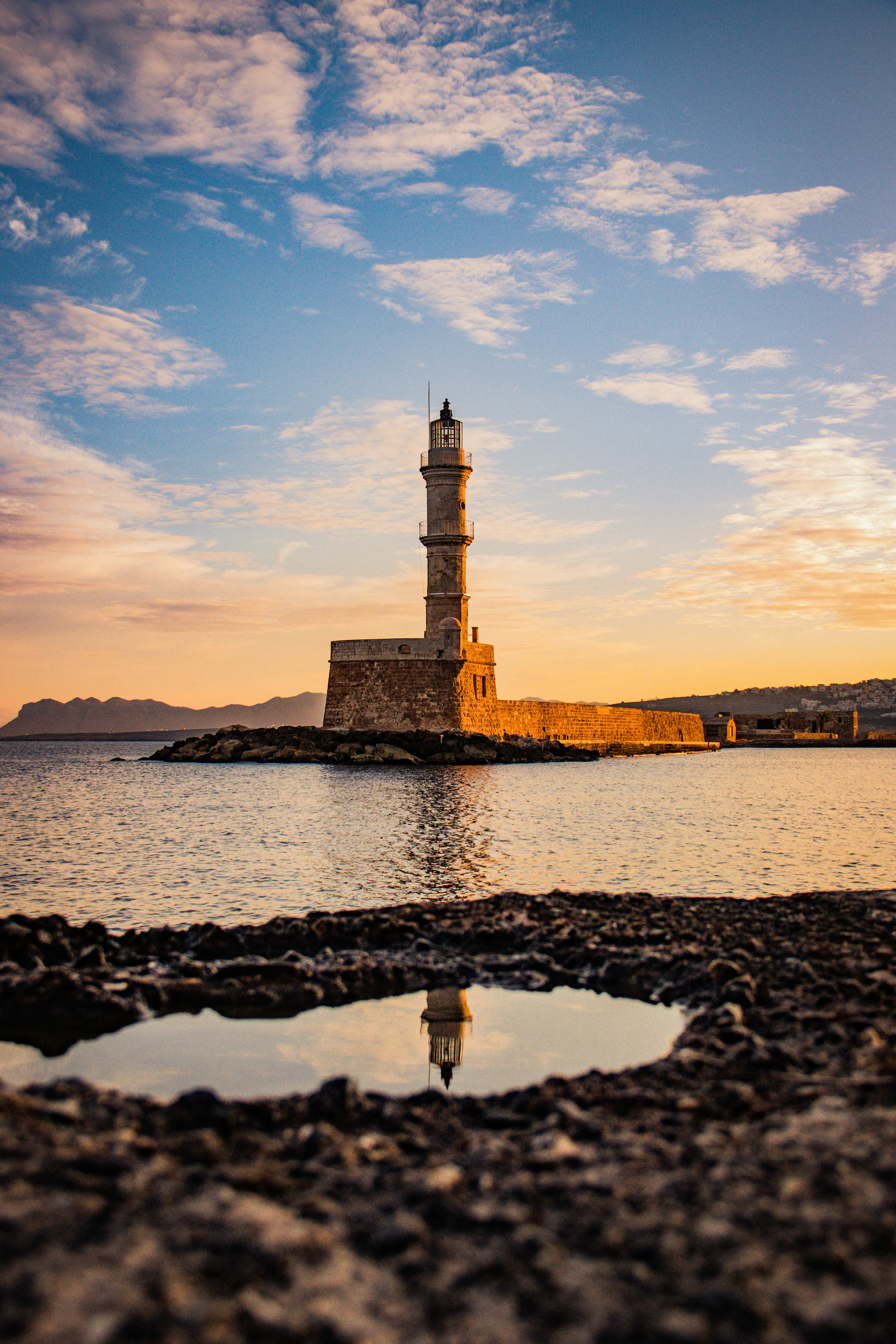
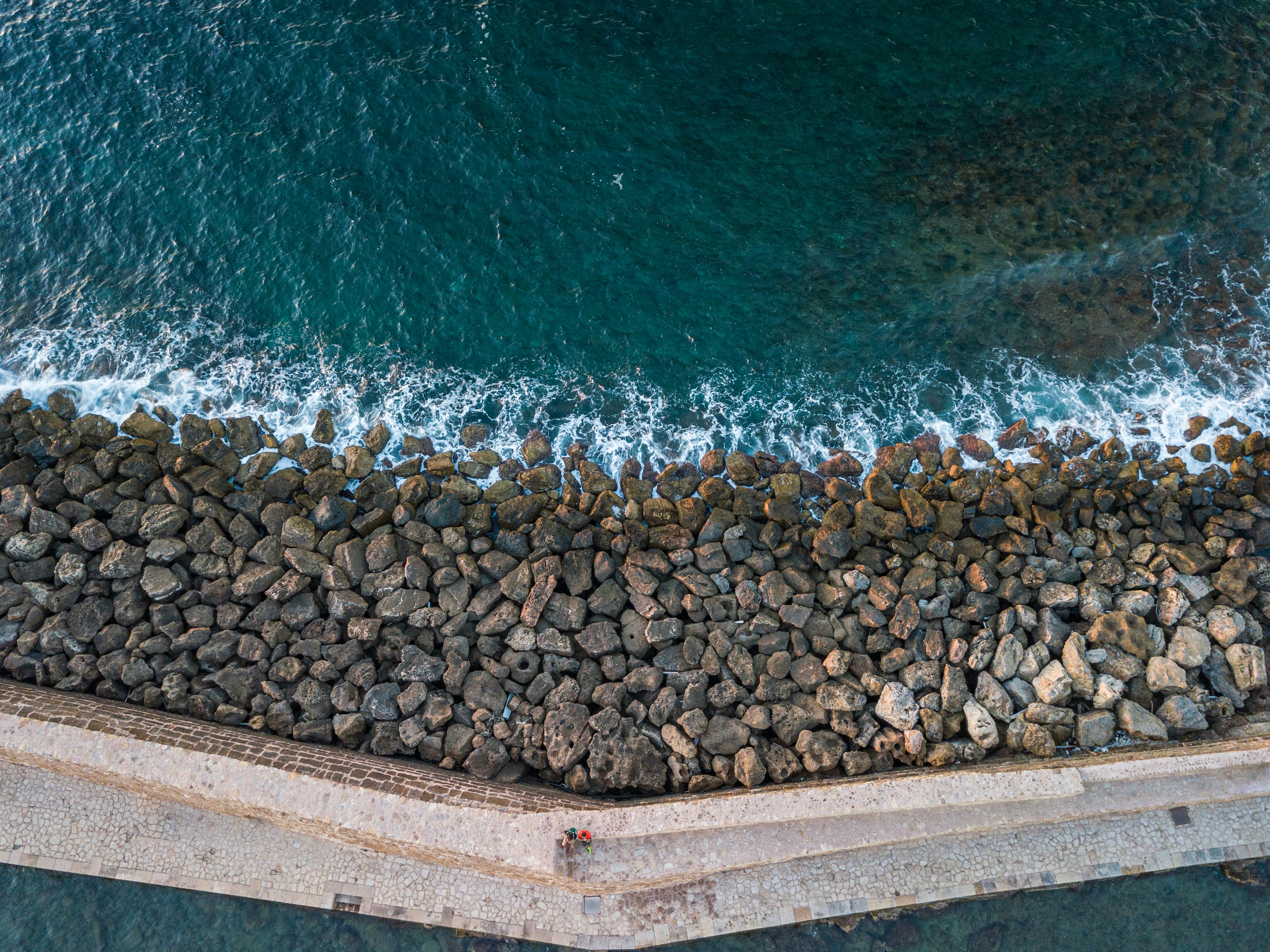
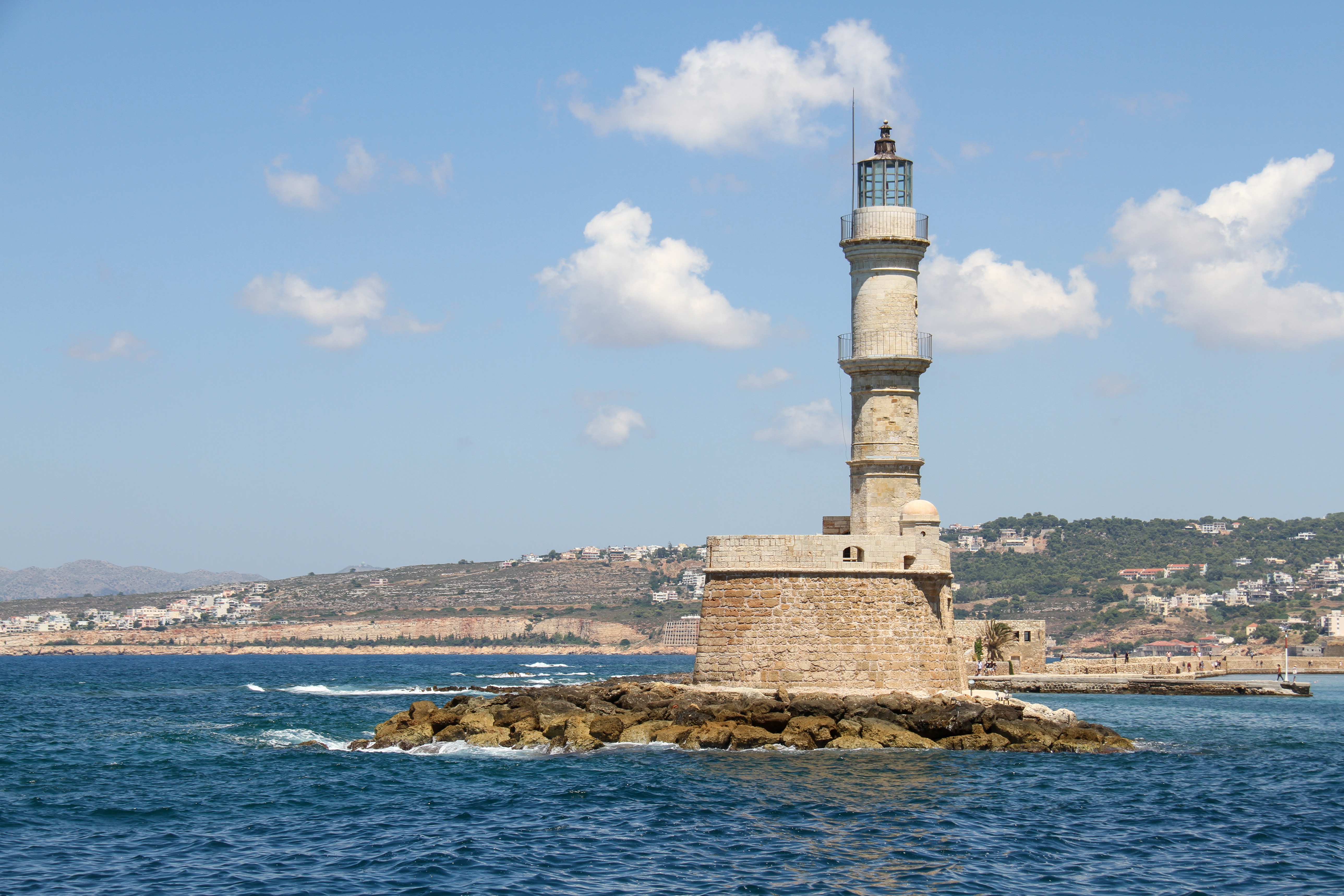
Day 6 - Khania

Welcome to Chania, a charming coastal town located on the northwest coast of the Greek island of Crete. Chania is known for its picturesque Venetian harbour, narrow winding streets and vibrant atmosphere. The town boasts a rich history that is evident in itseclectic blend of architectural styles, with Venetian, Ottoman and Greek influences. Here, spend your day relaxing on one of the beautiful beaches, exploring historical sites, or hiking through lush landscapes.  

DiscoverMORE
Walking Tour of Chania with Cretan Olive Oil Tasting (extra expense)
Immerse yourself in the flavours and history of Crete as you combine an authentic olive oil experience with a visit to the charming town of Chania. Begin with a visit to a traditional olive estate, where you will learn about the cultivation, harvesting, and production of premium extra virgin olive oil. Discover both an innovative stone mill with hydraulic press and a modern cold-extraction system before enjoying a guided tasting of four distinctive olive oils, exploring the unique characteristics of different olive varieties and naturally infused oils. Continue to the picturesque Old Town of Chania, where Venetian, Ottoman, and Greek influences blend around the historic Venetian Harbour and its iconic 15th-century lighthouse. Enjoy a guided walk through the atmospheric streets before free time to browse the lively Municipal Market area, known for its herbs, local honey, olive products, and traditional Cretan delicacies.
Activity Level: Active, Duration: 3 hours 45 minutes 

EmeraldPLUS
Local folklore performance on board
Experience the vibrant spirit of Crete through an authentic onboard folklore performance celebrating the island’s rich musical and dance traditions. Enjoy an hour of captivating entertainment featuring four talented dancers performing a lively repertoire of traditional Greek dances.Accompanied by live traditional music, the performance showcases the rhythm, colour, and diversity of regional folklore, offering a memorable cultural experience inspired by the heritage of Crete.
Event duration: 1 hour

Anchored: 08:00–19:00

The second-largest city in Crete and capital of the Homonym Prefecture, Chania is located in Minoan Kidonia at the end of the Homonym Gulf between the Akrotiri and Onicha peninsulas. Chania City is divided into two parts; the Old Town, which is comprised of several connected districts built around the old Venetian Harbour, and New Town, a larger, more modern city whose centre is situated next to, and south of, the Old Town. The Old Town is home to Venetian buildings and Turkish elements that combine to create a unique architectural style, and is considered to be the most beautiful urban district on Crete. It was once surrounded by old Venetian fortifications that separated it from the New Town; however, only the eastern and western parts remain today. Due to its compact size, Skiathos can be easily explored in just a single day.

Chania, Greece
Chania, GreecePhoto by Bayo Adegunloye on Unsplash
Tower, Chania, Greece
Tower, Chania, GreecePhoto by Florian Wehde on Unsplash
Old Town, Chania, Greece
Old Town, Chania, GreecePhoto by manos koutras on Unsplash
Khania, Greece
Khania, GreeceImage by Pat from Pixabay

Day 7 - Hydra

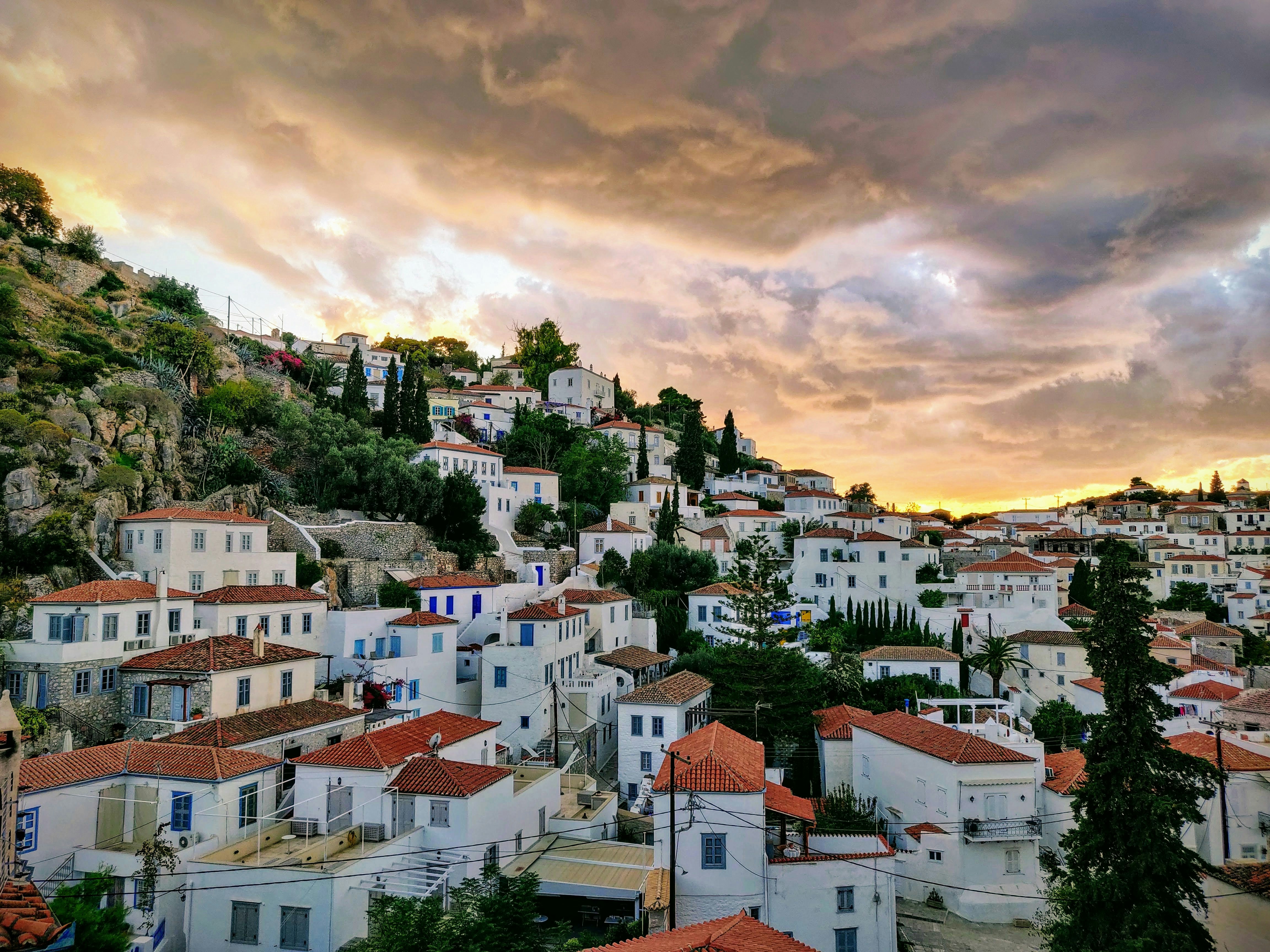
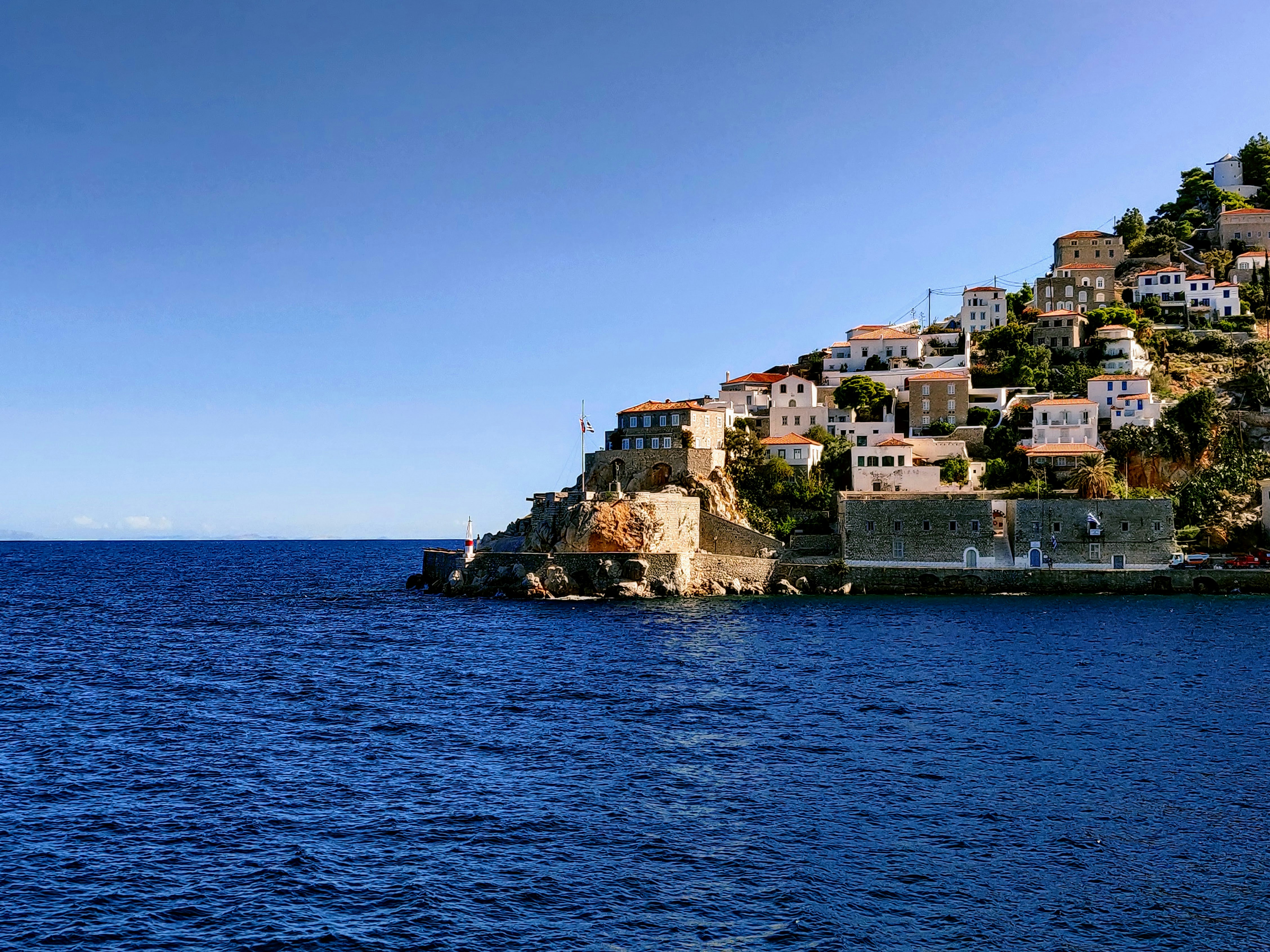
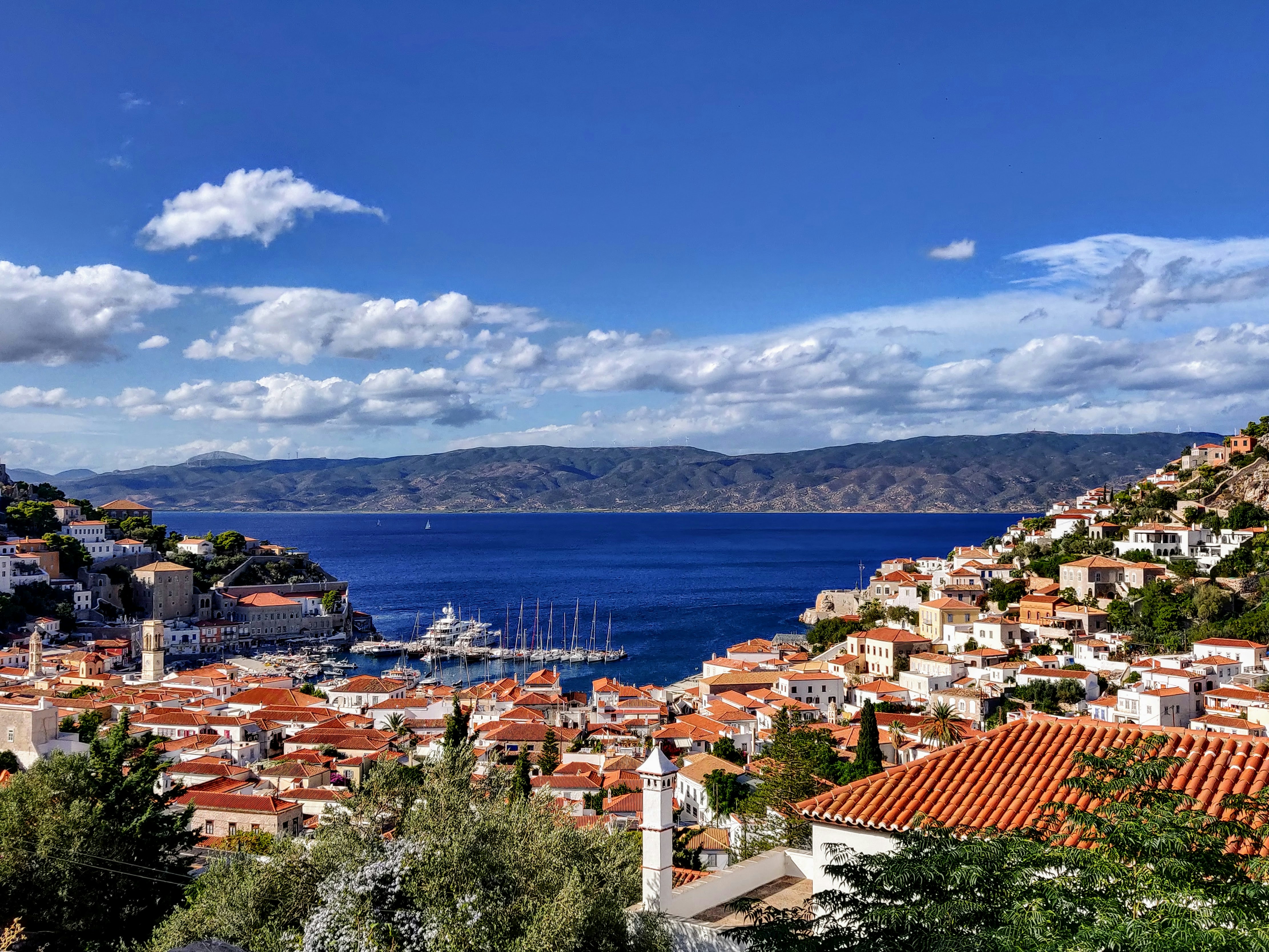
Life slows down on Hydra. Renowned for its stunning natural beauty and historic charm, there are no cars or motor vehicles allowed on the island, making it a peaceful and low-key getaway from the usual hustle and bustle of urban life. It’s ideal for walking, hiking or getting around by donkey, admiring the stone mansions, pebbly beaches and clear turquoise waters. The island’s main centre, also named Hydra, presents a charming and bustling port town, brimming with narrow cobblestone streets and traditional, whitewashed buildings adorned with bougainvillea-covered balconies.  

DiscoverMORE
A stroll through Hydra (extra expense)
Step into the heroic maritime history of Hydra, once a powerful naval force in the Aegean. In the late 18th century, the island’s fleet of brigs, corvettes, and brigantines connected Mediterranean ports and later played a decisive role in Greece’s War of Independence. These wooden ships and their fearless crews became known as ‘the wooden walls of Greek Independence.Stroll through Hydra’s picturesque harbour and narrow stone alleys, absorbing the atmosphere of a town shaped by seafaring tradition. Visit the Hydra Museum, where artefacts and exhibits vividly recount the island’s naval legacy. Continue to the elegant Church of the Virgin Mary, distinguished by its Venetian-style bell tower and graceful dome overlooking the port. The experience concludes with a relaxed stop at a traditional taverna, where you enjoy authentic Greek meze accompanied by a glass of ouzo, embracing the island’s warm hospitality and enduring spirit.
Activity Level: Moderate, Duration: 2 hours 30 minutes 

Anchored: 09:00–22:00 

Rising from the turquoise expanse of the sunny Mediterranean, Hydra is the counterpoint of choice for Athenians - who can swap the city chaos for blissful relaxation with an hour’s boat journey. Known for its inspiring celebrity appeal - Leonard Cohen bought a house here in the 60s - Hydra is a pretty island of rising streets, whitewash mansions, and carefree clamour. Located a stone's throw from the Greek mainland, the authorities have resisted the temptation to cash in, meaning Hydra remains an endearing time-warp, which revels in life in the slow lane. With cars and new building developments banned – discover an island of donkeys plodding cobbled streets, and fishing boats undulating gently on the harbour’s waves. 

Hydra, Greece
Hydra, GreecePhoto by Mauricio Muñoz on Unsplash
Hydra, Greece
Hydra, GreecePhoto by Mauricio Muñoz on Unsplash
Hydra, Greece
Hydra, GreecePhoto by Mauricio Muñoz on Unsplash
Hydra, Greece
Hydra, GreecePhoto by Mauricio Muñoz on Unsplash

Day 8 - Piraeus

Your luxurious yacht cruise concludes as you return to the ancient city of Athens. After bidding farewell to your crew and fellow guestsfrom the yacht, you’ll be transferred to the airport for your return flight home, or to continue your holiday. 

DiscoverMORE
Athens City tour with Acropolis (extra expense, must be booked on board)
Experience the timeless wonders of Athens, where ancient history and authentic Greek flavours come together in an unforgettable journey through the city’s most iconic landmarks. Begin with a guided visit to the magnificent Acropolis, ascending the sacred hill to admire the Parthenon, Erechtheion, Temple of Athena Nike, and Propylaea, while enjoying panoramic views over Athens and nearby landmarks including the Odeon of Herodes Atticus. Continue into the charming neighbourhood of Plaka, where narrow streets, neoclassical houses, and family-run shops create the perfect setting to experience traditional Athenian life. Stroll through the lively market streets while sampling a variety of authentic Greek specialities, including local cheeses, olives, savoury pies, pastries, olive oil, wine, and regional spirits, as your guide shares the story behind Greece’s celebrated culinary traditions.
Activity Level: Active, Duration: 5 hours

Notes: This excursion is available for guests continuing on the next cruise and for disembarking guests with flights departing after 5:00 pm. After the visit to Plaka, disembarking guests will transfer directly to the airport, while in-transit guests will return to the ship by separate vehicle.

Please book your flight to depart out of Athens after 01:00 PM.

Docked: 06:00

The itinerary is a guide only and may be amended for operational reasons. As such Emerald Cruises cannot guarantee the cruise will operated unaltered from the itinerary states above.

It's no wonder that all roads lead to the fascinating and maddening metropolis of Athens. Lift your eyes 200 feet above the city to the Parthenon, its honey-color marble columns rising from a massive limestone base, and you behold architectural perfection that has not been surpassed in 2,500 years. But, today, this shrine of classical form dominates a 21st-century boomtown. To experience Athens—Athína in Greek—fully is to understand the essence of Greece: ancient monuments surviving in a sea of cement, startling beauty amid the squalor, tradition juxtaposed with modernity. Locals depend on humor and flexibility to deal with the chaos; you should do the same. The rewards are immense. Although Athens covers a huge area, the major landmarks of the ancient Greek, Roman, and Byzantine periods are close to the modern city center. You can easily walk from the Acropolis to many other key sites, taking time to browse in shops and relax in cafés and tavernas along the way. From many quarters of the city you can glimpse "the glory that was Greece" in the form of the Acropolis looming above the horizon, but only by actually climbing that rocky precipice can you feel the impact of the ancient settlement. The Acropolis and Filopappou, two craggy hills sitting side by side; the ancient Agora (marketplace); and Kerameikos, the first cemetery, form the core of ancient and Roman Athens. Along the Unification of Archaeological Sites promenade, you can follow stone-paved, tree-lined walkways from site to site, undisturbed by traffic. Cars have also been banned or reduced in other streets in the historical center. In the National Archaeological Museum, vast numbers of artifacts illustrate the many millennia of Greek civilization; smaller museums such as the Goulandris Museum of Cycladic Art Museum and the Byzantine and Christian Museum illuminate the history of particular regions or periods. Athens may seem like one huge city, but it is really a conglomeration of neighborhoods with distinctive characters. The Eastern influences that prevailed during the 400-year rule of the Ottoman Empire are still evident in Monastiraki, the bazaar area near the foot of the Acropolis. On the northern slope of the Acropolis, stroll through Plaka (if possible by moonlight), an area of tranquil streets lined with renovated mansions, to get the flavor of the 19th-century's gracious lifestyle. The narrow lanes of Anafiotika, a section of Plaka, thread past tiny churches and small, color-washed houses with wooden upper stories, recalling a Cycladic island village. In this maze of winding streets, vestiges of the older city are everywhere: crumbling stairways lined with festive tavernas; dank cellars filled with wine vats; occasionally a court or diminutive garden, enclosed within high walls and filled with magnolia trees and the flaming trumpet-shaped flowers of hibiscus bushes. Formerly run-down old quarters, such as Thission, Gazi and Psirri, popular nightlife areas filled with bars and mezedopoleia (similar to tapas bars), are now in the process of gentrification, although they still retain much of their original charm, as does the colorful produce and meat market on Athinas. The area around Syntagma Square, the tourist hub, and Omonia Square, the commercial heart of the city about 1 km (½ mi) northwest, is distinctly European, having been designed by the court architects of King Otho, a Bavarian, in the 19th century. The chic shops and bistros of ritzy Kolonaki nestle at the foot of Mt. Lycabettus, Athens's highest hill (909 feet). Each of Athens's outlying suburbs has a distinctive character: in the north is wealthy, tree-lined Kifissia, once a summer resort for aristocratic Athenians, and in the south and southeast lie Glyfada, Voula, and Vouliagmeni, with their sandy beaches, seaside bars, and lively summer nightlife. Just beyond the city's southern fringes is Piraeus, a bustling port city of waterside fish tavernas and Saronic Gulf views.

Grath   Athens   Acropolis
Grath Athens Acropolis
Grath   Athens   Athens Sea
Grath Athens Athens Sea
Grath   Athens   City Overview
Grath Athens City Overview
Grath   Athens   Greek Ruins
Grath Athens Greek Ruins
Grath   Athens   Parthenon
Grath Athens Parthenon
Grath   Athens   Ruins And Architecture
Grath Athens Ruins And Architecture
Grath   Athens   Temple Of Hephaestus
Grath Athens Temple Of Hephaestus

Suites & Deck Plans

Suite

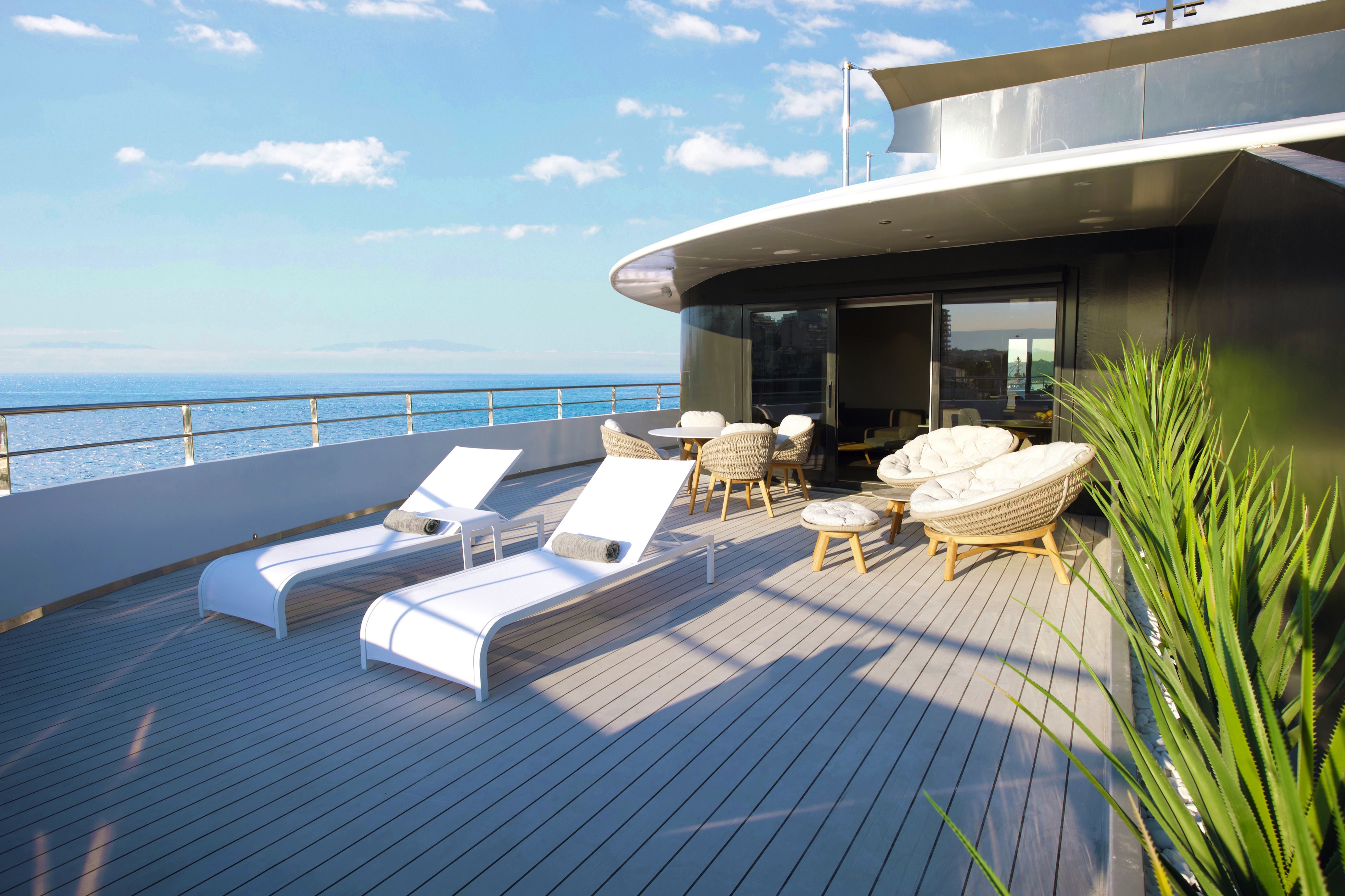
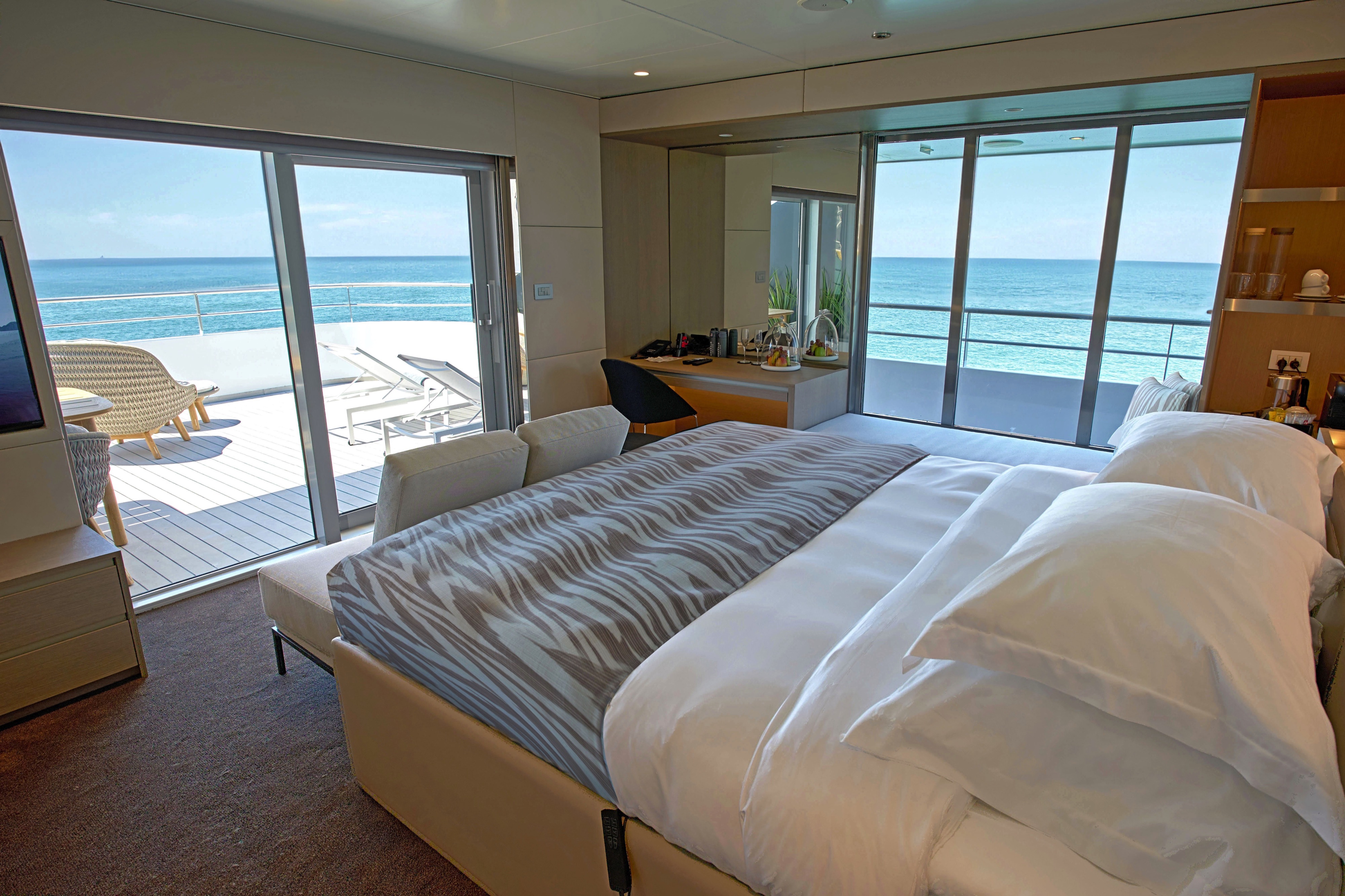
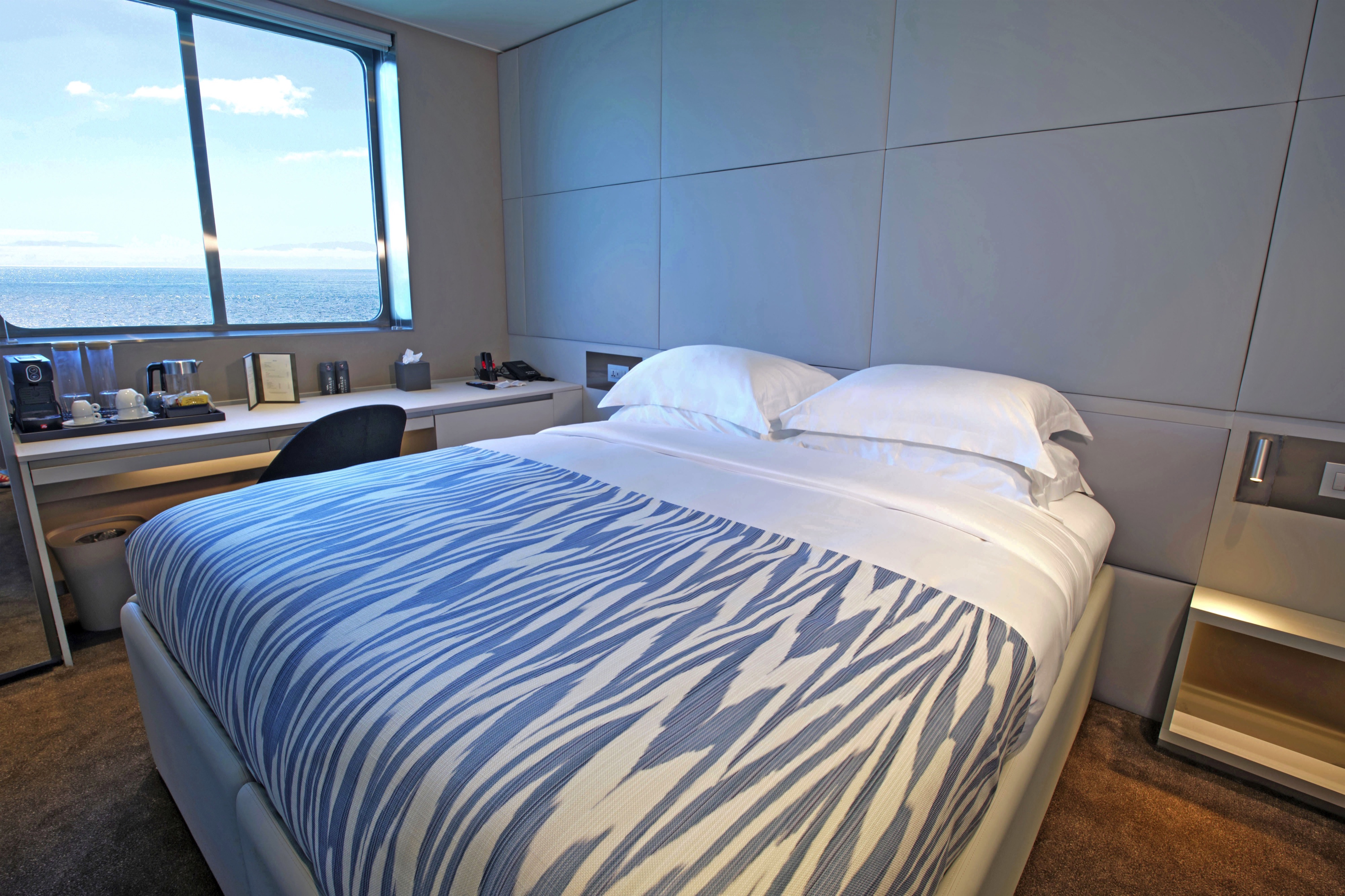
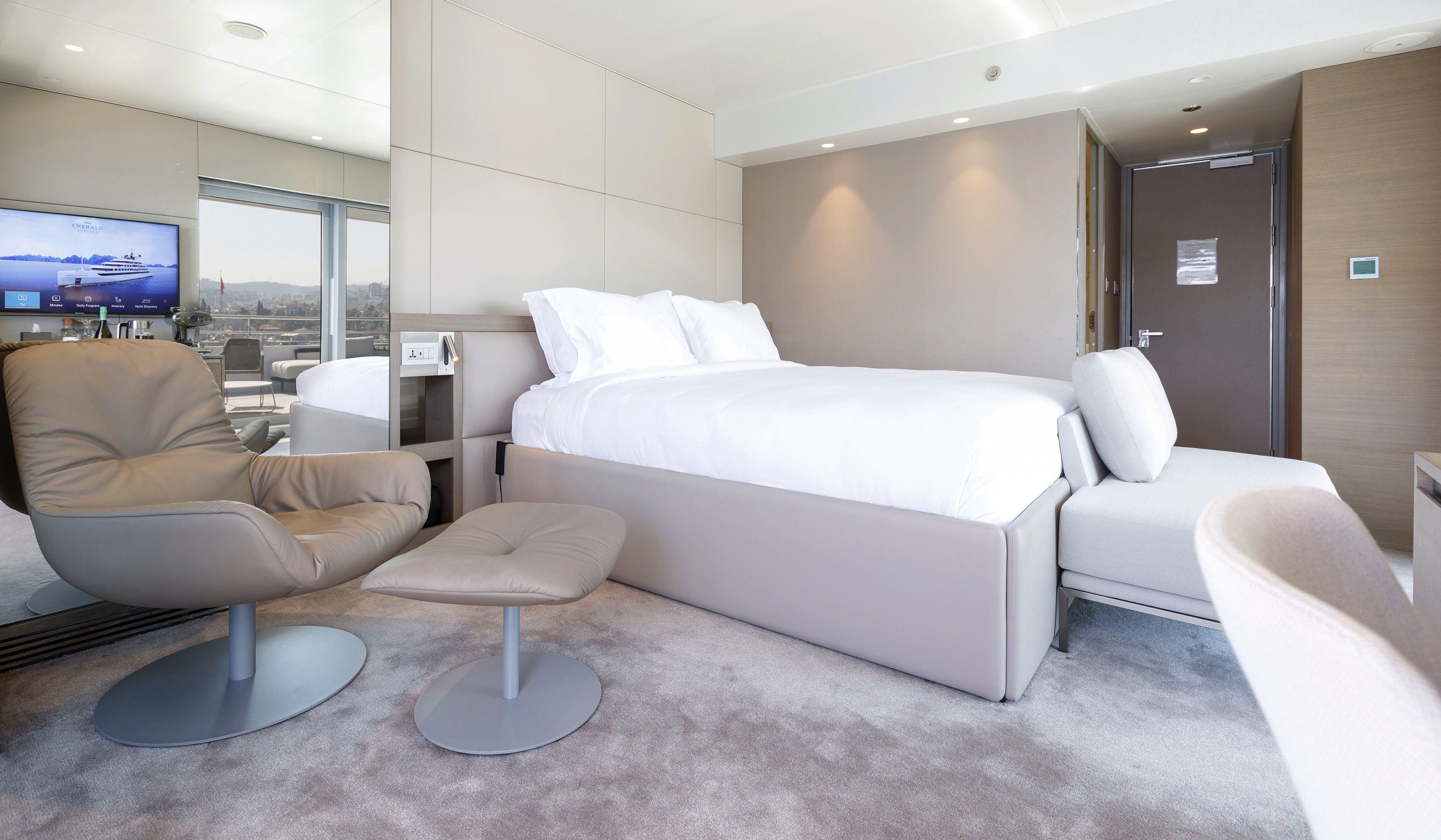
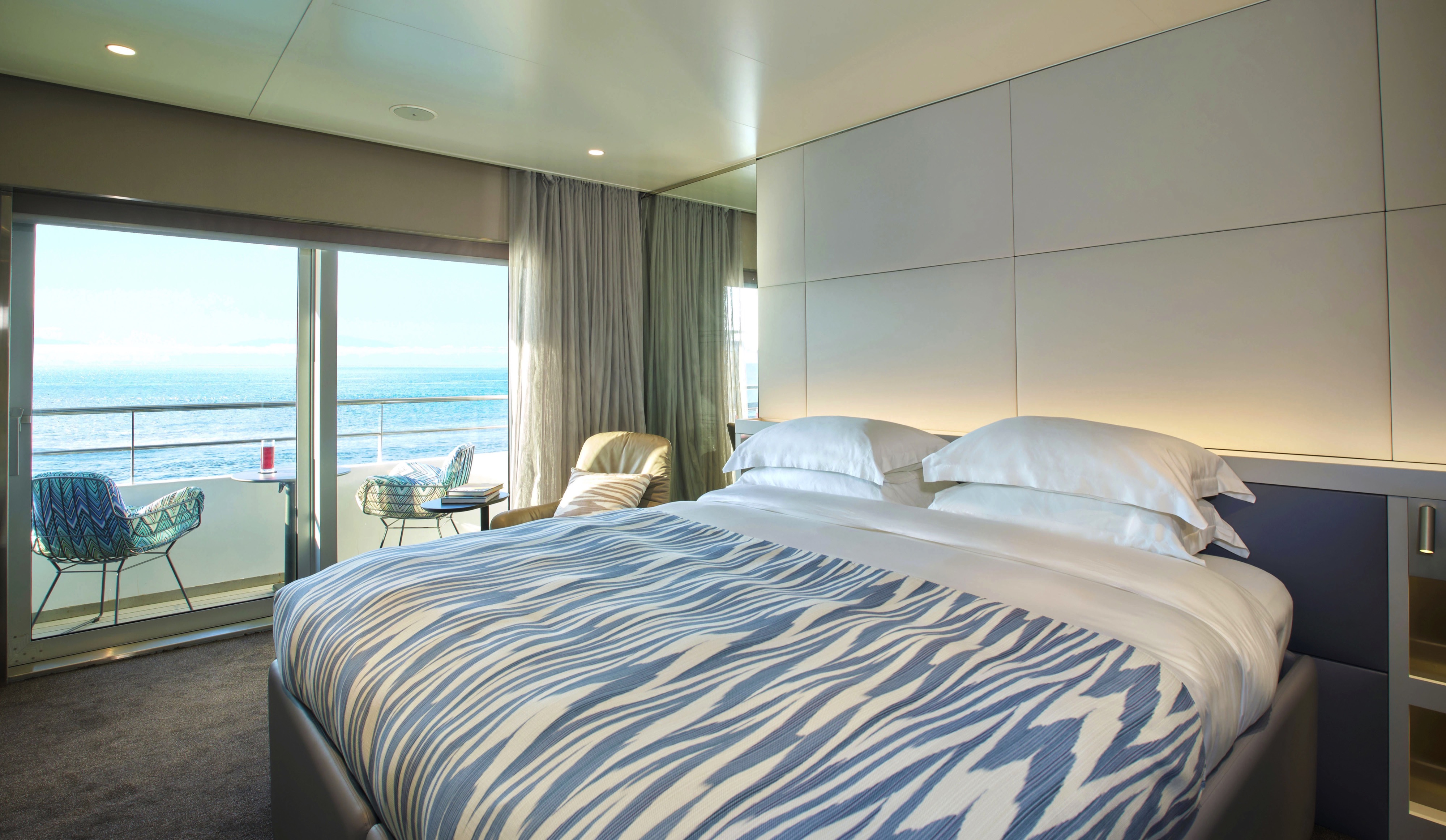
These suites are the largest on board, located on the Pool Deck. Boasting a walk-in wardrobe and separate lounge and bedroom areas, you'll benefit from pure privacy. Your large private terrace enables you to relax alfresco, admiring stunning views.
All suites & staterooms include:

  • King-size or twin hotel-style beds with the finest Egyptian cotton linen
  • En suite bathroom with luxurious ESPA toiletries
  • Complimentary bathrobes and slippers
  • Flat-screen HDTV and infotainment system
  • Complimentary mini-bar and water, restocked daily
  • Complimentary Wi-Fi
  • Individual climate control
  • Personal safe
  • Umbrella
  • Telephone
  • Room service available for breakfast

1162-1192 sq ft
Accommodates 2 guests
Owner's Suite

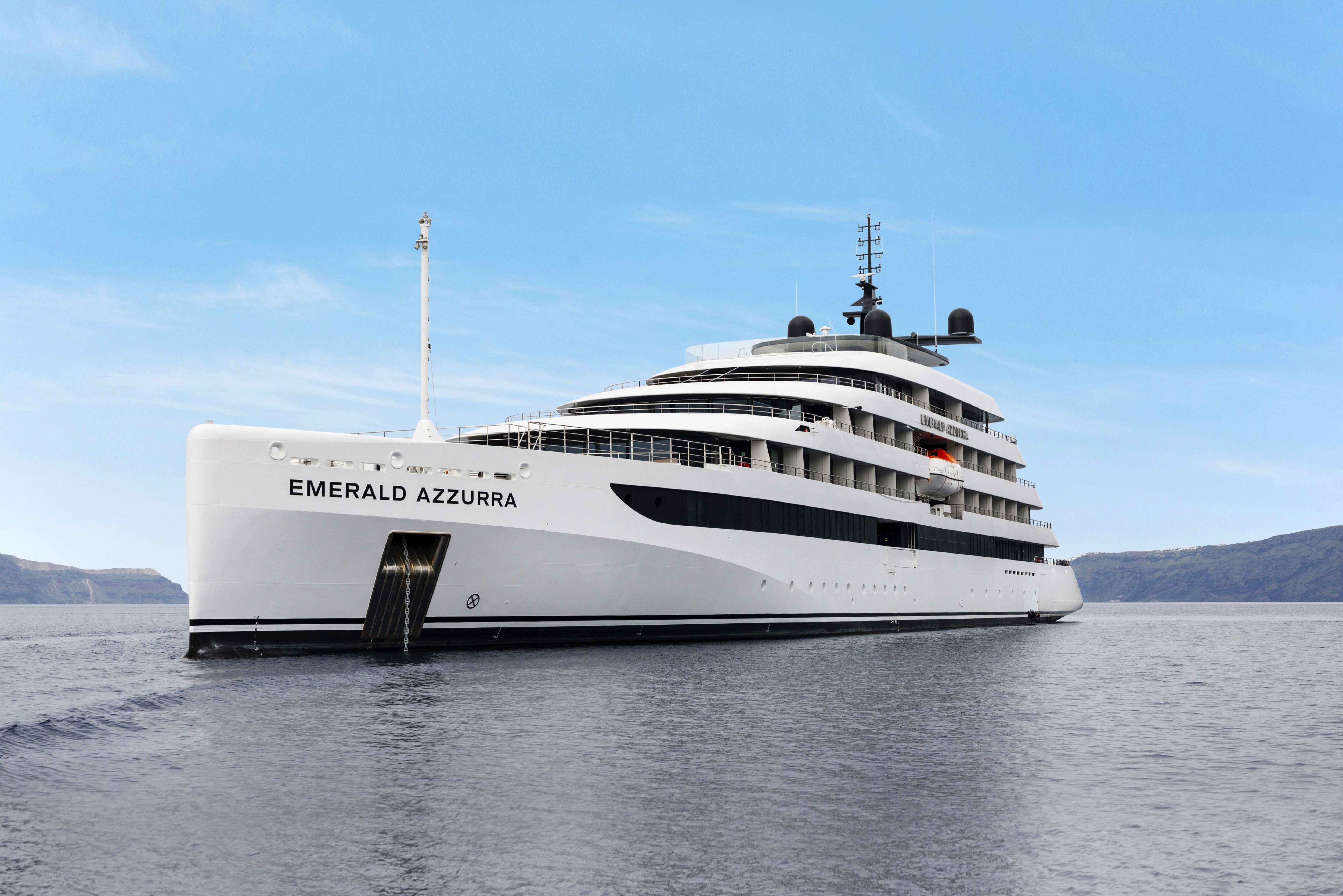
Emerald Azzurra

Emerald Azzurra

Client testimonials

I have worked with Lore Doick for more than 20 years, and she has booked over 30 cruises for me. Her expertise, care, and attention to every travel detail have made her an invaluable advisor and friend over the years.”

Tina B.

We are now in our second generation working with Cheri Ozimac at Tully Luxury Travel. From Antarctica to Greece, she has handled every detail with expertise, responsiveness, and care…

Earl M.

My wife and I have worked with Tully since 2007, and Kit Neil and her team went far beyond expectations while helping us navigate multiple cruise and flight cancellations. Their advocacy, care, and support during a difficult time were extraordinary.
Carri F.

Cheri Ozimac organized our Seabourn cruise flawlessly, from the hotel recommendation to every travel arrangement. She was responsive, attentive, and an excellent advocate throughout the process…

Cyn S.

We discovered Tully Luxury Travel after years of booking cruises through US agents and were impressed by their competitive pricing, exceptional service, and Canadian based support. Their team is always available, offers excellent value, and makes booking the right cruise seamless.

Peter C.

GoogleAverage Customer Rating:

The Tully Difference

Why travel with us


Tully Luxury Travel was built on access, discretion, and trust. For our clients, that means ease at every step, with distinctions that turn exceptional voyages into defining moments.

Recognized expertise

A renowned agency worldwide in luxury land and small-ship cruising, consistently trusted by the industry’s most prestigious brands.