American Cruise Lines logo

Alaskan Explorer (Juneau to Ketchikan)

Itinerary: Juneau, Alaska, Haines, Alaska, Glacier Bay National Park, Alaska, Cruising Inside Passage, U.S.A, Sitka, Alaska, Frederick Sound, Alaska, Endicott Arm, Alaska, Dawes Glacier, Petersburg, Alaska, Wran... See full itinerary

13 Jul 29
10 nights

Voyage Details

Duration:
10 nights
Departure:
13 Jul 2029
Embarkation:
Juneau, Alaska, United States
Voyage code:
P404

Your Itinerary, Day-By-Day

Special Chapters of Your Journey

Day 1 - Juneau, Alaska

Juneau, Alaska's capital and third-largest city, is on the North American mainland but can't be reached by road. Bounded by steep mountains and water, the city’s geographic isolation and compact size make it much more akin to an island community such as Sitka than to other Alaskan urban centers, such as Fairbanks or Anchorage. Juneau is full of contrasts. Its dramatic hillside location and historic downtown buildings provide a frontier feeling, but the city's cosmopolitan nature comes through in fine museums, noteworthy restaurants, and a literate and outdoorsy populace. The finest of the museums, the Alaska State Museum, is scheduled to reopen in May 2016 on its old site as the expanded Alaska State Library, Archives, and Museum (SLAM) following several years of planning and exhibit research. Another new facility, the Walter Soboleff Center, offers visitors a chance to learn about the indigenous cultures of Southeast Alaska–-Tlingit, Haida, and Tsimshian. Other highlights include the Mt. Roberts Tramway, plenty of densely forested wilderness areas, quiet bays for sea kayaking, and even a famous drive-up glacier, Mendenhall Glacier. For goings-on, pick up the Juneau Empire (www.juneauempire.com), which keeps tabs on state politics, business, sports, and local news.

Juneau  Alaska , Mendenhall Glacier
Juneau Alaska , Mendenhall Glacier
Juneau  Alaska , Mountains
Juneau Alaska , Mountains
Juneau  Alaska , Flowers
Juneau Alaska , Flowers
Juneau  Alaska , Harbor
Juneau Alaska , Harbor
Juneau, Alaska
Juneau, Alaska
Juneau From The Sea
Juneau From The Sea
Juneau, Alaska
Juneau, Alaska

Day 2 - Juneau, Alaska

Juneau, Alaska's capital and third-largest city, is on the North American mainland but can't be reached by road. Bounded by steep mountains and water, the city’s geographic isolation and compact size make it much more akin to an island community such as Sitka than to other Alaskan urban centers, such as Fairbanks or Anchorage. Juneau is full of contrasts. Its dramatic hillside location and historic downtown buildings provide a frontier feeling, but the city's cosmopolitan nature comes through in fine museums, noteworthy restaurants, and a literate and outdoorsy populace. The finest of the museums, the Alaska State Museum, is scheduled to reopen in May 2016 on its old site as the expanded Alaska State Library, Archives, and Museum (SLAM) following several years of planning and exhibit research. Another new facility, the Walter Soboleff Center, offers visitors a chance to learn about the indigenous cultures of Southeast Alaska–-Tlingit, Haida, and Tsimshian. Other highlights include the Mt. Roberts Tramway, plenty of densely forested wilderness areas, quiet bays for sea kayaking, and even a famous drive-up glacier, Mendenhall Glacier. For goings-on, pick up the Juneau Empire (www.juneauempire.com), which keeps tabs on state politics, business, sports, and local news.

Juneau  Alaska , Mendenhall Glacier
Juneau Alaska , Mendenhall Glacier
Juneau  Alaska , Mountains
Juneau Alaska , Mountains
Juneau  Alaska , Flowers
Juneau Alaska , Flowers
Juneau  Alaska , Harbor
Juneau Alaska , Harbor
Juneau, Alaska
Juneau, Alaska
Juneau From The Sea
Juneau From The Sea
Juneau, Alaska
Juneau, Alaska

Day 3 - Haines, Alaska

Unlike most cities of Southeast Alaska, Haines can be reached by road. With a population of 2,200, Haines lies in the upper northern reaches of the Inside Passage and is an important access point to the Yukon Territory and Interior Alaska. While cruising into Haines, see the Lynn Canal, the longest and deepest fjord in North America. Once in town, mountains seem to surround you on all sides while the jagged cathedral peaks of the Chilkat Mountains loom over Fort Seward. Haines has two distinct personalities. On the north side of the Haines Highway is the section of Haines that developed around the Presbyterian mission. After its missionary beginnings, it served as the trailhead for the Jack Dalton Trail into the Yukon during the 1897 gold rush to the Klondike. South of the highway, the town resembles a military post, which is exactly what it was for nearly half a century. In 1903 the U.S. Army established Fort William Henry Seward at Portage Cove just south of town. The post (renamed Chilkoot Barracks in 1922) was the only military base in the territory until World War II. In 1939, the army built the Alaska Highway and the Haines Highway to connect Alaska with the other states. Today, the community of Haines is recognized for the Native American dance and culture center at Fort Seward as well as for its superb fishing, camping and outdoor recreation.

Haines, Alaska, Usa
Haines, Alaska, UsaPhoto by Stephen Meyers on Unsplash

Day 4 - Glacier Bay National Park, Alaska

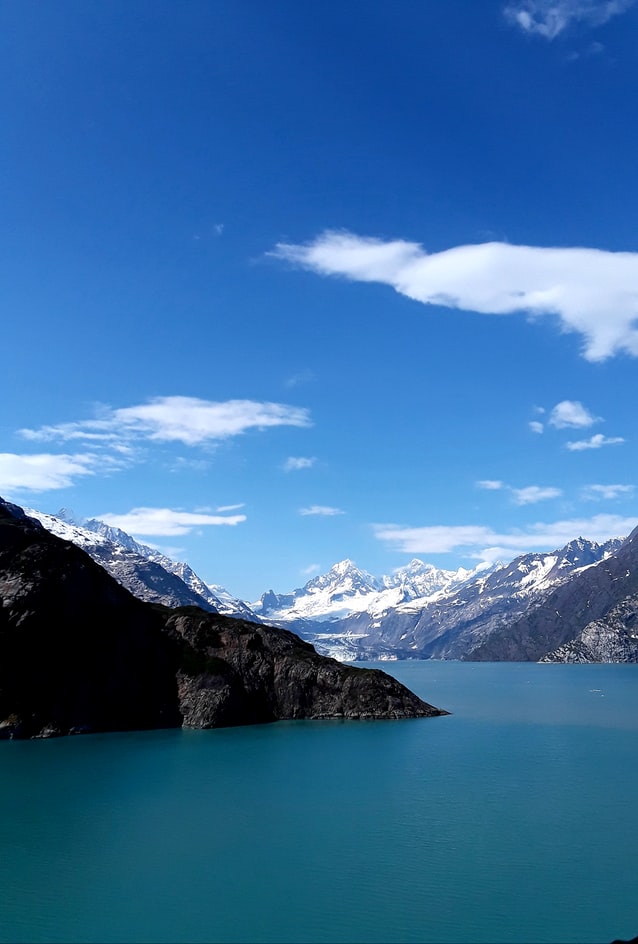
Located in Southeast Alaska, west of the capital city of Juneau, Glacier Bay is a beautiful National Park full of snow capped mountains, tidewater glaciers and wildlife. Experience wildlife in all its beauty from boat trips for whale watching and hiking through the trails of the Park. It is a protected area full of wonder to be explored.

Usgb1   Glacier Bay, United States   Claire Fischer
Usgb1 Glacier Bay, United States Claire FischerClaire Fischer
Usgb1   Glacier Bay, United States   Davina Schaetz
Usgb1 Glacier Bay, United States Davina SchaetzDavina Schaetz
Usgb1   Glacier Bay, United States   Rich Manalang
Usgb1 Glacier Bay, United States Rich ManalangRich Manalang

Day 5 - Cruising Inside Passage, U.S.A

Further details for this day are not available.

Day 6 - Sitka, Alaska

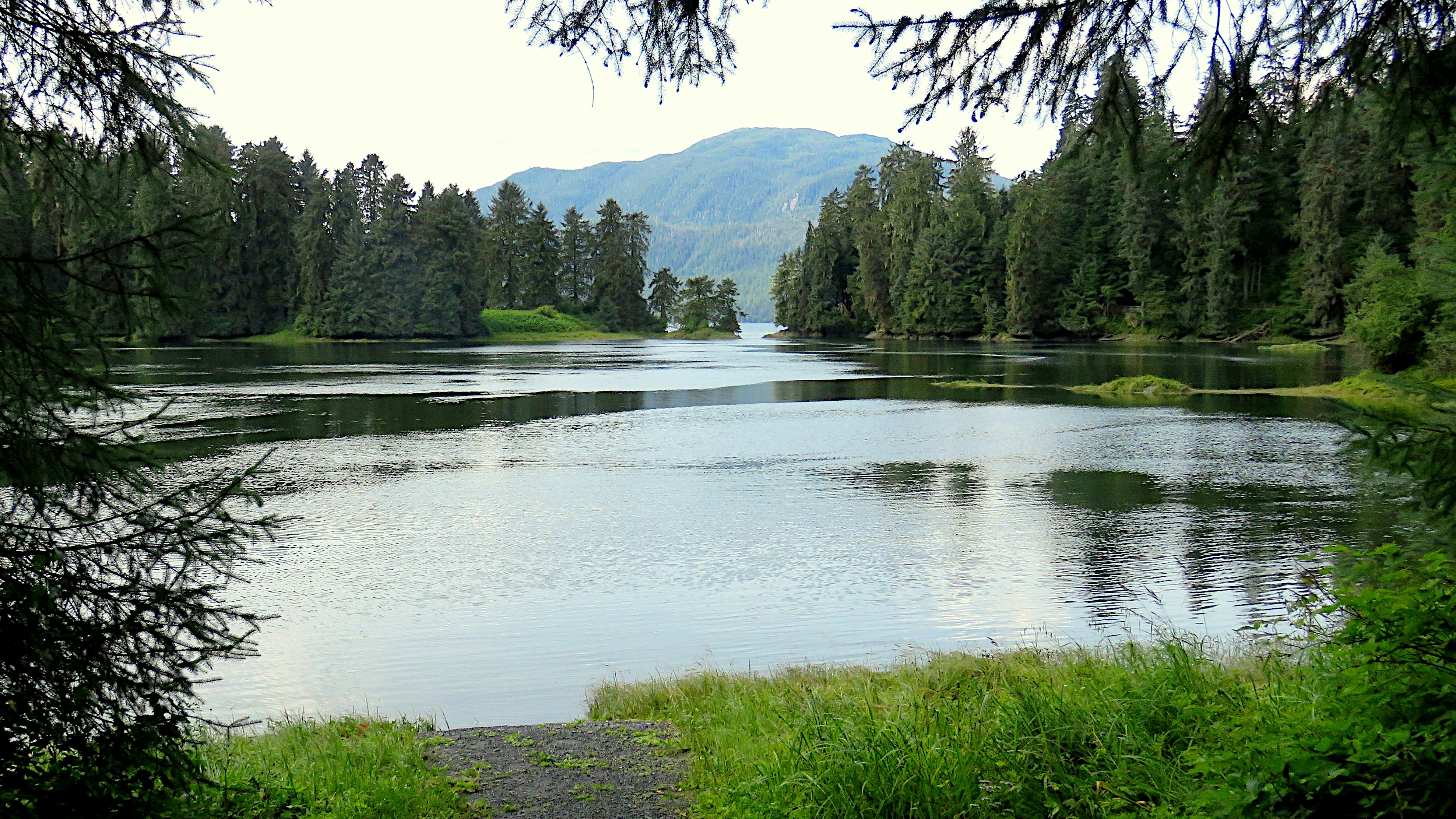
It's hard not to like Sitka, with its eclectic blend of Alaska Native, Russian, and American history and its dramatic and beautiful open-ocean setting. This is one of the best Inside Passage towns to explore on foot, with St. Michael's Cathedral, Sheldon Jackson Museum, Castle Hill, Sitka National Historical Park, and the Alaska Raptor Center topping the must-see list.Sitka was home to the Kiksádi clan of the Tlingit people for centuries prior to the 18th-century arrival of the Russians under the direction of territorial governor Alexander Baranof, who believed the region was ideal for the fur trade. The governor also coveted the Sitka site for its beauty, mild climate, and economic potential; in the island's massive timber forests he saw raw materials for shipbuilding. Its location offered trading routes as far west as Asia and as far south as California and Hawaii. In 1799 Baranof built St. Michael Archangel—a wooden fort and trading post 6 miles north of the present town.Strong disagreements arose shortly after the settlement. The Tlingits attacked the settlers and burned their buildings in 1802. Baranof, however, was away in Kodiak at the time. He returned in 1804 with a formidable force—including shipboard cannons—and attacked the Tlingits at their fort near Indian River, site of the present-day 105-acre Sitka National Historical Park, forcing many of them north to Chichagof Island.By 1821 the Tlingits had reached an accord with the Russians, who were happy to benefit from the tribe's hunting skills. Under Baranof and succeeding managers, the Russian-American Company and the town prospered, becoming known as the Paris of the Pacific. The community built a major shipbuilding and repair facility, sawmills, and forges, and even initiated an ice industry, shipping blocks of ice from nearby Swan Lake to the booming San Francisco market. The settlement that was the site of the 1802 conflict is now called Old Sitka. It is a state park and listed as a National Historic Landmark.The town declined after its 1867 transfer from Russia to the United States, but it became prosperous again during World War II, when it served as a base for the U.S. effort to drive the Japanese from the Aleutian Islands. Today its most important industries are fishing, government, and tourism.

Sitka Town
Sitka Town

Day 7 - Frederick Sound, Alaska

Further details for this day are not available.

Whale In Alaska
Whale In AlaskaImage by A P B from Pixabay

Day 8 - Endicott Arm, Alaska

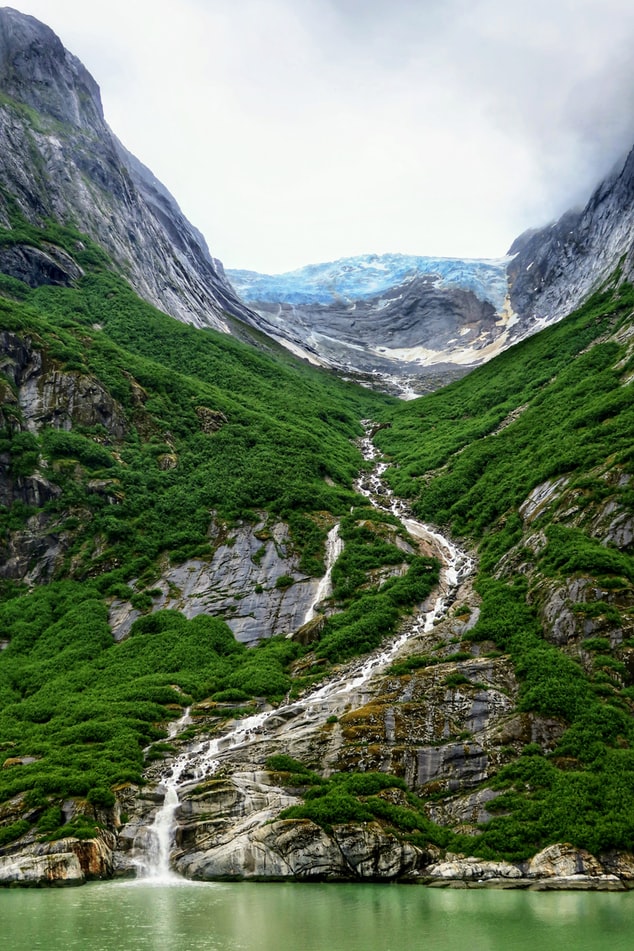
Endicott Arm is a long fjord branching off Stephen’s Passage, the major inner passage heading southeast from Juneau. The easternmost tip of Endicott Arm nearly reaches the Canadian border. Like all the fords in this region, it was carved by glaciers during the last Ice Age which ended about 11,000 years ago. One either side of the fjord the steep, nearly vertical walls, rise to a height of about 370 meters or 1,200 feet. Sitka spruce and western hemlock trees manage to cling onto the rock faces, adding to the breath-taking beauty of the landscape.

Endicott Arm, Alaska, Usa
Endicott Arm, Alaska, UsaPhoto by Marco Tjokro on Unsplash
Endicott Arm, Alaska, Usa
Endicott Arm, Alaska, UsaPhoto by Yuval Zukerman on Unsplash
Endicott Arm
Endicott ArmImage by Sabrina Eickhoff from Pixabay

Day 8 - Dawes Glacier

Further details for this day are not available.

Day 9 - Petersburg, Alaska

Petersburg lies on the northern end of Mitkof Island, in the Inside Passage, on the banks of Frederick Sound where it joins the Wrangell Narrows. It is halfway between Juneau, 120 mi to the north, and Ketchikan 110 mi to the south. Remnants of fish traps and ancient petroglyphs indicate that this area was used by the Tlingit people as a summer fish camp. For more than 1,000 years In 1897 Peter Buschmann, a Norwegian immigrant, settled here. The place was named Petersburg after him, and was incorporated as a town in 1910. It flourished as a fishing port, and even today, it remains an island community that makes its living from the sea. It is the largest home-based halibut fleet in Alaska, and is ranked the 15th-most lucrative fisheries port in the United States by volume.

Petersburg, Ak, Usa
Petersburg, Ak, UsaPhoto by Conner Baker on Unsplash
Petersburg, Ak, Usa
Petersburg, Ak, UsaPhoto by Conner Baker on Unsplash
Petersburg, Ak, Usa
Petersburg, Ak, UsaPhoto by Conner Baker on Unsplash
Petersburg, Ak, Usa
Petersburg, Ak, UsaPhoto by Conner Baker on Unsplash

Day 10 - Wrangell, Alaska

A small, unassuming timber and fishing community, Wrangel sits on the northern tip of Wrangel Island, near the mouth of the fast-flowing Stikine River—North America's largest undammed river. The Stikine plays a large role in the life of many Wrangel residents, including those who grew up homesteading on the islands that pepper the area. Trips on the river with local guides are highly recommended as they provide, basically, an insider's guide to the Stikine and a very Alaskan way of life. Like much of Southeast, Wrangel has suffered in recent years from a declining resource-based economy. But locals are working to build tourism in the town. Bearfest, which started in 2010, celebrates Wrangel's proximity to Anan Creek, where you can get a close-up view of both brown and black bears. Wrangel has flown three different national flags in its time. Russia established Redoubt St. Dionysius here in 1834. Five years later Great Britain's Hudson's Bay Company leased the southern Alaska coastline, renaming the settlement Ft. Stikine. It was rechristened Wrangel when the Americans took over in 1867; the name came from Baron Ferdinand Petrovich von Wrangel, governor of the Russian-American Company. The rough-around-the-edges town is off the track of the larger cruise ships, so it does not get the same seasonal traffic that Ketchikan and Juneau do. Hence, it is nearly devoid of the souvenir shops that dominate so many other nearby downtown areas. But the gift shops and art galleries that are here do sell locally created work, and the town is very welcoming to visitors; independent travelers would do well to add a stop in Wrangel during their Southeast wanderings.

Anan Creek, Wrangell, Alaska, Usa
Anan Creek, Wrangell, Alaska, UsaPhoto by Dieter Mueller on Unsplash

Day 11 - Cruising Wrangell Narrows

Further details for this day are not available.

Day 12 - Ketchikan, Alaska

Ketchikan is famous for its colorful totem poles, rainy skies, steep–as–San Francisco streets, and lush island setting. Some 13,500 people call the town home, and, in the summer, cruise ships crowd the shoreline, floatplanes depart noisily for Misty Fiords National Monument, and salmon-laden commercial fishing boats motor through Tongass Narrows. In the last decade Ketchikan's rowdy, blue-collar heritage of logging and fishing has been softened by the loss of many timber-industry jobs and the dramatic rise of cruise-ship tourism. With some effort, though, visitors can still glimpse the rugged frontier spirit that once permeated this hardscrabble cannery town. Art lovers should make a beeline for Ketchikan: the arts community here is very active. Travelers in search of the perfect piece of Alaska art will find an incredible range of pieces to choose from.The town is at the foot of 3,000-foot Deer Mountain, near the southeastern corner of Revillagigedo (locals shorten it to Revilla) Island. Prior to the arrival of white miners and fishermen in 1885, the Tlingit used the site at the mouth of Ketchikan Creek as a summer fish camp. Gold discoveries just before the turn of the 20th century brought more immigrants, and valuable timber and commercial fishing resources spurred new industries. By the 1930s the town bragged that it was the "salmon-canning capital of the world." You will still find some of Southeast's best salmon fishing around here. Ketchikan is the first bite of Alaska that many travelers taste. Despite its imposing backdrop, hillside homes, and many staircases, the town is relatively easy to walk through. Favorite downtown stops include the Spruce Mill Development shops and Creek Street. A bit farther away you'll find the Totem Heritage Center. Out of town (but included on most bus tours) are two longtime favorites: Totem Bight State Historical Park to the north and Saxman Totem Park to the south.

Usktn   Ketchikan, Alaska, United States Photo Credit Belongs To Cody Doherty 1
Usktn Ketchikan, Alaska, United States Photo Credit Belongs To Cody Doherty 1 Cody Doherty
Usktn   Ketchikan, Alaska, United States Photo Credit Belongs To Cody Doherty 2
Usktn Ketchikan, Alaska, United States Photo Credit Belongs To Cody Doherty 2 Cody Doherty
Usktn   Ketchikan, Alaska, United States Photo Credit Belongs To Cody Doherty 4
Usktn Ketchikan, Alaska, United States Photo Credit Belongs To Cody Doherty 4 Cody Doherty
Usktn   Ketchikan, Alaska, United States Photo Credit Belongs To Cody Doherty
Usktn Ketchikan, Alaska, United States Photo Credit Belongs To Cody Doherty Cody Doherty
Usktn   Ketchikan, Alaska, United States Photo Credit Belongs To Riley
Usktn Ketchikan, Alaska, United States Photo Credit Belongs To RileyRiley

Suites & Deck Plans

Suite

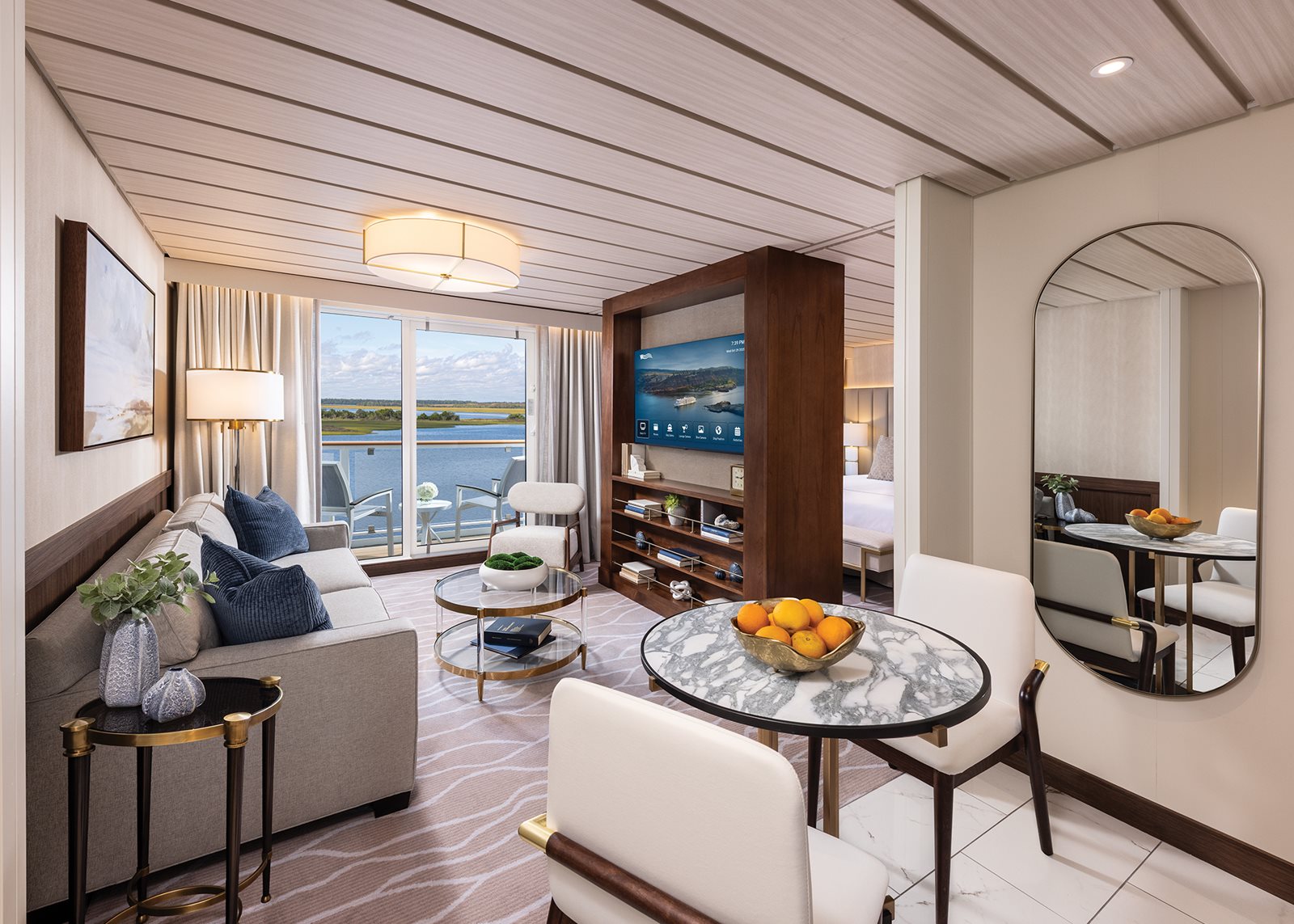
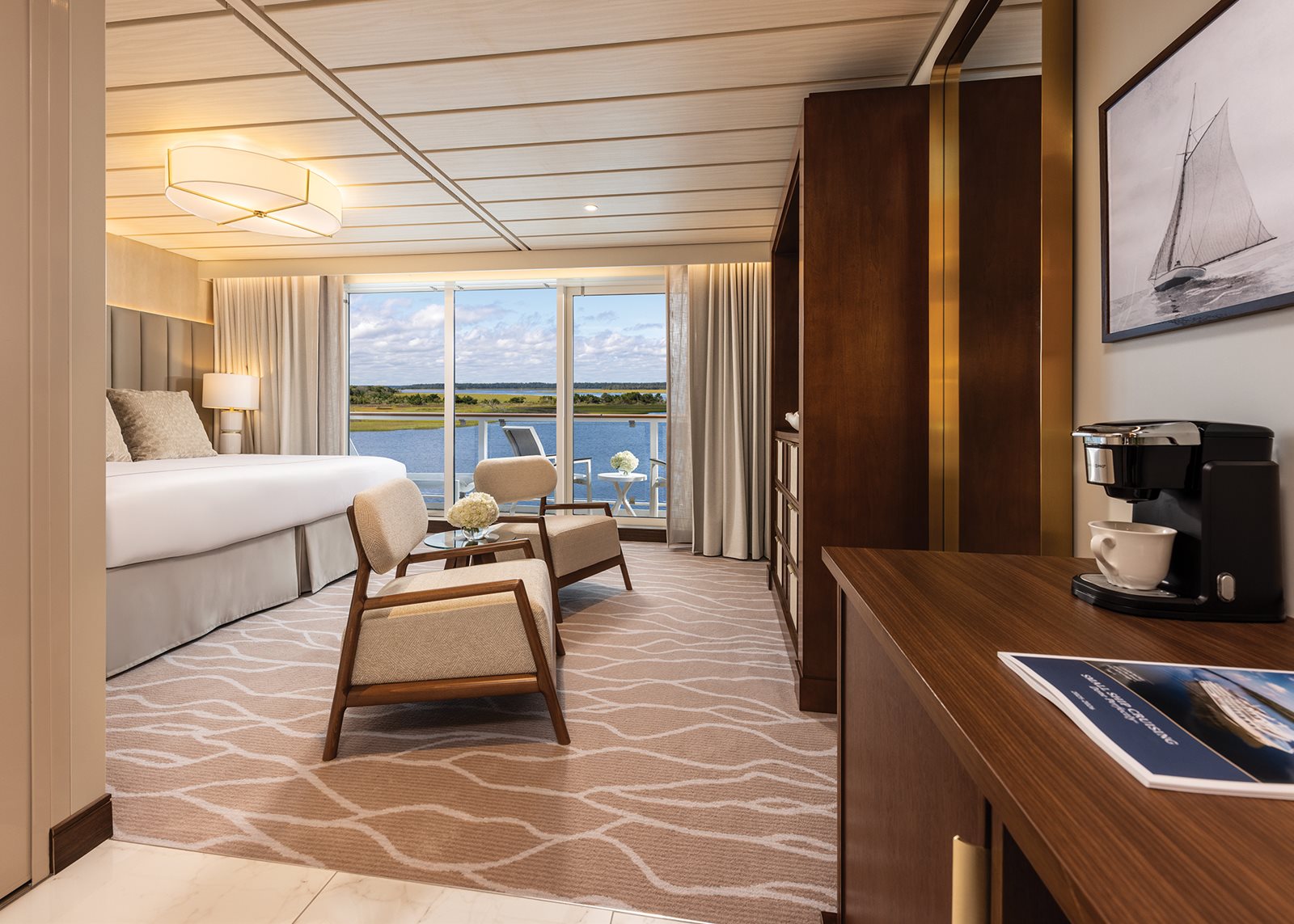
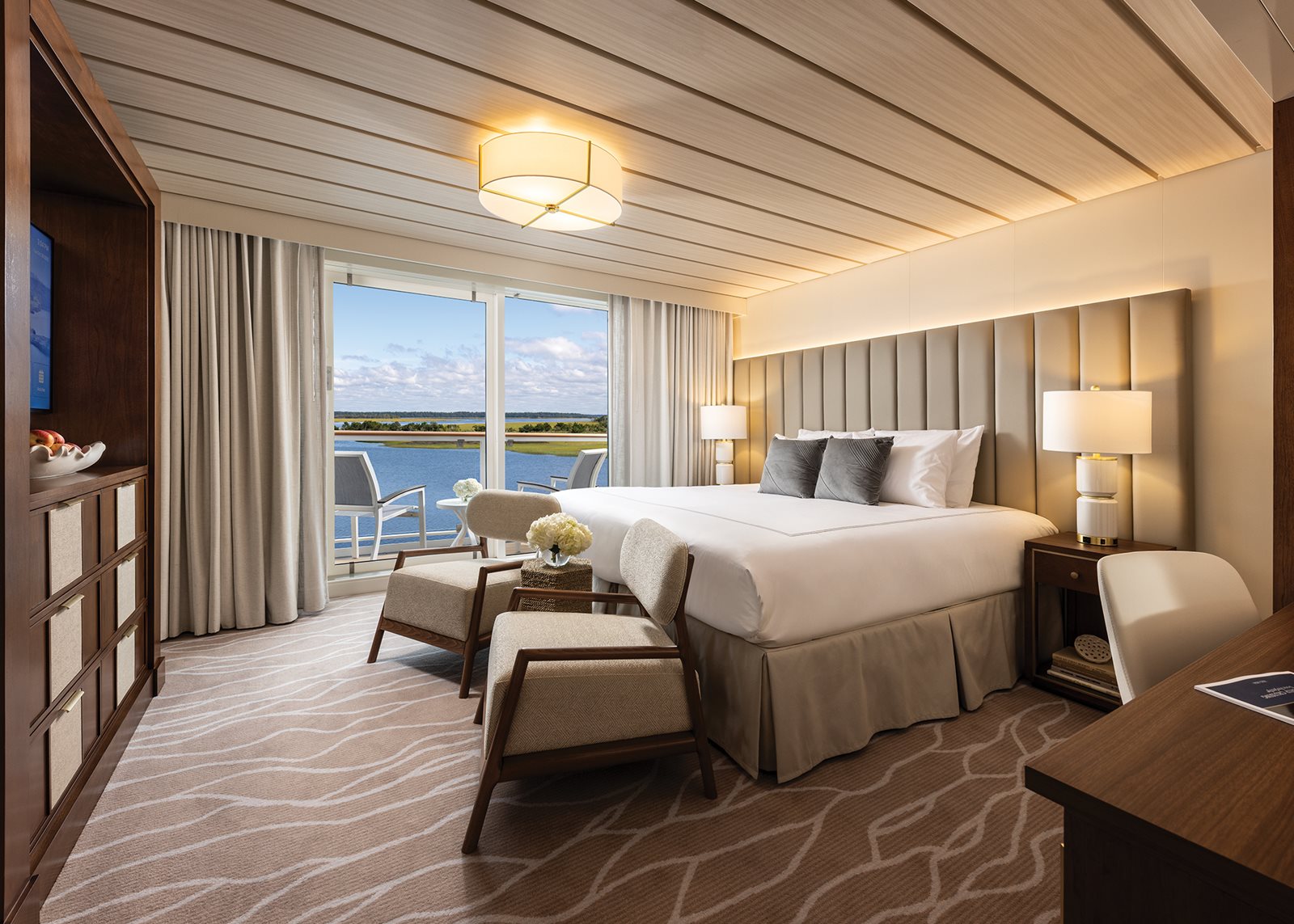
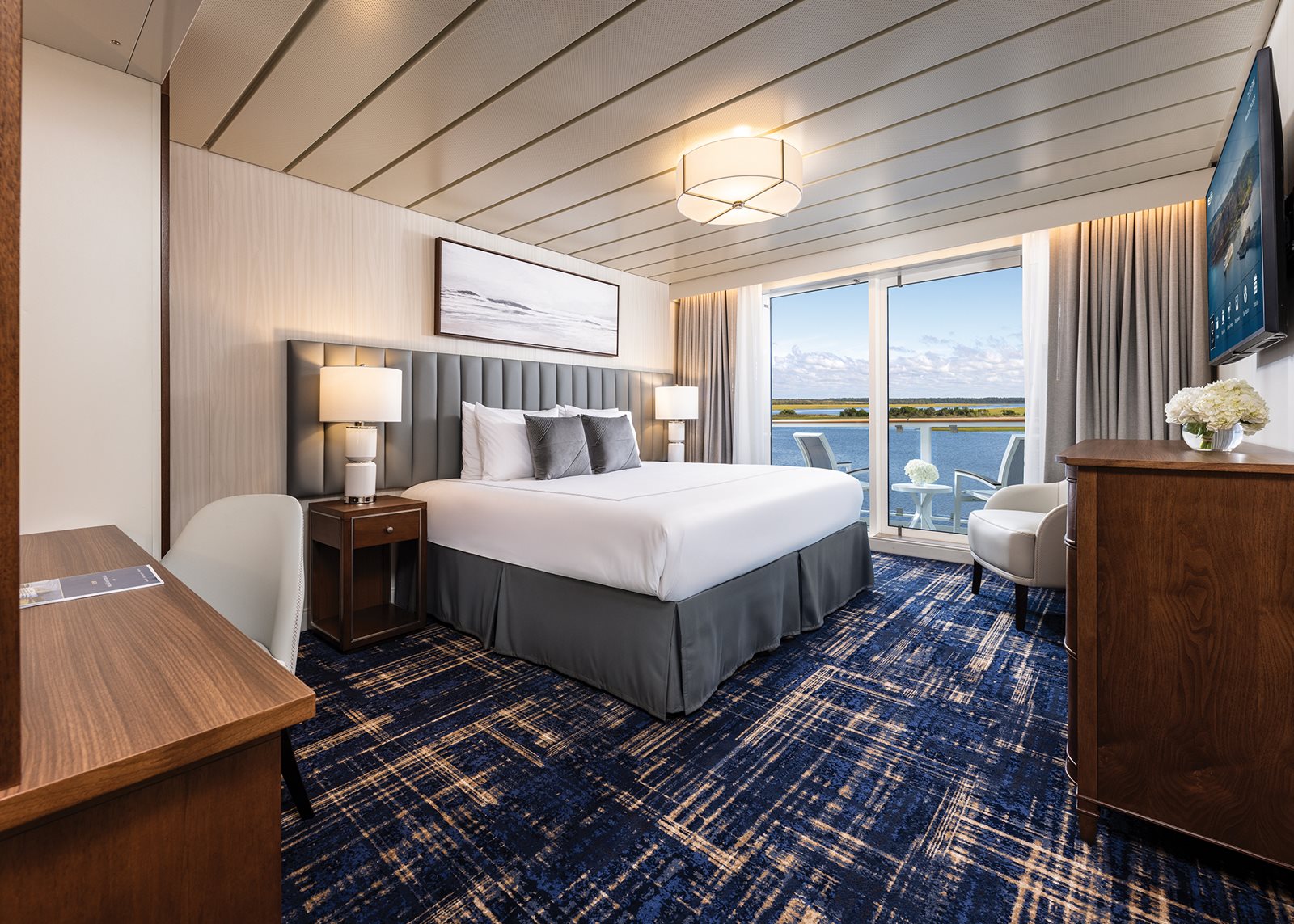
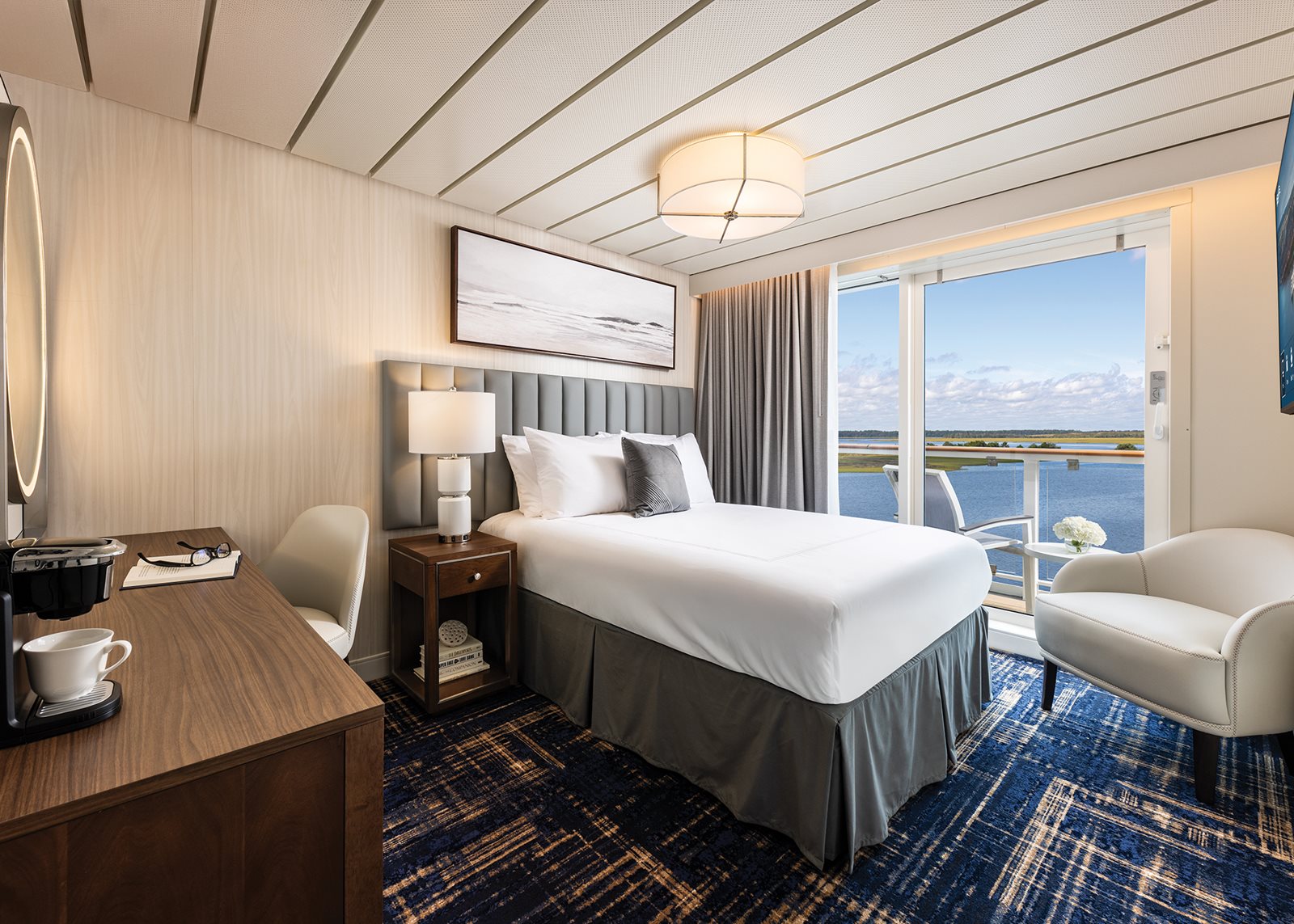
Located on the 4th Deck, the Grand Suite redefines comfort on a river cruise. At 500 square feet, it is unparalleled in space when compared to European staterooms. The exceptionally designed suite features a designated bedroom and separate living room. Floor-to-ceiling sliding glass doors in both rooms open to a 25-foot-long private balcony furnished with a table, chairs, and a chaise lounge—creating an expansive outdoor living area with sweeping views.

Inside, the living room includes a TV, dining area, breakfast bar, and a refrigerator, restocked daily. The private bedroom offers a king-size bed with an ottoman bench, generous storage, and its own TV. A spacious bathroom with a double vanity, premium amenities, and a large shower completes the Grand Suite.

500 sq ft
Accommodates 2 guests
Grand Suite

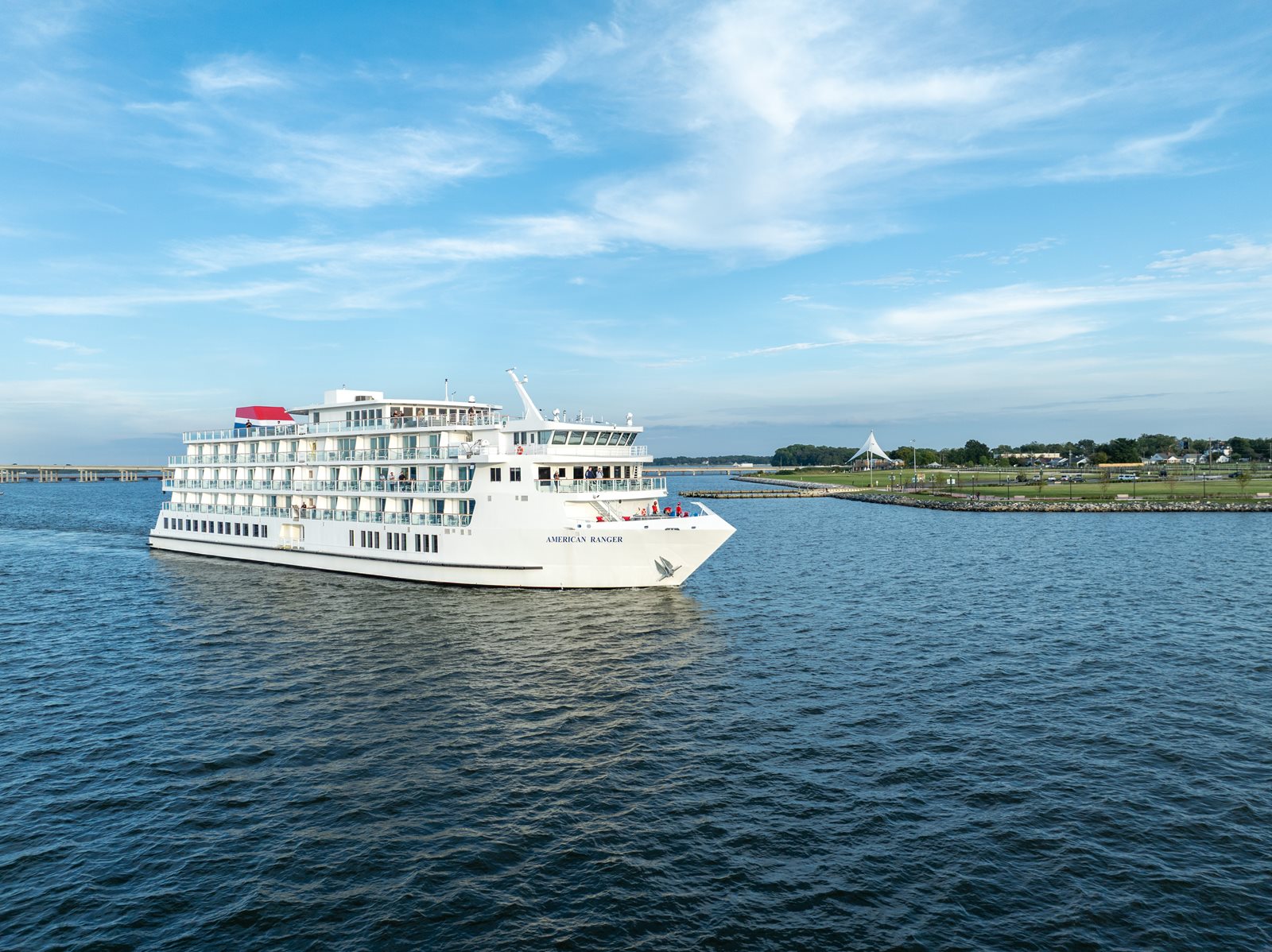
American Ranger

American Ranger

Client testimonials

I have worked with Lore Doick for more than 20 years, and she has booked over 30 cruises for me. Her expertise, care, and attention to every travel detail have made her an invaluable advisor and friend over the years.”

Tina B.

We are now in our second generation working with Cheri Ozimac at Tully Luxury Travel. From Antarctica to Greece, she has handled every detail with expertise, responsiveness, and care…

Earl M.

My wife and I have worked with Tully since 2007, and Kit Neil and her team went far beyond expectations while helping us navigate multiple cruise and flight cancellations. Their advocacy, care, and support during a difficult time were extraordinary.

Carri F.

Cheri Ozimac organized our Seabourn cruise flawlessly, from the hotel recommendation to every travel arrangement. She was responsive, attentive, and an excellent advocate throughout the process…

Cyn S.

We discovered Tully Luxury Travel after years of booking cruises through US agents and were impressed by their competitive pricing, exceptional service, and Canadian based support. Their team is always available, offers excellent value, and makes booking the right cruise seamless.

Peter C.

GoogleAverage Customer Rating:

The Tully Difference

Why travel with us


Tully Luxury Travel was built on access, discretion, and trust. For our clients, that means ease at every step, with distinctions that turn exceptional voyages into defining moments.

Recognized expertise

A renowned agency worldwide in luxury land and small-ship cruising, consistently trusted by the industry’s most prestigious brands.